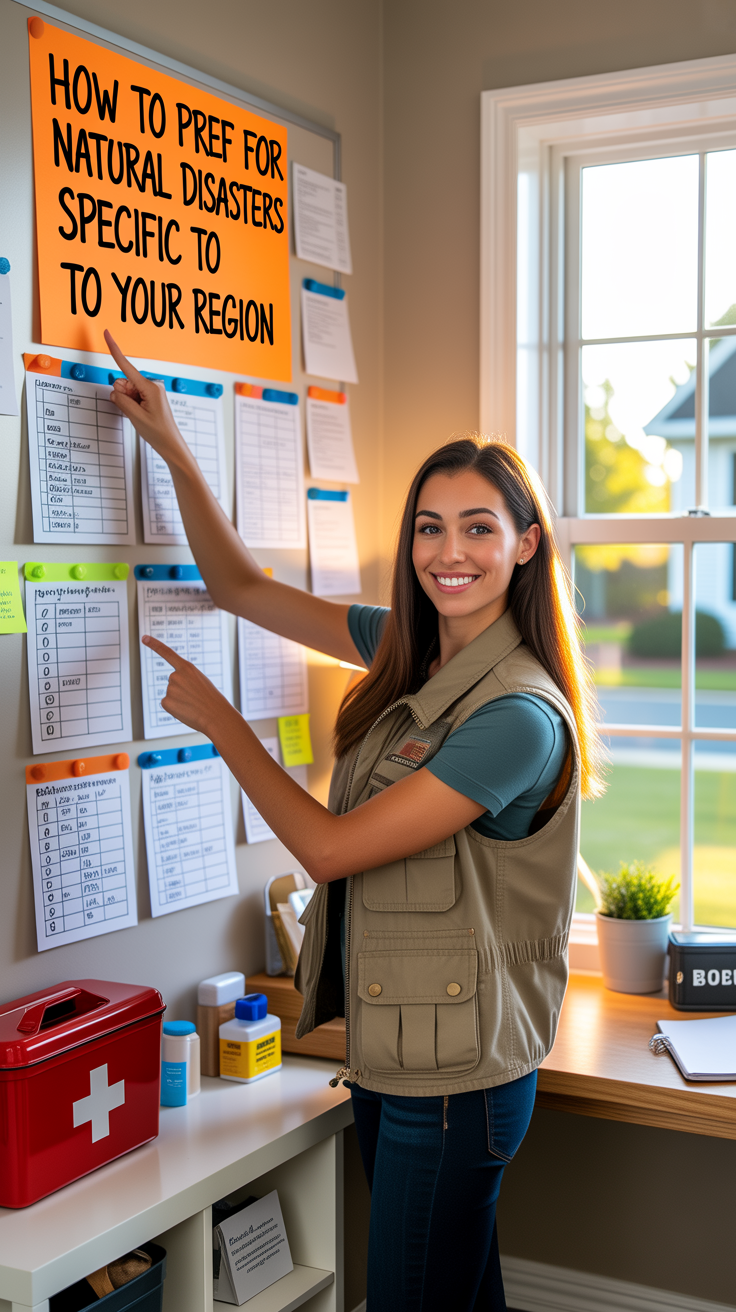
How to Prep for Natural Disasters Specific to Your Region
Preparing for emergencies isn’t a one-size-fits-all checklist. The smartest approach is how to prep for natural disasters specific to your region, because hazards, timing, infrastructure, and response capacity vary widely by geography. A coastal plan built around hurricanes and storm surge won’t fully protect you during an inland ice storm. A wildfire kit won’t cover the realities of flash flooding. Regional readiness is about matching your supplies, home hardening, communications, and evacuation decisions to the threats you’re most likely to face—without overcomplicating your life.
This guide walks you through a practical, region-based system: identify your risks, harden your home, build the right kits, protect water and power, plan for medical needs, and create a communication + evacuation strategy that works even when cell networks don’t.
Regional risk mapping that actually predicts what you’ll face
Many people prepare for what’s on the news instead of what’s likely in their zip code. Regional prep starts with a hazard profile that accounts for probability, speed of onset, and the most common failure points (power, water, roads, medical access).
Build your local hazard profile
Use a quick “triangulation” process:
- History: What has happened in the last 20–50 years? Look at storm tracks, wildfire perimeters, flood records, earthquake fault maps, and heatwave advisories.
- Infrastructure: Do you rely on well water? A single bridge? A rural power co-op? A coastal evacuation route? Infrastructure determines your weak links.
- Microclimate and terrain: Hills, canyons, coastal marshes, and urban heat islands amplify impact.
If you want a simple scorecard, rate each hazard (0–3) in four categories:
- Likelihood
- Lead time (none / hours / days)
- Duration (hours / days / weeks)
- Consequence (low / medium / high)
The highest combined score is where your prep time and budget go first.
Translate hazards into “failure scenarios”
Natural disasters cause predictable cascading failures. Your plan should focus on these scenarios:
- Extended power outage (most common across many regions)
- Water disruption (boil orders, contamination, well pump failure)
- Road closure / isolation (snow, debris, flooding, fire)
- Smoke or contaminated air (wildfires, dust storms)
- Medical access delay (overwhelmed EMS, closed clinics)
- Communication overload (cell congestion, internet down)
“Prepare for failures, not headlines” is the mindset that turns regional prep into something you can execute.
“As emergency management guidance consistently emphasizes, resilience comes from planning around the systems that fail first—power, water, and communications—rather than the event label.”
That’s why throughout this guide you’ll see water, energy, and medical readiness repeated in region-specific ways.
Home hardening and property prep by disaster type
Home hardening is where regional strategy pays the biggest dividends. The goal is to reduce damage and make your home safer to shelter in—without turning it into a construction project you never finish.
Hurricanes, coastal storms, and storm surge
Key risks: wind damage, flying debris, flooding, saltwater corrosion, long outages.
Priorities:
- Reinforce roof connections where possible; repair loose shingles early.
- Secure outdoor items that become projectiles.
- Know your evacuation zone and surge maps; surge is not “just flooding.”
- Store important documents in a waterproof container and digitally backed up.
- Install or pre-cut window protection if you’re in a high-wind zone.
Tornado and severe thunderstorms (Midwest/South)
Key risks: extreme wind, hail, fast onset, debris.
Priorities:
- Identify an interior shelter location (basement/cellar or interior room).
- Store helmets, heavy shoes, gloves, and a flashlight in the shelter area.
- Anchor tall furniture; storms turn bookshelves into hazards.
- Reduce tree limb overhang near the roof and power lines.
Flooding and flash flooding (river basins, low-lying areas, burn scars)
Key risks: rapid water rise, contaminated water, inaccessible roads.
Priorities:
- Elevate utilities if feasible; protect water heater, electrical panel, and HVAC.
- Keep sandbags or barriers if your area repeatedly floods.
- Learn turn-around-don’t-drown routes: identify higher-ground alternatives in advance.
- Protect valuables with shelving and sealed bins rather than floor storage.
Wildfires and smoke (West, Southwest, wildland-urban interface)
Key risks: ember storms, evacuations, smoke inhalation, water/road disruption.
Priorities:
- Create defensible space: clear dead vegetation, maintain spacing, clean gutters.
- Store N95 respirators and plan a clean-air room.
- Keep critical documents and “go bags” ready during fire season.
- Use noncombustible zone strategies near the home (gravel/stone where possible).
Earthquakes (West Coast, intermountain faults)
Key risks: structural damage, gas leaks, aftershocks, water line rupture.
Priorities:
- Strap water heater; brace tall furniture and TVs.
- Keep a wrench to shut off gas if you smell a leak; know shutoff locations.
- Store shoes and a flashlight bedside; broken glass is common.
- Expect self-reliance longer than storms because infrastructure repairs take time.
Winter storms, blizzards, and ice (North, mountain regions)
Key risks: hypothermia, carbon monoxide, frozen pipes, isolation.
Priorities:
- Insulate exposed pipes; keep heat tapes in known trouble spots.
- Stock safe indoor heating plan; avoid risky appliances indoors.
- Keep traction aids, shovel, and basic recovery gear for vehicles.
- Plan for multi-day road closures and delayed emergency services.
Extreme heat and drought (Southwest, urban heat islands)
Key risks: dehydration, heat illness, grid strain, wildfires.
Priorities:
- Prioritize hydration storage, shade, and cooling strategies.
- Identify local cooling centers; plan transport if you don’t drive.
- Avoid reliance on a single cooling device; plan layered cooling.
Water readiness that matches local failures and seasons
If you want one universal preparation category, it’s water—but regional prep changes the “how.” Flood zones face contamination. Winter zones face frozen pipes. Drought zones face supply restrictions. Earthquake zones can lose mains for weeks.
Decide your water strategy by region
Use a layered approach:
- Stored water for immediate needs
- Backup collection and treatment when supply breaks
- Container strategy that fits your space and mobility
A realistic baseline is several days of water for drinking and basic hygiene, then a plan to expand capabilities if outages extend.
Problem-solution bridge: Struggling with how to store meaningful amounts of water without turning your home into a maze of jugs? Many people use modular storage systems that simplify rotation and emergency access, especially where boil orders or infrastructure issues are common.
💡 Recommended Solution: SmartWaterBox
Best for: households that want organized, space-aware emergency water storage
Why it works:
- Helps structure water readiness so it doesn’t rely on last-minute store runs
- Supports rotation planning, reducing waste from forgotten containers
- Designed to make emergency access simpler when stress is high
Region-specific water pitfalls to plan for
- Hurricanes/coastal storms: pre-storm contamination and boil advisories are common; fill bathtubs/containers before landfall.
- Wildfires: ash can contaminate waterways; smoke and evac orders can interrupt your ability to shop.
- Earthquakes: municipal lines can rupture; stored water becomes critical.
- Winter storms: pipes freeze; wells need power to pump; melting snow for water takes fuel and time.
- Flood regions: never assume floodwater is treatable without robust filtration and disinfection.
Build a “water-only” checklist
Keep it simple and repeatable:
- Primary storage containers (label dates)
- A manual way to dispense water
- Treatment method for uncertain sources
- A plan for pets and medical devices (e.g., humidifiers, CPAP backups if applicable)
Contextual inline mention: Some households in outage-prone regions also keep a higher-capacity storage solution for longer disruptions, especially where roads close and resupply is uncertain. Tools like Water Freedom System are often considered for extending water resilience beyond a few days.
“As public health agencies regularly stress after major disasters, the most common preventable emergency is dehydration and waterborne illness—because people underestimate how quickly normal water access can disappear.”
Power, light, and heat plans for outages your region actually gets
Power is the backbone of comfort and safety: refrigeration, medical devices, heating/cooling, communications, and water pumps. Regional prep means anticipating not just outages—but outage duration.
Match your power plan to outage patterns
- Hurricane zones: outages can last days to weeks; humidity makes heat management critical.
- Ice storms: heavy line damage, slow repairs; cold exposure becomes a top-risk.
- Heat waves: blackouts or brownouts + high temps raise medical risk quickly.
- Wildfires: preemptive shutoffs are common in some areas; evacuation readiness matters.
- Earthquakes: grid instability + damage; assume limited fuel access.
Build a layered energy plan
- Low-tech first: headlamps, lanterns, batteries, hand-crank options
- Short-term power: power banks for phones and radios
- Longer-term resilience: scalable backup generation strategies
Comparison/alternative: While small power banks are popular for quick charging, they often fall short during multi-day outages. A more robust backup approach can be worth it in regions where outages regularly extend beyond 72 hours.
💡 Recommended Solution: Ultimate OFF-GRID Generator
Best for: people building a longer-duration backup energy plan
Why it works:
- Supports a more resilient approach than relying on a single battery pack
- Useful when fuel access is limited or lines are long after disasters
- Helps plan around the reality of extended outages
Heating/cooling region notes (safety-focused)
- Winter regions: prioritize safe indoor warmth; plan to prevent frozen pipes and manage hypothermia risk. Never run combustion devices indoors without proper ventilation and CO awareness.
- Hot regions: plan shade, hydration, airflow, and cooldown routines. Create a “cool room” strategy and know cool public locations if home becomes unsafe.
Power-related preparedness that most people miss
- Keep a paper list of critical phone numbers and medical info.
- Store cash in small bills during outage season.
- Identify where you can charge devices locally (library, community center) if roads are open.
- Plan refrigerator management: what to eat first, what to keep, and what to discard safely.
Food and supplies planning tailored to local logistics and disruption windows
Regional food planning isn’t about panic-buying. It’s about building depth in the categories most likely to be disrupted: supply chains, refrigeration, cooking fuel, and access to stores.
Decide your “disruption window”
Your region determines how long you may be isolated:
- Urban hurricane zones: supply disruptions + blocked roads; services return unevenly.
- Mountain winter zones: road closures can isolate communities.
- Earthquake zones: logistics may stall due to damaged bridges/ports.
- Wildfire zones: sudden evacuation means you need portable calories.
A practical system is a three-tier pantry:
- No-cook, ready-to-eat (first 48–72 hours)
- Quick-cook (boil/simmer; minimal fuel)
- Longer-term staples (requires planning and rotation)
Cooking without grid power
Plan for the constraints your region creates:
- Storm regions: cooking outside may be limited by rain/wind; have alternatives.
- Wildfire smoke: outdoor cooking might be unpleasant or unsafe; consider indoor-safe options only if ventilation and safety allow.
- Winter: melting snow or heating water costs fuel—plan more ready-to-eat items.
Resource list mindset: Many preparedness-minded households use structured food planning resources to avoid waste and ensure variety.
💡 Recommended Solution: The Lost SuperFoods
Best for: building a more resilient pantry mindset with traditional preservation ideas
Why it works:
- Encourages food planning beyond short-lived “emergency snacks”
- Helps broaden shelf-stable options and rotation habits
- Supports a skills-based approach rather than impulse buying
Backyard and local resilience (when it fits your region)
If you have outdoor space, even small improvements help:
- Herbs/greens in containers (fast, low commitment)
- Rain collection where legal and practical (supports gardening more than drinking)
- Soil improvement and season planning (especially in drought-prone areas)
Contextual inline mention: People who want to push beyond short-term food storage sometimes focus on home production and seasonal routines. Resources like The Self-Sufficient Backyard can help you think through space, seasons, and realistic output without reinventing the wheel.
Medical, sanitation, and air quality preparation for regional realities
In many disasters, the largest risks after the initial event are medical: infections, poor sanitation, smoke exposure, heat illness, and delayed access to care.
Build a realistic medical readiness plan
Start with:
- A 7–14 day buffer of essential prescriptions when possible
- Printed medication list, allergies, and conditions
- Basic first aid supplies for wound care and burns
- Backup for vision and mobility aids (glasses, contacts, batteries for hearing aids)
If your region frequently experiences grid stress or evacuation orders, prioritize portability and redundancy.
Expert quote format:
“As many clinicians highlight in disaster after-action reports, ‘Home Doctor has become a go-to reference-style resource for families who want a clearer framework for handling common health situations when care is delayed.’”
Use it as an educational support layer—never a replacement for emergency services.
Sanitation is regional (and often overlooked)
- Flood regions: contamination risk is high—assume surfaces and items may be unsafe until cleaned.
- Winter storms: water lines freeze; toilets may be unusable without stored water.
- Earthquakes: broken sewer/water lines can make hygiene difficult.
- Hurricanes: prolonged outages + heat increase hygiene problems quickly.
Sanitation basics:
- Heavy-duty trash bags and ties
- Disposable gloves
- Hand sanitizer and soap
- Paper towels and disinfectant
- A plan for toilet backup if water service is disrupted
Air quality and smoke planning (wildfires, dust storms, urban pollution events)
Wildfire smoke can travel hundreds of miles. Even if you’re not in a burn area, you may need a clean-air plan.
Key steps:
- Keep N95/KN95 respirators
- Seal drafts in one room and reduce indoor pollution sources
- Monitor air quality alerts locally
- Avoid strenuous outdoor activity during heavy smoke
Case study/example (general): For instance, households that set up a dedicated clean-air room ahead of fire season often report less stress and better sleep during smoke events because they aren’t improvising when conditions worsen.
Evacuation, sheltering, and communications built around local routes and constraints
Regional disaster prep isn’t complete until you can answer two questions: When do we leave? and Where do we go? That decision depends on your hazard type, your home’s safety, and your local routes.
Decide in advance: evacuation triggers and stay-put triggers
Create simple triggers tied to your region:
- Hurricane zones: evacuate when your zone is ordered; don’t wait for wind to start.
- Wildfire zones: evacuate early when routes are clear; ember storms move fast.
- Flood zones: leave before roads become waterlogged; flash floods are unforgiving.
- Winter storms: avoid travel during peak conditions; sheltering may be safer than driving.
- Earthquakes: expect aftershocks; leave unsafe structures and avoid damaged areas.
Build your local evacuation map
Include:
- Two routes in opposite directions (avoid single-point failures like bridges)
- Alternate meeting points if cell service fails
- A plan for pets and livestock
- A plan for hotels and “friends/family” options
Communications: assume networks fail
Use redundancy:
- Family contact plan (out-of-area contact)
- Printed addresses and phone numbers
- Battery-powered radio
- Short written checklist in each go bag
Problem-solution bridge: Struggling to prepare for difficult, high-stress scenarios like civil disruption after disasters, or navigating safety risks in dense urban areas? Some people prefer structured training-style resources to think clearly under pressure.
💡 Recommended Solution: URBAN Survival Code
Best for: city dwellers planning around outages, transit disruption, and dense environments
Why it works:
- Encourages practical planning for urban constraints and limited space
- Helps structure decision-making when services are disrupted
- Supports a layered approach to personal preparedness
Security and situational awareness (keep it practical)
Disasters can increase opportunistic crime, but fear-based planning can waste money and attention. Focus on:
- Lighting and visibility
- Keeping doors/windows secured
- Community coordination (neighbors helping neighbors)
- Discreet storage of supplies
Comparison/alternative: While generic “survival tips” can be helpful, some readers prefer more advanced, strategy-oriented frameworks. BlackOps Elite Strategies is often positioned as an alternative for people who want a more structured way to think about preparedness and risk management.
A region-by-region checklist you can personalize in one weekend
The fastest way to implement how to prep for natural disasters specific to your region is to do one focused weekend of setup, then maintain it with small seasonal updates.
Day 1: Assess + build the core
- Confirm top 2–3 hazards for your area
- Identify shutoffs (water, gas, electric) and label them
- Create a shelter point and a staging area for evacuation
- Assemble a 72-hour kit with region-specific add-ons:
- Tornado: helmets, shoes in shelter
- Wildfire: respirators, go-bag emphasis
- Winter: insulation supplies, warm layers
- Flood: waterproof document storage
Day 2: Upgrade resilience (water, power, food)
- Set up water storage and rotation schedule
- Consider tools like SmartWaterBox for organization if you struggle with consistency
- Build your power layers for your realistic outage duration
- In longer outages, explore a deeper backup plan such as the Ultimate OFF-GRID Generator
- Build the three-tier pantry and label it for rotation
- Use frameworks like The Lost SuperFoods to keep it skills-based
Maintenance plan (quarterly, seasonal)
- Pre-hurricane season: review evacuation routes, refresh batteries, fill prescriptions
- Pre-winter: check insulation, test backup heat plans, vehicle readiness
- Pre-fire season: clear defensible space, stock respirators, confirm go-bag status
- Pre-flood season: confirm barriers, elevate storage, review insurance documents
Contextual inline mention: Some households also look into broader energy independence strategies as a long-term project, particularly in outage-heavy regions. Programs like Energy Revolution System are often explored by people who want to reduce dependence on fragile grids over time.
Conclusion
The best emergency plan is the one you’ll actually use—and the easiest way to make it usable is to tailor it to where you live. How to prep for natural disasters specific to your region comes down to matching your resources to local hazards, building redundancy for the systems that fail first (water, power, communications), and making clear decisions about sheltering versus evacuating before you’re stressed and running out of time. Start with your top two disaster risks, cover water and power first, add region-specific supplies, and maintain the plan seasonally. That’s how you move from generic readiness to real resilience.
FAQ
How do I figure out which natural disasters are most likely in my region?
Look at local hazard maps and historical events, then rate hazards by likelihood, lead time, duration, and impact. The top two scores should drive your supplies, home hardening, and evacuation plan.
How to prep for natural disasters specific to your region if you live in an apartment?
Focus on portable readiness: a go bag, water storage that fits your space, backup lighting and charging, a medical kit, and a communication plan. For regional risks, add items like respirators for smoke, warm layers for winter outages, or waterproof document storage for flood-prone areas.
What’s the most important supply category across all regions?
Water and power planning tend to matter everywhere. Even short outages can disrupt safe drinking water, refrigeration, medical devices, and communications.
Should I evacuate early or shelter in place?
It depends on the hazard. Wildfires and storm surge often demand early evacuation. Winter storms can make travel more dangerous than sheltering. Decide triggers in advance using local guidance, routes, and your household needs.
How often should I rotate emergency supplies?
Check quarterly and update seasonally. Rotate water and pantry items on a schedule you can stick to, and refresh batteries, meds, and documents before your region’s peak risk season.
Rank Math SEO Block
SEO Title: How to Prep for Natural Disasters Specific to Your Region
Meta Description: Learn how to prep for natural disasters specific to your region with practical steps for water, power, evacuation, and home readiness.
URL Slug: prep-for-natural-disasters-by-region
Focus Keyword: How to Prep for Natural Disasters Specific to Your Region
Suggested Schema Type: FAQ