
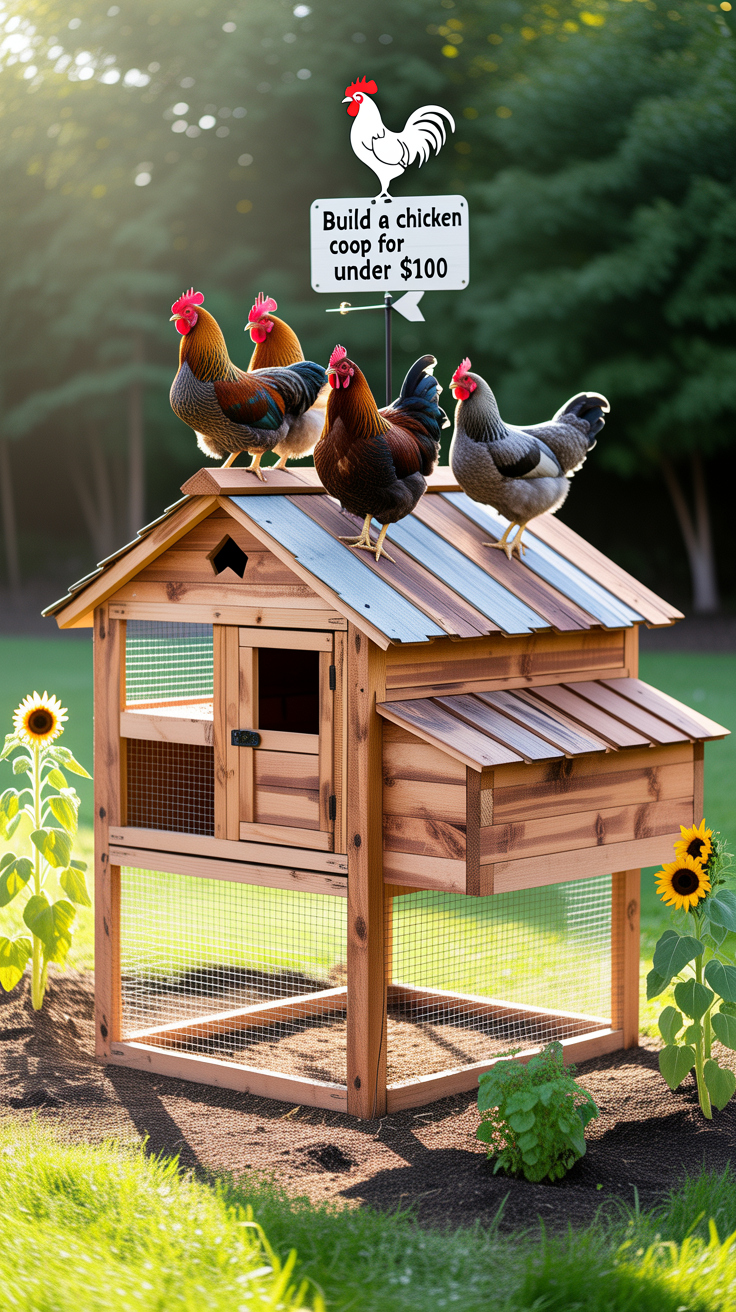
Build a Chicken Coop for Under $100: A Weekend Project That Works
Raising a small backyard flock doesn’t have to start with a $400 prefab coop that warps, leaks, and becomes a predator magnet. If you’re willing to do a little scrounging and keep the design simple, you can build a chicken coop for under $100 in a single weekend—and end up with something sturdier, easier to clean, and better suited to your yard.
This guide is built for real-life constraints: limited tools, limited time, and a limited budget. You’ll learn a proven “small flock” design, what to spend money on (and what not to), how to keep it predator-resistant, and how to avoid the mistakes that make cheap coops fail. You’ll also get practical build steps you can follow without needing perfect carpentry skills.
The design that keeps costs under $100
The easiest way to stay under budget is to avoid a “cute” coop and build a functional box that meets chickens’ actual needs: dry shelter, ventilation, roosts, nest boxes, and secure access.
Choose the right size for a budget build
For a weekend build, aim for 3–6 hens. That keeps the footprint manageable and reduces material costs.
- Coop interior (sleeping area): ~3–4 sq ft per bird
- Run space (if attached): ~8–10 sq ft per bird (more is better)
- Roost space: 8–10 inches per bird
A common “under $100” sweet spot:
- Coop box: 4′ x 4′ x 4′ (enough for 4–6 standard hens if managed well)
- Run: optional, but if you add one, build it from reclaimed fencing and reinforce it properly
Build for function, not perfection
You’re not building a showcase shed—you’re building a livestock shelter. The budget approach works when you prioritize:
- Ventilation high, not drafts low
- A tight, lockable door and easy-to-clean access
- A roof that sheds water
- Predator-resistant latches (not “good enough”)
A simple raised coop design usually lasts longer because it stays drier and discourages rodents.
Materials list for an under-$100 coop (what to buy vs scrounge)
If you walk into a big-box store and buy everything new, it’s hard to hit $100. The trick is to buy only what must be reliable and source the rest secondhand.
Spend money on these
These are “failure points” that cause escapes, predator losses, or rot:
- Hardware cloth (not chicken wire) for vents/openings
- Exterior screws (they hold better than nails)
- A basic latch system that can’t be popped open
- Roofing/waterproof layer (even if it’s reused metal or shingles)
Scrounge these (often free)
Look for these on Facebook Marketplace, Craigslist, construction leftovers, and curb finds:
- Pallets (for framing or cladding, if sound and untreated)
- Old fence pickets
- Scrap plywood (especially for roof deck)
- Used 2x4s
- Old metal roofing panels
- A leftover exterior door or cabinet door (great for clean-out access)
Budget-friendly “new buy” baseline
If you can scrounge wood, a realistic under-$100 shopping list often looks like:
- 1 roll hardware cloth (½” preferred)
- Exterior screws
- Hinges + latch
- Roofing paper or a used metal panel
- A small box of staples/fencing nails
If you can’t scrounge wood, consider building a tractor-style coop from 2x2s and a single plywood sheet—but your costs will likely land closer to $120–$180 depending on local prices.
Tools you actually need (and simple substitutes)
You don’t need a full workshop. Minimum kit:
- Tape measure + pencil
- Saw (circular saw is fastest; handsaw works)
- Drill/driver
- Staple gun (for hardware cloth)
- Square (or improvise with a straight board)
- Utility knife
- Level (optional)
Time-saving tip for weekend builds
Pre-cut your framing pieces Friday night. Most “weekend builds” fail because cutting eats half the daylight.
Foundation and framing that won’t rot out
Cheap coops die early from ground contact, standing water, and weak corners. The best low-cost fix is a simple raised base.
Pick the driest spot you have
Choose a location that:
- Doesn’t puddle after rain
- Gets morning sun
- Has afternoon shade (in hot climates)
- Is accessible in winter and mud season
Make a simple raised base
A basic approach that’s cheap and durable:
- Set 4 corner blocks (pavers, concrete blocks, or bricks)
- Add 2 more blocks mid-span if your base is long
- Build a 4′ x 4′ frame from 2x4s or reclaimed lumber
- Screw corners together with 3″ exterior screws
This keeps your coop off wet ground and discourages rats nesting underneath.
Frame the box
A practical under-$100 framing plan (for a 4×4 coop box):
- Bottom frame: 4′ x 4′
- Top frame: 4′ x 4′
- Corner posts: 4 pieces at ~4′ height
- Roof slope: one side taller by 4–6″ so water sheds
Don’t overcomplicate. Square, stiff, and dry beats fancy every time.
Walls, roof, and ventilation that keep birds healthy
This is where budget builders accidentally create a “chicken sauna” or a drafty wind tunnel. The goal: air exchange without direct wind on the roost.
Wall cladding options
Use what you can get cheaply:
- Pallet boards (best when backed with a solid layer inside)
- Fence pickets
- Scrap plywood (painted or sealed)
If you use pallet wood, inspect carefully and avoid chemically treated pallets. When in doubt, use fence pickets or construction scraps intended for outdoor use.
Roof that works on the cheap
A leaky roof destroys coops fast. Options:
- Reclaimed metal roofing (best)
- OSB/plywood + roofing felt + leftover shingles
- A repurposed billboard tarp over a roof deck (works if secured tight)
Build at least a small overhang to keep water off the walls and vents.
Ventilation (non-negotiable)
Add high vents on two sides. Cover all openings with hardware cloth.
Rule of thumb for a 4×4 coop:
- Two vents each about 4″ x 16″ (or equivalent) near the roofline
- Optional gable vent if your roof design allows it
Keep vents above roost height so air moves overhead, not directly across sleeping birds.
Door, clean-out access, and predator-proofing on a tight budget
Predators exploit tiny weaknesses: loose corners, flimsy latches, and wide wire openings.
Use hardware cloth where it matters
- Cover vents and windows with ½” hardware cloth
- Staple it down, then screw a wood strip over the edges (a “sandwich” mount) so raccoons can’t peel it back
Chicken wire is fine for keeping chickens in, but it’s not reliable for keeping predators out.
Latches that can’t be “figured out”
Raccoons are problem-solvers. Use a latch that requires two-step motion (or add a carabiner).
- Barrel bolt + carabiner
- Gate latch + clip
- Hasps with a simple lock
Easy clean-out saves your weekend later
The cheapest way to make cleaning easy is a large clean-out door on the back:
- Hinged panel that opens wide
- A simple latch on the opposite side
- Place it so you can rake bedding straight out
If you skip this, you’ll dread maintenance—and coops that don’t get cleaned become ammonia traps.
Interior setup: roosts, nest boxes, and bedding that stays manageable
You can build a coop cheaply, but you can’t skip the interior basics.
Roost bar setup
Chickens sleep on a bar, not in nest boxes (ideally). For standard hens:
- Use a 2×4 on its wide side (more comfortable in cold climates)
- Position roost higher than nest boxes
- Leave 12–18″ from wall to roost
- Provide 8–10″ of roost length per bird
Place a droppings board under the roost if you want easy cleanup. A scrap plywood panel works.
Nest boxes from scraps
You can build nest boxes from almost anything:
- A repurposed wooden crate
- Shelf cubbies
- A simple plywood box with dividers
Basic sizing:
- 12″ x 12″ x 12″ per box (approx.)
- One box per 3–4 hens is usually enough
Add a small lip to hold bedding in.
Bedding that doesn’t break the budget
- Pine shavings (common)
- Chopped straw
- Dry leaves (mixed)
- “Deep litter” method if you understand moisture control
Keep it dry. Wet bedding is where smell, flies, and respiratory issues begin.
The weekend build plan (so it actually gets finished)
A true weekend build requires a schedule and a “definition of done.” You can always add paint, trim, and an attached run later.
Friday evening: prep (1–2 hours)
- Finalize footprint and location
- Gather scrounged materials
- Pre-cut base and wall framing pieces
- Confirm you have: screws, hinges, latch, hardware cloth
Saturday: structure day (6–10 hours)
- Set blocks/pavers and level them
- Assemble base frame
- Frame walls + attach to base
- Build roof frame and attach roof deck
- Add roofing layer (metal/felt/shingles)
Aim to have the coop “dried in” by end of day—roof on, walls mostly enclosed.
Sunday: security + interior (4–8 hours)
- Install doors (human access + chicken door)
- Add vents with hardware cloth
- Install roost and nest boxes
- Add bedding and check for sharp edges/splinters
- Final predator walk-around: tug on wire, test latches
If you run out of time, prioritize: roof, door security, ventilation, and roosts.
Keeping the flock going: resilience upgrades that pair well with backyard coops
A budget coop is a strong start, but the real win is turning your backyard setup into a reliable system—especially if you’re aiming for more self-sufficiency.
Many backyard keepers eventually realize the coop is only one piece of the puzzle: water, feed storage, and household readiness matter just as much.
“As many preparedness educators note, ‘Reliable water storage becomes the quiet backbone of any home system—because when water is handled, everything else gets easier.’” One option people often explore is SmartWaterBox as a way to think through water planning beyond the coop—especially during storms, outages, or summer restrictions.
💡 Recommended Solution: Water Freedom System
Best for: Building a more consistent home water routine alongside backyard projects
Why it works:
- Supports a “systems” mindset for water use and storage
- Useful when heat, drought, or disruptions make water access less predictable
- Pairs well with homestead-style planning
If your bigger goal is a productive yard beyond eggs, many homeowners also lean into garden-based food durability. Tools and plans like The Self-Sufficient Backyard are often used as a practical next step when you’ve got the coop handled and want the rest of your space to pull its weight.
Tools, resources, and practical next steps
Once your coop is built, the biggest improvements come from routine and small upgrades, not expensive rebuilds.
Low-cost upgrades that make a big difference
- Add a larger run later using reclaimed fencing + hardware cloth skirt
- Install a simple rain cover over the run (tarp works in a pinch)
- Add wheels/skids if you want a mobile tractor style
- Paint or seal exterior wood to extend life
- Add an automatic-style latch/door only if it’s proven secure
Resource list that complements backyard self-reliance
If you’re treating this coop as part of a broader “weekend projects that work” lifestyle, these are commonly used resources people consider:
- The Self-Sufficient Backyard — helpful for expanding beyond the coop into practical yard systems
- The Lost SuperFoods — often used as inspiration for shelf-stable food planning alongside homestead projects
- Home Doctor — a general home reference some households like to keep around for basic readiness
While DIY power builds are a separate rabbit hole, some off-grid hobbyists look at options like Ultimate OFF-GRID Generator as a conceptual alternative when comparing larger backup plans. The key is not to overbuild—get your coop working first, then expand intentionally.
Conclusion
It’s completely realistic to build a chicken coop for under $100: a weekend project that works—as long as you keep the design simple, scrounge smart, and spend your money where it counts: hardware cloth, fasteners, and a roof that doesn’t leak. Focus on a dry, raised base, high ventilation, a secure door, and an interior that’s easy to clean. Do that, and you’ll end up with a flock-ready coop that outperforms many “store-bought” options—without draining your budget.
If you want, you can treat this build as your foundation and add upgrades over time: a larger run, better feed storage, rainwater planning, and other backyard systems that make your home more resilient and productive.
FAQ
How many chickens can fit in a coop built for under $100?
Most under-$100 weekend builds comfortably house 3–6 hens, depending on size and breed. A common target is a 4′ x 4′ coop box for 4–6 standard hens, with adequate ventilation and roost spacing.
What’s the cheapest predator-proof wire for a chicken coop?
The best budget choice is usually ½-inch hardware cloth. It costs more than chicken wire but is far more resistant to raccoons, rats, and tearing. Use chicken wire only for low-risk interior partitions or temporary containment—not predator defense.
How do I keep a cheap coop from smelling?
Smell usually comes from wet bedding and poor ventilation. Add high vents (covered with hardware cloth), keep bedding dry, and make clean-outs easy so you can remove droppings regularly. A droppings board under the roost helps a lot.
Can I build a chicken coop for under $100 without power tools?
Yes, but it’s slower. You can build with a handsaw, hammer, and screwdriver, but a drill/driver saves hours. If you’re doing this as a true weekend project, borrowing a drill is often the difference between “done” and “half built.”
How do I build a chicken coop for under $100 if lumber prices are high?
Lean harder into scrounging: pallets (untreated), fence pickets, scrap plywood, reclaimed roofing, and used doors. Spend your cash on hardware cloth, screws, hinges, and a predator-proof latch—the items that prevent failure.
Rank Math SEO Block
SEO Title (≤60 chars): Build a Chicken Coop for Under $100 (Weekend Plan)
Meta Description (≤160 chars): Build a Chicken Coop for Under $100 with a simple weekend plan, budget materials list, predator-proofing tips, and an easy DIY layout.
URL Slug: build-chicken-coop-under-100
Focus Keyword: Build a Chicken Coop for Under $100: A Weekend Project That Works
Suggested Schema Type: HowTo / FAQ