
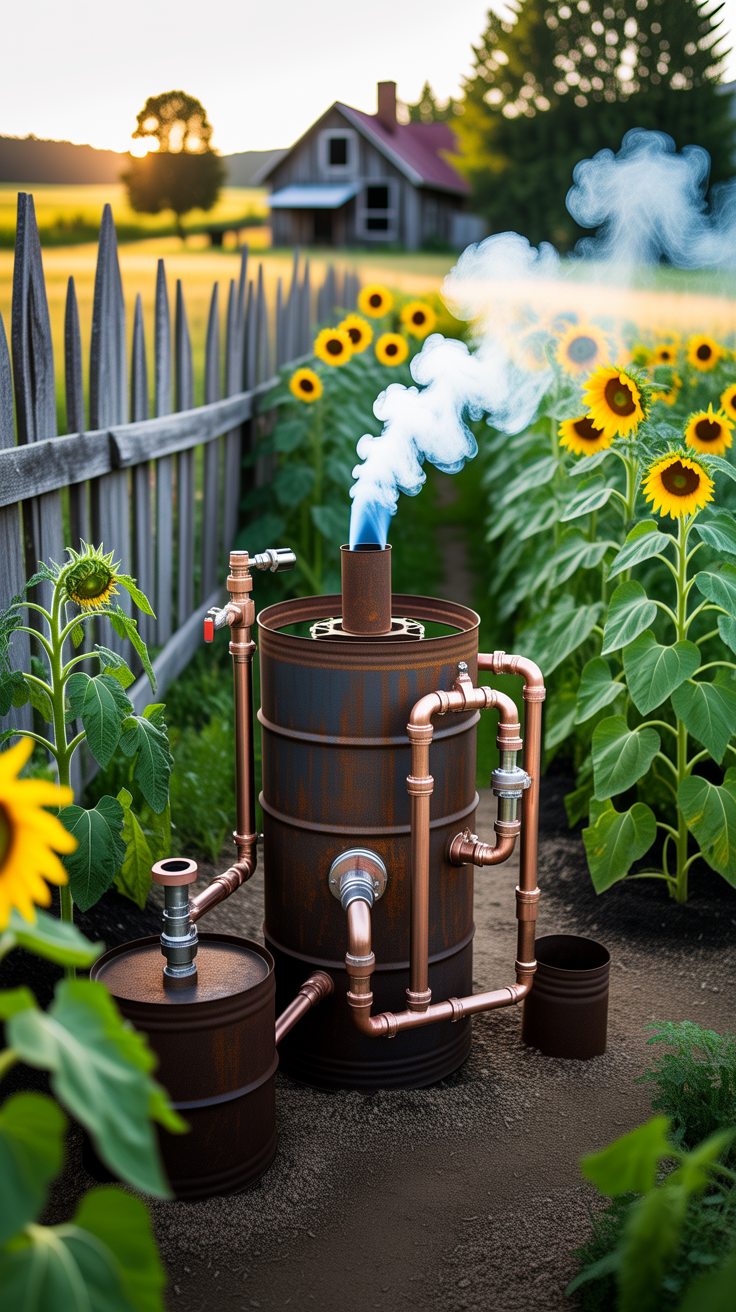
Build a DIY Wood Gasifier That Powers Your Homestead for Free
Energy independence is one of those homestead goals that sounds ambitious—until you realize you’re surrounded by fuel. If you have access to scrap wood, storm fall, pruned branches, wood chips, or pallet cutoffs, you have the raw material to build a DIY wood gasifier that powers your homestead for free (or close to it). A properly designed gasifier turns solid biomass into a combustible “producer gas” you can burn for heat, run through a burner, or feed (with the right setup and safety controls) into a small engine-generator system.
This guide walks you through the concepts, design choices, build plan, cleaning and cooling, engine/generator integration, safe operation, and realistic expectations. It’s written for practical homesteaders: the kind who want clear steps, honest limitations, and a system that’s maintainable with common tools.
💡 Recommended Solution: Ultimate OFF-GRID Generator
Best for: planning a complete backup power strategy alongside DIY energy projects
Why it works:
- Helps you think in systems (fuel → conversion → storage → loads) rather than gadgets
- Complements a wood gasifier by covering watt planning and resilience basics
- Useful when you want redundancy beyond a single fuel source
Understanding Wood Gasification for Homestead Power
Wood gasification is not the same thing as burning wood in a stove. In a gasifier, you intentionally limit oxygen so the fuel doesn’t fully combust. Instead, it goes through stages—drying, pyrolysis, oxidation, and reduction—producing a mixture of gases (often including carbon monoxide, hydrogen, and methane). That “producer gas” can be burned in a controlled way.
What a DIY Wood Gasifier Does (and Doesn’t) Do
A well-built gasifier can:
- Convert dry biomass into burnable gas on demand
- Run a burner for cooking/heat applications
- Feed a small internal combustion engine (with proper gas cooling and filtration)
A gasifier does not:
- Produce free energy (you’re converting stored chemical energy)
- Run forever unattended (it requires monitoring and maintenance)
- Work well with wet fuel (moisture kills performance and creates tar problems)
Why Homesteaders Love It
If you’re off-grid—or simply want a plan for outages—a gasifier can be a practical “wood-to-watts” option when propane deliveries stop or gasoline goes stale.
Many professionals rely on tools like a well-designed off-grid power plan to streamline load sizing and backup choices. That’s also where resources like the Energy Revolution System can be useful as a broader context resource—especially if your homestead power goals include combining biomass with solar, batteries, and conservation practices.
How Producer Gas Compares to Other Fuels
Producer gas has a lower energy density than propane or gasoline. That means:
- Engines make less power on wood gas than on gasoline
- You need consistent gas quality (good reduction zone, low tar, clean filtration)
- You must manage safety carefully (CO is deadly)
Still, for resilience, “lower power but locally sourced fuel” can beat “high power but unavailable fuel” when it matters.
Choosing a Practical Gasifier Design You Can Actually Build
There are multiple gasifier types, but for DIY homestead use, simplicity and reliability matter more than theoretical efficiency.
Common DIY Gasifier Styles
Updraft gasifier
- Easy to build
- Often produces tar-laden gas (problem for engines)
- Better for direct heat than engine use
Downdraft gasifier (recommended for engines)
- Hot gases pass through a charcoal reduction zone
- Better tar cracking and cleaner gas (if built and run correctly)
- More sensitive to fuel size and moisture
Imbert-style downdraft (classic engine gasifier approach)
- Uses a nozzle arrangement and constricted hearth
- Proven concept but requires careful dimensions and fabrication
For most homesteaders wanting a realistic engine-capable system, a downdraft build is the best balance.
Sizing Your System for Real Loads
Before you cut steel, decide what “powers your homestead” really means. Running an entire house like a utility feed is a different project than powering:
- a chest freezer
- LED lights
- a well pump (sometimes)
- charging batteries
- occasional tool use
A common resilient approach is: gasifier → generator head → battery charger/inverter → essential circuits. This lets you run the gasifier/generator in blocks (charging times) instead of constantly.
Problem-Solution Bridge: Struggling with figuring out what you actually need to run when the grid is down? Resources like The Self-Sufficient Backyard often help people map essentials—water, food storage, lighting, heat—so your power system matches real homestead priorities.
Materials and Tool Reality Check
A sturdy DIY gasifier is usually built from:
- thick steel pipe or a sealed metal vessel
- flanges, fittings, and high-temp seal solutions
- scrap steel for brackets and frame
- basic welding (or careful bolting with gasketing)
If you can’t weld, you can still build, but plan for:
- more fasteners
- better gaskets
- easier disassembly for cleaning
Building the Reactor Core: Hearth, Air Nozzles, and Grate
The reactor is the heart of the system. A reliable reactor:
- creates enough heat in the oxidation zone
- forces gases through hot charcoal for tar reduction
- supports steady fuel descent without bridging
Core Components You’ll Build
Fuel hopper
Holds wood chunks. Needs a sealed lid to prevent air leaks and flashback risk. A simple clamp lid with a heat-resistant gasket is common.
Oxidation zone + air nozzles
Air enters through nozzles (or a single inlet, depending on design). Nozzles must handle high heat. Many builds use steel nozzles with a plan to replace them as wear items.
Restriction (throat) and reduction zone
This geometry is what helps crack tars. The idea is to keep hot gases in contact with charcoal long enough to clean up.
Grate and ash cleanout
The grate supports the fuel bed and lets ash drop into a cleanout. If ash packs up, gas flow suffers and you’ll lose performance fast.
Step-by-Step Build Strategy (Conceptual, Not a Blueprint)
Because exact dimensions depend on your intended engine size and fabrication constraints, treat this as a practical build sequence:
- Pick your vessel: thick steel is your friend. Thin sheet metal warps and leaks.
- Add a sealed hopper lid: prioritize airtightness. Uncontrolled air leakage ruins gas quality.
- Install air inlet/nozzle ring: keep it serviceable. Nozzles erode.
- Create a defined hearth path: include a narrowed section or controlled flow path to maintain heat.
- Build a robust grate: removable, with enough open area to avoid plugging.
- Add ash cleanout door: gasketed, easy to open without disassembling the whole unit.
Fuel Matters More Than Most People Expect
A wood gasifier is picky about fuel:
- Moisture: aim for genuinely dry wood
- Size consistency: chunks flow better than random shapes
- Avoid bark-heavy, stringy, or punky fuel if you want stable gas quality
If your fuel bridges (hangs up), the reactor will channel air and produce tar. That’s one of the most common failure points for DIY systems.
Cooling and Cleaning the Gas: Cyclone, Radiator, and Filtration
If you plan to burn gas in a simple burner, you can tolerate dirtier gas than an engine can. Engines hate tar, soot, and moisture. The cleaning train is where many DIY builds succeed or fail.
A Practical Gas Cleaning Train
Cyclone separator (first stage)
Spins gas to drop out ash and char fines. This protects downstream coolers and filters.
Gas cooler (second stage)
Cooling condenses water vapor and some tars. People commonly use:
- a radiator-style cooler
- finned tubing runs
- long metal pipe runs with airflow
Moisture/tar condensate management
Plan for a drain and a safe container. Condensate can be nasty and flammable.
Final filter (third stage)
Common DIY approaches:
- hay/straw filter (messy but effective short-term)
- fabric filter elements
- packed media filters
Your goal is clean, cool, dry gas before it hits the engine intake.
“As many off-grid instructors note, ‘a gasifier is only as good as its filtration,’ because the clean-up train determines whether your engine runs for hours—or fails in minutes.”
Used correctly, foundational preparedness resources like URBAN Survival Code can be helpful for thinking through redundancy, maintenance schedules, and the unglamorous parts of resilient systems (filters, spares, storage, and safe procedures).
Don’t Skip Instrumentation
Add basic monitoring so you’re not guessing:
- temperature points (reactor and gas outlet)
- a simple vacuum/pressure gauge (restriction indication)
- a condensate sight/drain system
If your filter suddenly clogs, the engine will run lean or starve, and you’ll chase “carb problems” that are really gas supply problems.
Connecting a Wood Gasifier to a Generator (Safely and Realistically)
To “power your homestead,” most people aim to run a generator head. This is doable—but it’s not plug-and-play.
Engine Considerations
Small gasoline engines can run on producer gas with:
- a gas-air mixing valve (simple mixer)
- a throttle strategy that matches lower energy density gas
- careful tuning under load
Expect:
- reduced horsepower versus gasoline
- sensitivity to gas quality
- more maintenance (filters, spark plugs, oil checks)
A Simple System Architecture That Works
A resilient homestead setup often looks like:
- Wood processing area (drying + sizing)
- Gasifier reactor
- Cyclone + cooler + filter
- Mixer + engine
- Generator head
- Battery charger/inverter (optional but smart)
- Critical load panel
This reduces the pressure to maintain perfect generator frequency 24/7. Instead, you can charge batteries and run essentials from the inverter.
💡 Recommended Solution: Energy Revolution System
Best for: homesteaders combining multiple energy sources (biomass + solar + storage)
Why it works:
- Encourages load-prioritization and efficiency first
- Helps you design backup layers (not single points of failure)
- Useful when you want “power when needed,” not constant generator babysitting
Startup and Switching Basics
A common workflow:
- light the gasifier and establish a steady char bed
- flare/test the gas quality before feeding the engine
- start engine on gasoline (optional) then switch to wood gas
- gradually apply loads
Never feed questionable gas into an engine under heavy load. If the gas is tarry, you’ll pay for it later in valves, intake gumming, and stuck rings.
Where People Lose Time (Avoid These Traps)
- trying to run wet fuel
- under-building the cooler (hot gas carries more tar and moisture)
- tiny filters that clog quickly
- air leaks (ruin gas quality and increase flashback risk)
- no plan for ash and condensate removal
Operating Your Gasifier Day-to-Day: Fuel Prep, Maintenance, and Output
A gasifier is less like a solar panel and more like livestock: it needs routine care. The payoff is that your “fuel supply” is often right on your land.
Fuel Processing for Consistent Runs
Build a simple fuel workflow:
- Cutting/splitting into chunks (avoid long sticks)
- Drying under cover with airflow
- Screening fines (excess dust plugs systems)
A good target is uniform chunks that flow like “loose stackable pieces,” not tangled shards.
Maintenance Rhythm (Simple and Sustainable)
Plan on:
- dumping ash and checking grate condition regularly
- draining condensate from cooler stages
- cleaning or replacing filter media
- inspecting for leaks and heat damage
If you want “set and forget,” a wood gasifier will frustrate you. If you want independent, land-based energy, the routine becomes normal.
Output Expectations: What “Free Power” Really Means
The fuel might be free—but your time, tools, and maintenance aren’t. A realistic viewpoint:
- You’re trading labor for fuel cost
- You gain resilience when fuel markets or roads fail
- You can scale up over time as you learn
Comparison/Alternative: While gasoline generators are popular for convenience, a wood-gas system can be a more self-reliant alternative for homesteaders with abundant biomass—especially when paired with batteries so you’re not running it constantly.
Safety, Carbon Monoxide Risks, and Common Failure Points
Wood gas contains **carbon monoxide (CO)**—colorless, odorless, and lethal. Treat your system like you’d treat a running engine in a garage: never operate in enclosed spaces.
Non-Negotiable Safety Rules
- Operate outdoors or in a fully open-air shelter with strong ventilation
- Keep ignition sources controlled; flare in a safe area
- Treat the gasifier as hot equipment (burn and fire hazards)
- Keep a fire extinguisher appropriate for fuel and electrical fires
- Never store producer gas in improvised containers
- Use heat shielding around hot zones and protect nearby combustibles
Leak and Flashback Awareness
Air leaks do more than reduce performance:
- they can create explosive mixtures
- they can cause backfires at the mixer
- they can lead to uncontrolled burn zones
Use tight fittings, gaskets, and a consistent inspection routine.
Problem-Solution Bridge: Struggling with broader preparedness planning beyond energy—like what to do during prolonged outages when water, food, and medical access become the bigger problems? Dark Reset is often positioned as a high-level resilience resource to help people think through multi-day disruption planning alongside practical DIY systems.
Disposal and Handling of Condensate
Condensate can contain tar and other compounds. Handle it carefully, label containers, and keep it away from kids, animals, and ignition sources. Follow local disposal guidance where applicable.
Tools, Resources, and Complementary Systems for a Resilient Homestead
A wood gasifier becomes dramatically more useful when your homestead systems are designed to “sip” power instead of “chug” it.
Load Reduction Pays Bigger Than Bigger Generators
Before scaling your gasifier up, reduce demand:
- LED lighting
- efficient refrigeration habits
- better insulation and air sealing
- timing loads (pump water when running generator)
Water, Food, and Medical Resilience (The Power Multiplier)
If your power plan is about survival-grade resilience, connect it to the basics:
💡 Recommended Solution: SmartWaterBox
Best for: improving backup water preparedness alongside DIY power
Why it works:
- Supports a complete outage plan where water is the priority
- Pairs well with generator time-blocking (run purification/pumping while charging)
- Reinforces “systems thinking” beyond just electricity
Many homesteaders find that once they can produce some electricity, the next bottleneck is water security. Another option often mentioned in preparedness circles is Water Freedom System, which can be explored as a complementary water-focused resource if you’re building a broader off-grid readiness plan.
For food resilience, it’s smart to think beyond refrigeration alone—especially if you’re doing seasonal living, hunting, or gardening:
Resource List (balanced):
- The Lost SuperFoods — ideas for shelf-stable, traditional food strategies
- The Self-Sufficient Backyard — broad homestead skills and system planning
- Home Doctor — general home-health preparedness concepts for remote living
Example Outcome on a Realistic Homestead Schedule
For instance, users who build a “charge-and-coast” routine often report smoother days within a few weeks: run the gasifier/generator for a focused block (charging batteries and doing high-draw tasks), then let the inverter handle lights, electronics, and small loads quietly afterward. The exact results vary by build quality and loads, but the pattern is what makes the system livable.
Conclusion
If you want true resilience, learning to build a DIY wood gasifier that powers your homestead for free is less about a single device and more about a repeatable process: dry fuel, consistent reactor performance, serious gas cooling and filtration, and a realistic electrical plan. The win isn’t “endless electricity with no effort.” The win is the ability to turn local biomass into usable energy when fuels are scarce, prices spike, or the grid fails.
Start small, prioritize safety, design for maintenance, and build your homestead loads around efficiency. When you treat the gasifier as one part of a layered off-grid system—alongside water readiness, food resilience, and smart power storage—you get something better than a cool project: you get options.
FAQ
Can I really build a DIY wood gasifier that powers my homestead for free?
You can build a system that converts low-cost or on-site biomass into usable gas for heat or generator power. The “free” part usually refers to fuel cost, but you’ll still invest time, tools, and maintenance. Many homesteads find it worthwhile for resilience and independence.
What type of wood gasifier is best for running a generator?
A downdraft design is commonly favored for engine use because it can produce cleaner gas (lower tar) when built and operated correctly. Filtration and cooling are still essential.
How dry does the wood need to be for a wood gasifier?
Drier is better. Wet fuel reduces temperature, increases tar, and causes unstable gas quality. Aim for well-seasoned, covered wood with good airflow drying, and avoid running freshly cut “green” wood.
Is wood gasification dangerous?
Yes, if handled carelessly. Producer gas can contain deadly carbon monoxide, and the reactor runs extremely hot. Operate outdoors, prevent leaks, flare and test gas safely, and use proper fire/CO safety practices.
What are the most common reasons DIY gasifiers fail to run engines well?
The top issues are wet or inconsistent fuel, air leaks, inadequate gas cooling, undersized or poorly designed filters, and ash/condensate management problems. Most “engine problems” trace back to gas quality problems.
RANK MATH SEO BLOCK
SEO Title (≤60 chars): Build a DIY Wood Gasifier for Free Homestead Power
Meta Description (≤160 chars): Learn to build a DIY wood gasifier that powers your homestead for free with safe design, filtration, and generator integration tips.
URL Slug: diy-wood-gasifier-homestead-power
Focus Keyword: Build a DIY Wood Gasifier That Powers Your Homestead for Free
Suggested Schema Type: FAQ