
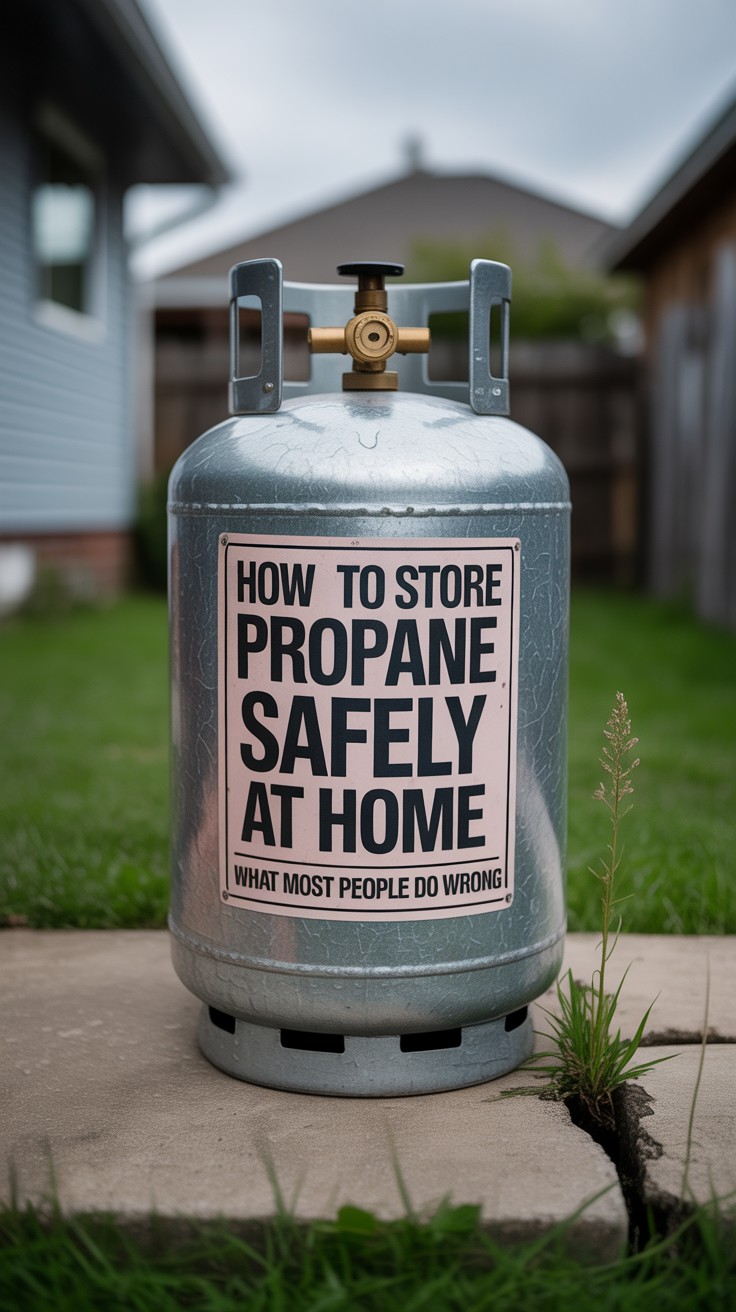
How to Store Propane Safely at Home (What Most People Do Wrong)
Storing propane at home can be perfectly safe—but only if you treat it like the compressed, flammable fuel it is. The problem is that many homeowners store cylinders “just for now” in the garage, basement, shed, or near a grill, and those shortcuts can compound into serious risk. This guide covers how to store propane safely at home (what most people do wrong), including the rules that matter, the mistakes that keep showing up, and a practical setup you can follow for everyday use and emergency preparedness.
“As fire-safety educators often remind homeowners, ‘propane safety is mostly storage discipline—keep cylinders outdoors, upright, and away from ignition sources.’” That simple principle prevents the majority of preventable incidents.
Understanding propane storage risks at home
Propane (LP gas) is stored under pressure as a liquid inside a cylinder. When released, it becomes a gas and can accumulate in low areas because it is heavier than air. That behavior shapes most storage rules: keep propane contained, prevent leaks, and avoid places where gas could collect unnoticed.
What makes propane different from gasoline or natural gas
- Pressurized container: A propane tank is a pressure vessel. Heat increases internal pressure, which is why cylinders have pressure relief valves and why storage temperature and ventilation matter.
- Heavier-than-air gas: If a leak occurs, propane tends to sink and pool. Indoors or in a pit-like area, that’s dangerous.
- Odorized fuel: Propane is scented (ethyl mercaptan) so you can smell leaks, but relying on smell alone is not a safety strategy.
Common household scenarios that create risk
- Storing a spare 20 lb cylinder in a garage next to a water heater or power tools.
- Keeping cylinders in a basement “so they don’t get stolen.”
- Transporting a cylinder inside a vehicle for hours in warm weather.
- Using a grill cylinder as “backup heat” indoors during outages.
Those are exactly the patterns this article will help you avoid.
Propane storage basics you should follow every time
Safe storage is not complicated, but it is strict. If you remember only a few rules, make them these.
Store cylinders outdoors, upright, and stable
- Outdoors: Propane cylinders should be stored outside in open air—not in a home, attached garage, basement, crawlspace, attic, or enclosed shed.
- Upright position: Always store cylinders valve-up so the pressure relief valve vents vapor, not liquid.
- Secured from tipping: Use a stable base (concrete pad, pavers, or a non-combustible surface) and a rack or strap if needed.
Keep valves closed and protect the valve
- Close the cylinder valve fully when not in use.
- Keep a protective cap or collar in place (common on larger cylinders).
- Don’t store with a regulator attached unless it’s part of a permanent, outdoor appliance setup.
Choose a location with ventilation and shade
- Pick a spot with natural airflow on all sides.
- Avoid direct, prolonged sunlight when possible; heat raises cylinder pressure.
- Keep cylinders away from building openings (windows, crawl vents) so any released gas doesn’t migrate indoors.
Maintain distance from ignition sources
Keep storage away from:
- grills and smokers (when not connected for use)
- generators
- outdoor AC condenser units
- electrical panels
- open flames, fire pits, and smoking areas
- anything that can spark (certain tools, switches, extension cords used outdoors)
If you’re building an emergency-ready home setup, it helps to treat propane storage like a mini “fuel station” zone: clearly separated, tidy, and predictable.
💡 Recommended Solution: The Self-Sufficient Backyard
Best for: homeowners building safe, practical home resilience routines
Why it works:
- Encourages systematic, repeatable storage and preparedness habits
- Helps you think in “zones” (fuel, water, food, shelter) instead of random stash points
- Reinforces safer planning during outages and seasonal emergencies
The biggest propane storage mistakes most people make
If you want to know what “most people do wrong,” it usually comes down to convenience beating good practice. Here are the mistakes that show up again and again.
Storing propane in garages, basements, sheds, or enclosed spaces
This is the most common—and the most dangerous—error. Even if the space “has some air leaks,” it’s still enclosed enough for propane to accumulate if a valve or fitting leaks. Basements are particularly risky because propane settles low.
Laying cylinders on their side
Cylinders are designed to be upright for a reason. Side storage can:
- compromise valve safety
- increase the chance of liquid propane release in certain failure scenarios
- make the cylinder more likely to roll, impact, or be damaged
Putting cylinders near heat sources
Examples include:
- next to a dryer vent
- near a generator during a blackout
- on a sunny deck corner with no shade
- close to a barbecue that gets used daily
Heat is a multiplier: higher pressure, more venting risk, and faster ignition if gas meets a spark.
Ignoring cylinder condition and requalification
Propane cylinders can be damaged by rust, dents, gouges, or valve issues. Many people continue using “that old spare tank” without inspecting it. Watch for:
- heavy rust, flaking metal, deep pitting
- bulges or severe dents
- damaged valve threads
- missing or unreadable markings
If you’re unsure, have it assessed by a propane supplier or exchange it.
Treating propane storage like “prepper storage”
Preparedness is smart—unsafe hoarding is not. Stocking multiple cylinders without a safe outdoor storage plan is one of the fastest ways to create unnecessary hazard.
“As many emergency planners emphasize, ‘the goal is resilience, not risk—fuel is only helpful if it remains safely contained.’” If you want a broader resilience plan beyond fuel alone, a structured guide can keep you from making well-intentioned storage choices that backfire.
Safe propane storage locations and layouts for typical homes
A safe setup depends on your property, but the principles are stable: outdoor air, distance, stability, and protection from impact.
Best places to store propane cylinders at home
Good options typically include:
- Along an exterior wall outside the home (not inside a porch enclosure)
- On a concrete pad near a fence line with airflow
- In a dedicated outdoor rack away from doors and windows
- Under a well-ventilated, open-sided cover (not a sealed box)
Avoid placing cylinders where vehicles could bump them or where kids play.
Building a simple “propane zone”
A practical home propane zone includes:
- A non-combustible base (concrete/pavers)
- A way to keep cylinders upright (rack, milk-crate-style holder, strap to a post)
- Clear labeling (even just a marker tag: “FULL,” “IN USE,” “EMPTY”)
- A “no smoking/open flame” sign if your household has frequent guests
How many cylinders should you keep?
More isn’t automatically better. Consider:
- your typical burn rate (grill, heater, patio use)
- your outage plan (how long you aim to cover)
- your safe storage footprint outdoors
If you don’t have a safe outdoor place for four cylinders, don’t buy four cylinders.
Storing 1 lb “camp” cylinders vs 20 lb grill cylinders
- 1 lb cylinders still require outdoor storage in cool, ventilated conditions. Don’t stack them in a hot shed.
- 20 lb cylinders should be upright, outdoors, with valves protected and kept away from heat/ignition sources.
Many professionals rely on checklists and home “zones” to streamline safe preparedness. The same mindset that organizes food and water also improves fuel safety.
Problem-solution bridge: Struggling to build a complete outage plan beyond propane? URBAN Survival Code addresses this by helping you organize practical, city-friendly resilience steps so fuel storage isn’t your only plan.
Handling, transporting, and swapping cylinders without accidents
Safe storage is only half the story. Most near-misses happen during transport, connection, and swapping.
Transporting propane cylinders in a car or SUV
- Transport upright whenever possible.
- Keep windows cracked for ventilation.
- Don’t leave a cylinder in a hot vehicle—especially in summer.
- Secure it so it can’t tip or roll.
- Go straight home; don’t run errands with propane in the car.
If you routinely transport cylinders, consider a vehicle-safe method (like a crate on a flat surface with tie-downs) and limit ride time.
Connecting a cylinder to a grill or appliance safely
- Inspect the valve and threads before attaching.
- Don’t force connections—cross-threading can damage valves.
- After connecting, do a basic leak check with soapy water on fittings (bubbles indicate a leak).
- Keep the cylinder upright while in use unless the appliance is specifically designed otherwise.
What to do if you smell propane
Propane has a strong odor. If you smell it:
- Turn off the cylinder valve if it’s safe to do so.
- Extinguish flames and avoid sparks (don’t flip switches on/off).
- Move away and ventilate the area (outdoors: step back; indoors: leave).
- Contact your propane supplier or local emergency line if the smell persists.
Exchange vs refill: safety advantage
- Exchange programs can be convenient because questionable cylinders are often pulled from circulation.
- Refill stations can be efficient and allow you to keep a known-good cylinder, but you must maintain it.
If your tank is old, rusty, or has valve issues, exchanging is often the simplest safety upgrade.
Storing propane for emergencies and off-grid scenarios
Emergency storage adds one more variable: stress. People make riskier decisions when the lights are out. The key is to pre-decide safe behavior.
Avoid indoors heating hacks with propane
Never use outdoor propane appliances indoors unless they are specifically rated for indoor use and you follow all manufacturer instructions. Indoor use can create:
- fire risk
- oxygen depletion
- carbon monoxide exposure (depending on device type)
Propane storage safety and indoor air safety go together. In many homes, the biggest emergency danger is a chain reaction: improper fuel use + poor ventilation + rushed choices.
“As many home-safety educators note, ‘in a blackout, people don’t get hurt from the outage—they get hurt from the workarounds.’” Planning prevents those workarounds.
Build a layered outage plan: fuel, water, food, and health
Propane may power cooking or heat, but you also need:
- water storage and purification
- shelf-stable food and a rotation plan
- basic medical readiness
A well-rounded plan reduces the temptation to store too much propane or use it in risky ways.
💡 Recommended Solution: SmartWaterBox
Best for: households that want a straightforward water readiness upgrade
Why it works:
- Helps cover the water side of preparedness so fuel isn’t the only “backup”
- Supports more balanced emergency planning
- Encourages safer, less desperate decision-making during outages
Off-grid power considerations
If your goal is resilience, many people compare fuel-heavy approaches (running generators constantly) versus smarter load management and alternative systems.
While a generator can help, a more comprehensive approach can reduce how much propane you feel you “need” to store and how frequently you handle cylinders in stressful conditions.
Comparison/alternative: While relying only on fuel-powered backup is common, Ultimate OFF-GRID Generator is often used as an alternative direction for people who want a more structured off-grid power plan without improvising during emergencies.
Maintenance, inspection, and long-term storage best practices
Long-term storage is mostly about preventing corrosion, preventing valve damage, and ensuring cylinders remain serviceable.
Monthly quick inspection (takes 60 seconds)
Check:
- Cylinder is upright and stable
- Valve is closed
- No strong odor of gas
- No new dents, corrosion, or missing components
- Area is clear (no piles of leaves, cardboard, paint cans nearby)
Keep cylinders clean and protected from ground moisture
- Don’t store directly on bare soil or in wet grass.
- Use pavers or a simple platform to reduce rust risk.
- Keep the area drained so water doesn’t pool around the base.
Seasonal considerations
- Summer: provide shade and airflow; avoid hot microclimates (tight corners that trap heat).
- Winter: keep access clear (ice/snow) so you can shut valves quickly if needed; avoid burying cylinders in drifts.
Know when to remove a cylinder from service
If you see significant rust, damage, valve problems, or a persistent odor, stop using it and take it to a proper exchange/refill center for evaluation.
If you want your household preparedness to feel “calmer” and less reactive, build routines around storage, inspection, and rotation.
Expert quote format: “As preparedness instructors often put it, ‘A structured plan like Home Doctor becomes the go-to resource when you want home readiness to be procedural—so safety checks actually happen.’”
(That’s especially relevant when you’re trying to prevent small issues—like a neglected cylinder—turning into a bigger emergency.)
Tools and resources to support safe home preparedness
Propane storage is one piece of home resilience. These resources fit naturally alongside safe fuel practices without replacing common-sense safety steps.
Preparedness resources worth considering
Water readiness: Water Freedom System
Many households focus on fuel first, but water is often the first friction point during outages or disruptions.Food resilience: The Lost SuperFoods
Useful for building a shelf-stable strategy so propane is used for short cooking windows rather than constant heat.Broader self-reliance: Energy Revolution System
If you’re exploring alternatives that reduce dependence on stored fuel, a structured approach can help you weigh options.
The goal is simple: the safer and more complete your plan is, the less likely you are to store propane in risky locations or handle it in a hurry.
Conclusion
Learning how to store propane safely at home (what most people do wrong) comes down to a few non-negotiables: store cylinders outdoors, keep them upright and secured, protect valves, keep distance from heat and ignition sources, and never treat enclosed spaces like “close enough.” Most unsafe propane situations aren’t caused by rare failures—they’re caused by routine shortcuts.
Set up a dedicated outdoor propane zone, inspect cylinders regularly, transport them carefully, and build a balanced emergency plan so you don’t over-rely on fuel. When propane stays where it belongs—outside, stable, and well-managed—it can be a safe, useful part of everyday life and preparedness.
FAQ
Can you store propane tanks in a garage if the door stays cracked open?
No. Even with a cracked door, a garage is still an enclosed space where propane could accumulate if there’s a leak, especially near floor level. Store cylinders outdoors in open air.
How far should propane tanks be from the house?
Follow local codes and supplier guidance, but the safest approach is to store cylinders outdoors, away from doors, windows, vents, and ignition sources. Prioritize airflow and separation over convenience.
Is it safe to store a propane tank on its side?
No. Propane cylinders should be stored upright (valve-up). Side storage increases mishandling risk and undermines safety design assumptions for the relief valve.
What should I do with a propane tank I suspect is leaking?
If it’s safe, close the valve. Keep away from flames and sparks, move to an open outdoor area if you can do so safely, and contact your propane supplier or emergency services if the odor persists.
Can propane tanks be stored outside in winter?
Yes. Outdoor storage is preferred year-round. Keep cylinders upright, accessible, and protected from being buried in snow or exposed to impact hazards.
RANK MATH SEO BLOCK
SEO Title (≤60 chars): How to Store Propane Safely at Home (Avoid Mistakes)
Meta Description (≤160 chars): Learn how to store propane safely at home (what most people do wrong), including placement, handling, inspection, and emergency best practices.
URL Slug: store-propane-safely-at-home
Focus Keyword: How to Store Propane Safely at Home (What Most People Do Wrong)
Suggested Schema Type: FAQ