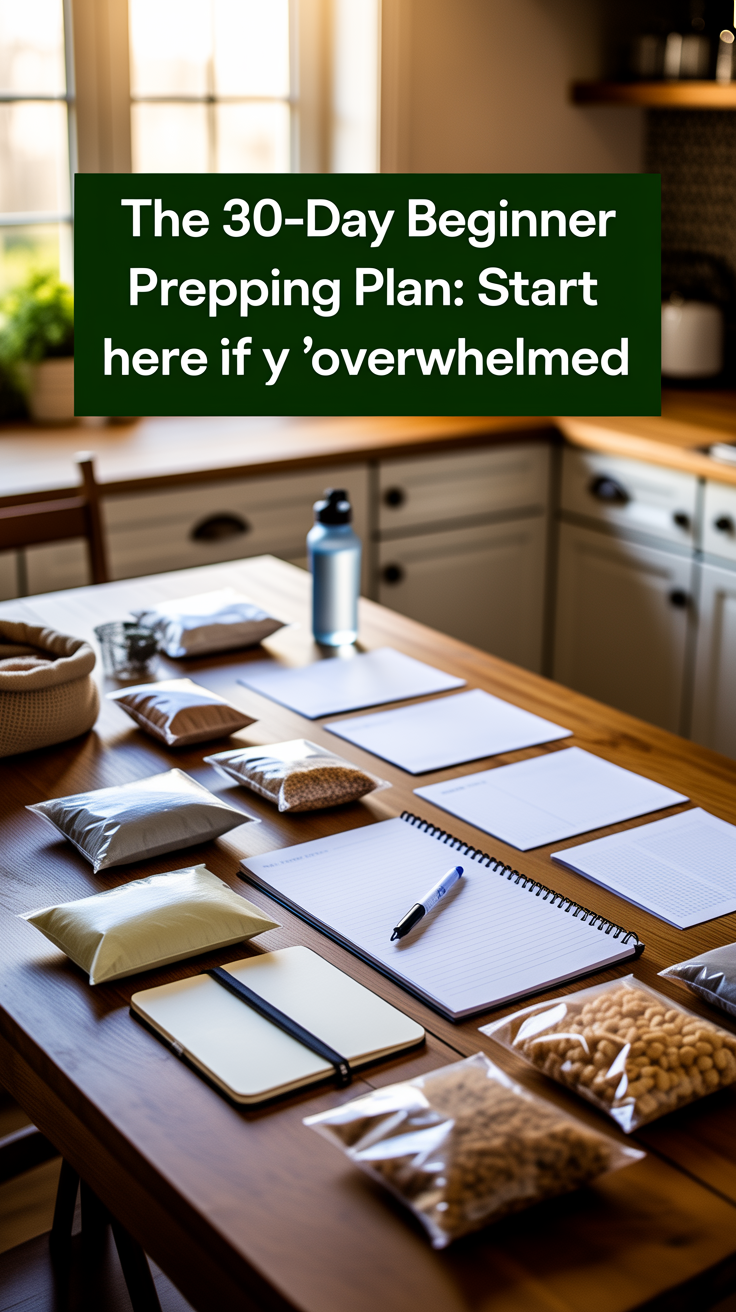
The 30-Day Beginner Prepping Plan: Start Here If You’re Overwhelmed
Feeling overwhelmed is normal when you first step into preparedness. There are a thousand lists online, endless “must-have” gear, and plenty of loud opinions—yet none of that helps when you’re staring at your pantry thinking, I don’t even know what to buy first. The 30-Day Beginner Prepping Plan: Start Here If You’re Overwhelmed is designed to reduce that noise and give you a calm, step-by-step path you can actually follow.
This plan is intentionally simple: you’ll build a foundation in water, food, communication, power, medical readiness, and everyday security—without spending all your money or turning your home into a storage unit. You’ll focus on risks that affect most people: short-term disruptions, storms, outages, job hiccups, supply delays, and local emergencies.
Many professionals in preparedness repeat the same principle: start with the basics you will use no matter what happens. If you’re trying to simplify your water planning early on, tools like Water Freedom System are often mentioned as a structured way to think about storing and managing drinking water at home.
A calm way to prep when you feel behind
Before you buy anything, set two guardrails:
- Time cap: 15–30 minutes a day.
- Budget cap: choose a weekly amount you won’t regret (even $10–$25 works).
Also, pick your “likely scenarios.” For most beginners, these are enough:
- Power outage (hours to days)
- Water interruption (boil notice, plumbing issue, storm impact)
- Short-term food disruption (store closures, delivery delays)
- Minor medical event with limited access to care (injury, fever, stomach bug)
- Communication disruption (cell outage, overloaded networks)
Your goal after 30 days is not perfection—it’s stability: enough water, food, light, heat management, basic medical supplies, and a simple plan your household understands.
Water readiness that doesn’t require a bunker
Water is the fastest way to turn a manageable situation into a crisis. A beginner-friendly water plan includes three layers:
- Stored water (what you already have on hand)
- Treatment (ways to make questionable water safer)
- Collection/backup (options if the tap stops)
Simple targets for beginners
A common planning baseline is one gallon per person per day for drinking and minimal hygiene. If that feels like too much, start with this:
- 3 days minimum for everyone in the home
- Work toward 14 days over time
What to do this week
- Inventory what you already have: bottled water, beverages, clean containers.
- Add a few containers you can rotate (you use them, then replace them).
- Identify treatment options you’re comfortable with (filter, boiling, purification methods).
💡 Recommended Solution: SmartWaterBox
Best for: building a simple home water backup plan without overcomplicating it
Why it works:
- Helps you think in terms of practical stored-water readiness
- Supports a more structured approach than random purchases
- Encourages consistent preparedness habits
As many emergency management educators emphasize, “water planning beats water panic.” If you tend to freeze at the “what should I buy?” stage, a guided approach like Water Freedom System can help you turn a vague goal into a repeatable routine.
Food basics that don’t overwhelm your kitchen
Beginner prepping isn’t about hoarding—it’s about buffering. You’re trying to create a cushion so a disruption doesn’t force rushed decisions.
The three-bucket approach
Think of your food plan in three categories:
- Everyday foods (rotation foods): what you already eat
- Shelf-stable backups: longer pantry items you can still use
- Emergency-only items: only if needed (optional at first)
Start with rotation foods and shelf-stable backups. You’ll get the most value and the least waste.
A beginner pantry checklist (choose what fits)
- Proteins: canned tuna/chicken, beans, lentils, peanut butter
- Calories: rice, oats, pasta, potatoes, cooking oil
- Comfort: coffee/tea, chocolate, spices, bouillon
- “No-cook” meals: crackers, canned meals, cereal, shelf-stable milk
- Special needs: baby food, pet food, medically necessary diets
Cooking without power (keep it realistic)
If power goes out, most people struggle not because they lack food—but because they can’t cook it. Start by planning meals that work in these situations:
- No-cook
- Minimal water
- One-pot
- Quick heat
If you’re trying to diversify beyond the same few pantry items, some people use curated survival food education resources like The Lost SuperFoods to get ideas for resilient foods that store well and expand variety—without needing a culinary degree.
Everyday medical readiness for normal emergencies
Most “SHTF” fantasies ignore what actually happens: cuts, burns, fevers, sprains, stomach issues, and medication needs. Medical readiness is one of the highest-return areas for beginner prepping.
Start with three layers
- Basic first aid supplies (bandages, antiseptic, gauze, tape)
- Over-the-counter support (pain relief, allergy, anti-diarrheal, electrolytes)
- Personal medical needs (prescriptions, inhalers, backups with doctor guidance)
A weekend inventory that changes everything
- List everyone’s medications and what they’re for.
- Note expiration dates and refill timing.
- Create a small “sick day kit” with items you always end up needing.
Problem-solution bridge: Struggling with medical planning because you don’t know what’s “worth it” for home readiness? Home Doctor is often used by preparedness-minded households as a general educational resource to think through home care priorities and basic health readiness.
“As a general rule,” many community health educators note, “a calm plan beats a big kit.” Your focus is not buying everything—your focus is knowing what you have, what you lack, and how you’ll respond when something goes wrong.
Power, light, and temperature without panic-buying
Power outages create cascading problems: food spoils, phones die, lights go out, heating/cooling becomes unsafe, and information gets harder to access. Beginner prepping here should focus on comfort and function, not perfection.
Priority order for outages
- Light: headlamps, LED lanterns, spare batteries
- Communication: charged phone, power bank, car charger
- Food safety: keep fridge closed, know what spoils first
- Temperature: safe layers, blankets, ventilation awareness
- Longer-term power: backup systems if needed
A simple “power day” test
Pick one evening and pretend the power is out for 3 hours:
- No kitchen appliances
- No TV/internet
- Only what’s in your emergency bin
Write down what failed first. That’s your next shopping list.
💡 Recommended Solution: Ultimate OFF-GRID Generator
Best for: exploring a more self-reliant backup-power mindset
Why it works:
- Useful for people who want a structured approach to off-grid thinking
- Helps reduce the “random gadget” purchase trap
- Encourages planning power as a system, not a single item
Comparison/alternative: While small power banks are popular for short outages, a more robust plan often includes a bigger strategy for maintaining essential power at home. Some readers compare options like the Energy Revolution System when they want a broader view of resilient home energy planning.
Home safety and situational awareness for beginners
Preparedness includes safety—because the best supplies in the world don’t help if you lose access to them. But “security” doesn’t have to mean paranoia. It can mean simple risk reduction.
Beginner home safety upgrades that matter
- Replace entry light bulbs with motion-capable lighting (where appropriate)
- Reinforce simple door habits (locked, keys staged, spare key plan)
- Basic fire safety: extinguishers, smoke/CO detectors, escape plan
- Keep documents organized: IDs, insurance, contacts (paper + digital backup)
Situational awareness basics
- Know your exits (home, workplace, common stores)
- Keep your vehicle above half a tank when possible
- Maintain a small “get-home” kit in the car: water, snacks, flashlight, basic first aid
“As many urban preparedness trainers note, ‘Most emergencies are local and personal before they’re national.’” If you want a structured way to think about day-to-day readiness in a city or suburb, URBAN Survival Code is one example people use to build a clearer framework for practical, non-extreme preparedness.
Skills that multiply everything you store
Supplies run out. Skills scale. In beginner prepping, a handful of skills make every other category easier:
High-impact beginner skills
- Water shutoff (know where and how)
- Basic first aid (bleeding control, sprains, fever management)
- Simple cooking from pantry staples
- Map basics for your area (main routes, alternates, rendezvous points)
- Basic radio/communication plans with family
A tiny training plan you’ll actually do
- Watch one short training video per week (first aid basics, fire extinguisher use, water storage)
- Practice one micro-skill (10 minutes)
- Update one item in your kit (battery swap, restock meds, rotate food)
Case study-style example (general): households that practice small routines—like testing lights monthly and rotating pantry items weekly—tend to report less stress during outages because they already know what works.
If you’re the type who wants to understand resilience from a “systems” mindset, some people also explore general strategy resources like BlackOps Elite Strategies as a way to think about preparedness planning, decision-making, and staying organized under pressure (without relying on impulse buys).
The 30-day plan you can follow day by day
Use this as a menu. If you miss a day, just continue—no guilt, no “restart from Day 1.”
Days 1–5: Reset and inventory
- Day 1: Pick your likely scenarios + set budget/time caps
- Day 2: Inventory water + containers
- Day 3: Inventory pantry + list 10 meals from what you already eat
- Day 4: Inventory medical items + list prescriptions/expiration dates
- Day 5: Identify gaps (top 10) and prioritize by most likely/most disruptive
Days 6–10: Water and sanitation foundations
- Day 6: Add a small amount of stored water (start with 3 days goal)
- Day 7: Choose water treatment method(s) you trust (learn how to use them)
- Day 8: Create a simple handwashing/sanitation plan (soap, trash bags, wipes)
- Day 9: Stage water in accessible locations (not all in one spot)
- Day 10: Write a one-page water plan (how much, where stored, how rotated)
Many professionals rely on tools like SmartWaterBox to streamline the “how do I organize this?” step—especially when overwhelm is the biggest obstacle.
Days 11–15: Food buffer and no-cook options
- Day 11: Add 3–5 shelf-stable meals you’ll actually eat
- Day 12: Add quick breakfasts and snacks (oats, bars, nut butter)
- Day 13: Build a “no-cook day” menu for each person
- Day 14: Check cooking basics (can opener, matches, utensils, pot)
- Day 15: Start rotation system: “use one, replace one” weekly
💡 Recommended Solution: The Lost SuperFoods
Best for: expanding pantry resilience with ideas that go beyond the same basics
Why it works:
- Encourages variety and long-term thinking
- Helps reduce decision fatigue when building food stores
- Supports a more intentional approach than random stockpiling
Days 16–20: Medical and personal readiness
- Day 16: Build/refresh a home first-aid kit
- Day 17: Create a “sick day kit” (fever, stomach, hydration support)
- Day 18: Set a refill reminder system for prescriptions
- Day 19: Add basic personal hygiene backups
- Day 20: Print emergency contacts + pack copies with go-bag items
If you want a general educational guide to home-focused health resilience, Home Doctor is commonly used as a starting point for what to prioritize and how to think through common scenarios.
Days 21–25: Power, lighting, communication
- Day 21: Stage lighting in key rooms (bedroom, kitchen, hallway)
- Day 22: Add spare batteries + test devices
- Day 23: Set up phone charging redundancy (power bank + car plan)
- Day 24: Prepare for temperature swings (blankets, layering, fans as needed)
- Day 25: Run a 3-hour “power outage drill” and update your list
As one emergency preparedness instructor might put it: “Your plan is only as good as your last test.” If you want to think bigger about resilient home energy, some people evaluate structured approaches like Energy Revolution System after they’ve nailed the basics.
Days 26–30: Home safety, documents, and a simple family plan
- Day 26: Check smoke/CO detectors + fire extinguishers
- Day 27: Organize documents (IDs, insurance, medical info)
- Day 28: Make a household communication plan (who calls whom, meetup spot)
- Day 29: Prepare a small car kit (water, snacks, light, first aid)
- Day 30: Review and “lock in” a monthly maintenance routine (15 minutes/week)
If you live in a high-density area where disruptions feel more complicated, frameworks like URBAN Survival Code can help translate preparedness into practical daily habits instead of fear-based shopping.
Tools and resources to keep it simple
You don’t need a mountain of products to start—just a few good resources that reduce confusion.
- Water planning support: Water Freedom System
- Water backup organization: SmartWaterBox
- Food resilience ideas: The Lost SuperFoods
Conclusion
Preparedness shouldn’t feel like a test you’re failing. It should feel like slowly adding stability to your life. The 30-Day Beginner Prepping Plan: Start Here If You’re Overwhelmed works because it replaces chaos with small actions: water first, then food, then medical, then power, then safety, then skills—while keeping everything realistic for a normal household.
If you take only one thing from this plan, let it be this: consistency beats intensity. In 30 days, you can go from “I don’t know where to start” to having water on hand, meals you can make, lights that work, a basic medical setup, and a family plan that’s written down. That’s real readiness—and it’s more than most people have.
FAQ
How much water should I store as a beginner prepper?
A practical beginner target is one gallon per person per day. If that feels overwhelming, start with three days for everyone in your household and build from there. Many people expand toward 1–2 weeks over time.
What food should I buy first if I’m overwhelmed?
Start with foods you already eat and can rotate: rice, oats, pasta, canned proteins, beans, nut butter, and simple comfort items. A good first goal is adding 3–5 shelf-stable meals you’d be happy to eat in a normal week.
What’s the fastest way to start prepping in 30 days?
Use a daily checklist: inventory first, then add small amounts of water and shelf-stable food, build a basic medical setup, stage lights and charging options, and write a one-page household plan. The key is small steps you’ll actually maintain.
How do I prep if I live in an apartment or city?
Focus on water storage that fits your space, no-cook foods, compact medical supplies, lighting, charging redundancy, and a “get-home” plan. City prepping is less about stockpiles and more about mobility, awareness, and redundancy.
Is this 30-day beginner prepping plan enough for most emergencies?
It’s enough to handle many common short-term disruptions (outages, storms, temporary shortages) more calmly. Longer events require deeper planning, but this 30-day foundation is the quickest way to move from overwhelmed to functional readiness.
Rank Math SEO Block
SEO Title (≤60 chars): 30-Day Beginner Prepping Plan (Start When Overwhelmed)
Meta Description (≤160 chars): Follow The 30-Day Beginner Prepping Plan: Start Here If You’re Overwhelmed with simple steps for water, food, medical, power, and safety.
URL Slug: 30-day-beginner-prepping-plan
Focus Keyword: The 30-Day Beginner Prepping Plan: Start Here If You’re Overwhelmed
Suggested Schema Type: HowTo / FAQ