
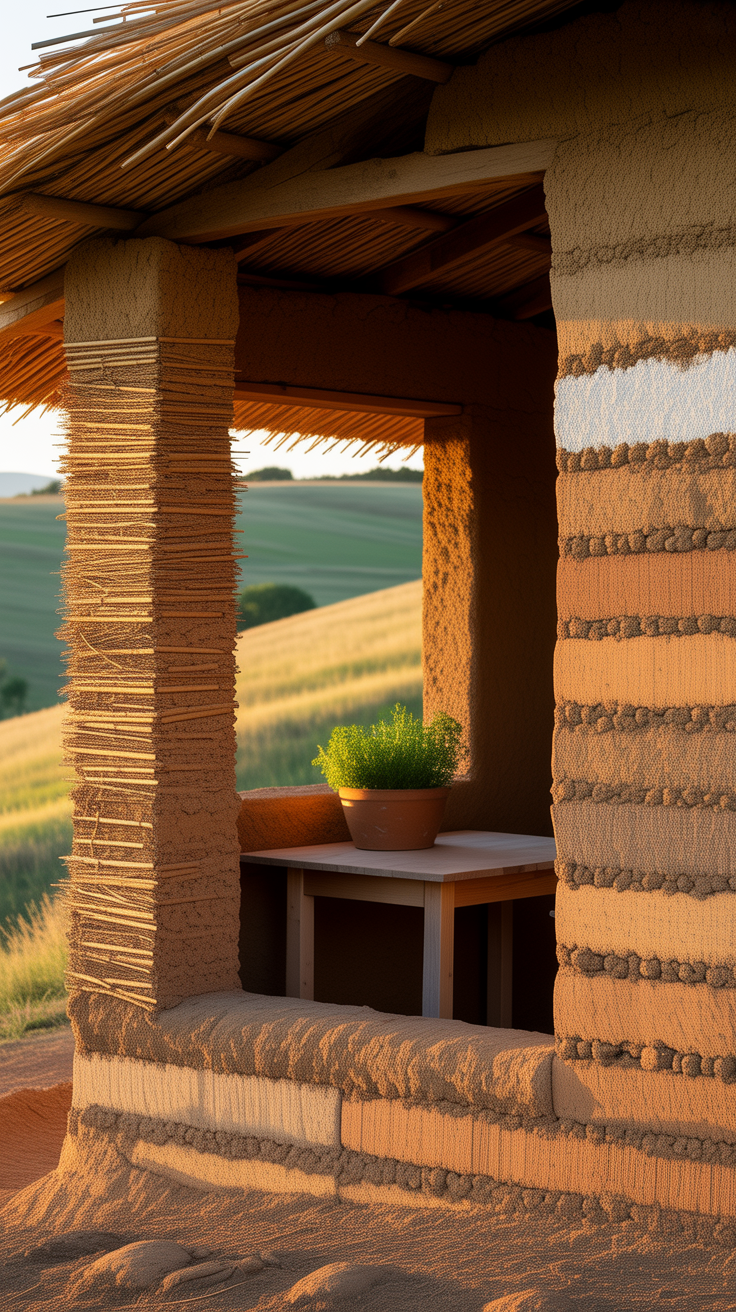
9 Natural Building Materials That Still Outperform Modern Ones
Modern construction often promises speed and uniformity—drywall in a day, foam insulation sprayed in minutes, a “maintenance-free” exterior that looks identical from house to house. Yet in real life, plenty of homeowners and builders are rediscovering something older and surprisingly more effective: natural building systems that last longer, regulate moisture better, and create more comfortable interiors with fewer hidden downsides.
This guide to 9 Natural Building Materials That Still Outperform Modern Ones isn’t about nostalgia. It’s about performance: durability, repairability, thermal comfort, indoor air quality, and resilience when supply chains get tight. Many of these materials have been used for centuries, and the reason is simple—they work. When you combine them with smart detailing and modern code-aware design, they can outperform “newer” materials that fail quietly behind paint and siding.
Along the way, you’ll find practical use cases, limitations to respect, and how to choose the right material for your climate and budget—so you can build (or renovate) in a way that’s healthier, more repairable, and less dependent on disposable products.
Why natural materials keep winning on durability, comfort, and resilience
Natural building materials have a few “unfair advantages” that synthetic assemblies often struggle to match.
Hygroscopic performance and moisture buffering
Many natural materials—wood, clay, lime, straw, wool—can absorb and release moisture safely. That buffering smooths indoor humidity swings and reduces condensation risk when assemblies are detailed properly.
Repairability over replacement
A lime plaster wall or a timber frame can be patched, tightened, and maintained. By contrast, many modern systems fail as a system: once water gets into foam sheathing or a sealed wall with paper-faced gypsum, the repair can require large-scale demolition.
Passive comfort
Thick earthen walls, wool insulation, and wood fiber boards often deliver comfort that “R-value only” math misses—because thermal mass, air tightness strategies, and vapor-open design can work together.
Resilience when systems fail
If you’re thinking about long-term self-sufficiency, materials that don’t rely on proprietary chemicals, complex adhesives, or fragile supply chains can be a quiet form of insurance.
As building scientist Joseph Lstiburek is often paraphrased in the industry: “Buildings must manage rain, air, vapor, and heat—in that order.” Many traditional assemblies were designed around those realities before the term “building science” existed.
Timber framing and solid wood joinery
Timber framing is one of the most proven structural systems on earth. Think post-and-beam frames with mortise-and-tenon joinery (sometimes reinforced with pegs or modern hidden connectors). Properly designed and protected from chronic wetting, timber frames can last centuries.
Why timber outperforms many modern structural systems
- Long-term structural reliability: Large timbers can char on the outside in a fire while maintaining structural capacity longer than light framing members.
- Lower reliance on engineered adhesives: Many modern structural products depend on resins and glues. Timber framing can reduce that dependency.
- Serviceability: Individual elements can be accessed, inspected, and repaired without stripping an entire wall assembly.
Best uses
- Homes in temperate climates with good roof overhangs and drainage detailing
- Hybrid builds where a timber frame is paired with natural infill (straw bale, light clay, wood fiber)
- Renovations that add exposed beams for structure and aesthetics
What to watch
- Moisture detailing: Timber hates persistent wetness. Protect with overhangs, capillary breaks, and reliable flashing.
- Movement: Wood moves. Joints, finishes, and connections should respect seasonal changes.
Many professionals rely on proven structural planning and redundancy to reduce risk in off-grid or rural builds. If you’re also thinking about power resilience for tools, pumps, and emergency loads during construction or homesteading, systems like the Ultimate OFF-GRID Generator are often explored as part of a broader self-reliance approach (without needing to depend on grid stability for essential tasks).
Stone: the original high-performance cladding and foundation material
Stone is heavy, durable, UV-proof, rot-proof, and—when used correctly—nearly unbeatable for longevity. Historic stone buildings that are hundreds of years old aren’t exceptions; they’re what stone does.
Where stone still beats modern alternatives
- Extreme durability: Stone doesn’t rot, warp, or melt.
- Low maintenance: No repainting cycles like many fiber-cement or engineered wood sidings.
- Thermal mass benefits: In the right design, stone can moderate temperature swings.
Best uses
- Foundation walls in suitable soils and seismic contexts
- Exterior veneers with proper drainage planes and weep systems
- Retaining walls (engineered as needed)
What to watch
- Moisture management: Stone is not a waterproofing system. It needs drainage details behind it.
- Thermal bridging: Solid stone walls can conduct heat. Many modern high-performance stone builds use insulated backing assemblies.
- Labor intensity: Stone is time-heavy. That’s often its biggest “cost.”
💡 Recommended Solution: The Self-Sufficient Backyard
Best for: homeowners pairing durable building materials with long-term home resilience
Why it works:
- Encourages practical planning for food, water, and “systems thinking” at home
- Complements long-life materials by reducing reliance on fragile supply chains
- Helps prioritize projects that increase everyday self-sufficiency
Stone is a material that rewards long planning horizons. If you want a home that’s still performing in 80 years, stone belongs in the conversation.
Adobe and rammed earth for thermal mass and indoor comfort
Adobe (sun-dried earthen blocks) and rammed earth (compacted moist soil in forms) deliver something many modern walls struggle to match: deep thermal stability. In the right climate and design, earthen walls can make interiors feel calm and steady.
Why earth can outperform modern wall systems
- Thermal mass: Thick earthen walls store heat and release it gradually, reducing temperature swings.
- Non-toxic, low off-gassing: Earth is inert; it doesn’t need chemical flame retardants.
- Fire resistance: Properly built earthen walls do not burn.
Best uses
- Arid to semi-arid climates with big day-night temperature swings
- Passive solar homes using thermal mass strategically
- Interior feature walls that add mass without the full structural commitment
What to watch
- Moisture sensitivity: Earth walls need good foundations, capillary breaks, and roof overhangs. Chronic wetting is the enemy.
- Code and engineering: Rammed earth may require engineering approval and testing depending on jurisdiction.
- Insulation strategy: Thermal mass is not the same as high R-value. Cold climates often need additional insulation.
“As many passive design practitioners note, ‘Thermal mass works best when it can be ‘charged’ and ‘discharged’ predictably.’” Earth walls can shine when paired with shading, ventilation strategy, and proper solar orientation—not just as a “cool-looking” material.
If you’re planning a build that’s meant to keep performing during heat waves or grid interruptions, water safety becomes part of the comfort equation, too. Struggling with reliable storage and access? Water Freedom System is often considered by homeowners looking to strengthen everyday water readiness as part of a resilient home plan.
Lime mortar and lime plaster: breathable walls that self-heal
Lime is one of the most important “lost” performance materials in Western construction. Before modern Portland cement dominated, lime mortars and plasters were widely used because they work with moisture rather than trapping it.
Why lime often outperforms modern cement-based finishes
- Vapor permeability: Lime “breathes,” letting assemblies dry.
- Compatibility with old buildings: Historic masonry often fails when repointed with hard cement mortar; lime is softer and sacrificial.
- Autogenous healing: Lime can re-carbonate and seal tiny cracks over time under the right conditions.
Best uses
- Repointing older brick or stone buildings
- Interior plaster finishes for humidity buffering
- Exterior lime render (in appropriate climates with correct detailing)
What to watch
- Cure time and workmanship: Lime needs proper curing; it’s not a rush job.
- Wrong substrate combinations: Putting lime over unstable or incompatible surfaces can cause delamination.
- Weather exposure: Lime exterior work requires attention to rain, freeze/thaw cycles, and protection during curing.
While cement is popular for speed, lime is often a better long-term bet for moisture-risk assemblies. If you’re restoring a century home or renovating masonry, lime can be the difference between walls that dry and walls that decay.
Cork insulation and cork cladding
Cork is harvested from the bark of cork oak trees without killing the tree, making it one of the most renewable building materials available. In building assemblies, it’s valued for insulation, acoustic performance, and resistance to moisture and pests.
Why cork can outperform common synthetic insulation
- Moisture resilience: Cork handles humidity better than many fibrous or foam insulations when properly detailed.
- Durability: It resists rot and pests and maintains performance over time.
- Comfort and sound dampening: Cork reduces noise transmission and feels “quiet” in a building.
Best uses
- Exterior continuous insulation (depending on regional availability and approvals)
- Interior acoustic upgrades
- Thermal breaks in details where condensation risk is high
What to watch
- Availability and cost: Cork can be expensive or hard to source in some regions.
- Fire rating and code compliance: Ensure products meet local requirements and are installed as tested.
For many builders, cork is one of the clearest examples of a natural material meeting modern performance expectations—without the long-term brittleness concerns some foams can develop.
Straw bale walls: thick insulation with real-world performance
Straw bale construction has moved well beyond its “quirky” reputation. When detailed properly (especially around moisture control), straw bale walls can be high-performing, comfortable, and surprisingly durable.
Why straw bales can outperform conventional insulated walls
- Excellent insulation potential: Thick walls reduce heat loss and improve comfort.
- Vapor-open assemblies: When paired with compatible plasters (lime or clay), straw bale walls can dry safely.
- Low embodied energy: Straw is an agricultural byproduct, not an energy-intensive manufactured product.
Best uses
- Cold or mixed climates where thick insulation is valuable
- Rural or semi-rural builds where wall thickness is acceptable
- Homeowners prioritizing low-tox materials
What to watch
- Bulk water is the enemy: The number-one rule is keeping straw dry. That means raised foundations, big overhangs, clean flashing, and smart window detailing.
- Pest detailing: Tight plaster skins and proper site cleanliness reduce nesting risks.
- Skilled labor: Good plastering matters for durability.
💡 Recommended Solution: Home Doctor
Best for: homeowners preparing for everyday disruptions while improving home livability
Why it works:
- Supports a practical, preparedness mindset that pairs well with resilient building choices
- Helps you think through contingencies for heat, cold, and basic comfort needs
- Complements natural-building goals focused on healthy, dependable living
If you’re considering straw bale, treat the wall like a high-performance roof: protect it from water first, then let it dry when it needs to.
Clay plaster: indoor air quality and moisture control without chemicals
Clay plaster is an indoor comfort powerhouse. It’s not just an aesthetic finish; it’s a performance layer that can stabilize humidity and reduce that “stale” feeling many modern tight houses get when ventilation isn’t tuned well.
Why clay plaster outperforms many modern interior finishes
- Humidity buffering: Clay absorbs and releases moisture quickly.
- Low VOC potential: When formulated traditionally, it avoids many synthetic binders.
- Repairability: Dings and cracks can often be reworked with water and new plaster.
Best uses
- Bedrooms, living areas, and offices for better comfort
- Kitchens and bathrooms (with the right detailing and splash protection)
- Natural building retrofits over appropriate substrates (earthen, masonry, or prepared surfaces)
What to watch
- Not a waterproofing layer: Clay is not for shower pans or wet zones.
- Dusting and sealing: Some clay finishes require proper burnishing or compatible sealers.
- Substrate prep: Like all plasters, adhesion depends on good prep.
“As many green building consultants note, ‘The healthiest house is the one that manages moisture calmly.’” Clay plaster helps do that—quietly and continuously—without needing electronics or moving parts.
If you’re also thinking about water independence as part of a healthier home—especially during boil-water advisories or outages—many homeowners look at options like SmartWaterBox as a general way to strengthen water preparedness alongside durable building upgrades.
Hempcrete: vapor-open insulation with fire and pest advantages
Hempcrete is a bio-composite—typically hemp hurd mixed with a lime-based binder—used as an insulating infill (not usually structural on its own). It’s known for being vapor-open and for creating assemblies that can dry.
Why hempcrete can outperform common wall insulation approaches
- Moisture tolerance: It can buffer humidity and reduce condensation risk in certain assemblies.
- Comfort: Many owners report a stable, less “sharp” indoor temperature feel.
- Fire and pest resistance: The lime content can discourage pests and improve fire behavior.
Best uses
- Infill walls in timber frame structures
- Retrofit insulation where vapor openness is a design priority
- Buildings targeting healthier indoor air and lower embodied carbon
What to watch
- Curing and timeline: Hempcrete cures; it isn’t instant like foam.
- Thickness requirements: To reach desired performance, hempcrete walls may be thicker than standard framing.
- Regional supply: Materials and trained installers vary by location.
While fiberglass and foam are common, hempcrete is increasingly a “best of both worlds” option for builders who want insulation plus moisture safety—especially in mixed climates where drying potential matters.
Wool insulation: resilient, safe, and moisture-friendly
Sheep’s wool insulation is one of the most underappreciated natural alternatives to conventional batts. It’s durable, handles moisture better than many insulations, and is pleasant to work with.
Why wool can outperform fiberglass in real homes
- Moisture management: Wool can absorb moisture and still insulate, helping buffer humidity.
- Comfort and handling: Less irritation during installation versus many conventional fibers.
- Longevity: Properly installed wool can maintain performance for a long time.
Best uses
- Renovations where indoor air quality is a priority
- Roof and wall cavities in vapor-open designs
- Tiny homes and cabins where moisture swings are common
What to watch
- Cost and availability: Wool is often more expensive.
- Moth/pest treatment: Ensure the product uses an appropriate treatment method for durability.
- Air sealing still matters: Insulation is not an air barrier; detailing is key.
Tools & resources that support resilient building choices
Natural materials shine when the systems around them are also resilient—water, power, and household readiness.
- Water Freedom System — often explored for strengthening at-home water readiness
- SmartWaterBox — another option people consider for water preparedness planning
- Ultimate OFF-GRID Generator — commonly considered by those building redundancy for essential home power needs
While modern homes often depend on a chain of fragile utilities, pairing durable materials with simple preparedness planning can reduce the “single point of failure” problem.
Conclusion
Choosing from these 9 Natural Building Materials That Still Outperform Modern Ones is less about rejecting modern construction and more about reclaiming proven performance: walls that dry instead of rot, finishes that can be repaired instead of replaced, and structures that stay comfortable without constant mechanical intervention.
If you’re building new, consider hybrid assemblies—timber frame with hempcrete infill, straw bale with lime render, clay plaster interiors with wool insulation. If you’re renovating, lime mortar and clay plaster are often high-impact upgrades that respect how older buildings were meant to work. And regardless of your material choices, remember that the real “secret” is good detailing: manage bulk water, control air movement, allow safe drying, and build in a way that expects decades—not just warranty periods.
Natural materials aren’t automatically better in every context, but when climate, detailing, and craftsmanship align, they can outperform modern alternatives in the ways homeowners actually feel: comfort, calm, and confidence that the building will keep doing its job.
FAQ
Do natural building materials really last longer than modern ones?
They can. Many natural materials—stone, timber, lime, and well-detailed earthen systems—have proven multi-century durability. Longevity depends heavily on moisture management, detailing, and proper installation.
Are natural materials harder to get approved by building codes?
Sometimes. Materials like straw bale, rammed earth, and hempcrete may require engineering documentation or local precedent. Lime, timber, and stone are often easier to permit because they’re widely recognized or can be specified through accepted standards.
Do natural materials improve indoor air quality?
Often, yes—especially low-VOC finishes and hygroscopic materials like clay plaster and wool insulation. They can reduce chemical exposure and help buffer indoor humidity, though good ventilation design still matters.
Are natural materials always more expensive?
Not always. Some are labor-intensive (stone, lime plaster) or regionally scarce (cork, hempcrete), which can increase cost. Others can be cost-effective depending on local supply and DIY capability (clay plaster, certain earthen mixes, straw bale where sourced locally).
Can I mix natural and modern materials safely?
Yes, and many high-performing homes do. The key is compatibility: for example, pairing vapor-open materials (lime, clay, wood fiber) with assemblies that can dry, and being cautious about trapping moisture behind impermeable layers.
RANK MATH SEO BLOCK
SEO Title (≤60 chars): 9 Natural Building Materials That Outperform Modern Ones
Meta Description (≤160 chars): Discover 9 Natural Building Materials That Still Outperform Modern Ones for durability, comfort, moisture control, and resilient home design.
URL Slug: natural-building-materials-outperform-modern
Focus Keyword: 9 Natural Building Materials That Still Outperform Modern Ones
Suggested Schema Type: FAQ