Prepper Pantry Setup: A Full Year of Food on Any Budget
Building a prepper pantry setup: a full year of food on any budget isn’t about fear or filling a basement with random cans. It’s about creating a calm, organized buffer that keeps your household fed through job loss, supply shortages, storms, medical recovery, or rising prices. The good news: you don’t need a bunker, and you don’t need to buy everything at once. With the right strategy, you can build a one-year pantry from the inside out—starting with what you already eat, then expanding into shelf-stable staples, long-term storage, and a simple rotation system that prevents waste.
A full-year pantry is also more than food. It’s water, cooking methods, basic sanitation, and the know-how to turn ingredients into meals when life is inconvenient. Many families find that once they set up a practical pantry, their grocery bill stabilizes because they’re buying on sale, avoiding last-minute takeout, and relying less on fragile supply chains.
“As the USDA’s food safety guidance emphasizes, ‘date labels are not indicators of safety’—what matters most is proper storage and handling.” A well-run pantry is less about obsessing over expiration dates and more about temperature control, rotation, and packaging.
If you’ve been overwhelmed by “prepper lists,” this guide will simplify it: a realistic food plan, budget tiers, storage methods, and a step-by-step build you can maintain.
Pantry planning basics that prevent expensive mistakes
A full-year pantry starts with math and clarity—not shopping. Before you buy anything, define the target: who you’re feeding, how you eat, and what “a year” really means for your household.
Set your realistic goal: calories, meals, and comfort foods
Most adults average roughly 1,800–2,400 calories per day depending on body size and activity. Kids vary widely. Instead of obsessing over perfect numbers, plan in meals and staples:
- Daily basics: breakfast, lunch, dinner, snacks
- Staples: grains, proteins, fats, fruits/veg, dairy substitutes, seasonings
- Comfort items: coffee/tea, chocolate, sauces, spices—small morale boosters matter
If you only store bulk grains and beans but your family doesn’t eat them now, you’ll end up with waste and stress. The best one-year pantry is built from foods you already know how to cook.
Pantry inventory: build around what you already use
Do a quick inventory (30–45 minutes) before you shop:
- List what you have (even roughly): rice, pasta, canned goods, oils, frozen foods
- Identify gaps: proteins, fats, breakfast items, shelf-stable vegetables
- Note your “weekly repeat meals” (tacos, chili, pasta night, oatmeal, soups)
That list becomes your pantry blueprint. Your goal is to extend your existing diet out to 30 days… then 90… then 6 months… then a year.
Rotation system: the simple FIFO method
FIFO = first in, first out. New groceries go behind older ones so you naturally use the oldest first. This prevents expired cans, stale flour, and wasted money.
A practical rule:
- Pantry shelves: 1–3 months of “working pantry” you actively eat from
- Deep storage: 3–12 months of backup sealed for long shelf life
Water is part of pantry readiness
Food is useless without water to hydrate, cook, and sanitize. If you’re storing a year of food, you also need a water plan—at minimum for short disruptions and ideally for longer-term resilience.
💡 Recommended Solution: Water Freedom System
Best for: strengthening your home water readiness alongside food storage
Why it works:
- Supports a broader plan for water access during disruptions
- Helps reduce dependence on last-minute bottled-water runs
- Fits well with pantry-based preparedness planning
Many professionals rely on tools like Aqua Tower to streamline emergency readiness planning—because water is the first bottleneck in any cooking-from-storage scenario.
The food categories that make a one-year pantry actually work
A year of food isn’t “one thing.” It’s a balanced system. If you stock only one category (like freeze-dried meals or only grains), you’ll run into nutritional gaps and menu fatigue. Aim for a mix.
Everyday shelf-stable staples (your foundation)
These are the foods you’ll rotate constantly and can buy gradually:
- Rice, pasta, oats, flour, cornmeal
- Canned tomatoes, canned vegetables, canned fruit
- Broth, bouillon, soups
- Peanut butter, jam, honey, sugar
- Coffee/tea, shelf-stable milk alternatives (as used)
NLP keywords to keep in mind: shelf-stable foods, pantry staples list, emergency food supply, long-term food storage.
Proteins: the hardest category to get right
Protein is where many pantries fail. Mix types so you’re not dependent on one source:
- Canned tuna/salmon/chicken
- Beans and lentils
- Nut butters
- Shelf-stable meats if used regularly
- Baking needs that support protein (powdered eggs or substitutes, depending on your routine)
If your budget is tight, beans and lentils go far. If you dislike them, store what you’ll actually eat: canned chicken for quick meals, tuna for lunches, and a “beans you genuinely like” plan (chili, refried, lentil soup).
Fats: essential and often overlooked
Fats are calorie-dense and essential for cooking and satiety:
- Olive oil, vegetable oil, coconut oil (as preferred)
- Ghee or shelf-stable alternatives if used
- Nuts and seeds
Store fats in cool, dark places and rotate them. Rancid oil is a morale killer.
Fruits, vegetables, and micronutrients
Canned and dehydrated produce fill the gap:
- Canned veg (corn, green beans, carrots)
- Canned fruit (peaches, pears)
- Dried fruit (raisins, apricots)
- Dehydrated vegetables for soups and stews
Problem-solution bridge: Struggling with meal variety from basic staples? A deeper “lost foods” style recipe library can help you turn shelf-stable ingredients into meals without getting bored.
💡 Recommended Solution: The Lost SuperFoods
Best for: learning how to use shelf-stable and traditional foods more creatively
Why it works:
- Encourages variety beyond rice-and-beans repetition
- Supports skill-building so your pantry becomes “cookable,” not just storable
- Helps connect ingredients to practical meals
“As many preparedness educators point out, ‘skills are the multiplier’—a pantry is only as useful as your ability to cook from it.” Resources like The Lost SuperFoods are popular because they focus on usable knowledge rather than hype.
Budget-friendly strategies to build a full year without panic-buying
A one-year pantry can be built on almost any budget if you treat it like a slow construction project. The fastest way to fail is trying to buy a year of food in one weekend.
Use a tiered approach: 30 days → 90 days → 6 months → 12 months
Break it into milestones:
- 30 days: duplicate what you already eat; focus on convenience foods
- 90 days: add bulk staples (rice, beans, oats), deeper proteins, baking basics
- 6 months: expand variety, add dehydrated produce, deeper fats, more seasonings
- 12 months: strengthen deep storage, fill gaps, add redundancy
At each stage, ask: Can we eat from this pantry for X days without a store trip?
Shop smarter, not harder
Use these tactics:
- Buy loss leaders (sale pasta, rice, canned tomatoes)
- Focus on unit price, not package price
- Keep a “one extra” rule: every time you buy it, buy one more
- Build a “case by case” system: one case of tomatoes, then one case of beans, etc.
Deep pantry vs. long-term storage: know the difference
- Deep pantry: normal foods, rotated constantly
- Long-term storage: packaged to last longer (sealed, oxygen managed, kept cool)
Many people start with a deep pantry and only later add true long-term storage. That’s fine—and often smarter.
Store what your household actually eats
Diet realities matter:
- Gluten-free? Store gluten-free grains and baking substitutes you know how to use.
- Food allergies? Build redundancy of safe staples.
- Low-sodium needs? Choose lower-sodium options now, not later.
While it’s popular to copy someone else’s “prepper pantry list,” a custom plan prevents waste.
Storage, packaging, and organization for real-life homes
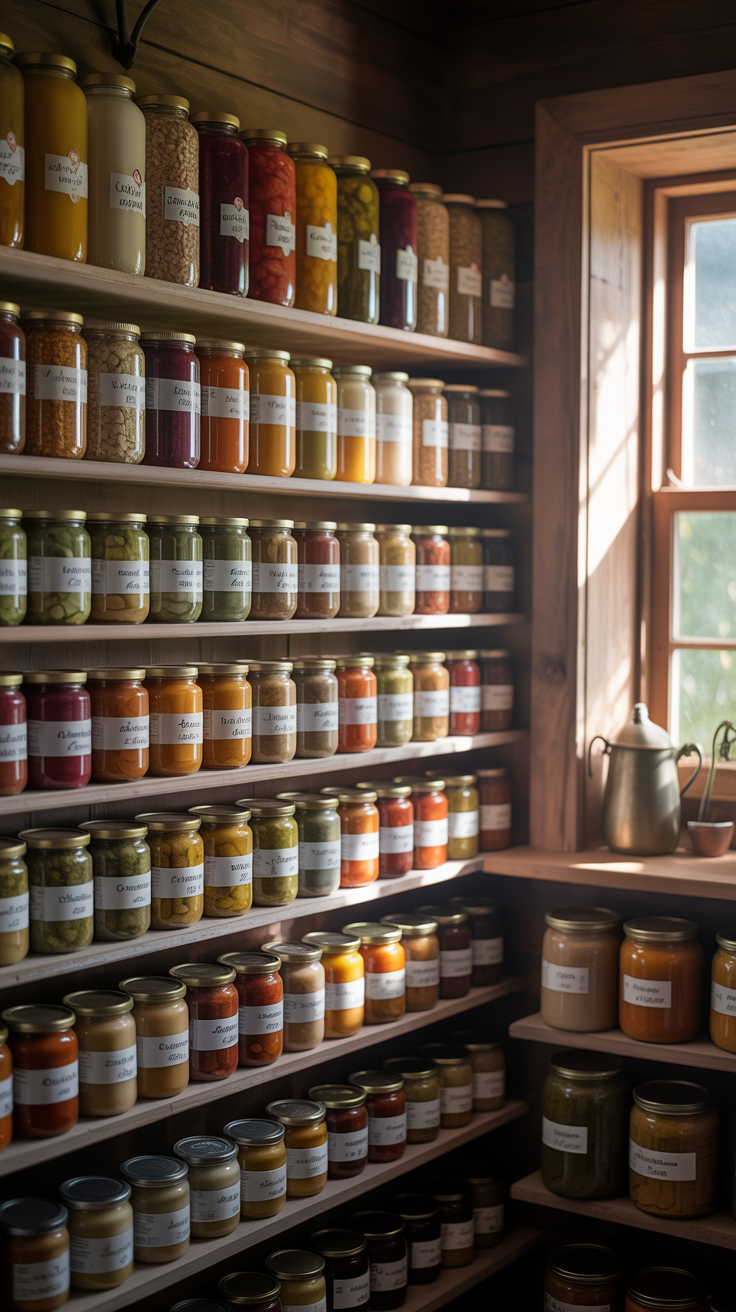
You don’t need a dedicated bunker room. You need cool, dark, dry, and organized storage that fits your space.
Choose storage locations that protect food quality
Good options:
- Interior closets
- Under-bed bins (for lightweight, sealed items)
- Pantry shelving with overstock zones
- Basement storage only if dry and temperature-stable
Avoid garages and attics if they swing hot/cold—heat destroys shelf life.
Containers and pest control basics
You can do a lot with simple supplies:
- Food-grade buckets for bulk items
- Tight-lid bins for boxed foods
- Glass jars for dehydrated items
- Bay leaves and cleanliness (not magic, but helps with general pantry hygiene)
Label clearly:
- Item name
- Packed date (month/year)
- Notes (cooking ratio, allergens)
Mylar bags and oxygen absorbers: when they matter
For long-term storage of dry staples (rice, beans, flour), many families use barrier packaging and oxygen management. If you’re not ready, don’t overcomplicate it—start with deep pantry rotation and grow from there.
Shelf system that prevents “forgotten food”
Try a 3-zone shelf layout:
- Working pantry: daily use
- Backup pantry: duplicates behind working pantry
- Deep storage: sealed bulk and less-used items
That structure reduces the common problem of three open rice bags and no plan.
Water storage and dispensing as part of organization
If space is tight, water is often the first thing skipped. But water is also the first thing you’ll need. Smart storage and dispensing is key.
💡 Recommended Solution: SmartWaterBox
Best for: practical water readiness and easier household water management
Why it works:
- Supports organized storage that’s easier to use than scattered bottles
- Helps integrate water into your pantry plan
- Useful for short-term disruptions where tap water isn’t reliable
While basic water jugs are popular, SmartWaterBox can be an alternative for people who want a more structured, pantry-adjacent setup.
Cooking from the pantry when the power is out
A full pantry is only “full” if you can cook from it during the disruptions most likely to happen: outages, boil-water advisories, winter storms, or short-term supply gaps.
Plan no-power meals you’d actually eat
Create a list of meals with minimal cooking:
- Peanut butter + crackers + fruit
- Canned chicken wraps with shelf-stable tortillas (if used)
- Oatmeal (requires heat, but minimal)
- Canned chili over rice (small fuel use)
- Soup + bread mix (if you bake)
Keep a “storm menu” that uses low fuel and simple cleanup.
Fuel and cooking methods (choose redundancy)
Consider:
- Propane camp stove (ventilation required)
- Grill (outdoor only)
- Indoor-safe options (research safety carefully)
- Simple thermos cooking / retained-heat cooking
Water for cooking and sanitation
Cooking dry staples requires water. So does washing hands and cleaning utensils. If you plan to live on rice, beans, pasta, and oats, your water needs increase.
“As emergency management agencies repeatedly note, water access is the fastest turning point in a home crisis.” That’s why pairing pantry planning with a water strategy is non-negotiable.
Skills matter as much as supplies
Practice one pantry meal per week. Not forever—just until it’s normal. You’re training:
- Portions
- Fuel use and cook times
- Seasoning
- Digestion changes (especially with more beans/lentils)
If you know how to cook what you store, you’ll feel less stressed and more in control.
Expanding beyond the pantry: produce, backups, and self-reliance
A year of pantry food is strong resilience—but the best setups reduce how often you need to buy replacements. Even small steps toward home food production can extend your stored food and improve nutrition.
Simple backyard additions that support pantry meals
You don’t need a farm. Many households start with:
- Herbs (high flavor, low space)
- Container greens
- Tomatoes/peppers in pots
- Basic composting for soil improvement
Garden produce pairs perfectly with pantry staples (pasta, rice bowls, soups).
💡 Recommended Solution: The Self-Sufficient Backyard
Best for: learning how to add home-grown food to support pantry storage
Why it works:
- Helps reduce reliance on stores over time
- Adds fresh nutrition to shelf-stable meals
- Supports a more sustainable “rotate-and-replenish” system
Backup power and food protection
A year pantry includes items that dislike heat: fats, some canned goods, and anything stored near temperature swings. In longer outages, power can protect freezers, water access (well pumps), and basic cooking convenience.
Problem-solution bridge: Struggling to keep essentials running during outages? A backup power plan can protect food and reduce disruption.
💡 Recommended Solution: Ultimate OFF-GRID Generator
Best for: improving resilience during extended outages
Why it works:
- Supports continuity for essential household needs
- Helps reduce food loss risk where electricity matters
- Strengthens overall emergency planning beyond pantry storage
Medical readiness affects food planning
If you’re sick or injured, you may not be able to cook. Include:
- Easy-open foods
- Ready-to-eat soups
- ORS ingredients (oral rehydration basics)
- Comfort foods for recovery
“As many primary-care educators stress, resilient households plan for ‘care gaps’—times when access to clinics or pharmacies isn’t simple.” Building a pantry should include basic health planning.
Many people keep a reference guide like Home Doctor for general home-preparedness knowledge around everyday issues (not as a substitute for medical care, but as a readiness resource).
Contextual inline mention: A lot of preparedness-minded families rely on tools like Home Doctor to support home resilience planning when professional help is delayed.
Putting it all together: a 12-month pantry setup you can maintain
This is where your pantry becomes a system you can live with—not a one-time project.
A practical monthly build plan (works on most budgets)
Use a simple monthly rhythm:
- Week 1: add grains (rice, oats, pasta)
- Week 2: add proteins (canned meats, beans, lentils)
- Week 3: add produce (canned fruit/veg, dehydrated vegetables)
- Week 4: add fats + baking + comfort (oil, spices, sugar, coffee)
Each month, also add:
- 1–2 “convenience meals” (quick dinners for stressful days)
- 1 pantry ingredient you’re learning to cook better
Maintain your pantry with a 15-minute weekly check
- Pull 3–5 items you’ll use this week (oldest first)
- Add those items to the grocery list
- Confirm one “no-power meal” option is stocked
- Confirm water plan is still intact
This routine prevents the two biggest pantry problems: forgotten stock and surprise gaps.
Crisis-proof your plan: redundancy and mobility
Include a small “grab-and-go” layer:
- 3–7 days of easy foods
- Water and a way to carry it
- Manual can opener
- Basic utensils
Your full pantry protects you at home; a small mobile layer protects you if you must leave.
Tools & resources to support a smarter pantry (not just a bigger one)
- The Lost SuperFoods — pantry-focused food knowledge and variety inspiration
- Water Freedom System — supports water readiness planning alongside food storage
- The Self-Sufficient Backyard — helps extend pantry resilience with home food production
Comparison/alternative note: While buying only pre-made emergency meals is convenient, a balanced pantry with cookable staples plus knowledge resources often offers more flexibility and a lower long-term cost.
“As many emergency preparedness instructors note, ‘the best plan is the one you can sustain’—a year pantry should feel like a normal extension of your household, not a separate lifestyle.”
Conclusion
A prepper pantry setup: a full year of food on any budget is achievable when you stop thinking in doomsday totals and start thinking in systems: what you eat, how you store it, how you rotate it, and how you cook it during disruptions. Build in milestones (30/90/180/365 days), balance your categories (carbs, proteins, fats, produce), and treat water as part of the pantry—not an optional extra. With consistent small steps, you’ll end up with a pantry that lowers stress, reduces waste, and keeps your family fed through whatever comes.
FAQ
How much food do I need for a full-year prepper pantry setup on a budget?
Start by estimating how many meals your household eats at home and build in stages: 30 days, then 90, then 6 months, then a year. A budget-friendly approach focuses on rotating staples you already eat (rice, pasta, oats, canned goods) and adding deeper storage over time.
What are the best pantry staples for a one-year emergency food supply?
Most one-year pantry plans rely on grains (rice, oats, pasta), proteins (beans, lentils, canned meats), fats (cooking oils, nut butters), and shelf-stable fruits and vegetables (canned and/or dehydrated). Seasonings and comfort items help prevent menu fatigue.
How do I store bulk food safely for long-term storage?
Keep foods cool, dark, dry, and protected from pests. Use clear labeling and a FIFO rotation system for your working pantry. For deeper storage, many households use barrier packaging and oxygen management for dry goods, plus sturdy containers for pest control.
How do I rotate food so it doesn’t expire?
Use FIFO: put new items behind older items and plan weekly meals around the oldest stock. Keep a “working pantry” you eat from regularly and a “deep storage” backup you replace intentionally.
Why is water included in a prepper pantry setup?
Stored food often requires water to cook and you’ll also need water for sanitation. Even a perfect pantry fails if your water supply is disrupted. Pair food storage with a realistic water plan for cooking, drinking, and basic hygiene.
SEO Title: Prepper Pantry Setup: Full Year of Food on Any Budget
Meta Description: Prepper Pantry Setup: A Full Year of Food on Any Budget—build a 12-month pantry with smart staples, storage, rotation, and water planning.
URL Slug: prepper-pantry-setup-full-year-food-any-budget
Focus Keyword: Prepper Pantry Setup: A Full Year of Food on Any Budget
Suggested Schema Type: FAQ