
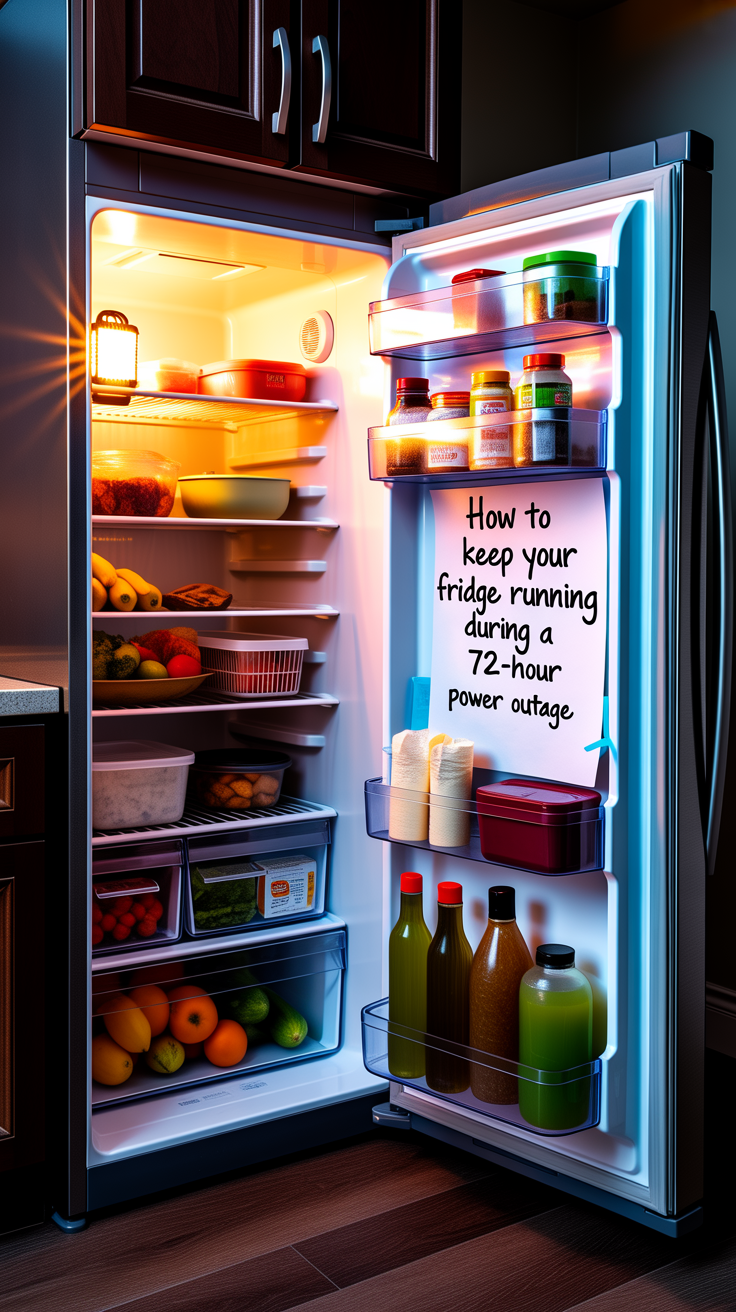
How to Keep Your Fridge Running During a 72-Hour Power Outage
A 72-hour power outage can turn a well-stocked refrigerator into a ticking clock. The good news is you can keep food safe—and in many cases keep your fridge running—if you act fast, prioritize the right loads, and use practical backup-power and cold-management strategies. This guide walks you through how to keep your fridge running during a 72-hour power outage, including what to do in the first 10 minutes, how to stretch cold time, how to power a refrigerator safely, and what to prep so you’re not improvising next time.
If your goal is simple—prevent food loss and avoid unsafe temperatures—the playbook is: preserve the cold you already have, reduce openings, add thermal mass, then supply efficient power in controlled bursts while you manage water and overall home resilience.
The first-hour priorities that protect food and reduce power needs
When the power goes out, your refrigerator and freezer are not instantly “warm”—they’re insulated boxes that can hold temperature for a while. Your job in the first hour is to lock in cold, reduce heat gain, and set up a plan before you start moving food around.
Confirm the outage and start a timer
- Check whether it’s a single breaker or a neighborhood outage.
- Note the time power dropped. Temperature safety depends on duration.
- If you have a fridge/freezer thermometer, check current temps without lingering.
Keep doors closed and stop “checking” the food
Every door opening dumps cold air and brings in warm, humid air that forces the compressor to work harder when power returns (or when you run a generator/inverter). Treat each opening as a cost.
Cold-hold rule of thumb (varies by model and room temp):
- Refrigerator: can often hold safe temps for ~4 hours if unopened.
- Freezer (full): can often hold temps for ~48 hours if unopened.
- Freezer (half full): often closer to ~24 hours.
Your goal for a 72-hour outage is to extend these windows with packing, insulation, and controlled power.
Consolidate and “mass up” only if you can do it fast
Thermal mass helps. A full fridge stays cold longer than an empty one. If you have time within the first 15–20 minutes:
- Group items together (cold items touching cold items).
- Move the most temperature-sensitive foods (raw meats, dairy) to the coldest zone (often the back/bottom of the fridge).
- Fill empty space with sealed jugs of water (if you have them already cold). If you don’t, don’t waste too much door-open time making it perfect.
Make “cold packs” and staged ice if you have freezer time
If your freezer is still very cold:
- Freeze a few shallow containers of water (more surface area freezes faster).
- Bagged ice from a store is ideal, but don’t burn fuel driving around if roads/lines are bad.
Decide your 72-hour strategy: cold management, power, or both
There are three workable approaches:
- Cold management only: minimize openings, add ice/thermal mass, use a cooler rotation.
- Power in bursts: run the fridge periodically from a backup source (generator, inverter, battery system).
- Continuous power: dedicated generator/solar + battery sized for steady operation.
Most households succeed with #2: short, scheduled run cycles that maintain safe temperatures while conserving fuel.
Food-safety temperature targets you must maintain
A fridge “running” doesn’t matter if temps drift into the danger zone. The real objective is keeping food out of unsafe temperature ranges.
The critical numbers
- Refrigerator safe zone: ≤ 40°F (4°C)
- Freezer safe zone: ≤ 0°F (-18°C)
- Danger zone (food safety): 40–140°F (4–60°C)
If perishable food sits above 40°F for too long, risk rises quickly. Since you can’t always monitor constantly in an outage, it helps to use thermometers and conservative rules.
What to eat first if temps climb
If you suspect temps are rising, prioritize consumption in this order:
- Highly perishable items: milk, soft cheeses, leftovers, deli meats
- Raw meats and seafood (cook promptly if still cold)
- Eggs and hard cheeses (more resilient)
- Condiments, pickles, hard vegetables (more resilient)
A practical thermometer setup
- Place a thermometer in the fridge and freezer (or use one with probes).
- When you briefly open, check quickly and close.
- If you must choose only one: monitor the fridge, because it warms faster than a full freezer.
Keeping cold without power for 72 hours using ice, thermal mass, and cooler rotation
If you don’t have backup power—or you want to conserve it—your best tool is an organized “cold chain” inside your home.
Build a two-zone system: fridge stays shut, cooler becomes the “daily access”
The most common mistake during outages is repeatedly opening the refrigerator for drinks, snacks, and quick ingredients.
Instead:
- Pick a cooler (or two).
- Load it with:
- The items you’ll access often (milk, creamer, lunch meat, a few vegetables).
- Ice or frozen water bottles (from your freezer while it’s still solid).
- Keep the refrigerator closed as much as possible.
This concentrates door openings on the cooler—not your main cold storage.
Use frozen water bottles as modular thermal mass
Frozen bottles do triple duty:
- Keep coolers cold
- Stabilize fridge temps if placed in open spaces
- Provide drinking water when they thaw (keep caps clean)
If you have extra freezer capacity before emergencies, pre-freeze several bottles and flat containers.
Add insulation around the fridge (safely)
You can slow heat gain by:
- Keeping the kitchen cooler (close blinds, limit cooking heat).
- Ensuring airflow around the fridge condenser is not blocked if you do run it.
- Avoiding improvised insulation that blocks vents or traps heat around compressor areas.
A safe tactic: place a blanket on the fridge doors (not on the back/sides where coils need to shed heat), especially if the room is warm.
Use ice strategically
If you can obtain ice:
- Put ice in sealed containers to avoid meltwater mess.
- Place ice higher in the fridge (cold air sinks).
- In a cooler, place ice on top of foods and minimize air gaps.
Decide early what you will sacrifice
In a long outage, not everything can be saved if you have no power. If freezer temps rise above freezing:
- Cook and eat what you can quickly.
- If you can cook outdoors, do it (reduces indoor heat gain).
- When in doubt about safety, discard perishables.
Power options that can keep a refrigerator running safely and efficiently
If you want to truly keep your fridge running during a 72-hour power outage, you need a safe, practical power method. The best route depends on what you already own, your budget, and whether fuel or sunlight is available.
Know your refrigerator’s real power needs
Refrigerators use:
- Running watts (steady draw while compressor runs)
- Starting surge watts (brief spike when the compressor starts)
Many fridges run modestly but surge higher at startup. That’s why weak inverters trip, even if the “average” watts look fine.
Practical steps:
- Check the nameplate (inside fridge or back panel).
- Measure with a watt meter when you’re not in an outage.
- Plan for surge headroom.
Use “power in bursts” to conserve fuel
A refrigerator does not need constant power if you manage the cold well. Many households can maintain safe temps by powering the fridge:
- 30–60 minutes every few hours, depending on ambient temperature, fridge insulation, and how often it’s opened.
This reduces fuel use and runtime.
Generator safety basics (non-negotiable)
If you use a generator:
- Run it outside only, far from doors/windows (carbon monoxide risk).
- Use heavy-duty cords rated for the load.
- Don’t backfeed your home without a proper transfer switch.
- Let it cool before refueling.
Inverters and battery power
Battery + inverter setups can work well for short bursts, especially if paired with solar charging. Key considerations:
- Refrigerator surge capacity
- Battery capacity (amp-hours / watt-hours)
- Charging plan (vehicle alternator, solar, generator)
If your plan is “run fridge on batteries for 72 hours,” you need realistic capacity. For most people, batteries are best used for controlled cycles plus essential electronics.
An off-grid approach for longer outages
If you’re thinking beyond this outage—toward resilience—an off-grid generator or energy system can be the difference between scrambling and staying comfortable.
💡 Recommended Solution: Ultimate OFF-GRID Generator
Best for: building a more self-reliant backup-power plan when the grid is down
Why it works:
- Helps you plan an off-grid power approach for critical appliances
- Supports a structured way to think about electricity resilience beyond a single outage
- Useful if you want a repeatable system rather than improvisation
Comparison/alternative: While a basic gas generator is a common first step, longer outages often push people toward systems that reduce fuel dependency. That’s where an approach like the Energy Revolution System can be considered if you want a broader home-energy resilience strategy rather than only a portable generator.
A practical 72-hour fridge survival schedule (what to do each day)
A shutdown that lasts three days is long enough that small habits matter. Use a predictable schedule to reduce guesswork, food waste, and stress.
Day 1: Stabilize and reduce openings
Goals: keep temps low, avoid panic cooking, establish your system.
- Keep fridge closed; move “daily access” items to a cooler.
- Add thermal mass (frozen bottles, packed items).
- If using generator/inverter bursts, do one early run cycle to bring temps back down.
- Eat leftovers first—this reduces the most risky foods sooner.
Tip: the first day is where most waste happens due to repeated checking. Lock the plan and stick to it.
Day 2: Maintain safe temps and shift to planned meals
Goals: keep fridge ≤ 40°F; prevent freezer thaw.
- If you have power bursts, run them at consistent intervals. Avoid random short runs; let the compressor actually pull temps down.
- Keep a written inventory on paper so you don’t “browse” the fridge.
- Use shelf-stable foods to reduce cooler openings.
If your freezer is starting to soften:
- Start cooking thawing meats immediately.
- Keep cooked items in the cooler if you’ll eat soon, or consume promptly.
Day 3: Decide what you’re saving and what you’re eating
Goals: finish perishables, preserve what’s truly safe, avoid risky food.
- If the fridge has been above 40°F for an unknown time, discard high-risk items.
- Shift meals to pantry staples, canned proteins, and dry goods.
- Keep powering the fridge only if it’s actually preserving safe temps—don’t waste fuel on a refrigerator that can’t cool effectively due to repeated opening or poor scheduling.
Expert quote format:
“As many emergency-preparedness instructors emphasize, ‘The smartest outage plan is the one that reduces refrigerator openings first—because every door swing costs you cold you can’t easily replace.’”
That principle matters more than any single gadget: restrict access, centralize cold, and power strategically.
Water and broader outage readiness that indirectly keeps your fridge cold
People focus on the refrigerator, but water and household readiness often determine whether you can keep the fridge closed and the kitchen cool. If you’re constantly opening the fridge for drinks or improvising meals, you’ll lose cold faster and need more power.
Store drinking water so you stop opening the fridge
If you have reliable stored water, you won’t rely on chilled beverages from the refrigerator.
Many households incorporate dedicated water preparedness so the fridge’s cold capacity is reserved for food safety, not hydration.
💡 Recommended Solution: SmartWaterBox
Best for: building a household water plan during outages
Why it works:
- Helps you structure emergency water readiness
- Reduces dependence on refrigerated drinks
- Supports longer-duration planning beyond 72 hours
Problem-solution bridge: Struggling with limited potable water during outages? Water Freedom System addresses this by supporting a more deliberate approach to storing and managing water when normal utilities aren’t available.
Build meals that don’t require opening the fridge repeatedly
A 72-hour blackout is short enough that pantry planning pays off:
- Canned chili, tuna/salmon, beans
- Rice, pasta, oats
- Peanut butter, shelf-stable milk
- Crackers, tortillas
- Electrolyte mixes (reduce need for chilled beverages)
Use preparedness guides to reduce decision fatigue
Most outage mistakes happen because people are improvising under stress. Having a simple checklist and a “what to do when” plan helps protect your food and your time.
Contextual inline mention: Many families rely on preparedness playbooks like URBAN Survival Code to streamline what to do first during grid-down events—so you’re executing steps instead of guessing.
Expert quote format:
“As one practical preparedness maxim goes, ‘A short outage is a nuisance; a three-day outage is a logistics problem.’” Guides such as Dark Reset are often used as a framework to think through food, water, and energy in a coordinated way so your refrigerator plan fits into a broader system.
A simple pre-outage checklist that makes 72 hours much easier
If you want the next outage to feel routine, do a few small things now. The goal is not perfection—it’s making sure you can protect food fast without running around.
Refrigerator and freezer readiness
- Keep at least a few frozen water bottles in the freezer at all times.
- Don’t let your freezer sit half empty—fill gaps with water containers (frozen).
- Keep a fridge/freezer thermometer installed.
- Know where your appliance info is (model number, manual, energy label).
Backup power readiness
- If you have a generator: test it, store fuel safely, keep oil and a funnel.
- If you use batteries/inverter: test starting surge, confirm runtime expectations.
- Keep labeled extension cords: “FRIDGE ONLY,” “FREEZER,” “LIGHTS.”
Case study/example (general outcome): Households that test-run their backup power before storm season typically discover problems early—like undersized cords or inverter surge limits—rather than discovering them when the fridge is warming.
Food strategy readiness
- Keep a “no-cook” pantry layer: ready-to-eat meals for at least 3 days.
- Keep a cooler clean and accessible.
- Keep a written “eat-first” list on the fridge door (outside).
Tools & resources that support a full 72-hour plan
If you’re building a more complete home resilience setup (not just saving the groceries), these resources are often used as part of a broader plan:
- The Lost SuperFoods — useful for expanding shelf-stable food ideas and planning beyond refrigerated items
- The Self-Sufficient Backyard — helpful for long-term food resilience that reduces reliance on constant refrigeration
- Home Doctor — a general home-oriented preparedness resource that can complement an outage plan
Conclusion
Learning how to keep your fridge running during a 72-hour power outage comes down to two things: protecting the cold you already have and supplying efficient power only as needed. Start by keeping doors closed, consolidating food, adding thermal mass, and shifting daily access to a cooler. Then decide whether you’ll use generator/inverter bursts to maintain safe temperatures. Track fridge temps, prioritize perishables, and don’t let hydration or meal improvisation force repeated refrigerator openings.
If you treat the outage like a simple system—cold management + scheduled power + water and meal planning—you can protect food safety, reduce waste, and make three days off-grid feel far more manageable.
FAQ
How long will a refrigerator stay cold without power?
A refrigerator often holds safe temperatures for about 4 hours if you keep the door closed. Actual time depends on insulation, room temperature, and how full it is. For a 72-hour outage, plan on cold-management techniques and/or scheduled backup power.
How can I keep my fridge running during a 72-hour power outage without a generator?
Use a layered approach: keep the fridge closed, move “daily access” items to a cooler, add frozen bottles for thermal mass, and consider a battery + inverter setup for short run cycles if available. If you can’t power it at all, focus on food safety and ice management.
Is it better to run the fridge continuously or in bursts during an outage?
For many households, bursts work well: run the fridge long enough to pull temperatures down, then keep it closed. Continuous running can waste fuel if doors are opened frequently or the power source is inefficient.
What foods should I throw out after a long outage?
If perishable foods have been above 40°F (4°C) for an unknown or extended time, discard high-risk items (milk, soft cheese, leftovers, deli meats, raw meats). When in doubt, prioritize safety.
Can I use my car to power my refrigerator?
In some cases, yes—using an inverter connected properly and rated for your fridge’s starting surge. However, idling time, inverter capacity, and safe cabling matter. Test your setup ahead of time rather than relying on assumptions during an emergency.
RANK MATH SEO BLOCK
SEO Title (≤60 chars): Keep Your Fridge Running in a 72-Hour Power Outage
Meta Description (≤160 chars): Learn how to keep your fridge running during a 72-hour power outage with cold-saving tactics, safe backup power options, and food safety tips.
URL Slug: keep-fridge-running-72-hour-power-outage
Focus Keyword: How to Keep Your Fridge Running During a 72-Hour Power Outage
Suggested Schema Type: FAQ