
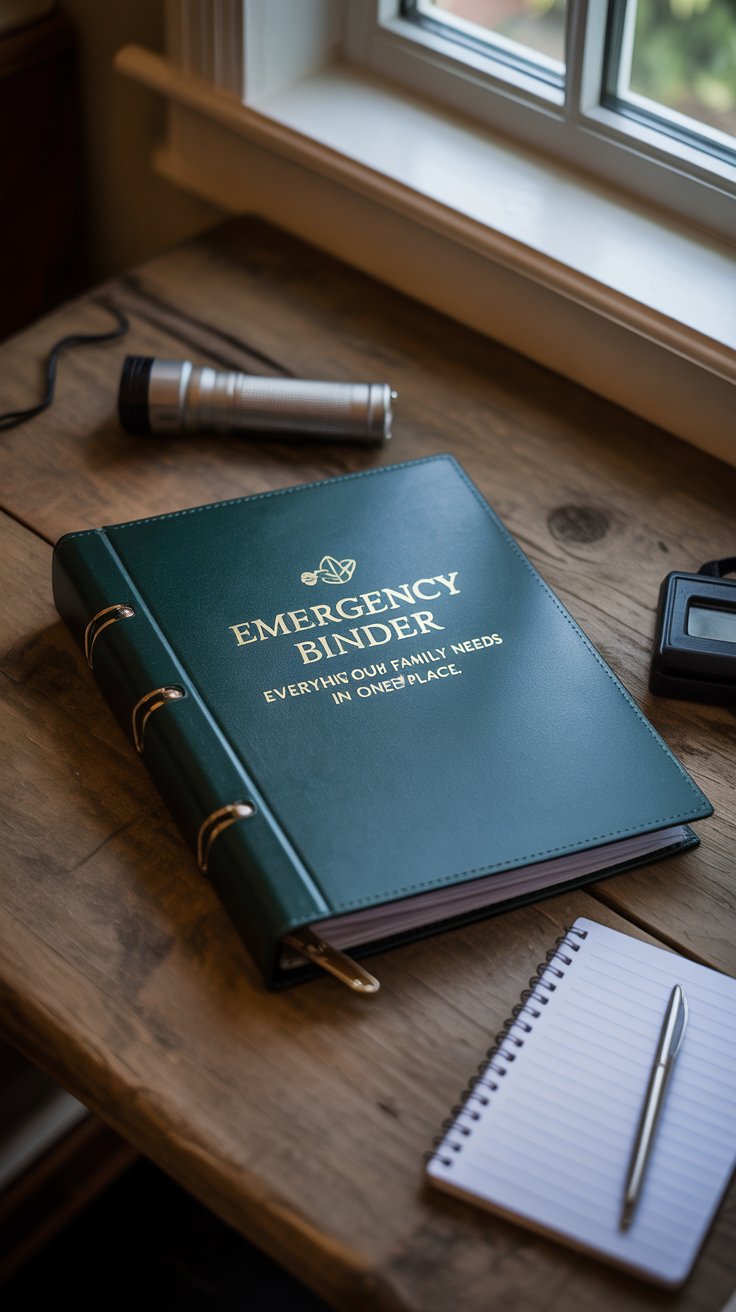
Emergency Binder: Everything Your Family Needs in One Place
When life is normal, it’s easy to assume you can “look it up later.” But during a power outage, wildfire evacuation, flood, medical emergency, or sudden travel disruption, “later” disappears fast. That’s why an Emergency Binder: Everything Your Family Needs in One Place is one of the simplest, highest-impact preparedness steps you can take—without buying a single gadget.
An emergency binder is not about fear. It’s about speed, clarity, and continuity: having the right information, documents, instructions, and contacts ready for the moment you need them most. Whether you’re coordinating care for children, managing a family member’s medications, dealing with insurance, or simply trying to remember which shutoff valve controls the water, the binder becomes your family’s “operating manual.”
In this guide, you’ll build a binder that works in real life: organized, easy to update, and usable by someone who isn’t you. You’ll also learn what to include (and what not to), how to store it securely, and how to pair it with practical home readiness—especially for water, power, and medical planning.
Foundation and Setup for an Emergency Binder
An emergency binder works best when it’s frictionless: easy to grab, easy to scan, and easy to keep current. The biggest mistake is overcomplicating it into a “perfect” system that never gets finished.
Choose a binder system you’ll actually maintain
Pick one of these formats:
- 3-ring binder (2–3 inch) + tab dividers + sheet protectors (most flexible)
- Expandable file folder (more grab-and-go; harder to update neatly)
- Hybrid: binder for core pages + folder for originals and overflow
If you’re building for a household with kids, pets, property, and medical needs, a 3-inch binder usually wins.
Set the “grab location” and the “safe copy”
Your binder should live in a consistent location:
- Primary location: near your main exit (hall closet, entryway cabinet), or in a home office you can access quickly
- Backup storage: a fire-resistant safe or lockbox for originals (or certified copies) you don’t want in the binder full-time
Rule of thumb: the binder holds working copies + instructions; the safe holds hard-to-replace originals.
Build for usability under stress
Design matters more than people think. In an emergency, you’re not calmly reading—you’re scanning.
Use:
- Large headings
- One topic per page when possible
- Checklists and “if/then” instructions
- A one-page Quick Start at the very front (we’ll cover it below)
“As any emergency management coordinator will tell you, ‘In a crisis, information isn’t helpful unless it’s accessible in seconds.’ A well-structured binder reduces decision fatigue and prevents critical delays.”
Create a simple update schedule
Most binders fail because they go stale. Put a repeating calendar reminder:
- Quarterly: contact list, medication list, school info
- Annually: insurance declarations, ID copies, tax summary, home inventory photos
Slip a single “Last Updated” page right behind the front cover.
The Quick Start Pages That Make a Binder Work
The first 3–5 pages are the difference between a binder you own and a binder you use. These pages should be visible immediately and written so another adult could take over if you’re unavailable.
Page 1: Family Emergency Snapshot
Include:
- Full names + nicknames used at school/daycare
- Birthdates
- Blood types (optional; avoid guessing—use only verified info)
- Allergies (confirmed)
- Primary care doctor and pediatrician contact
- Emergency contacts (local + out-of-state)
Add a simple instruction block:
If we must evacuate:
- Grab binder + go bag + meds
- Text out-of-area contact: “We’re safe / leaving now / destination”
- Meet at: [location A] or [location B]
Page 2: Communication Plan
Cell networks can be overloaded. Include:
- Out-of-area contact (most reliable family relay)
- Group text template
- Where to check local updates (county alerts, radio station, city emergency page)
- Social media handles you trust (official only)
Page 3: Home “Shutoffs and Essentials”
List and label:
- Water shutoff location
- Gas shutoff location + wrench location
- Electrical panel location
- Sump pump location (if applicable)
- Safe location of fire extinguisher(s)
Include a written note with any special instructions.
Page 4: Immediate Medical Info
A single page with:
- Current medications (dose + schedule)
- Pharmacy contact
- Insurance member ID numbers
- Medical conditions that matter in emergency care
This is especially important when caring for children, elderly parents, or anyone with chronic conditions.
Page 5: Quick Checklist for Evacuation or Shelter-in-Place
Two short lists:
- Evacuate—take these now
- Shelter—do these now
Keep it short, realistic, and based on your home.
Problem–Solution Bridge: Struggling to plan for medical issues when clinics are closed or you can’t reach your usual provider? Many families keep a practical home reference alongside their binder—tools like Home Doctor are often used as a general educational guide for home medical preparedness and “what to do first” decision-making when professional care is delayed.
Documents and Records to Include (Without Overloading It)
This is the heart of the binder: the documents you’ll need to prove identity, access services, file claims, make decisions, and keep life moving.
Identity and legal documents (copies)
Include a copy of:
- Driver’s licenses / state IDs
- Passports (if applicable)
- Birth certificates
- Social Security cards (consider whether you want this in the binder; you may prefer the safe)
- Marriage certificate / divorce decree (if relevant)
- Custody paperwork (critical)
- Power of attorney, healthcare proxy, living will (if you have them)
Security note: Use copies in the binder. Store originals in a secure safe. If you’re concerned about theft, keep the binder in a locked cabinet and bring it out when needed.
Financial and insurance essentials
Include:
- Insurance declaration pages (homeowners/renters, auto, health, life)
- Policy numbers + claim phone numbers
- Bank list (not full account numbers if you prefer—last 4 digits may be enough)
- Credit card issuer phone numbers (for freezing cards)
- A short “bill map”: what must be paid monthly and where (mortgage/rent, utilities)
Add:
- Photos of cards (front/back) only if you’re comfortable with the risk—otherwise list issuer + phone + last 4 digits.
Home, vehicle, and property records
- Home deed or lease (copy)
- Vehicle titles/registrations (copy)
- Home inventory (photos, serial numbers, purchase dates if known)
- Utility account numbers
- Contractor list (plumber/electrician/roofing)
A quick home inventory can be as simple as a phone walk-through video saved to a secure cloud folder plus a printed summary in the binder.
Work, school, and childcare
- Employer contact info + HR number
- Copies of school enrollment documents or emergency pickup authorizations
- Childcare contacts + pickup permissions
- “Who can pick up my child” list (with phone numbers)
Pets and animals
- Vaccination records
- Microchip numbers
- Vet contact info
- A photo of you with your pet (helps prove ownership)
Expert Quote Format:
“As many disaster recovery caseworkers note, ‘Paperwork becomes currency after a disaster—having the right copies can speed up housing, benefits, and claims by weeks.’”
Medical, Special Needs, and Caregiving Sections
Medical disruptions are common in emergencies: pharmacies close, roads shut down, clinics run on limited schedules, and stress worsens existing conditions. Your binder can reduce risk dramatically if you focus on clarity.
Medication and treatment plan page
Create a table for each person:
- Medication name (exact)
- Dose + timing
- Prescribing doctor
- Pharmacy
- Refill schedule
- What happens if doses are missed (only if confirmed by your provider)
Also include:
- Medical device info (CPAP, glucose meter, nebulizer) + model + where it’s stored
- Durable medical equipment supplier contact (if applicable)
Allergies and contraindications
List:
- Medication allergies
- Food allergies
- Severe reactions and what helps (e.g., epinephrine location)
Avoid guessing—only include what’s medically confirmed.
Caregiving continuity (kids, seniors, disability support)
If someone else might need to step in, add:
- Daily routine summary (sleep, meals, behaviors, calming strategies for kids)
- Mobility needs
- Therapy schedules
- Communication needs (AAC devices, hearing aids)
- Names and numbers for caregivers
Mental health and stress management notes
Emergencies can cause panic and shutdowns. Include:
- Coping strategies that work for each family member
- A short “grounding” checklist
- Therapist contact info (if desired)
First aid and home medical readiness
Your binder isn’t a first aid kit, but it can guide its use:
- Where supplies are stored
- Where extra prescription copies are stored
- Which urgent care or hospital you prefer
💡 Recommended Solution: Home Doctor
Best for: building a practical home medical reference to pair with your binder
Why it works:
- Supports step-by-step decision-making when care is delayed
- Helps organize what symptoms and actions to track in your binder
- Encourages structured preparedness rather than panic
(General educational resource; not a substitute for professional medical care.)
Water, Food, and Household Resilience Pages to Add
A truly useful emergency binder doesn’t stop at paperwork. It also tells you how to operate your home during disruption—especially when the essentials (water, food, sanitation) are affected.
Water plan page (the most important non-document page)
Your water page should include:
- How much water you have on hand right now (estimate)
- Storage locations (garage shelf, pantry, basement)
- Backup sources (water heater, rain barrels where legal/appropriate)
- Purification methods you own + where they are stored
- A one-paragraph sanitation plan (handwashing, dishwashing, toilet backup)
Contextual Inline Mention: Many preparedness-minded households rely on tools like Water Freedom System or SmartWaterBox as part of a broader water strategy to keep clean water available when municipal systems are interrupted.
Food plan page (simple, not fancy)
List:
- 7-day meal plan based on shelf-stable items you already eat
- Where cooking fuel is stored (and safety notes)
- Pantry rotation notes: “use oldest first”
- Dietary constraints (gluten-free, infant formula, etc.)
Problem–Solution Bridge: If you’re unsure how to build a resilient pantry beyond “random cans,” resources like The Lost SuperFoods are often used to generate ideas for shelf-stable foods and preservation approaches that complement your binder’s meal planning page.
Power and light plan
Add a page for:
- Flashlights, lanterns, battery types used
- Charging plan (power banks, car charging)
- Generator notes (if used): safety reminders + fuel storage location
- Where spare batteries live
Comparison/Alternative: While small power banks are popular for short outages, a household that needs longer-duration backup may look into broader options such as the Ultimate OFF-GRID Generator as a general solution concept for maintaining power resilience when the grid is unreliable.
Sanitation and hygiene page
Include:
- Trash bags, disinfectant, wipes
- Toilet backup method (camp toilet, bucket system, etc.)
- Laundry workaround notes
- Pet waste plan
This prevents a manageable outage from turning into a health problem.
Evacuation, Home Defense Awareness, and Urban Disruption Planning
Your binder should help you make fast, confident choices when time is limited. That means clear evacuation triggers, route planning, and practical safety considerations—especially for urban/suburban disruptions.
Evacuation triggers and decision points
Write down what “go time” means for your family:
- Evacuation order issued
- Fire within X miles
- Flood warnings and road closures
- Extended power outage in extreme temperatures
- Medical equipment needs that require power
Then add:
- Two evacuation routes
- Two destinations (local and out-of-area)
- Where you’ll reunite if separated
Vehicle readiness page
- Insurance + roadside assistance numbers
- Vehicle maintenance checklist (tires, fluids)
- Where spare key is stored
- Fuel plan (keep above half tank if possible)
Home security and situational awareness (practical, not paranoid)
During disruptions, crimes of opportunity can rise. Your binder can include:
- “Lockup checklist” before leaving
- Indoor safety plan for sheltering
- Neighborhood contact tree (trusted neighbors, not a public list)
Expert Quote Format:
“As many urban preparedness instructors emphasize, ‘Your best security tool is a plan—clear routines, communication, and coordinated neighbors reduce risk far more than improvisation.’”
Contextual Inline Mention: For people focused on city-specific disruptions—transit shutdowns, civil unrest, short-notice evacuations—many professionals study frameworks like URBAN Survival Code to structure their planning and avoid guesswork.
Personal safety and emergency skills training notes
Add a page for:
- CPR/first aid certification renewal dates
- Local emergency management resources
- Family skill inventory (who knows what: ham radio, wilderness first aid, etc.)
If you want a dedicated section for higher-level preparedness strategy, keep it as a “learning resources” page—don’t let it crowd out critical documents.
Problem–Solution Bridge: If you feel overwhelmed by “what should we do first,” some readers use a general preparedness guide such as Dark Reset to outline priorities and then translate those priorities into binder checklists.
Digital Backups, Privacy, and Where to Store Your Emergency Binder
A binder is physical by design—because phones die, passwords get forgotten, and internet goes down. But digital backups add resilience if your home is damaged or you evacuate quickly.
The best-practice triad: paper + secure digital + safe originals
Aim for:
- Binder (working copies + instructions)
- Encrypted digital folder (scans of key documents)
- Safe/lockbox (originals)
How to create a secure digital backup
- Scan documents as PDFs
- Use a password manager for account access (don’t print master passwords)
- Store in an encrypted drive or trusted secure cloud
- Share emergency access with a spouse/trusted person (as appropriate)
Privacy and identity theft considerations
Your binder may contain enough data to be dangerous if stolen. Reduce risk:
- Use copies, not originals
- Mask or omit full account numbers where you can
- Store the binder in a locked drawer/cabinet
- Consider a “travel version” with minimal sensitive data for evacuation
Make it usable for someone else
Injuries happen. Include a “How to use this binder” page:
- Where tabs are
- What the first steps are
- Where the safe key is located (or who has it)
Tools & Resources (optional, practical add-ons)
If you want your binder to connect directly to action, keep this list short and relevant:
- Water readiness: SmartWaterBox and Water Freedom System are commonly used as part of household water contingency planning.
- Food planning inspiration: The Lost SuperFoods can help generate shelf-stable meal ideas to document in your binder.
- Health reference: Home Doctor can serve as a general home medical preparedness companion to your binder notes.
Conclusion
An Emergency Binder: Everything Your Family Needs in One Place is one of the rare preparedness projects that pays off immediately: it organizes your life today and reduces chaos tomorrow. The goal isn’t a perfectly curated binder—it’s a functional one that helps your family act quickly, communicate clearly, access services, and recover faster.
Start small: build the front “Quick Start” pages, add your most critical document copies, and include your water/food/power plan pages. Then schedule updates so it stays accurate. When the unexpected happens, you won’t be hunting through drawers, old emails, or half-remembered logins—you’ll have a single, calm source of truth you can grab and use.
FAQ
What should be in an emergency binder for a family?
Include a quick-start page (contacts, meeting points, medical snapshot), copies of IDs, insurance policy details, medication lists, school/childcare info, pet records, and home shutoff instructions. The best Emergency Binder: Everything Your Family Needs in One Place also includes simple water, food, and power plans.
Where should I keep my emergency binder?
Keep it in a consistent, easy-to-grab location near an exit or home office. Store sensitive originals in a fire-resistant safe, and consider a minimal “evacuation version” if you’re concerned about theft.
How often should I update an emergency binder?
Update quarterly for contacts and medications, and annually for insurance declarations and home inventory. Add a “Last Updated” page so you always know what’s current.
Should I include original documents in my emergency binder?
Usually no. Keep originals (birth certificates, passports, titles) in a secure safe. Put working copies in the binder so you can access information quickly without risking irreplaceable documents.
How do I back up an emergency binder digitally?
Scan key pages as PDFs and store them in an encrypted drive or secure cloud folder. Avoid printing master passwords; instead, use a password manager with an emergency access option for a trusted person.
RANK MATH SEO BLOCK
SEO Title (≤60 chars): Emergency Binder: Everything Your Family Needs in One Place
Meta Description (≤160 chars): Build an Emergency Binder: Everything Your Family Needs in One Place—documents, medical info, contacts, and home plans for fast action.
URL Slug: emergency-binder-everything-your-family-needs
Focus Keyword: Emergency Binder: Everything Your Family Needs in One Place
Suggested Schema Type: FAQ