
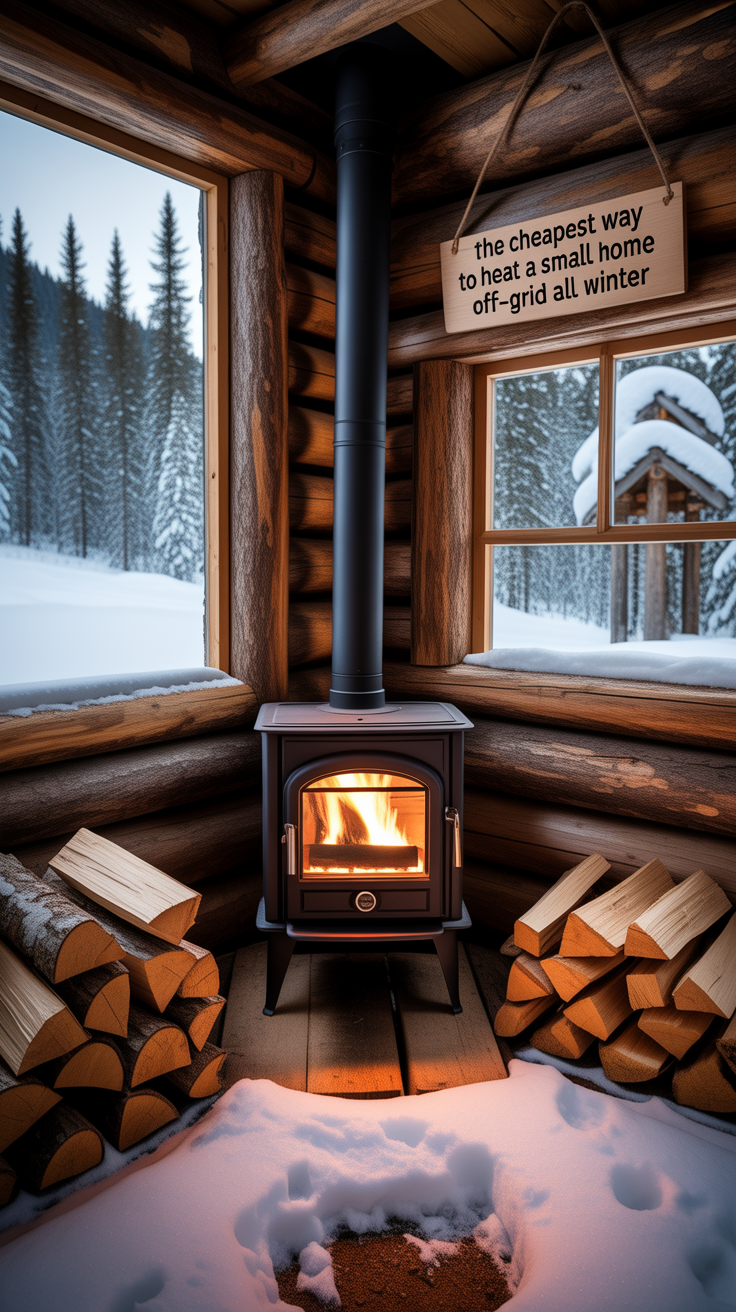
The Cheapest Way to Heat a Small Home Off-Grid All Winter
Heating a small off-grid home through months of snow, wind, and long nights doesn’t have to mean burning through cash—or burning through fuel faster than you can haul it. The cheapest way to heat a small home off-grid all winter is almost never a single gadget or one “miracle” heater. It’s a system: reduce heat loss first, then choose a heat source you can feed reliably, then back it up with low-cost contingency options for power outages, illness, or supply interruptions.
In practice, the lowest-cost approach for most people combines aggressive weatherization + zone heating + a simple, fuel-flexible primary heater (often wood) + a small, efficient backup. The key is designing your entire winter plan around BTUs, insulation, moisture control, and your real fuel supply chain.
Winter heat economics for off-grid living
The reason off-grid heating gets expensive isn’t the cold—it’s inefficiency and logistics. Every winter heating plan has three cost buckets:
Heat demand (how many BTUs you must replace)
Your home loses heat by:
- Conduction (through walls, ceiling, floor, windows)
- Air leakage (drafts, attic bypasses, leaky doors)
- Ventilation (needed fresh air, especially with combustion)
A smaller home can still bleed heat if it’s drafty or poorly insulated. If you cut heat loss by 30–50%, you often cut heating cost by the same (or more), regardless of fuel.
Heat source cost (your cost per usable BTU)
The “cheapest” fuel depends on what you can obtain and store:
- Free/cheap firewood can be unbeatable if you have access and time to process it.
- Propane is convenient but can be costly off-grid and requires deliveries/tanks.
- Kerosene/diesel can be expensive and adds storage/safety overhead.
- Electric resistance heat is rarely cheapest off-grid unless you have surplus hydro/wind or a very overbuilt solar system.
Reliability cost (what it takes to not freeze)
The cheapest plan on paper can be the most expensive if it fails. Winter means:
- Storms that block fuel deliveries
- Injuries/illness that reduce your ability to cut wood
- Equipment breakdowns
- Smoke backdrafts, CO risks, and condensation problems
The best “cheap” system is simple, repairable, and redundant.
Make the house smaller than it is: zone heating and lived-in space design
One of the biggest off-grid heating wins is to stop heating rooms you don’t truly need.
Choose a “winter core”
Pick 1–3 rooms to live in most of the day:
- Kitchen/living combined area
- One bedroom
- One bathroom (or keep the plumbing warm)
Then:
- Close doors
- Hang heavy curtains or moving blankets in hallways
- Use tension rods to create soft barriers
- Put draft snakes at thresholds
This is how you reduce your required BTUs without spending a cent.
Target comfort instead of “whole-house warmth”
A “comfortable” home doesn’t always mean 72°F everywhere.
- 60–65°F ambient with warm surfaces and no drafts can feel better than 70°F with cold floors and air leaks.
- Radiant comfort (warm stove, warm chair, warm bed) is cheaper than heating all the air.
Use micro-comfort tools
Tiny electricity draws can replace huge heat loads:
- Heated mattress pad (low wattage)
- Hot water bottles
- Wool layers and slippers
- Reflective insulation behind seating areas near exterior walls
Even if you avoid electric heat, you can still use small electric “comfort” devices when your power budget allows.
Weatherization: the true cheapest way to heat all winter
If you want the cheapest way to heat a small home off-grid all winter, start with weatherization. It’s the one investment that reduces costs for every fuel type.
Air sealing first (because insulation doesn’t stop drafts)
Common leak points:
- Door jambs and thresholds
- Window sashes
- Electrical outlets on exterior walls
- Attic access hatches
- Plumbing penetrations under sinks and in crawlspaces
- Chimney/stove pipe penetrations (use proper high-temp sealing methods)
Low-cost fixes:
- Rope caulk for old windows
- Adhesive foam weatherstripping
- Door sweeps
- Window shrink film kits
- Outlet gaskets
- Caulk + spray foam (where appropriate)
If you can only do one thing: stop uncontrolled air exchange. Drafts are expensive.
Ceiling/roof insulation: highest priority
Heat rises. A poorly insulated roof can dominate heat loss.
- Add insulation where you can
- Seal attic bypasses first (around lights, fans, top plates)
- Ensure ventilation is correct to avoid moisture rot
Window strategy: treat glass like a hole
You don’t have to replace windows to cut losses:
- Thermal curtains, especially at night
- DIY interior storm panels (clear plastic sheets or acrylic)
- Bubble wrap on panes (ugly but effective in deep winter)
- Close curtains before dusk to trap heat
Floor and crawlspace fixes
Cold floors steal comfort fast.
- Rugs and runners where you stand
- Seal rim joists if accessible
- Skirt an exposed under-home area (mobile/tiny homes especially)
- Block ground moisture from entering the crawlspace (vapor barrier helps)
Result: After sealing and insulating, you can often heat with a smaller stove, less fuel, and fewer “emergency heat” purchases.
Primary heat options ranked by real-world off-grid cost
There’s no universal answer, but there is a practical ranking for most off-grid setups when you consider winter-long fuel needs.
Wood heat (often cheapest if you have access)
Wood wins on:
- Local availability
- Independence from deliveries
- High heat output
- Ability to cook/boil water (with the right setup)
Where wood loses:
- Time and labor
- Learning curve (draft, creosote, moisture content)
- Storage space
- Smoke/indoor air risk if poorly installed
Key to keeping wood cheap:
- Burn seasoned wood (wet wood wastes heat as steam)
- Use a stove sized for your space (oversized stoves encourage smoldering)
- Run it hot enough to avoid creosote
- Maintain chimney and clearances
Safety note: Install a CO detector and smoke detectors, and follow safe chimney practices.
Propane (convenient, typically not cheapest long-term)
Propane can be a solid backup or shoulder-season option.
Pros:
- Easy thermostat control
- Clean storage
- Easy start/stop
Cons:
- Can be pricey per usable BTU
- Supply chain dependence
- Requires safe tank setup and regular checks
Pellet stoves (efficient but supply-dependent)
Pellets can be efficient, but they:
- Often require electricity
- Require consistent pellet supply and indoor storage
- Depend on manufacturing and delivery systems
For deep off-grid, pellets are sometimes a great “semi-grid” solution, not always a “remote cabin” solution.
Electric heat (rarely cheapest off-grid)
Resistive electric heat (space heaters) drains batteries fast. Even if solar is “free,” winter solar is limited in many climates.
Electric can still be useful for:
- Short bursts (bathroom comfort)
- A small well-insulated micro-room
- When you have a generator running anyway
If you want to reduce generator runtime and improve resilience, it’s worth looking at off-grid power planning tools. Many professionals rely on tools like Ultimate OFF-GRID Generator to streamline the planning side of reliable power—especially when winter loads (pumps, lights, communications) stack up.
The simplest “cheapest winter heat system” that works in real cabins
For many small off-grid homes (cabins, tiny homes, homesteads), the lowest-cost workable system looks like this:
A small wood stove as the primary heater
You get high heat output and fuel flexibility. If you can responsibly source wood, you can control your costs.
Tightened envelope + a smaller heated zone
Instead of trying to heat every corner, you heat the winter core well and accept cooler storage rooms.
A minimal backup for nights and emergencies
Backups can be:
- Propane radiant heater (used carefully with ventilation)
- Kerosene heater (with strict safety practices)
- A small generator + electric micro-heating for short periods
- Extra bedding and hot water bottles as “no-fuel backup”
A routine that keeps costs down
- Morning: reload stove, heat soak the core rooms
- Day: maintain a steady burn (avoid smoldering)
- Evening: close curtains, block drafts, reduce zone size
- Night: bank coals safely or let it go cooler and rely on bedding
This is not glamorous, but it’s cheap and dependable.
Moisture, ventilation, and why “cheap heat” can become expensive
Off-grid homes often become too humid in winter because people air-seal without managing moisture.
Why humidity matters
- Damp air feels colder
- Condensation rots wood and grows mold
- Wet insulation loses performance
- Windows ice up, frames rot
Cheap ventilation that protects heat
You don’t want a wide-open window all day, but you do want controlled fresh air:
- Brief “air purge” ventilation (5 minutes) after cooking/showering
- Use lids while cooking
- Dry firewood under cover, not indoors
- Vent combustion appliances correctly
Manage indoor moisture sources
- Drying clothes indoors spikes humidity
- Unvented propane heaters add water vapor
- Snow on boots melts into humidity (use a tray)
The cheapest system is one that doesn’t create thousands of dollars of repairs.
Off-grid winter readiness: fuel, water, and power as one plan
Heating intersects with everything else. If you’re heating off-grid all winter, you’re also managing water, food, and backup power.
Water resilience reduces heating risk
Frozen water systems can force you to overheat certain rooms or run generators more.
If you’re building a winter-resilient homestead plan, having a robust water strategy matters. A practical option some off-gridders explore is Water Freedom System as a general preparedness resource for water security—because when water infrastructure fails in winter, heating becomes harder (and sometimes impossible) fast.
Prepare for “heat interruptions”
Have a plan for:
- 24 hours without heat
- 72 hours without heat
- 7 days without heat (storm/illness)
That plan can be as simple as:
- Extra dry wood staged under cover
- An indoor-safe cooking method
- Backup lighting
- Insulated sleeping setup
- A way to keep pipes from freezing (drain system / heat tape / targeted warm zone)
“As many experienced homesteaders note, ‘Redundancy beats optimization in winter—because the cheapest system is the one that still works on your worst day.’” That mindset saves money because it prevents emergency purchases.
Tools and strategies that keep winter heating truly low-cost
Burn less by measuring, not guessing
If you can, track:
- Indoor temp (core room vs. cold room)
- Outdoor temp
- Wood usage per day
- Stove burn time and reload schedule
Small tweaks can cut fuel use significantly:
- Adjust damper settings
- Use denser wood for overnight burns
- Improve stove gasket seals
- Add a simple heat shield (properly installed) to reduce wall losses and improve safety
Get serious about food and heat together
If your stove or heater allows safe cooking, you can reduce propane/electric cooking loads. Winter is when “one flame doing two jobs” reduces total cost.
For broader self-reliance planning—including deep pantry approaches that reduce winter resupply runs—resources like The Lost SuperFoods are often used as ideas for shelf-stable options. Less driving and fewer emergency store trips can indirectly reduce winter heating costs (fuel saved is money saved).
Health prep matters in winter
If the person who cuts wood gets injured, the “cheap wood heat” plan collapses. Even basic first-aid readiness reduces the chance you’ll need to abandon your winter system.
Recommended resources for a more resilient off-grid winter
💡 Recommended Solution: Ultimate OFF-GRID Generator
Best for: Planning backup power around winter loads (pumps, lighting, communications)
Why it works:
- Helps you think through off-grid power needs when solar output drops
- Supports a layered approach so you don’t rely on a single point of failure
- Useful for reducing expensive “last-minute” generator runtime
💡 Recommended Solution: Water Freedom System
Best for: Strengthening water resilience when winter conditions disrupt supply
Why it works:
- Encourages a system approach to water storage and access
- Complements heating plans by reducing freeze-related emergencies
- Supports a broader off-grid preparedness strategy
💡 Recommended Solution: The Self-Sufficient Backyard
Best for: Building everyday resilience that lowers winter dependency
Why it works:
- Reinforces a homestead-style plan that reduces supply-chain pressure
- Helps align food, water, and energy habits
- Supports long-term cost control, not just emergency fixes
“As an off-grid preparedness educator might put it, ‘The best winter heating plan is the one that integrates food, water, and energy—not three separate projects.’” That’s where real savings show up over an entire season.
Putting it all together: a realistic cheapest-winter blueprint
If you want a straightforward blueprint that tends to be the cheapest across many climates, start here:
- Seal drafts (doors, windows, penetrations).
- Boost ceiling insulation as much as feasible.
- Create a winter core and commit to zone heating.
- Choose a primary heater you can fuel locally (often wood).
- Store fuel correctly (dry, covered, accessible).
- Add a minimal backup (small propane/kerosene option, or generator support).
- Plan for moisture control (ventilation habits, avoid unvented combustion when possible).
- Build redundancy (extra blankets, spare parts, contingency water plan).
This is how the cheapest way to heat a small home off-grid all winter stays cheap: you reduce demand first, simplify your heat source next, and protect the plan with realistic backups.
Conclusion
The cheapest way to heat a small home off-grid all winter isn’t a single heater—it’s a low-heat-loss home paired with zone heating and a primary fuel you can source reliably (often wood), backed by a small contingency plan for the worst weather and worst timing. Seal drafts, insulate the ceiling, shrink your heated footprint, and build a fuel routine you can sustain. When your system is efficient and resilient, your winter costs drop—and your comfort goes up.
FAQ
What is the cheapest way to heat a small home off-grid all winter?
For most off-grid households, the cheapest approach is weatherization + zone heating + a locally sourced primary heat source (often wood). Cutting heat loss usually saves more money than changing heaters.
Is electric heat ever cheap off-grid in winter?
Electric resistance heat is usually expensive off-grid because it demands a lot of power when solar production is lowest. It can be practical in small doses (micro-comfort heating) or if you have abundant winter generation.
How can I heat off-grid if I can’t cut enough firewood?
Focus on reducing heat demand first (air sealing, insulation, zone heating), then consider a fuel you can store safely (propane, kerosene, diesel) and keep a backup plan for supply disruptions.
How do I keep an off-grid home warm without overheating the whole house?
Use zone heating: heat a core area, close off unused rooms, use curtains/blankets as thermal barriers, and prioritize radiant comfort (warm seating, warm bed, insulated floors).
What’s the biggest mistake that makes off-grid winter heating expensive?
Trying to “buy your way out” with more fuel before fixing drafts and insulation. Air leaks and poor attic insulation can double your heating needs, no matter what heater you use.
Rank Math SEO Block
SEO Title (≤60 chars): Cheapest Way to Heat a Small Off-Grid Home All Winter
Meta Description (≤160 chars): Learn the cheapest way to heat a small home off-grid all winter with insulation, zone heating, wood heat options, backups, and safety tips.
URL Slug: cheapest-way-heat-small-home-off-grid-all-winter
Focus Keyword: The Cheapest Way to Heat a Small Home Off-Grid All Winter
Suggested Schema Type: FAQ