Bug Out vs. Bug In: How to Know Which One Could Save Your Life
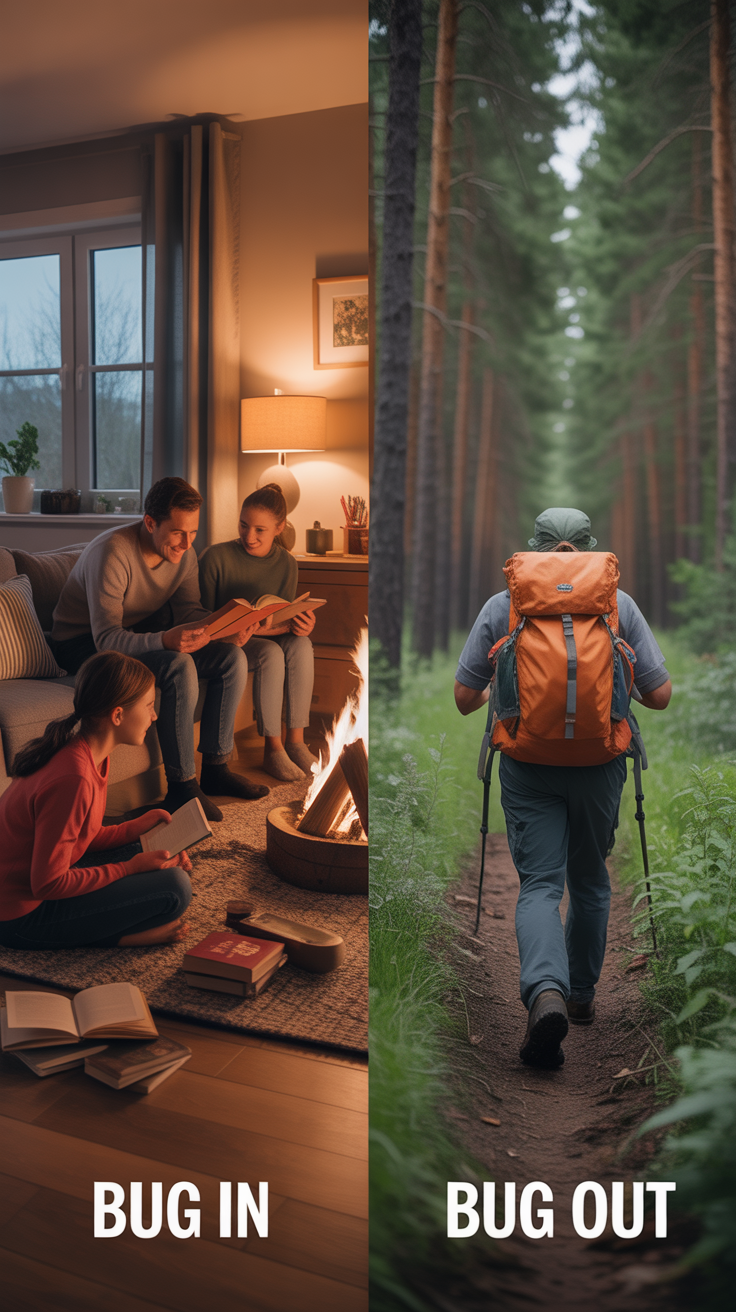
Disasters don’t usually announce themselves politely. One minute it’s a normal Tuesday, and the next you’re staring at a wildfire map, a chemical spill alert, a grid-down rumor, or a storm track that just shifted toward your town. In those first few minutes, the decision that matters most is simple but heavy: bug out vs. bug in—how to know which one could save your life.
Bugging in (shelter-in-place) can keep you safer, warmer, and more stable—if your home is viable. Bugging out (evacuating) can save you from fast-moving, localized threats—if you leave early and have a realistic destination. The danger is not choosing “wrong” in theory; it’s choosing wrong for your situation, your timing, your geography, and your supplies.
This guide gives you a practical, real-world framework to decide quickly and confidently. You’ll learn the decisive triggers, the risk math, the supplies that make either strategy work, and how to build a plan that doesn’t rely on luck.
Risk math that decides bug out vs. bug in
The cleanest way to decide between bugging out and bugging in is to evaluate two categories of risk:
Immediate external threat vs. internal home viability
- External threat is what’s happening outside: fire, flood, civil unrest, toxic smoke, active violence, looming evacuation orders, or collapsing infrastructure.
- Home viability is whether your home can keep you alive: water, heat/cooling, food, medical capacity, security, sanitation, and the ability to communicate.
A simple decision rule:
- If the external threat is fast-moving and localized, you usually bug out early.
- If the external threat is widespread and mobility is dangerous, you often bug in, then reassess.
The three timelines that matter
When people get hurt, it’s often because they choose the right strategy… too late. Track these timelines:
- Threat timeline: How fast does danger reach you?
- Wildfire and flash flood: minutes to hours
- Chemical plume: minutes
- Hurricane: hours to days
- Grid failure: hours to days (effects worsen over time)
- Mobility timeline: How long until roads clog or become unsafe?
- Evacuation routes can lock up in 30–90 minutes in populated areas.
- Sustainment timeline: How long can you last safely at home?
- Water is usually the first hard limit, then sanitation, then power/temperature, then food.
If your threat timeline is short and mobility is still possible, you leave. If mobility collapses and your home is viable for days, you stay.
Non-negotiable bug-out triggers
Some situations are not “debate and see.” They are leave-now conditions. In the bug out vs. bug in decision, these are the most consistent bug-out triggers:
Evacuation orders and imminent hazard zones
- Mandatory evacuation for wildfire, hurricane surge zones, dam failure risk
- You’re in a mapped floodplain and water is rising
- You are downwind of a chemical spill or refinery fire
If officials say leave, assume they know something you don’t—and the roads will worsen.
Fire, smoke, and breathable air failure
Wildfires don’t just burn—they suffocate. If smoke drives indoor air quality into dangerous levels and you don’t have filtration or clean-air shelter capacity, home viability collapses.
Structural uninhabitability
Your home stops being a shelter if it loses:
- Roof integrity
- Safe indoor temperature (heat stroke/hypothermia risk)
- Safe sanitation (sewage backup, contaminated water intrusion)
- Safe electrical conditions (fire hazards)
Targeted personal threat
If there’s a credible threat to you or your family (stalking, domestic violence risk, targeted theft, localized civil violence), the mobility of leaving can be safer than “defending” a fixed address.
Problem-solution bridge: Struggling with the idea of leaving too late because you don’t have a destination or a checklist? Many people find it easier to act decisively when they’ve built a repeatable “go plan.” Resources like URBAN Survival Code are often used as a structured way to think through urban evacuation, routes, and fast decision-making without improvising under stress.
When bugging in is safer than evacuating
Bugging out is dramatic, but bugging in is often the safer move—especially when travel is the hazard.
Widespread instability where roads become risk multipliers
Examples:
- Severe winter storms and ice events
- Extended power outage across a region
- Fuel shortages or supply chain disruption
- Pandemic-style events where crowding increases risk
If traffic is stalled, shelters are crowded, and crime risk rises, staying home can reduce exposure and preserve control.
Your home is defensible, stable, and stocked
Bugging in works best when:
- You have water storage or treatment (at least several days)
- You can cook without grid power
- You can manage heating/cooling
- You have basic medical supplies
- You can secure doors/windows and keep a low profile
Expert quote format:
“As many emergency management trainers emphasize, ‘Water is the first domino—if your water plan is solid, your bug-in plan becomes dramatically more reliable.’” For people building a water-first home plan, tools like Water Freedom System or SmartWaterBox are commonly explored to support water readiness when tap reliability is uncertain.
You have medical or mobility constraints
If you have:
- small children
- elderly family members
- disabilities or limited mobility
- insulin or oxygen dependence
…then bugging out can be less realistic unless you’ve pre-planned transportation, meds, and a verified destination.
The decision framework: a fast checklist that works under stress
When adrenaline hits, people default to emotion: “I feel safer at home,” or “I need to get out now.” Instead, use a short, repeatable checklist.
The S.A.F.E. decision model
Use this four-part filter:
S — Severity: Is the threat likely to injure/kill within 0–24 hours?
A — Access: Are roads open now, and will they remain open?
F — Fitness of home: Can the home provide water, temperature safety, and sanitation for 72 hours?
E — Exit plan: Do you have a destination and a route that avoids bottlenecks?
If Severity is high and Access is still good → Bug out early.
If Access is poor and home Fitness is good → Bug in and harden.
If both are poor → Move to a safer nearby shelter (micro-evacuation) and reassess.
Micro-evacuation: the overlooked third option
You don’t always need a 200-mile escape. Sometimes, the smartest play is:
- moving to a friend’s home outside the danger zone
- relocating to a hotel on the opposite side of the city
- shifting from a flood-prone area to higher ground nearby
Micro-evacuation reduces travel time and complexity while still getting you away from the most immediate hazard.
Contextual inline mention: Many professionals who plan for city disruptions rely on structured preparedness playbooks to reduce decision fatigue. Tools like BlackOps Elite Strategies are often used as a framework for thinking through layered contingencies—especially when the goal is to act early, not react late.
Bug-out planning that doesn’t collapse in the real world
Bugging out fails for three reasons: leaving too late, going nowhere, and carrying the wrong things. A realistic plan fixes all three.
Your destination matters more than your gear
A bug-out bag helps you travel, but it doesn’t replace a place. Prioritize:
- Family/friend locations (pre-approved)
- A secondary home or cabin
- A hotel corridor outside typical evacuation zones
- A campground plan (season-dependent)
You need at least two destinations in different directions.
Route planning: avoid the herd
Have:
- Primary route (fastest)
- Secondary route (less obvious)
- Tertiary route (even if it’s slower)
Keep paper maps. Assume cell towers may fail or networks may overload.
What actually belongs in a real bug-out loadout
Think in systems, not gadgets:
- Water: capability to carry + treat
- Food: simple, shelf-stable calories
- Shelter: tarp, bivy, blanket, rain protection
- Heat: layers + fire/heat method where legal/safe
- Medical: trauma basics + personal prescriptions
- Light/Power: headlamp, batteries, power bank
- Documents: IDs, insurance photos, cash
- Communication: family meeting plan, contact card
Comparison/alternative: While “grab a case of bottled water and go” is common, it’s fragile in extended events or when stores empty quickly. A more resilient approach is building water redundancy at home and in transit—using storage solutions for bug-in, and portable treatment for bug-out.
Bug-in planning: hardening your home for 72 hours to 30 days
Bugging in isn’t “do nothing.” It’s active preparation: reducing dependence and increasing resilience.
Water and sanitation: the real foundation
Minimum practical baseline:
- 1 gallon per person per day for drinking + minimal hygiene (more is better)
- A way to purify: boiling, filtration, chemical treatment (layered options)
- Sanitation plan: trash bags, toilet alternatives, disinfectants, hand hygiene
💡 Recommended Solution: SmartWaterBox
Best for: strengthening a home water plan when supply is uncertain
Why it works:
- Supports a water-first approach to short-term disruptions
- Helps reduce dependence on last-minute store runs
- Fits well into a broader bug-in readiness checklist
(Use as part of a layered plan—no single item replaces smart storage, treatment, and conservation.)
Food that works when stress is high
In real emergencies, people don’t want complicated recipes. Focus on:
- no-cook items (canned fish, nut butter, crackers)
- quick-cook staples (rice, pasta) if you can heat water
- comfort calories (chocolate, instant soup, electrolyte mixes)
Contextual inline mention: Building a food buffer is easier when you have a structured list of overlooked staples. Some people use guides like The Lost SuperFoods to diversify shelf-stable options beyond the usual “beans and rice,” especially when trying to avoid menu fatigue.
Power and temperature control
Temperature kills faster than hunger in many climates. Consider:
- insulation improvements (weather stripping, blankets)
- safe indoor heating methods (always consider ventilation and fire risk)
- backup power for small essentials (lights, comms, charging)
💡 Recommended Solution: Ultimate OFF-GRID Generator
Best for: maintaining basic electricity when the grid is unreliable
Why it works:
- Supports emergency lighting and device charging
- Helps keep communications running longer
- Adds resilience to a bug-in plan without constant fuel runs
Medical readiness for staying put
Bugging in often means delayed EMS and closed pharmacies. Plan for:
- 30-day refill strategy where possible
- first aid + basic trauma supplies
- common OTC meds, wound care, hydration support
Problem-solution bridge: Struggling with what to stock medically—especially if you’re not a clinician? Home Doctor is often used as a home-reference style resource to think through practical household medical readiness when professional help is delayed.
Scenario-based decisions: what to do for the most common emergencies
This is where “bug out vs. bug in” becomes obvious. Use these patterns as default assumptions, then customize.
Wildfire
- Bug out: usually yes if you’re near the interface or under advisory/mandatory order
- Leave early. Smoke and road closures escalate fast.
- Have go-bags staged and vehicles fueled.
Hurricane
- Bug out: if in storm surge zones, mobile homes, or flood-prone areas
- Bug in: if structurally safe, outside surge zones, and stocked for 7–14 days
- The biggest mistake is waiting until wind picks up and then driving.
Earthquake
- Bug in (initially): often safest immediately after shaking stops, unless the structure is compromised
- Prepare for aftershocks; shut off utilities if needed and safe.
- You may “bug out” to the yard or a nearby open area, then reassess.
Winter storm / blizzard
- Bug in: usually safer
- Travel becomes deadly; focus on heat, water (pipes), and food.
- Short power outages can become long—plan for layered warmth.
Civil unrest / riots localized to areas
- Bug in: often, if you’re not in the direct zone
- Micro-evacuation: if your neighborhood becomes a target corridor
- Avoid “driving into it” without verified routes and destination.
Long-term grid disruption
- Bug in first: if your home can function for at least 72 hours
- Transition criteria: if sanitation, water, or security fails, consider micro-evacuation.
Case study/example (general): In many regional outages, households that implemented a water-first plan and a simple power-backup routine tended to report less panic in the first 48 hours—because they weren’t forced into crowded stores during the most chaotic window.
Building a combined plan: the hybrid model that wins
The best answer to bug out vs. bug in is often: prepare for both, decide based on triggers. A hybrid model prevents “all eggs in one basket” failure.
The 3-layer preparedness structure
- Home base resilience (bug-in ready): water, food, power, medical, security basics
- Rapid departure capability (bug-out ready): go-bags + documents + fuel
- Destination network: people, places, and permissions already arranged
Your trigger list should be written, not imagined
Under stress, people forget. Write a personal trigger list like:
- If wildfire is within X miles and wind is toward us → go
- If floodwater reaches Y street or Z gauge level → go
- If indoor temps exceed X°F without relief → leave for cooling shelter/hotel
- If water stops and we have under 3 days stored → resupply or relocate
Security and discretion: staying unnoticed beats “looking prepared”
Whether you bug in or bug out, avoid broadcasting resources:
- keep gear out of sight
- maintain calm routines
- don’t advertise supply levels
Expert quote format:
“As preparedness instructors often repeat, ‘The best plan is the one you can execute quietly and early.’” For people who want a broader reset of household readiness—especially around early action, routines, and redundancy—resources like Dark Reset can serve as a structured planning companion.
Tools & resources that support both bug-in and bug-out readiness
No product replaces judgment. But the right resources can reduce uncertainty and help you build repeatable systems.
- Water readiness: Water Freedom System and SmartWaterBox are commonly considered by people who want stronger water resilience at home.
- Medical home-reference: Home Doctor can help families think through basic care when help is delayed.
- Backup power concepts: Ultimate OFF-GRID Generator can support keeping essentials running when the grid is unstable.
Conclusion: choosing bug out vs. bug in without regret
The most dangerous moment in an emergency isn’t always the disaster itself—it’s the delay while you debate. Bug Out vs. Bug In: How to Know Which One Could Save Your Life comes down to a clear-eyed assessment of external threat speed, road viability, and whether your home can sustain life safely.
Bug out when danger is immediate, localized, and moving toward you—especially if evacuation routes are still workable. Bug in when mobility is risky and your home can provide water, temperature safety, sanitation, and security for at least several days. And remember the most underrated option: micro-evacuation to a nearby safe zone when you need distance, not a cross-country escape.
Write your triggers down. Stage your essentials. Decide early. Survival favors the prepared—and the decisive.
FAQ
What is the biggest factor in bug out vs. bug in decisions?
The biggest factor is whether the threat is fast-moving and localized (favoring bug out early) or widespread and travel becomes dangerous (favoring bug in if your home is viable).
How much water should I have to bug in safely?
A practical minimum is 1 gallon per person per day, with a goal of at least 3–7 days stored plus a way to purify more. Water is often the first limiting factor in shelter-in-place scenarios.
When is it too late to bug out?
It’s often too late when roads are gridlocked, visibility is poor (smoke/snow), fuel is scarce, or official routes close. If you choose to bug out, leaving early is usually safer than leaving during peak panic.
Can I plan to bug out if I don’t have a cabin or rural land?
Yes. A bug-out destination can be a pre-arranged friend/family home, a hotel corridor outside hazard zones, or a micro-evacuation plan to safer ground nearby. The key is having verified destinations and multiple routes.
Should I bug in during a long power outage?
Often yes—if your home can maintain safe temperatures, water, sanitation, and basic security. If those systems fail (especially water and heat/cooling), consider micro-evacuation or relocating to a powered shelter.
RANK MATH SEO BLOCK
SEO Title (≤60 chars): Bug Out vs. Bug In: Which Choice Saves Your Life?
Meta Description (≤160 chars): Bug Out vs. Bug In: How to know which one could save your life with triggers, checklists, and real-world scenarios for fast decisions.
URL Slug: bug-out-vs-bug-in-save-your-life
Focus Keyword: Bug Out vs. Bug In: How to Know Which One Could Save Your Life
Suggested Schema Type: FAQ