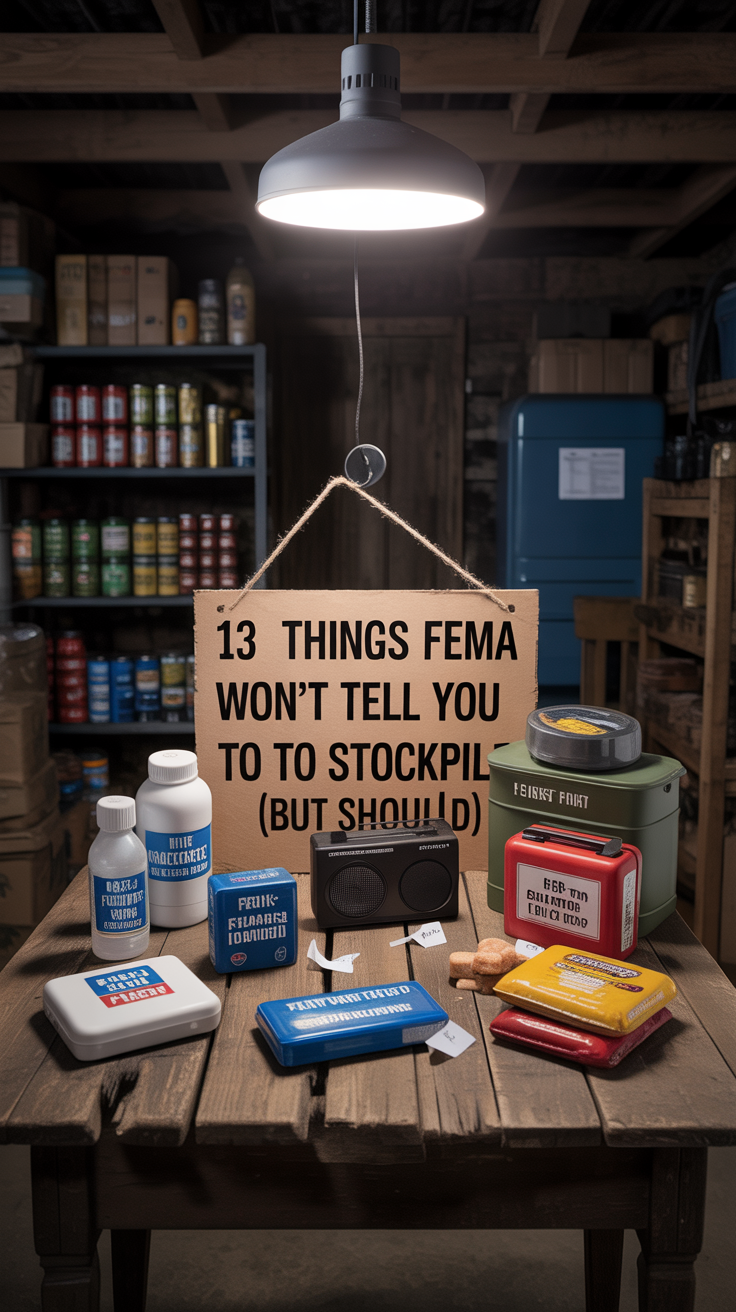
13 Things FEMA Won’t Tell You to Stockpile (But Should)
When people search for 13 Things FEMA Won’t Tell You to Stockpile (But Should), they’re usually trying to close the gap between “official advice” and what actually fails first in real-world disasters. FEMA guidance is helpful, but it’s necessarily broad, conservative, and designed for mass public messaging. It rarely dwells on the awkward, unglamorous items that become priceless when supply chains stall, stores empty, power blinks off, and stress rises.
This guide focuses on what experienced preppers, off-grid households, and emergency managers quietly prioritize: redundancy, water certainty, sanitation, medical readiness, and the “boring” consumables that prevent small problems from turning into emergencies.
“Preparedness isn’t about buying exotic gear,” as many emergency management trainers emphasize. “It’s about removing single points of failure—especially water, heat, hygiene, and communications.”
Water certainty supplies beyond bottled water
Bottled water disappears fast, and it’s heavy to store for weeks—especially for families. The overlooked stockpile is not “more bottles,” but ways to produce safe water every day even if taps run dry or contaminated advisories appear.
Stockpile water treatment redundancy
Aim for layered capability, not one solution:
- Gravity filtration for daily drinking needs
- Chemical disinfection (unscented household bleach or water purification tablets) for backup
- Boiling capability (stove, fuel, pot) when filtration isn’t enough
- Storage containers meant for potable water (and a way to rotate)
Also consider that many disasters don’t remove water entirely—they make it unsafe (floodwater intrusion, broken mains, boil notices). That’s where treatment and secure storage matter more than a garage full of cases.
💡 Recommended Solution: Water Freedom System
Best for: Households that want a practical plan for daily water resilience
Why it works:
- Helps you think in systems (collection, treatment, storage)
- Supports planning for more than a 72-hour window
- Useful if you’re building redundancy beyond “just buy bottles”
Many preparedness-minded homeowners also rely on tools like SmartWaterBox to streamline stored-water planning when space and rotation are ongoing challenges.
Stockpile collapsible containers and transfer tools
Two items people regret not having:
- Collapsible jugs (easy to store, crucial when you must fetch water)
- A siphon pump or simple transfer pump (moving water without spills or contamination)
A small spill at home is annoying. A spill during a boil notice when water is scarce is a crisis multiplier.
Sanitation and waste control that keeps illness away
FEMA mentions hygiene, but the deeper reality is this: sanitation becomes “medical.” When toilets don’t flush, trash stops being collected, and handwashing is limited, stomach bugs and infections spread rapidly.
Stockpile a no-flush toilet plan
You do not need a fancy system, but you do need a plan:
- 5-gallon bucket + snap-on toilet seat lid
- Heavy-duty contractor trash bags
- Absorbent material (sawdust, pine pellets, kitty litter)
- Disposable gloves + hand sanitizer
- Disinfectant spray and wipes
Add privacy and odor management (a small pop-up shelter or designated bathroom corner) for morale and dignity—often overlooked, always impactful.
Stockpile cleaning concentrates and “dry” hygiene
When water is limited, prioritize:
- Soap bars (store longer than liquid)
- Concentrated disinfectants (follow dilution directions carefully)
- No-rinse bathing wipes (or washcloths + minimal water)
- Toothpaste, floss, and spare toothbrushes
- Feminine hygiene supplies in longer-than-usual quantities
“Outbreaks after disasters are frequently sanitation-driven,” public health guidance often notes. “Clean hands and safe waste handling reduce secondary emergencies.”
Stockpile bug and rodent control
Pests move in when trash piles up or buildings are compromised:
- Mouse traps (mechanical, not just poison)
- Sealed food containers
- Insect repellent
- Mosquito netting if your area floods or storms often
Shelf-stable calories people don’t think to buy
The classic pantry list emphasizes canned goods and dried staples. Helpful—but the under-discussed need is calorie density, variety, and preparation flexibility when power or cooking options are limited.
Stockpile “no-cook” nutrition
Assume at least some days you cannot cook normally. Keep:
- Nut butters
- Crackers
- Canned fish or meat
- Shelf-stable milk alternatives
- Dried fruit
- Protein bars (rotate)
If you’re tired, cold, stressed, and the house smells like damp drywall, you’ll eat what’s easy. Make it something that sustains you.
Stockpile comfort-food morale items
This isn’t frivolous. In prolonged disruptions, morale drives compliance and calm:
- Cocoa/coffee/tea
- Honey or sugar
- Spices and hot sauce
- Instant soups
- Hard candy
Problem-Solution Bridge: Struggling with making pantry food feel “real” when fresh groceries are gone? The Lost SuperFoods can help you broaden your shelf-stable options and meal planning approach so you’re not relying on the same two cans and a box of pasta for every meal.
Stockpile the ingredients that make staples usable
People buy rice and beans, then forget:
- Salt (lots of it—cooking, preservation, electrolyte support)
- Cooking oil (rotate; store in cool/dark)
- Vinegar (cleaning + food use)
- Baking soda (multi-purpose)
- Yeast or baking powder (if you bake)
Medical readiness beyond a basic first-aid kit
A “first-aid kit” is usually bandages and antiseptic. In real outages, you need a bigger capability: minor wound care, fever management, gastrointestinal issues, and basic monitoring—especially for kids and older adults.
Stockpile OTC medicine redundancy
Rotate and store properly:
- Pain/fever reducers (acetaminophen/ibuprofen as appropriate)
- Anti-diarrheal medication
- Oral rehydration salts (or ingredients to make them)
- Antihistamines
- Hydrocortisone
- Electrolyte powder
Also keep tools that make care easier:
- Digital thermometer (plus spare batteries)
- Tweezers, trauma shears
- Instant cold packs
- Elastic wrap bandages
Stockpile practical wound management
- Sterile gauze pads and rolls
- Medical tape (multiple types)
- Antiseptic solution
- Nitrile gloves
- Saline rinse (or materials to make safe rinse)
Expert Quote Format: “As many family preparedness educators note, ‘Home Doctor has become a go-to resource for households who want to think through common medical scenarios at home, because it emphasizes practical decision-making when professional care is delayed.’”
(General note: Always follow local medical guidance and consult professionals when possible; this is about preparedness, not replacing care.)
Stockpile prescription continuity planning
This is often the biggest “quiet” vulnerability:
- Ask about 30–90 day refills when allowed
- Keep a list of medications, dosages, and prescribing physician info
- Store copies in waterproof bags
- Consider a locked, temperature-stable storage location
Power, heat, and light for real outages
Official lists mention flashlights and batteries. The deeper stockpile is sustained, safe power for communication, refrigeration needs, and temperature control.
Stockpile layered lighting
- Headlamps (hands-free beats flashlights)
- Lanterns (for room lighting)
- Rechargeable batteries + charger (if you have generation)
- Candles only if you understand fire risk and ventilation
Stockpile a realistic home power plan
Think in “loads,” not gadgets:
- Phone charging and radios (low draw)
- Medical devices (if applicable)
- Refrigeration strategy (coolers + ice plan, or limited generator runs)
- Heating/cooling safety
Comparison/Alternative: While small power banks are popular for short outages, an off-grid approach can provide broader resilience for longer disruptions—especially when refueling is difficult.
💡 Recommended Solution: Ultimate OFF-GRID Generator
Best for: People building longer-outage resilience beyond a single battery pack
Why it works:
- Supports thinking in sustained power, not just emergency charging
- Useful for scenarios where refueling access is uncertain
- Fits planning for extended disruptions
Stockpile safe indoor heat contingencies
If you live in cold climates, heat is not optional. Stockpile:
- Cold-weather sleeping bags or layered blankets
- Thermal base layers, hats, gloves
- Mylar blankets (as supplemental, not primary)
- Carbon monoxide detector batteries (and spare units if possible)
Never run combustion heaters indoors without appropriate ventilation and CO monitoring.
Security, situational awareness, and the “gray man” basics
“Security” is not about looking tactical. It’s about deterrence, lighting, communication, and keeping a low profile so you don’t become a target when everyone is stressed.
Stockpile home hardening basics
- Motion-sensor lights (solar if possible)
- Reinforced strike plates and longer screws for doors
- Window locks and dowels for sliding doors
- Fire extinguisher (plus knowledge to use it)
Stockpile communication and information channels
- NOAA weather radio (battery/hand crank)
- Spare charging cables + adapters
- Printed contact list and meeting plan
- Local paper maps (phones fail, towers fail)
Many professionals rely on tools like URBAN Survival Code to organize preparedness thinking for dense-city realities: apartment constraints, limited storage, elevator outages, and higher dependence on public infrastructure.
Stockpile cash and “micro-trade” items
When card systems are down:
- Small bills ($1, $5, $10)
- Quarters (laundry, vending, toll variations)
- A few universally useful trade items (batteries, lighters, hygiene)
Tools, repair items, and the consumables that keep your home livable
When storms hit, what fails is often not “food supply.” It’s your home’s ability to stay dry, sealed, and functional.
Stockpile tarps and fastening methods
- Tarps in multiple sizes
- Paracord, bungees, ratchet straps
- Duct tape and contractor tape
- Plastic sheeting for quick weatherproofing
Stockpile basic repair and shutoff tools
Know how to shut off:
- Water
- Gas (if applicable)
- Power (breaker)
Keep:
- Adjustable wrench
- Multi-bit screwdriver set
- Utility knife + extra blades
- Work gloves and eye protection
Stockpile “quiet” hardware that disappears fast
These sell out after the first storm warning:
- Trash bags (contractor grade)
- Zip ties
- Nitrile gloves (multiple boxes)
- Paper towels
- Aluminum foil and storage bags
If you want to expand from “emergency supplies” into household resilience—food growing, water capture, and repeatable systems—**The Self-Sufficient Backyard** can be a helpful planning resource for building capacity instead of only stockpiling consumables.
Food production and longer disruptions most people ignore
Short emergencies are common. Longer disruptions are rarer, but the consequences are bigger. The items below are “quiet insurance” for the events that outlast your pantry’s easy week.
Stockpile seeds and sprouting supplies
Even if you don’t garden, sprouting is compact and fast:
- Sprouting seeds (rotate; store cool/dry)
- Mason jars + mesh lids (or sprouting trays)
- Notes for rinsing schedule and food safety
Stockpile preservation basics
If you suddenly have access to food (neighbors sharing freezer contents, hunting/fishing, bulk purchases), preservation matters:
- Salt
- Vinegar
- Dehydration supplies (as available)
- Freezer bags and labels
- Basic canning knowledge (if you do it—follow safe guidelines)
Stockpile skills in printable form
When the internet is down, skills vanish. Print:
- Water disinfection ratios
- First-aid references
- Cooking conversions
- Local emergency numbers and radio frequencies
Expert Quote Format: “As many preparedness instructors point out, ‘Planning beats gear; BlackOps Elite Strategies is popular because it helps people think in scenarios and redundancy rather than shopping lists alone.’”
Psychological, sleep, and “soft” supplies that prevent bad decisions
In prolonged stress, people make risky choices—driving in dangerous conditions, mishandling tools, skipping hygiene, or escalating conflicts. Your stockpile should protect your judgment.
Stockpile sleep and warmth as a system
- Earplugs and eye masks
- Extra pillows/blankets
- A designated “warm room” plan
- Simple routines for kids (books, cards, small games)
Stockpile stress-reduction essentials
- Notebooks and pens (tracking matters)
- A deck of cards or compact games
- Familiar snacks
- Battery-powered fan (heat can destroy sleep)
If you’re building a comprehensive household plan that includes both resources and mindset, Dark Reset is often positioned as a broader “reset” style resource for people who want structure when uncertainty spikes.
Stockpile community readiness
The most resilient households aren’t isolated—they’re coordinated:
- Check-in plan with neighbors/family
- Shared tool mindset (loaning/borrowing rules)
- Simple mutual aid expectations
Tools and resources for smarter stockpiling
Some households want a framework, not just a list. Here are a few resources that fit different needs without needing you to buy “more stuff” blindly:
- Water resilience planning: SmartWaterBox
- Broader water preparedness approach: Water Freedom System
- Longer-term household self-reliance: The Self-Sufficient Backyard
Conclusion
The point of 13 Things FEMA Won’t Tell You to Stockpile (But Should) isn’t to claim official guidance is wrong—it’s to fill in what mass messaging leaves out: the unsexy essentials that keep your water safe, your sanitation controlled, your home functional, and your decision-making clear.
If you take only one action, make it this: remove single points of failure. Don’t rely on one water method, one light source, one way to cook, or one place to store critical information. Disasters are chaotic—but your plan doesn’t have to be.
FAQ
What are the most overlooked items in the “13 Things FEMA Won’t Tell You to Stockpile (But Should)” list?
Water treatment redundancy, sanitation supplies for no-flush scenarios, contractor-grade trash bags, OTC gastrointestinal meds, and basic repair materials like tarps and plastic sheeting are commonly overlooked.
How much water should I stockpile if I can’t store lots of bottles?
Store what you can, but prioritize methods to treat and safely store water daily. A layered plan (filtration + chemical disinfection + boiling capacity) is often more sustainable than trying to stack weeks of bottled water.
What should I stockpile for sanitation during a power or water outage?
A bucket-toilet setup (bucket, bags, absorbent material), disinfectants, soap, gloves, and hand sanitizer. Sanitation failures can quickly turn into illness outbreaks, so treat hygiene as a core survival category.
What’s better for emergencies: food stockpiling or learning to produce food?
Both matter. Stockpiling covers immediate disruptions; simple food production (sprouting, basic gardening) helps if supply issues last longer. Many households do best with a pantry foundation plus one small, repeatable food-growing method.
Are these stockpiles only for extreme scenarios?
No. These are useful for common events: storms, boil notices, extended outages, local supply shortages, and temporary disruptions. The goal is to make everyday emergencies easier to manage—not to predict a worst case.
RANK MATH SEO BLOCK
SEO Title: 13 Things FEMA Won’t Tell You to Stockpile (But Should)
Meta Description: Discover 13 Things FEMA Won’t Tell You to Stockpile (But Should) for real-world emergencies: water, sanitation, meds, power, and more.
URL Slug: fema-wont-tell-you-to-stockpile
Focus Keyword: 13 Things FEMA Won’t Tell You to Stockpile (But Should)
Suggested Schema Type: FAQ