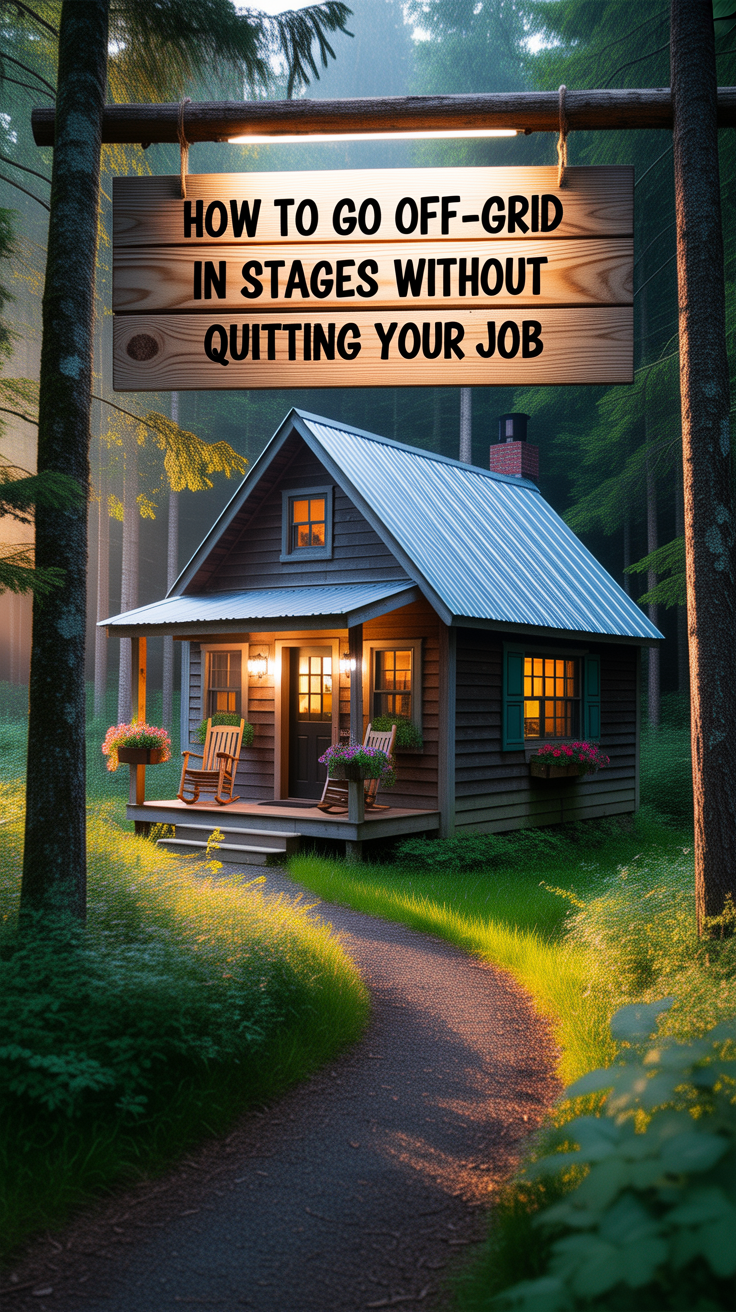
How to Go Off-Grid in Stages Without Quitting Your Job
Going off-grid doesn’t have to be a dramatic “sell everything and disappear” move. If you’re researching how to go off-grid in stages without quitting your job, you’re already thinking like a practical, long-term builder: reduce dependencies piece by piece, keep income stable, and avoid the common trap of taking on too much too fast.
The truth is that most modern off-grid transitions fail for predictable reasons—cashflow shock, unrealistic timelines, underestimating utilities, and trying to learn everything at once. The staged approach flips that. You keep your job, you keep your safety net, and you create a system that becomes more resilient each month—energy, water, food, storage, and skills—until “off-grid” is simply how you live, not a leap you survived.
Foundations for a staged off-grid plan that fits a work schedule
A staged transition starts with designing your target lifestyle around your current reality: limited weekday time, predictable income, and the need for reliability. Before you buy gear or land, build a simple framework you can execute in 60–90 minute blocks.
Define your “off-grid” baseline
“Off-grid” means different things to different people. Decide what success looks like in measurable terms:
- Energy: percentage of your electricity you produce (e.g., 30% in year one, 70% in year three).
- Water: redundancy for municipal water (e.g., 30-day emergency supply + filtration).
- Food: pantry depth and growing capacity (e.g., 30 days stored food, then 90 days).
- Waste: composting, greywater strategy, reduced trash output.
- Connectivity: enough internet/cell reliability to keep your job.
This isn’t about perfection—it’s about a minimum viable off-grid system that you can expand.
Build constraints into your plan
Most working professionals succeed with off-grid projects when they respect three constraints:
- Time: You can’t “weekend warrior” every weekend forever without burnout.
- Maintenance: Reliable systems beat complex systems you can’t service.
- Cashflow: Treat the transition like a portfolio—diversify investments across energy, water, food, and skills.
A helpful mental model is “reduce dependence, increase redundancy.” Each upgrade should either lower a monthly bill, reduce a single point of failure, or increase your ability to handle disruptions.
“As many preparedness educators emphasize, resilience comes from layers—water safety, energy backup, and medical readiness—built gradually so each layer is dependable under stress.”
If you want a structured starting point for household resilience (especially if you’re balancing work and family), many people use resources like Home Doctor to map practical home-first capabilities without needing to become an expert overnight.
Money, time, and risk management for professionals moving off-grid
The biggest advantage you have—by not quitting your job—is financial predictability. Use it strategically. The staged method works best when you treat off-grid progress like a program with milestones, not random purchases.
Create a “transition budget” that doesn’t break your life
Start with a monthly amount you can invest without stress—often 5–15% of take-home pay. Split it into buckets:
- Infrastructure (50–60%): power backup, water storage, tools
- Consumables (20–30%): long-term food, filters, medical supplies
- Skills (10–20%): classes, books, practice builds
This prevents the common scenario where you buy a shiny system but can’t afford the basics that make it useful.
Reduce recurring costs first
Cutting recurring expenses is like generating “negative bills”—money you can redirect into off-grid systems. Prioritize:
- high electricity usage items (old freezers, inefficient HVAC habits)
- convenience spending (delivery food, subscriptions)
- interest costs (credit cards, unnecessary vehicle upgrades)
Lower overhead also reduces the income you “must” keep, which gives you options later.
Practice risk reversals
Risk management for a staged off-grid transition looks like:
- Prototype before you commit: test solar generators, water storage, small gardens.
- Build redundancy: two water treatment methods, alternate cooking options.
- Avoid single points of failure: one well pump, one battery, one freezer.
If you live in a city or dense suburb, redundancy matters even more because disruptions affect more people at once. Many professionals in urban areas improve readiness with systems-based training like URBAN Survival Code, focusing on practical, non-extreme preparedness while you keep living your normal schedule.
Power independence in stages without disrupting your work life
Energy is often the first off-grid upgrade people chase—and also where people overspend. The staged route focuses on backup first, then partial production, then optimization.
Start with a power audit and “must-run” circuits
List what you truly need during outages or instability:
- refrigeration/freezer
- lighting
- router/modem + phone charging (especially if you work remotely)
- medical devices, if applicable
- minimal cooking and water pumping
Then estimate usage. You don’t need precision—just enough to choose the right scale without guessing.
Stage 1: Backup power you can deploy instantly
A practical first step is a reliable backup plan for critical devices and food preservation. This is where many people consider an off-grid generator approach.
💡 Recommended Solution: Ultimate OFF-GRID Generator
Best for: building a dependable emergency power layer while still tied to the grid
Why it works:
- helps you plan for power continuity without needing a full solar build immediately
- supports staged preparedness while you learn your real energy needs
- fits weekend project pacing for working households
Stage 2: Reduce load before you add production
The cheapest “power generation” is lowering consumption:
- switch lighting to LEDs
- add thermal curtains and weather stripping
- move to efficient cooking methods when possible
- schedule high-draw tasks during off-peak rates (if applicable)
This step makes every future solar/battery system smaller and less expensive.
Stage 3: Build partial generation
Once you know your baseline usage, you can build toward producing a meaningful slice of power. Some people explore solution guides and design frameworks like Energy Revolution System to structure their approach and avoid randomly assembling mismatched components.
Comparison/Alternative: While a full rooftop solar installation is popular, a staged setup built around essential loads and backup-first design can be a more manageable alternative for professionals—especially when you can’t risk downtime during workdays.
Water security and storage that works in apartments, suburbs, or rural land
You can survive a power outage with candles and blankets. Water is different. Water planning is one of the fastest ways to feel “off-grid capable” without changing your address or job.
Stage 1: Build a two-layer water plan
Your goal is redundancy:
- Stored water for immediate needs
- Treatment for extended disruptions
Even if you have city water, you want a plan for loss of pressure, contamination advisories, or supply issues.
Stage 2: Make storage realistic for your space
A common mistake is aiming for huge storage that doesn’t fit your home. Instead:
- distribute containers in closets and under beds
- store a portion in garage/shed if temperatures allow
- rotate and label dates
If you want a packaged approach for emergency water readiness, some households incorporate tools like SmartWaterBox as part of a grab-ready solution for short-notice disruptions.
Stage 3: Add a “produce water” capability
Long-term off-grid living means you can acquire water, not just store it: rain catchment (where legal), well planning, filtration, condensation-based collection, or hauling and treatment.
Many people aim for a system that can cover drinking/cooking needs even during long outages. Solutions like Water Freedom System are often considered by those looking for a step up from basic storage—especially if they want a structured approach to water resilience without immediately installing permanent infrastructure.
“As resilience instructors often note, water is the first domino—when you control water, every other system (food, sanitation, health) becomes easier to stabilize.”
Food independence in stages with minimal daily time
Food is where staged off-grid living shines—because you can make real progress in small weekly routines. Your job stays; your pantry and skills grow.
Stage 1: Build a calm, practical pantry
Start with what you actually eat. Track meals for two weeks, then build a 30-day pantry that covers:
- carbs (rice, pasta, oats)
- proteins (beans, canned fish/meat)
- fats (oil, nut butters)
- flavor (salt, spices, sauces)
- comfort (coffee/tea, snacks)
This isn’t about fear—it’s about flexibility and fewer emergency runs.
If you want a structured guide for building long-lasting food resilience, many people learn from resources like The Lost SuperFoods, which can help you think beyond modern grocery dependence and diversify what you can store.
Stage 2: Grow small, not heroic
Most working adults fail at gardening because they start too big. Choose something you can maintain on weekdays:
- herbs in containers
- salad greens in a small bed
- a few high-yield plants you’ll actually eat
A small system that runs for 12 months beats a large garden that collapses in July.
For those building a property-based plan, guides like The Self-Sufficient Backyard are often used to organize a realistic path from “starter garden” to a more productive homestead—while still living a normal working life.
Stage 3: Add preservation and rotation
Off-grid resilience depends on what you can keep:
- freezing (with backup power plan)
- dehydrating
- canning (once you’ve learned safe basics)
- rotating pantry stock so nothing becomes waste
Problem-solution bridge: Struggling to turn “random stored food” into a real system? A planned pantry with rotation dates, staple recipes, and preservation routines prevents the common burnout cycle of buying supplies you never use.
Safety, security, and medical readiness without paranoia
A staged off-grid transition should make you feel more at ease—not more anxious. The safest approach is to focus on probability-first preparedness: common injuries, short outages, temporary supply chain disruptions, and weather events.
Home-first medical capability
Before you worry about extreme scenarios, tighten up the basics:
- first aid supplies you know how to use
- OTC medications you actually rely on
- hygiene and sanitation backups
- a written list of allergies/prescriptions (printed)
Many families improve this layer with practical home medical guidance like Home Doctor, especially when professional medical care might be delayed during storms or regional events.
Security as layers, not weapons
Security is mostly about visibility, habits, and deterrence:
- motion lighting
- locking routines
- cameras/signage where appropriate
- knowing neighbors
- layered storage (don’t keep all critical supplies in one obvious place)
If you’re in a higher-density area, skills-based preparedness can matter more than gear. Resources like URBAN Survival Code are often used by people who want a practical, everyday approach to self-reliance without changing their entire lifestyle.
Information, awareness, and resilience planning
Some off-grid-minded professionals maintain a broader preparedness framework—communications, contingency plans, decision-making under stress, and redundancy in essential resources.
“As many preparedness authors point out, a plan you practice is more valuable than a plan you admire.”
If you want to explore higher-level strategy and layered readiness concepts, some readers use BlackOps Elite Strategies as a resource for building a more comprehensive approach.
Land, housing, and infrastructure choices that don’t require quitting your job
You don’t need land to begin going off-grid in stages—but if land is part of your plan, you can still do it without career disruption by treating it like a long-term build.
Stage 1: Make your current home more self-reliant
Even renters can improve resilience:
- water storage and filtration that doesn’t modify plumbing
- balcony/container gardening
- backup lighting and charging
- improved pantry depth
This creates skills and proven routines you can move anywhere.
Stage 2: Acquire land strategically (if that’s your goal)
If you plan to buy land, don’t start with the dream cabin. Start with criteria that support staged building:
- legal access and clear title
- water potential (well feasibility, catchment friendliness, nearby sources)
- workable solar exposure
- distance that matches your weekends and PTO
- realistic zoning/building rules
A common mistake is buying cheap land that’s expensive to use.
Stage 3: Build infrastructure in “weekend modules”
Design your build so each weekend produces something functional:
- secure storage and a basic shelter
- a reliable water setup (hauling + treatment at first)
- a small solar/backup power layer
- a composting or sanitation plan
The final form might be a cabin or full homestead—but the path is modular.
Stage 4: Keep the job until the system is stable
This is where many people get impatient, but it’s the professional advantage: you can keep financing the transition. Set a “quit threshold” only if you choose to later, such as:
- 12 months of expenses saved
- land systems stable through all seasons
- predictable food/water/energy routines
- health insurance and income replaced or reduced need proven
If you’re concerned about increasing volatility or disruptions while you build gradually, some people add a broader resilience resource like Dark Reset to help think through contingency planning—especially when the goal is to stay employed and stable while becoming more independent.
Tools, routines, and a weekly cadence that makes staged off-grid sustainable
The difference between “I want to go off-grid” and “I’m becoming off-grid” is routine. You don’t need huge projects every week—you need consistent momentum.
A realistic weekly schedule (example)
- One weekday (30–45 minutes): inventory + rotate pantry/water; charge backup devices
- One weekday (30 minutes): skill practice (knots, first aid review, seed starting, maintenance checklist)
- One weekend block (2–4 hours): one infrastructure task (garden bed, rain barrel planning, freezer organization, shelf building)
In three months, that’s 12 weekend builds and dozens of small maintenance actions—more than enough to create real independence.
Build a “resilience stack” (layered essentials)
Instead of chasing trends, keep a layered stack:
- power continuity
- water storage + treatment
- food pantry + preservation
- medical readiness
- household security and communication
This aligns with the staged approach and prevents neglecting one critical area.
Tools & resources to support your staged journey
If you want optional guides and systems to help you plan without overcomplicating:
💡 Recommended Solution: SmartWaterBox
Best for: quick-start emergency water readiness
Why it works:- supports short-notice disruptions
- complements longer-term water collection plans
- fits home/apartment storage strategies
💡 Recommended Solution: The Self-Sufficient Backyard
Best for: turning “I want a homestead someday” into a step-by-step property plan
Why it works:- encourages small, high-success projects
- supports gardening + food independence goals
- helpful for staged infrastructure planning
💡 Recommended Solution: Ultimate OFF-GRID Generator
Best for: building a power backup layer before full independence
Why it works:- supports an essential-load approach
- improves resilience while you stay employed
- helps avoid rushing into expensive systems
Conclusion
Learning how to go off-grid in stages without quitting your job is mostly about sequencing: reduce dependence before you increase complexity, build redundancy before you chase perfection, and create routines you can sustain while working full-time. Start with the pillars—power, water, food, and safety—then expand toward land and deeper infrastructure only when your current layer is stable.
A staged approach keeps your income steady, lowers stress, and gives you time to develop skills that matter far more than any single purchase. If you keep stacking small wins—one weekend project, one pantry upgrade, one water improvement at a time—you’ll eventually look up and realize you didn’t “escape the grid.” You simply outgrew your dependence on it.
FAQ
How long does it take to go off-grid in stages without quitting your job?
Most people see meaningful resilience within 3–6 months (water storage, pantry depth, basic backup power) and deeper independence within 1–3 years, depending on whether land and major infrastructure are part of the plan.
What should I prioritize first when going off-grid gradually?
Start with the basics that fail fastest during disruptions: water storage + treatment, a calm 30-day pantry, and backup power for essential loads (refrigeration, communication, lighting).
Can I start going off-grid while living in an apartment?
Yes. You can build pantry depth, water storage, compact cooking backups (where safe/legal), medical readiness, and portable power continuity. These skills and systems transfer later if you move to a house or land.
How do I stay off-grid-focused without burning out while working full-time?
Use a weekly cadence: one small weekday task (inventory/rotation) and one weekend build block. Keep projects modular and measurable so you can pause without losing progress.
Is going off-grid in stages expensive?
It can be as affordable or as costly as you make it. The staged approach is designed to control costs by prioritizing load reduction, resilience basics, and incremental upgrades rather than a single large lifestyle overhaul.
RANK MATH SEO BLOCK
SEO Title (≤60 chars): Go Off-Grid in Stages Without Quitting Your Job
Meta Description (≤160 chars): Learn how to go off-grid in stages without quitting your job with a practical plan for power, water, food, and resilience—step by step.
URL Slug: go-off-grid-in-stages-without-quitting-job
Focus Keyword: How to Go Off-Grid in Stages Without Quitting Your Job
Suggested Schema Type: FAQ