
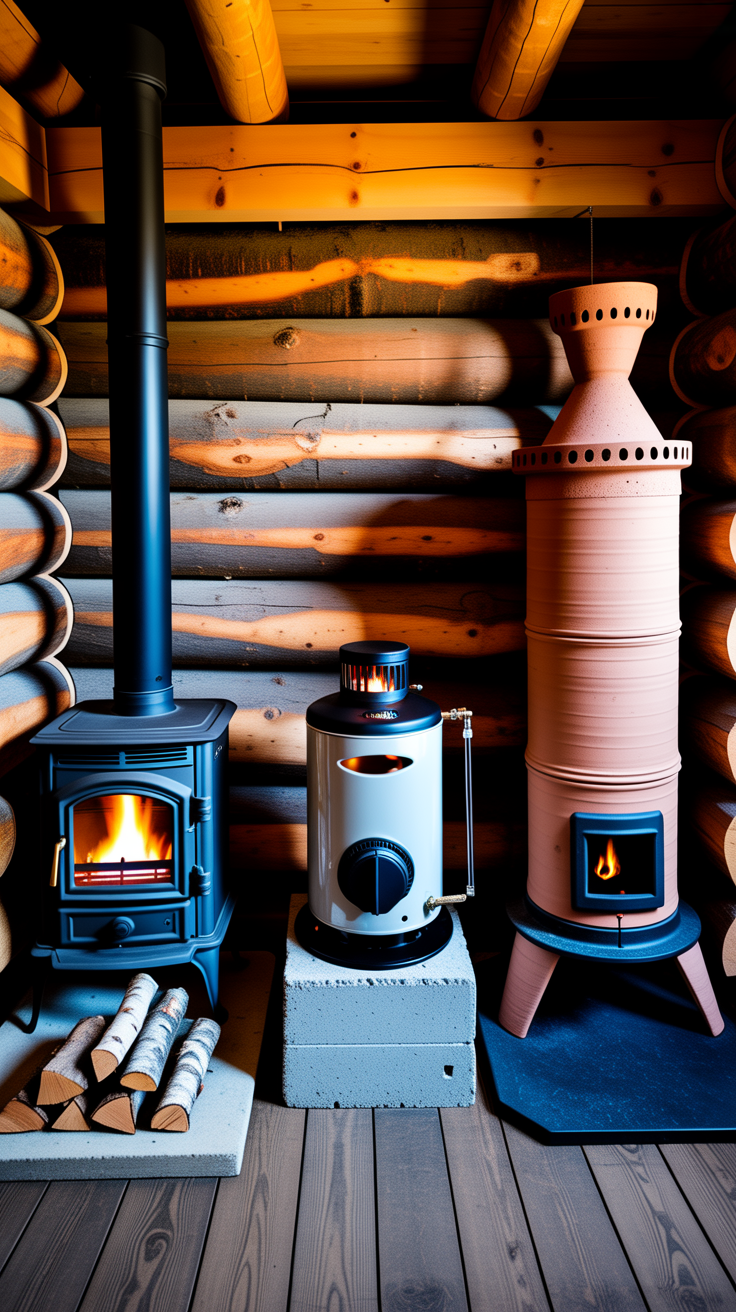
Wood Stove vs. Propane vs. Rocket Mass Heater: Which Wins Off-Grid?
Choosing heat for an off-grid cabin isn’t just about staying warm—it’s about fuel you can actually get, how much daily work you can handle, whether you need cooking capability, and how safe the system is when the weather turns ugly. In Wood Stove vs. Propane vs. Rocket Mass Heater: Which Wins Off-Grid?, the “winner” depends on your climate, your site access, local regulations, and how permanent your setup is. A propane heater can feel effortless until deliveries get interrupted. A wood stove can be bulletproof if you have trees and time. A rocket mass heater can be incredibly efficient, but it rewards planning, materials, and a willingness to build.
If you’re building an off-grid lifestyle, heat is only one piece of resilience. Many homesteaders pair a reliable heating plan with water and food contingency systems—because when you’re snowed in, water storage and shelf-stable calories matter as much as BTUs. 💡 Recommended Solution: Water Freedom System
Best for: backup water collection/storage planning alongside winter heat
Why it works:
- Supports off-grid readiness when pipes freeze or access is limited
- Useful in cabins where power and pumping are inconsistent
- Complements any heating choice without changing your heater setup
Introduction
Off-grid heat is a systems decision: fuel sourcing, ventilation, humidity control, carbon monoxide safety, and daily routine. If you choose wrong, you might end up with a comfortable cabin—right up until the tank runs dry, the woodpile is wet, or your heater demands a skillset you don’t have yet.
This guide compares the three most common off-grid options—wood stoves, propane heaters, and rocket mass heaters—using real-world criteria: efficiency, heat quality, cost factors (without guessing prices), installation complexity, maintenance, emissions, and how each performs during multi-day cold snaps. You’ll also get practical “best fit” scenarios and a quick decision framework, so you can pick a setup you can live with all winter.
Performance criteria that actually matter off-grid
Before comparing equipment, define what success looks like. Off-grid heating isn’t a showroom comparison; it’s a lifestyle match.
Fuel availability and independence
- Wood can be locally harvested, scavenged, or bought—often the most independent if you have access to trees and time.
- Propane is energy-dense and predictable—until supply chains, deliveries, or road conditions fail.
- Rocket mass heaters usually burn small-diameter wood very efficiently, but still require wood access (and dry fuel).
Heat quality and comfort
- Wood stoves deliver radiant heat fast and can make a cabin feel instantly warm.
- Propane gives controllable heat output; some models provide quick convection warmth.
- Rocket mass heaters excel at thermal mass comfort—steady warmth over long periods, less temperature swing, and a warm bench or mass surface.
Installation limits and legality
- Wood stoves generally have established code pathways (clearances, chimney class, roof penetration).
- Propane appliances depend on safe piping, regulators, and ventilation requirements.
- Rocket mass heaters can be difficult in some jurisdictions; some are “non-standard” builds that may not be recognized by inspectors or insurers.
Workload and daily routine
- Wood stoves and rocket systems require fueling, ash management, and seasonal wood processing.
- Propane is lower labor day-to-day but can create a different burden: keeping tanks filled and monitoring consumption.
Safety, ventilation, and indoor air
All combustion heat needs:
- Adequate make-up air (especially in tight cabins)
- CO alarms and smoke alarms
- Safe clearances, fireproof hearths, and proper flue design
“As many certified hearth installers emphasize, ‘a reliable system is one you can vent correctly and maintain consistently—efficiency means nothing if the house fills with smoke.’” That applies to all three options.
Wood stoves for off-grid heating
A wood stove is the off-grid classic for a reason: it can heat through grid outages, storms, and fuel disruptions—assuming you can get dry wood. Most off-grid cabins rely on wood because it’s a locally controllable resource, and stoves can also support cooking, simmering, and warming water when you don’t have a full kitchen.
Strengths of wood stoves
- Fuel autonomy: If you have acreage, you can build a multi-year woodpile and insulate yourself from fuel deliveries.
- Simple mechanics: A basic stove has few failure points.
- High peak output: Useful for quickly warming a cold cabin.
- Works without electricity: Many setups run fine with natural draft.
Common pitfalls
- Wood processing is real work: Cutting, splitting, stacking, and seasoning is a seasonal job.
- Moisture content matters: Wet wood leads to creosote, poor draft, and smoky burns.
- Chimney and draft issues: Cold chimneys, short stacks, bad cap placement, and tight buildings can cause backdrafting.
- Overheating small cabins: A too-large stove can make a tiny space unbearable.
Best-fit scenarios
A wood stove tends to “win” off-grid when:
- You have abundant local wood and a safe storage area
- You want resilience through long outages
- You can commit to a woodpile routine
- You’re in cold climates where steady winter heating is non-negotiable
Practical upgrades that don’t require new tech
- Improve insulation and air sealing (while ensuring proper make-up air for combustion)
- Build a dedicated dry woodshed
- Use a stove thermometer and burn practices that limit creosote
- Consider a layout that supports airflow (fans can help, but don’t rely on power)
Many off-grid builders also prep for winter “lock-in” situations where travel becomes risky. In those cases, food redundancy matters as much as heat output. Many professionals rely on resources like The Lost SuperFoods to streamline pantry planning for long stretches when resupply is limited.
Propane heaters off-grid: clean control with a supply-chain tether
Propane is popular in off-grid cabins because it’s controllable, clean-burning compared to many solid fuels, and easy to turn on. A properly installed propane system can run a heater, cookstove, and sometimes on-demand hot water. For many people, propane is the “comfort-first” solution—especially for weekend cabins or areas where wood is scarce.
Strengths of propane heating
- Convenience: Fast start, easy modulation, minimal daily mess.
- Compact storage: A single tank can hold a lot of energy in a small footprint.
- Cleaner indoor routine: No wood debris, less ash handling.
- Strong pairing with thermostats: Some systems allow more consistent temperature control.
Limitations to consider
- Fuel dependence: Your heat depends on deliveries or transport of refills—bad roads and storms can change everything.
- Ventilation and moisture: Some propane heaters add moisture indoors (model-dependent). In tight cabins, humidity can become a real comfort and mold issue.
- Cold-weather performance: Regulators, lines, and tank pressure behavior in extreme cold can affect performance.
- Ongoing monitoring: You’ll want a reliable way to track consumption and avoid “empty-tank surprises.”
Best-fit scenarios
Propane often “wins” when:
- The cabin is used intermittently and needs fast warm-up
- Wood is scarce, protected, or hard to process
- You prioritize low daily labor and clean operation
- You can reliably store and replenish fuel
Propane + preparedness reality check
Propane can feel like a perfect solution—until a multi-week disruption hits. That’s why many off-grid households build redundancy: propane for convenience, plus a backup plan for prolonged disruptions. Struggling with broader resilience planning beyond just heat? URBAN Survival Code addresses this by helping you map practical backup systems when normal services and deliveries don’t happen on schedule.
Rocket mass heaters: high efficiency, high commitment
Rocket mass heaters (RMHs) are famous in homesteading circles for using small sticks to produce a clean, hot burn and then storing that heat in a large thermal mass (often cob, masonry, or other dense material). In the right build, an RMH can deliver long-lasting warmth with less wood than a conventional stove.
That said, RMHs are not “plug-and-play.” They’re a build project—a heating appliance integrated into your cabin structure. The payoff can be big, but only if you’re ready for design considerations, materials sourcing, and potential code/insurance complexity.
Strengths of rocket mass heaters
- Efficient wood use: Very hot combustion can reduce smoke and stretch your woodpile.
- Thermal mass comfort: Warmth that lingers for hours; less temperature swing.
- Small-diameter fuel: Useful where you have brush, coppice, or scrap wood rather than large rounds.
- Cozy living features: Many designs create a warm bench or mass that becomes a lifestyle upgrade.
Limitations and risks
- Build complexity: Sizing, chimney drafting, safe clearances, and material choice matter.
- Weight and foundation: Thermal mass is heavy; floors and foundations must handle it.
- Not always code-friendly: Some areas lack clear permitting pathways.
- Slow response: RMHs aren’t ideal if you want quick warm-up from freezing temps.
Best-fit scenarios
A rocket mass heater tends to “win” when:
- You live in the cabin full-time and want stable, all-day comfort
- You can build safely (or get help) and have a solid foundation
- You’re in a region where permitting/insurance is manageable
- You have steady access to dry small wood and enjoy hands-on systems
“For instance, users who implemented a well-designed rocket mass heater commonly report a shift from ‘constant feeding’ to ‘strategic burns’—getting warmth that lasts long after the fire is out.” Results vary by design, climate, and building envelope, but the thermal-mass concept is the core advantage.
Head-to-head comparison: what “wins” by category
This is the practical, off-grid way to compare wood stove vs. propane vs. rocket mass heater—not by hype, but by outcomes you’ll feel all winter.
Fuel security
- Winner: Wood stove / RMH (tie, context-dependent)
If you control your wood source, you control your heat. RMH often uses less wood, but still depends on dry fuel.
Ease of daily use
- Winner: Propane
Turn a knob, set a temperature, minimal mess. That’s hard to beat.
Comfort and steady heat
- Winner: Rocket mass heater
Thermal mass smooths out temperature swings. It’s a “slow and steady” comfort.
Fast warm-up
- Winner: Wood stove or propane (depends on appliance)
Wood stoves can blast radiant heat; propane is instant and adjustable. RMHs generally warm slowly.
Installation simplicity
- Winner: Propane (appliance-dependent) / Wood stove (well-established codes)
Wood stoves have common standards. Propane is straightforward if piping, regulators, and venting are done correctly. RMHs are the most complex.
Maintenance burden
- Winner: Propane
Wood stoves and RMHs require ash handling, chimney maintenance, and wood processing. Any solid-fuel system demands attention.
Multi-function use (heat + cooking)
- Winner: Wood stove
Wood stoves can cook, simmer, dry gear, heat water, and keep you warm—high utility during outages.
Dirty secret: the real winner is insulation
No heater “wins” if your cabin loses heat through the roof, floor, windows, and air leaks. Upgrading insulation, sealing drafts, and managing ventilation often reduces your heating demand more than switching appliances.
While you’re hardening the cabin, don’t neglect power resilience if you rely on fans, ignition systems, well pumps, or freezers. 💡 Recommended Solution: Ultimate OFF-GRID Generator
Best for: off-grid power backup to support heating accessories and essentials
Why it works:
- Helps maintain critical electricity during winter storms
- Supports small loads tied to comfort and safety (as appropriate to your setup)
- Complements wood, propane, or RMH systems rather than replacing them
Safety and indoor air: the non-negotiables
Off-grid cabins are often smaller and tighter than conventional homes, which changes the safety math. Combustion appliances need oxygen and create byproducts you must vent safely.
Core safety checklist for any heating type
- Install CO alarms and smoke alarms (and test them)
- Maintain required clearances to combustibles
- Use a proper hearth pad / floor protection
- Ensure adequate combustion air (especially with tight construction)
- Keep a fire extinguisher accessible and practice an exit plan
Wood stove specifics
- Creosote risk: Burning wet wood or smoldering fires increases chimney deposits.
- Chimney maintenance: Regular inspection and cleaning is part of ownership.
- Ash handling: Store ash in a metal container outdoors on a non-combustible surface.
Propane specifics
- Use correct regulators, hoses, and fittings; leak-check connections.
- Understand ventilation requirements (varies by appliance design).
- Store and protect tanks according to local standards and common safety practices.
Rocket mass heater specifics
- Prioritize proven design principles and safe materials.
- Treat it like a structural element: layout, thermal expansion, clearances, and venting are serious engineering considerations.
- If you’re uncertain, consult an experienced builder or relevant professionals.
“As many emergency medicine educators remind people living remotely, ‘winter emergencies often start as small oversights.’” Heating safety isn’t a one-time install—it’s a habit.
If you’re building a broader remote-living safety plan (injuries, exposure, delayed response times), Home Doctor is often used as a general preparedness reference for handling common medical situations when help is far away.
Real-world decision framework for different off-grid lifestyles
Pick the “winner” based on how you live, not what sounds coolest online.
Weekend cabin or hunting cabin
- Best fit: Propane, or propane + small wood stove
Why: You want quick warm-up and low hassle. Maintaining a big woodpile for occasional use can be inefficient.
Full-time off-grid homestead
- Best fit: Wood stove, or rocket mass heater (if you’re committed)
Why: Long winters reward fuel independence and durable systems. RMH can shine with steady occupancy and a lifestyle that matches slow, consistent heat.
Deep winter + long snow-ins
- Best fit: Wood stove with serious wood storage; consider redundant heat options
Why: When roads are blocked, deliveries don’t matter if you have a dry multi-month woodpile.
Minimal physical labor preference
- Best fit: Propane
Why: Hauling and splitting wood is demanding. Propane shifts burden from labor to logistics.
Limited wood access (desert, tundra edge, protected forest areas)
- Best fit: Propane
Why: Fuel you can store and transport becomes the constraint. Don’t plan around “free wood” you can’t legally or practically obtain.
DIY builder with permanent site
- Best fit: Rocket mass heater
Why: If you love building and can plan the structure around the heater, RMH can be a high-comfort, low-fuel solution.
Many off-grid planners also prefer to reduce total energy dependence in parallel—heat choices become easier when the cabin needs less heat in the first place. While a heater is “energy use,” broader efficiency and energy planning can matter. While solar is popular, Energy Revolution System is often mentioned as a general resource for thinking through home energy resilience and reducing reliance on external systems.
Tools and resources that complement any off-grid heating plan
Having the right heater is step one. Having the right support systems is what keeps the heater useful when conditions change—especially water, food, and overall resilience planning.
Resource list for off-grid resilience (heat-adjacent)
- Water readiness: SmartWaterBox
- Food redundancy: The Lost SuperFoods
- Homestead systems planning: The Self-Sufficient Backyard
💡 Recommended Solution: The Self-Sufficient Backyard
Best for: building a cohesive off-grid plan beyond just heating
Why it works:
- Helps connect shelter, water, food production, and storage strategies
- Useful for prioritizing projects that reduce winter risk
- Supports long-term self-reliance planning without relying on one tool
Conclusion
In Wood Stove vs. Propane vs. Rocket Mass Heater: Which Wins Off-Grid?, the most honest answer is: the winner is the system that matches your fuel reality, your labor tolerance, your legal constraints, and your winter routine.
- Choose a wood stove if you want proven reliability, multi-use heat, and true fuel independence—assuming you can source and season wood.
- Choose propane if you prioritize convenience, fast control, and low daily labor—and you can reliably refill or store adequate fuel.
- Choose a rocket mass heater if you’re building a permanent, high-comfort homestead solution and you’re prepared for the design, weight, and complexity.
No matter which heater you choose, invest in insulation, draft management, ventilation, and safety gear. Off-grid warmth isn’t just about BTUs—it’s about staying consistently safe and comfortable when the easiest options disappear.
If you want a “belt and suspenders” approach, build redundancy: a primary heater you love using, plus backup systems for water, food, and power so winter doesn’t turn into a scramble.
FAQ
Wood stove vs. propane vs. rocket mass heater for off-grid cabins
For most full-time off-grid cabins, a wood stove or rocket mass heater tends to offer better fuel independence, while propane wins on convenience and temperature control. The best choice depends on your access to wood, ability to store propane, and whether your build allows an RMH legally and structurally.
Which is cheapest to run off-grid long-term
It depends on local fuel availability. If you can harvest your own seasoned wood sustainably, a wood stove (or efficient RMH) can reduce dependence on purchased fuel. Propane cost depends on delivery access, refill schedules, and consumption during cold snaps.
Which off-grid heater is safest
All can be safe if installed and vented correctly with proper clearances and alarms. Wood and RMH systems require chimney/vent maintenance and good burning practices; propane requires leak-safe installation and attention to ventilation requirements. In all cases, use CO/smoke alarms and follow relevant codes.
Which heater works best without electricity
Wood stoves and many rocket mass heater designs operate without electricity using natural draft. Some propane systems also work without electricity, but certain appliances and controls may need power—verify your specific setup requirements.
Can I combine propane and wood heat off-grid
Yes. Many off-grid setups use propane for quick warm-up or shoulder seasons and a wood stove for deep-winter resilience. Redundancy is often the most practical “win” in off-grid heating.
Rank Math SEO Block
SEO Title (≤60 chars): Wood Stove vs Propane vs Rocket Mass Heater Off-Grid
Meta Description (≤160 chars): Wood Stove vs. Propane vs. Rocket Mass Heater: Which Wins Off-Grid? Compare cost factors, fuel, safety, and comfort for cabins.
URL Slug: wood-stove-vs-propane-vs-rocket-mass-heater-off-grid
Focus Keyword: Wood Stove vs. Propane vs. Rocket Mass Heater: Which Wins Off-Grid?
Suggested Schema Type: FAQ