
Every person who has ever lived has looked up at the same face of the Moon. The same craters, the same dark patches, the same “Man in the Moon.” Until 1959, no human had any idea what the other half looked like. The far side of the Moon is permanently turned away from Earth, and when we finally saw it, it looked nothing like the side we know.
Here’s why we only ever see one side of the Moon, why the “dark side” isn’t actually dark, and what spacecraft have found on the hidden half.

Why We Only See One Side of the Moon
The Moon does spin. It turns on its axis exactly once for every orbit it makes around Earth, about every 27.3 days. Because its spin and its orbit are perfectly matched, the same side always faces us. Astronomers call this tidal locking or synchronous rotation.
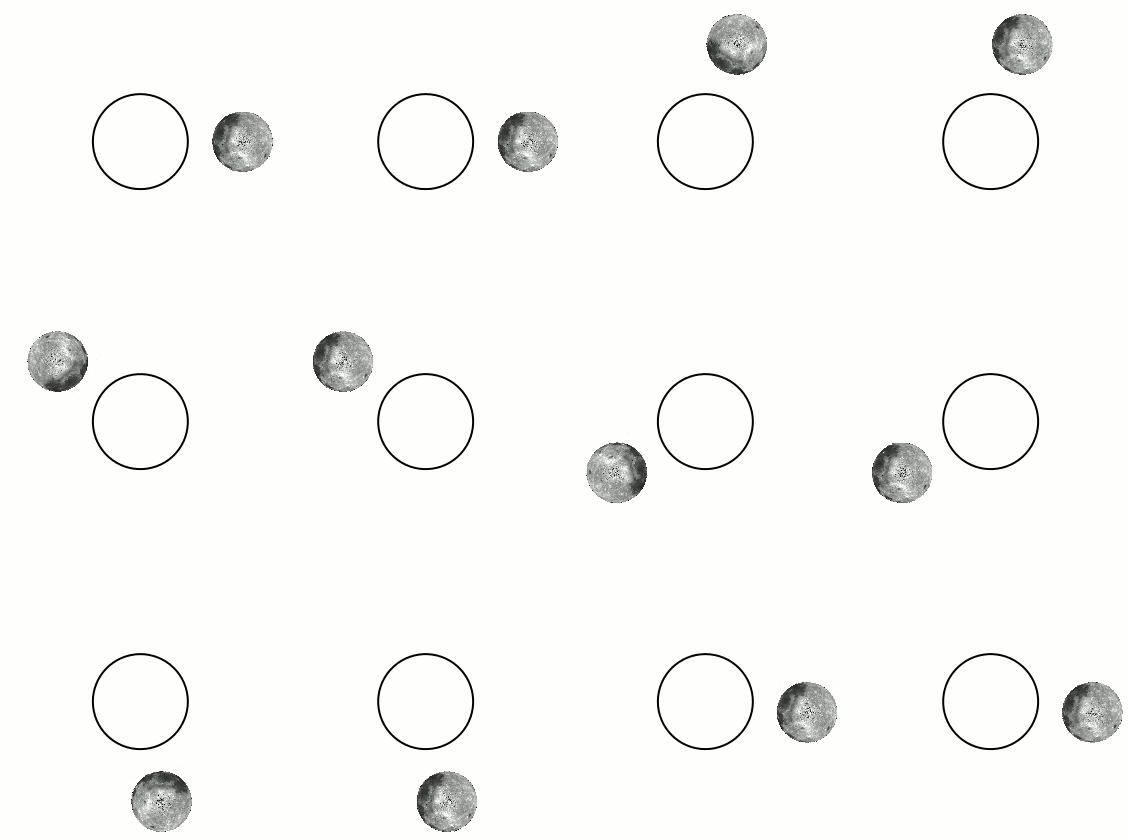
You can try it at home. Walk in a circle around a chair while always facing it. By the time you’ve gone all the way around, you’ve also turned a full circle, but the chair only ever saw your front.
How Tidal Locking Happened
The Moon didn’t start out this way. Billions of years ago it spun faster. Earth’s gravity pulled on the Moon and stretched it slightly into an egg shape, raising “tidal bulges” in its rock. As the Moon rotated, Earth’s pull kept tugging on those bulges and slowly braked its spin, the same way a hand rubbing on a spinning wheel slows it down. Eventually the spin slowed until it matched the orbit, and the Moon became locked.
This is common in space. Most large moons in the solar system, including Jupiter’s four big moons, are tidally locked to their planets.
Actually, We See 59%
The Moon’s orbit is slightly oval and tilted, so it seems to wobble a little from our point of view. This wobble is called libration, and it lets us peek a short way around the edges. Over time, observers on Earth can see about 59% of the Moon’s surface. The remaining 41% is always hidden.
The “Dark Side of the Moon” Myth
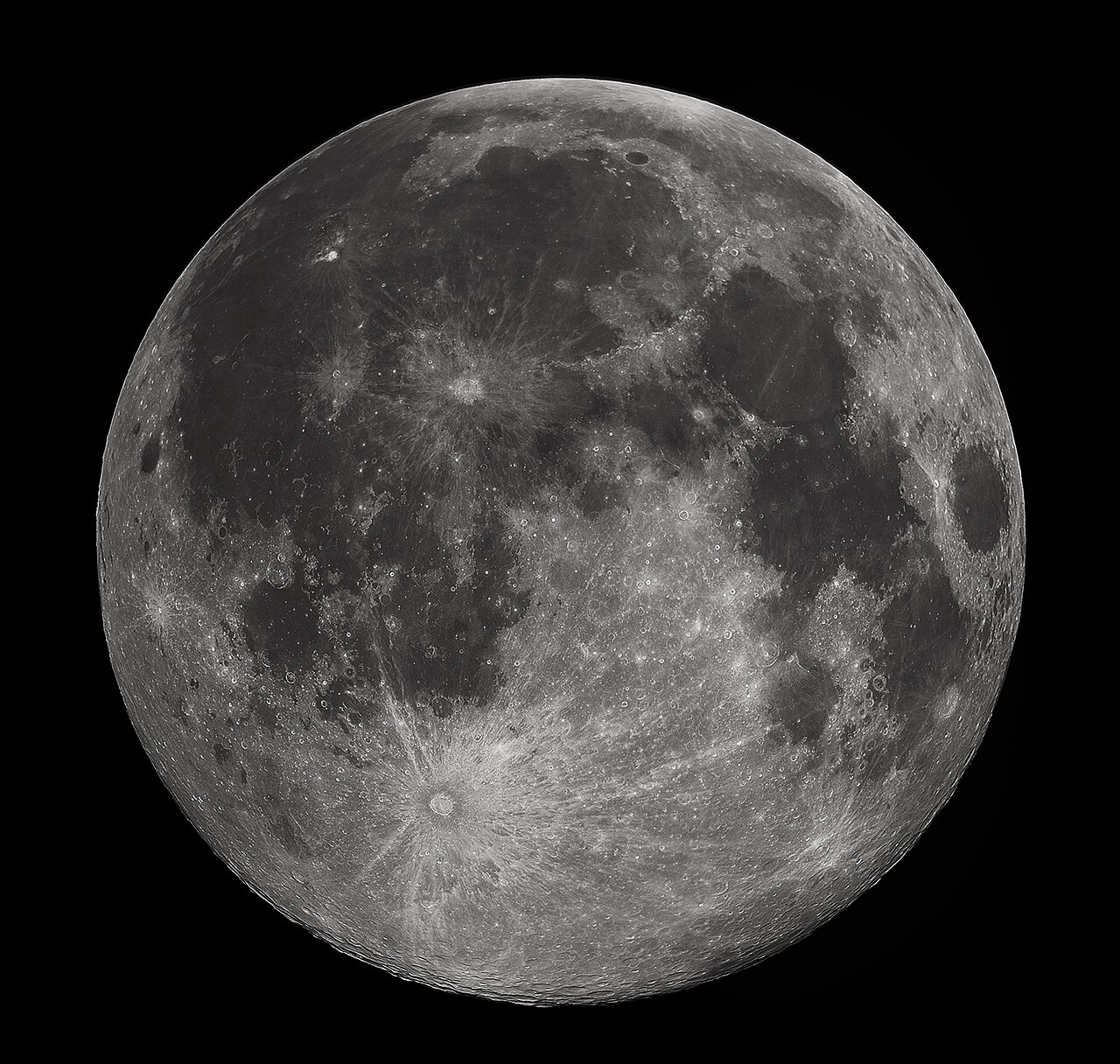
The far side is often called the “dark side of the Moon,” but it gets just as much sunlight as the near side. “Dark” here really means “unknown.”
The far side has day and night like everywhere else on the Moon. During a new Moon, when the side facing us looks completely dark, the far side is actually in full sunlight. A day on any spot of the Moon lasts about two Earth weeks, followed by about two weeks of night.
The First Look at the Far Side
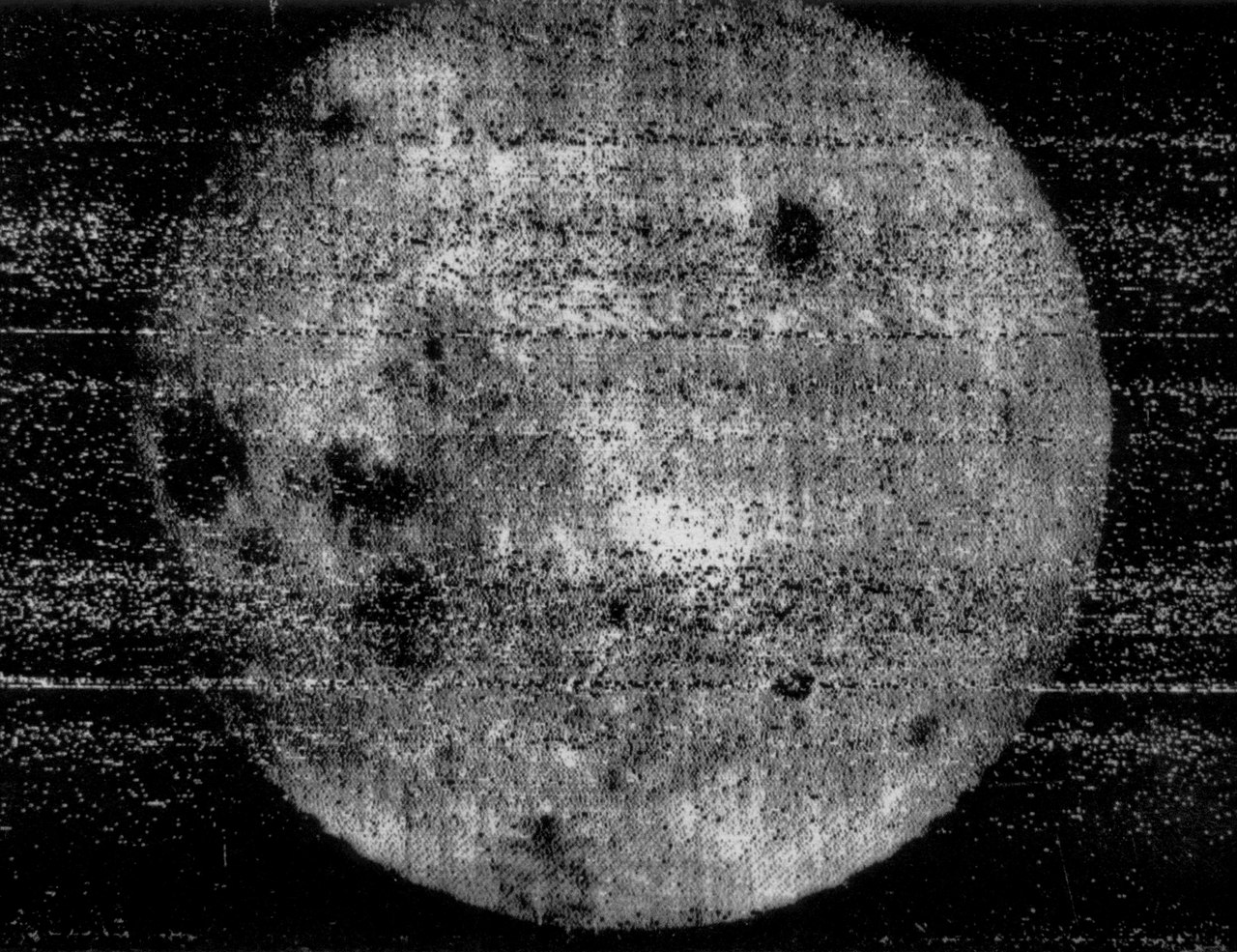
On 7 October 1959, the Soviet probe Luna 3 swung around the Moon and took the first photos of its far side. The images were grainy, but they showed something nobody expected: the far side looked very different from the near side.
The first humans to see it with their own eyes were the crew of Apollo 8, Frank Borman, Jim Lovell and Bill Anders, as they orbited the Moon in December 1968. While behind the Moon they were cut off from all radio contact with Earth.
Why the Far Side Looks So Different

The near side is covered with large dark patches called maria (“seas”), which are ancient plains of hardened lava. Maria cover about 31% of the near side but only about 1% of the far side. The far side is mostly bright, rugged highlands packed with craters.
The main reason is that the Moon’s crust is much thicker on the far side. On the near side, molten rock from deep inside could break through the thinner crust and flood large impact basins. On the far side, the thick crust mostly kept it trapped below.
Why the crust is lopsided is still debated. One idea is that the young Earth, still glowing hot after it formed, heated the near side of the newly locked Moon and changed how its crust cooled. Another suggests the Moon once collided with a smaller second moon that piled extra material onto the far side.
The far side also holds the South Pole–Aitken basin, an impact crater about 2,500 km across and up to 8 km deep. It’s one of the largest and oldest known craters in the solar system.
Landing on the Far Side: Chang’e 4 and Chang’e 6

Landing on the far side is hard because the Moon blocks direct radio contact with Earth. China solved this by first launching Queqiao, a relay satellite parked beyond the Moon that passes signals back and forth.
On 3 January 2019, China’s Chang’e 4 became the first spacecraft to soft-land on the far side, touching down in Von Kármán crater inside the South Pole–Aitken basin. Its rover, Yutu-2, kept working for years, far longer than planned. It used ground-penetrating radar to map layers of rock and dust beneath the surface and studied material that may have been dug up from deep inside the Moon by ancient impacts.
In June 2024, Chang’e 6 went further. It collected about 1.9 kg of rock and soil from the far side and brought them back to Earth, the first far side samples in history. Early studies of those samples show the far side had volcanic activity billions of years ago and help explain how the two halves of the Moon came to be so different.
The Quietest Place in the Solar System
The far side has another valuable property: silence. The Moon blocks the constant radio noise from Earth, including TV, phones, radar and Wi-Fi. That makes the far side one of the best places anywhere for radio telescopes listening to the faint signals of the early universe. Several space agencies are studying plans to build radio observatories there.

Keep exploring: Our Moon is only the beginning. See how far the nearest large galaxy is in You’re Looking 2.5 Million Years Into the Past When You See Andromeda.
Frequently Asked Questions
Why do we only see one side of the Moon?
The Moon is tidally locked to Earth. It rotates once on its axis in exactly the time it takes to orbit Earth (about 27.3 days), so the same side always faces us.
Is the far side of the Moon dark?
No. The far side gets the same amount of sunlight as the near side. It’s only “dark” in the sense that it was unknown. During a new Moon, the far side is fully lit by the Sun.
Who first saw the far side of the Moon?
The Soviet probe Luna 3 took the first photographs of the far side on 7 October 1959. The first humans to see it directly were the Apollo 8 astronauts in December 1968.
Has anything landed on the far side of the Moon?
Yes. China’s Chang’e 4 made the first soft landing on the far side in January 2019, and Chang’e 6 brought the first far side samples back to Earth in June 2024.