
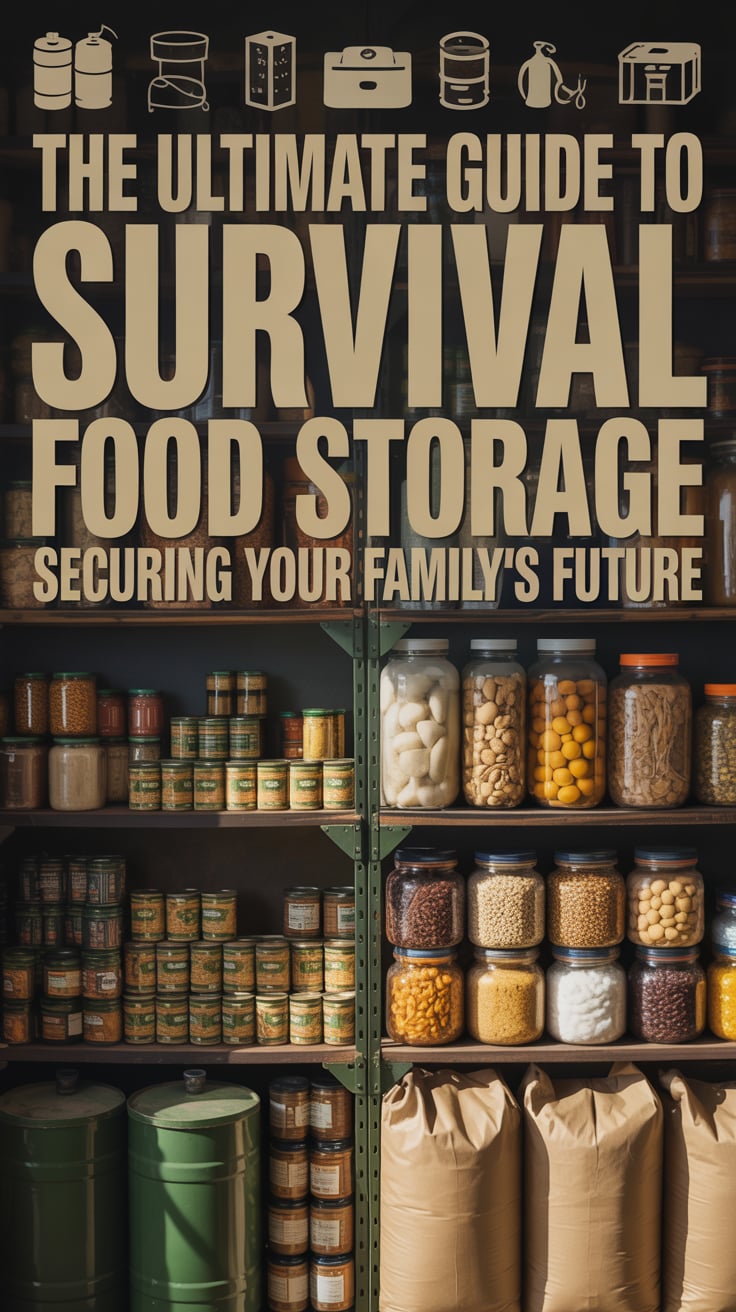
In an unpredictable world, the peace of mind that comes from a well-stocked pantry is immeasurable. Survival food storage isn’t about succumbing to fear; it’s about embracing preparedness as a practical, empowering lifestyle choice. It’s the strategic process of building a reserve of nutritious, long-lasting food to sustain you and your loved ones through any disruption, from a temporary power outage to a more significant, long-term crisis. This comprehensive guide will walk you through the fundamental principles, from calculating your family’s needs to mastering preservation techniques and selecting the right supplies, transforming the overwhelming task of prepping into a manageable, step-by-step plan. By prioritizing survival food storage, you are not just storing food; you are investing in security, self-reliance, and the unwavering confidence that you can handle whatever comes your way.
Understanding the Fundamentals of Food Preparedness
Before you purchase a single can or bucket, it’s crucial to grasp the core concepts that form the foundation of any effective food storage plan. This isn’t merely about hoarding large quantities of food; it’s about intelligent, strategic planning that ensures nutritional adequacy, shelf stability, and overall sustainability. The goal is to create a system that provides both short-term convenience and long-term security.
The first concept to understand is the difference between short-term and long-term storage. Short-term storage typically covers emergencies lasting from 72 hours to three months. This includes the food you rotate through your regular diet, often comprised of canned goods, boxed meals, and other supermarket items with a shelf life of one to five years. Long-term storage, on the other hand, is designed for crises lasting from several months to many years. This tier relies on staples with a multi-decade shelf life, such as white rice, dried beans, wheat berries, and professionally packaged freeze-dried meals. A robust plan integrates both, allowing you to dip into your short-term supplies for minor incidents while preserving your long-term reserves for truly catastrophic events.
Another fundamental principle is the “Store What You Eat, and Eat What You Store” philosophy. A common mistake beginners make is stockpiling vast quantities of unfamiliar foods like bulk wheat or lentil soup mix that their family would never normally consume. In a stressful situation, the last thing you need is digestive upset or outright refusal to eat. The most effective emergency food supply consists of foods your family already enjoys. Integrate these items into your regular meal rotation, practicing a first-in, first-out (FIFO) rotation system to keep your stock fresh and avoid waste. This practice not only maintains freshness but also ensures your family is accustomed to the meals they will be eating during an emergency.
Ultimately, the foundation of food preparedness is built on knowledge and a systematic approach. It requires an assessment of your family’s unique needs, preferences, and any dietary restrictions. By starting with these fundamentals, you build a resilient and practical food storage system that is far more valuable than a random collection of canned goods—it becomes a tailored lifeline for your household.
Calculating Your Family’s Caloric and Nutritional Needs
A pantry full of food is useless if it doesn’t provide adequate energy and nutrition to keep your family healthy and functional. Simply stacking cans without a plan can lead to critical gaps when you need sustenance the most. Calculating your needs is a science-backed process that ensures your long-term food storage plan is both sufficient and sustainable.
Start with calories. The average sedentary adult requires about 2,000 calories per day, but this is a baseline. In a survival scenario, stress, manual labor, and exposure to the elements can significantly increase caloric needs. A more realistic estimate for an active person in a stressful situation is 2,500 to 3,000 calories per day. To calculate your family’s total needs, multiply the number of people in your household by their estimated daily caloric intake, and then multiply that by the number of days you wish to prepare for. For a 90-day supply for a family of four (at 2,500 calories/person/day), you would need: 4 people x 2,500 calories x 90 days = 900,000 total calories. This number provides a tangible goal for your stockpile.
However, calories alone are not enough. Nutrition is paramount. A diet lacking in essential vitamins and minerals can lead to weakness, compromised immune systems, and serious health issues like scurvy. Your storage must include a balance of macronutrients and micronutrients. Focus on building a pantry around core categories:
- Proteins: Essential for tissue repair and immune function. Stock canned meats (tuna, chicken, spam), dried beans and lentils, peanut butter, and freeze-dried meats.
- Carbohydrates: The primary source of energy. This category includes grains like rice, pasta, oats, and flour.
- Fruits and Vegetables: Critical for vitamins, minerals, and fiber. Canned, jarred, and freeze-dried options are excellent for long-term food storage.
- Fats and Oils: Provide concentrated energy and are necessary for absorbing fat-soluble vitamins. Store cooking oils, coconut oil, and canned butter or ghee.
- Dairy/Dairy Alternatives: For calcium and vitamin D. Powdered milk, shelf-stable UHT milk, and powdered cheese sauces are reliable options.
Don’t forget comfort and morale. Including familiar favorites like coffee, chocolate, honey, or hard candy can provide a significant psychological boost during difficult times. By methodically calculating both caloric and nutritional needs, you move from simply having food to having a scientifically sound nutritional plan that will truly sustain life.
Essential Methods for Preserving Food Long-Term
The longevity of your survival pantry hinges on your understanding and application of various food preservation methods. Each technique works by inhibiting the growth of bacteria, yeasts, and fungi, the microorganisms that cause food to spoil. By combining these methods, you can create a diverse and resilient food storage portfolio that remains safe and nutritious for years, even decades.
Canning is a time-tested method that involves placing food in jars and heating them to destroy microorganisms. There are two primary types: water bath canning for high-acid foods like fruits, pickles, and jams, and pressure canning for low-acid foods like vegetables, meats, and soups. Pressure canning is essential for reaching the higher temperatures needed to kill dangerous pathogens like Clostridium botulinum. Properly canned foods stored in a cool, dark place can remain viable for one to five years or more. It’s a fantastic way to preserve garden harvests and create ready-to-eat meals.
Dehydrating and Freeze-Drying are methods that remove moisture, making it impossible for microbes to thrive. Dehydrating uses low heat and circulating air to dry food, resulting in a chewy texture. It’s excellent for making jerky, fruit leather, and dried herbs. While nutritious, dehydrated foods have a shorter shelf life than freeze-dried alternatives and require thorough rehydration before eating. Freeze-drying, on the other hand, is the gold standard for emergency food supplies. The process involves freezing the food and then placing it in a vacuum, which turns the ice directly into vapor. This preserves the food’s cellular structure, resulting in a product that is incredibly lightweight, retains nearly all its original nutrition and flavor, and can last for 25 years or more. Freeze-dried foods rehydrate quickly and easily, making them incredibly convenient.
Dry Staples and Oxygen Absorbers form the backbone of bulk long-term food storage. Foods like white rice, dried beans, pasta, and wheat berries have naturally long shelf lives. However, their longevity can be dramatically extended from a few years to 25-30 years by sealing them in Mylar bags with oxygen absorbers. The oxygen absorbers remove the oxygen from the sealed environment, preventing oxidation and killing insect eggs. Stored in food-grade buckets, this method is one of the most cost-effective ways to build a massive calorie reserve. For those looking for a comprehensive, ready-made solution that utilizes these advanced preservation techniques, resources like The Lost SuperFoods offer valuable insights into historical and modern preservation methods for a wide array of foods.
Mastering these preservation techniques empowers you to take control of your food supply, reduce waste, and build a storage plan that is both economical and extraordinarily durable.
Building a Balanced and Practical Food Stockpile
With the principles and methods in hand, it’s time to actively build your stockpile. A strategic approach prevents overwhelm and ensures you acquire the right foods in the right order. A haphazard collection of groceries is not a plan; a systematic, tiered build-out is. The key is to start with the essentials and gradually expand into more specialized and long-term items, all while maintaining balance and variety.
Begin with a robust short-term emergency food supply. This should cover at least two weeks to three months of meals that your family eats regularly. Focus on canned goods (fruits, vegetables, meats, soups), boxed foods (pasta, rice, cereal), and other pantry staples (peanut butter, crackers, cooking oils). This tier is your first line of defense and is used for everyday emergencies like job loss, storms, or illness. Practice the FIFO method rigorously here, using the oldest items from the back and replenishing with new items in the front. This keeps your investment fresh and functional.
Next, layer in your long-term survival food foundation. This is where you invest in the bulk staples that will provide calories and basic nutrition for the long haul. Prioritize foods that are calorie-dense, nutritious, and have ultra-long shelf lives. The core of this category typically includes:
- Grains: White rice, pasta, rolled oats, and hard wheat berries.
- Legumes: Dried beans (pinto, black, kidney), lentils, and split peas.
- Dairy and Fats: Powdered milk, powdered eggs, and cooking oil.
- Salt and Sugar: Essential for both nutrition and food preservation.
Store these items in Mylar bags with oxygen absorbers inside 5-gallon food-grade buckets for maximum protection against pests, moisture, and oxygen.
Finally, enhance your stockpile with freeze-dried and ready-to-eat meals. While bulk staples are cost-effective for calories, freeze-dried meals offer unparalleled convenience, variety, and nutritional completeness. They require minimal water and preparation time—a critical advantage when fuel and resources are scarce. These meals are perfect for bug-out bags, or as the primary source of nutrition when cooking facilities are limited. Integrating a few high-quality, ready-made survival kits can fill gaps in your plan and provide sophisticated solutions for complex scenarios, ensuring you have access to nutritious meals regardless of the situation.
By building your stockpile in these logical tiers, you create a dynamic, layered system that is both immediately usable and endlessly scalable, providing security for both minor inconveniences and major disasters.
The Critical Role of Water in Your Survival Strategy
While food is a primary concern, water is the non-negotiable foundation of life and any survival plan. A person can survive for weeks without food, but only a few days without water. Furthermore, your carefully planned survival food storage is useless without adequate water for rehydration and cooking. A comprehensive water strategy involves securing a supply, ensuring its purity, and having multiple ways to access and treat more.
Your first step is to establish a stored water reserve. The general guideline is to store at least one gallon of water per person per day. This covers not only drinking but also minimal hygiene and food preparation needs. For a family of four preparing for a two-week disruption, this equates to a minimum of 56 gallons. Store commercially bottled water in a cool, dark place, and rotate it every six months. For larger volumes, you can use food-grade water storage containers, such as 5- or 7-gallon jugs or 55-gallon drums. Always treat tap water with a preservative like water stabilizer if you’re filling your own containers for long-term storage.
Storing water is only half the battle; you must also be prepared to treat and purify water from alternative sources. Your stored supply will eventually run out, forcing you to turn to sources like rivers, lakes, rainwater, or even questionable tap water. Having multiple reliable purification methods is essential. Boiling is the most reliable method, but it requires fuel and time. Chemical treatment, such as iodine or chlorine dioxide tablets, is lightweight and effective against most pathogens. For the best combination of convenience and effectiveness, high-quality water filters are indispensable. A reliable system like the SmartWaterBox can provide a significant, portable reserve and efficient purification capabilities, giving you a critical edge in a prolonged crisis where water sources become compromised.
Don’t overlook passive water collection methods. Installing rain catchment barrels on your downspouts can provide a supplemental source of non-potable water for gardening or sanitation. Understanding how to collect dew or find natural springs in your environment are also valuable skills. In a true long-term scenario, securing a sustainable water source is even more critical than your food supply. Your water plan should be as detailed and redundant as your food plan, with stored water as your reserve and multiple purification tools as your active solution for extending that reserve indefinitely.
Storing, Rotating, and Organizing Your Food Cache
Acquiring a massive stockpile is an achievement, but its long-term viability depends entirely on how you store, manage, and maintain it. Improper storage can lead to spoilage, pest infestation, and the loss of your entire investment. An organized system is not just about neatness; it’s about functionality, ensuring you can quickly find what you need and consume it before it expires.
The environment for your emergency food supply is paramount. The three biggest enemies of food storage are heat, light, and humidity. Your storage area should be a cool, dark, and dry place. Ideally, the temperature should be consistently below 70°F (21°C). A basement can work if it’s dry, but a dedicated closet or spare room on a main floor is often better. Avoid attics and garages, as they typically experience extreme temperature fluctuations that dramatically accelerate food degradation. Ensure your storage area is also protected from pests by using sealed containers and keeping the area clean.
Organization is key to a functional system. The most effective method for managing a stockpile is the First-In, First-Out (FIFO) system. This means you always use the oldest items first and place the newest items at the back. To implement this, use shelving—preferably sturdy, metal shelving that can hold significant weight. Group like items together (e.g., all vegetables, all fruits, all meats) and label every container with the contents and the date it was stored. For bulk items in buckets, a simple spreadsheet or notebook inventory can help you track what you have and when it needs to be rotated. This prevents the frustration of finding a five-year-old can of beans that you forgot you had.
Regular rotation and maintenance are what separate a dynamic, living pantry from a decaying cache. Integrate your stored food into your everyday cooking. When you buy new canned goods, add them to the back of the shelf and take your next meal’s ingredients from the front. Schedule a quarterly “pantry check” to survey your stock, check for any signs of damage or spoilage, and update your inventory. This habit ensures your food remains fresh, and it keeps your family accustomed to eating the types of meals you’ve stored. Understanding and applying these organizational principles transforms your stockpile from a static collection into a resilient, reliable resource. For more advanced strategies on securing and managing your entire preparedness ecosystem, including food, water, and security, exploring resources like BlackOps Elite Strategies can provide deeper insights.
Beyond the Pantry: Vital Accessories and Final Preparations
A stockpile of food and water is the core of your preparedness, but it is not the entire picture. To truly be ready, you must equip yourself with the tools to use those resources effectively, especially when modern conveniences like electricity and running water are unavailable. This final stage of preparation bridges the gap between having supplies and being able to thrive with them.
Cooking and Fuel: Without power, your electric stove is useless. You must have alternative means to heat food and water. This is critical not only for palatability but also for safety, as heating can kill potential bacteria. Reliable options include a propane camping stove (with a large, refillable tank), a charcoal grill, or a rocket stove that burns small twigs and biomass. Don’t forget the fuel itself—store significantly more than you think you’ll need. Also include basic cooking implements like a manual can opener (multiple backups are wise), a cast-iron skillet, and sturdy pots and utensils.
Medical and Sanitation: In a crisis, the risk of injury and illness increases dramatically. A comprehensive medical kit is non-negotiable. While a standard first-aid kit is a start, you need supplies for more serious scenarios. This includes ample bandages, antiseptics, suture kits, pain relievers, antibiotics, and prescription medications if needed. Equally important is knowledge; consider taking a basic first-aid and CPR course. Sanitation is another often-overlooked element. Without a functioning sewer system, human waste becomes a immediate health hazard. Have a plan for a makeshift toilet, such as a five-gallon bucket with pool noodles for a seat and a supply of heavy-duty garbage bags and lime or kitty litter to control odor and breakdown. A guide like Home Doctor can be an invaluable reference when professional medical help is not available.
Security and Community: Your supplies make you a potential target in a prolonged disaster. Basic home security measures are a prudent part of preparedness. This includes reinforced doors, window security, and a plan for keeping a low profile (e.g., not running a generator at night). Perhaps the most powerful asset beyond your supplies, however, is your community. Building relationships with trusted neighbors creates a network for mutual aid, shared skills, and collective security. A lone prepper is vulnerable; a prepared community is resilient. Discussing plans and potential scenarios with those you trust can reveal blind spots in your own preparations and create a powerful support system.
By addressing these critical ancillary needs—cooking, medical, sanitation, and security—you elevate your preparedness from simply having a stockpile to possessing a comprehensive, actionable survival plan. This holistic approach ensures that when a crisis strikes, you are equipped not just with food, but with the capability, knowledge, and support to use it effectively and safeguard your family.
Conclusion: Your Journey to Self-Reliance Starts Now
Building a comprehensive survival food storage system may seem like a daunting task, but as we’ve detailed, it is a journey of manageable, logical steps. It begins with understanding the fundamentals of your family’s needs, progresses through the science of preservation and the strategy of stockpiling, and culminates in a holistic plan that encompasses water, tools, and security. This is not an exercise in paranoia, but one of profound empowerment. Taking deliberate action today to secure your family’s nutritional future provides an unmatched sense of confidence and peace. You are moving from a position of potential vulnerability to one of strength and self-reliance.
Remember that preparedness is a process, not a destination. Start small if you must—with a one-week supply of foods your family loves. Then, methodically expand to one month, three months, and beyond. Integrate rotation into your daily life, continuously educate yourself on new techniques and tools, and regularly reassess your plan as your family’s needs evolve. The goal is not to build a fortress of fear, but to cultivate a garden of resilience. By taking ownership of your food security, you are making a powerful statement that you and your family are worth protecting. Let this guide be the catalyst that transforms intention into action, and uncertainty into unwavering readiness.
Frequently Asked Questions (FAQ)
What is the difference between freeze-dried and dehydrated food?
Freeze-drying uses a vacuum process to remove moisture while preserving the food’s structure, nutrition, and flavor. It rehydrates quickly and can last 25+ years. Dehydrating uses heat to remove moisture, often resulting in a tougher texture and shorter shelf life (typically 1-5 years), and requires longer rehydration times.
How long does canned food really last in survival food storage?
Properly stored canned goods (in a cool, dark, dry place) can remain safe to eat well beyond their “best by” date. High-acid foods (like tomatoes) are best used within 18 months, while low-acid foods (like meats and vegetables) can often last 2-5 years. Always inspect cans for bulging, rust, or severe dents before use.
What is the most important first step in starting a survival food supply?
The most critical first step is to calculate your family’s specific caloric and nutritional needs for a target timeframe (e.g., 72 hours, 2 weeks, 1 month). This provides a data-driven foundation, preventing you from buying random items and ensuring your stockpile is both sufficient and balanced.
Can I use my regular pantry as my emergency food supply?
Yes, but with a crucial caveat. Your regular pantry can form the core of your short-term emergency supply, but you must practice rigorous rotation (FIFO) to keep it fresh. For true long-term security, you should supplement this with specifically packaged long-term staples like rice, beans, and freeze-dried meals.
How much water should I store per person?
The general rule is to store a minimum of one gallon of water per person per day. This covers drinking and minimal hygiene needs. For a family of four, a two-week supply would be 56 gallons. It’s better to overestimate, and you must also have plans for water purification once your stored supply is depleted.
What is the best way to store bulk grains like rice and beans for the long term?
The most effective method is to use oxygen absorbers and Mylar bags inside food-grade 5-gallon buckets. The oxygen absorbers remove oxygen that causes spoilage, and the Mylar bag provides a barrier against moisture and pests. This method can extend the shelf life of white rice and beans to 25-30 years.
Do I need to worry about hidden water needs in my survival food storage?
Absolutely. Many food preparation methods require significant water. Dehydrated and freeze-dried foods need water for rehydration, and cooking grains like rice or pasta also requires water. Your water storage plan must account for this “hidden” water—typically an additional 1-2 quarts per person per day for cooking alone.
Is it better to buy a pre-made survival food kit or build my own?
There are pros and cons to each. Pre-made kits from reputable companies offer convenience, nutritional balance, and a long shelf life, making them excellent for beginners or as a core reserve. Building your own allows for complete customization to your family’s tastes, dietary restrictions, and can be more cost-effective for bulk calories. A robust plan often includes both.