
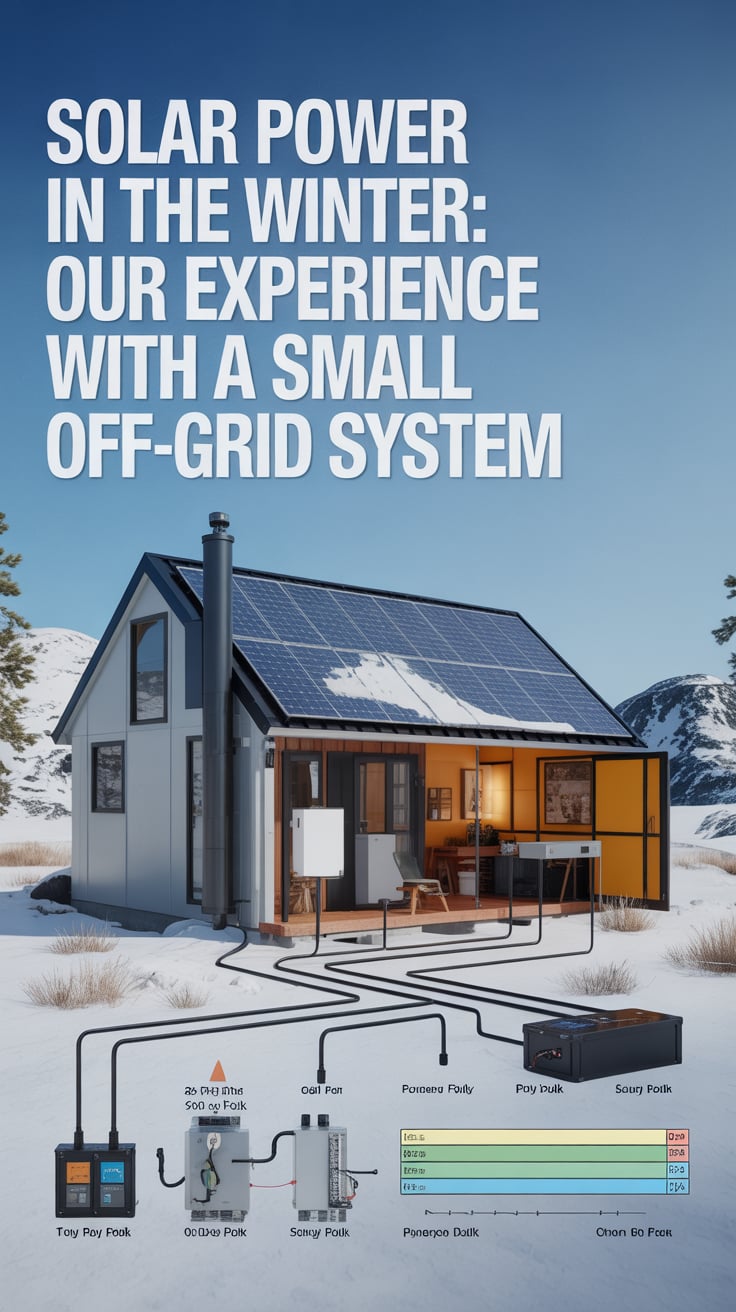
Living off-grid through winter taught us that solar power can absolutely work in the cold season—but it requires a different mindset than summer. Short days, low sun angles, snow cover, and long nights compress your energy budget and pressure every inefficiency. In this guide, we share what Solar Power in the Winter: Our Experience With a Small Off-Grid System taught us about planning, daily habits, gear choices, and backup strategies that actually work.
Right at the start of every winter we realized that power is just one pillar of resilience—the others are heat, food, and water. If you’re building a winter-ready setup alongside your solar, a simple way to shore up water independence is a compact storage-and-filtration system like SmartWaterBox, which pairs well with off-grid energy constraints.
Our small off-grid setup is the kind of system many weekend cabins, tiny homes, and homesteads use: a modest solar array, a capable MPPT charge controller, a battery bank sized for a day or two of essentials, and an inverter for AC loads. Below you’ll find exactly how winter changes the math—and what we adjusted to keep lights on, devices charged, and essentials running with peace of mind.
Table of Contents
How a small off-grid system behaves when the temperature drops
A “small off-grid system” usually means a compact solar array, a matched MPPT charge controller, a battery bank sized for essential loads, and an inverter that can handle brief surges. In summer, such a system often feels generous. In winter, it feels tight. Here’s the big picture of why and how we adapted:
- Solar input shrinks: Winter delivers fewer peak sun hours and a lower sun angle. Even on clear days, the arc is shallow and production ramps more slowly, peaks lower, and ends earlier.
- Cold is a mixed blessing: Photovoltaic modules actually operate a bit more efficiently at low temperatures. But the gain is overshadowed by reduced irradiance, cloud cover, and shading.
- Snow disrupts harvest: A thin layer can cut production to near zero. On the upside, when panels are clear, the reflected light off snow (albedo) can slightly boost output on bright days.
- Long nights stretch storage: With 14–16 hours of darkness in many regions, the battery must cover more evening and early morning hours.
- Inverter overhead matters more: The constant draw of inverters, routers, and monitors—tiny in summer—becomes a bigger slice of the pie in winter.
What we prioritized
- Robust charge control: MPPT controllers shine in winter by squeezing extra harvest from low-voltage, low-irradiance conditions compared to PWM.
- Battery protection: Keeping cells within recommended temperature ranges was non-negotiable. We insulated the battery space and thought carefully about charge cutoffs.
- DC-first mentality: Whenever possible, we used DC lighting and charging to skip conversion losses.
- Load discipline: We shifted high-draw chores to the brightest part of the day when the array could help shoulder the load.
If you’re starting small, this is good news: winter viability comes less from raw wattage and more from smart configuration, maintenance, and habits you can adopt immediately.
What solar power in the winter really looks like off-grid
The headline difference between summer and winter is energy availability. A simple way to visualize it is to think in daily “budget envelopes.” In winter, you just have fewer envelopes to open.
Key realities we observed
- Peak sun hours drop: In many temperate regions, winter may provide less than half the daily harvest of summer. Planning for this swing keeps expectations realistic.
- Angles matter more: Because the sun rides low, fixed shallow-tilt arrays underperform. Steeper winter tilt helps panels face the sun longer.
- Clouds linger: Winter often packs extended overcast streaks. An extra day or two of battery autonomy or a reliable backup becomes invaluable.
- Snow load is binary: Zero covered cells means power; a few centimeters of powder often means almost none. Clearing is critical.
How we adapted our usage
- Shift timing: We scheduled charging of laptops, tool batteries, and other moderate loads for midday when the array is producing. Nighttime use became lighting, phones, and essentials only.
- Batch tasks: Rather than many small pulses, we grouped chores (vacuuming, running a small pump, or using power tools) into the same sunny window to avoid deep battery cycling after dusk.
- Avoid resistive heat: Space heaters, electric kettles, and toasters are watt-hour killers. We used alternate fuels for heat and cooking and reserved electricity for lighting, communications, and small appliances.
- Plan for streaks: We kept a written log of state of charge (SOC) and weather patterns. If SOC dipped for two days straight, we scaled back proactively before hitting bottom.
A note on expectations
Even a modest array can carry you through winter if you right-size loads and maintain the system. But winter is less forgiving of waste. Every parasitic draw and every shadow shows up in the numbers. The payoff is reliability: fine-tuning in winter makes the same setup feel abundant in shoulder seasons.
Energy budgeting that works for solar power in the winter
Our Experience With a Small Off-Grid System taught us that energy budgeting is the backbone of winter viability. The best budgeting is simple enough to remember and strict enough to matter.
Start with a minimalist baseline
- Essentials only: Lighting, phone and radio charging, internet modem/router, and a small circulation or water pump if needed.
- Occasional loads: Laptops, small kitchen appliances (used briefly at midday), or a compact refrigerator/freezer with smart cycling.
- Exclusions: Electric space heat, electric water heating, hair dryers, and most power-hungry tools after dusk.
Map daily consumption to harvesting windows
- Morning: Reserve battery for lighting and coffee prep (non-electric heat source). Avoid heavy loads until the array wakes up.
- Midday: Run everything you can while sun is up—charge devices, batch chores, and let the array feed loads directly while topping the battery.
- Evening: Dim lights, switch to task lighting, and avoid vampire loads. A low-draw DC light string can save surprising watt-hours over a night.
Trim the invisible losses
- Inverter idling: Turn off the inverter overnight if you don’t need AC loads, and use DC where possible.
- Wall warts and adapters: Unplug when not in use. A handful of small parasitic draws adds up over long winter nights.
- Phantom networking: If your router must stay on, choose an energy-efficient model and schedule reboots to maintain performance without bloating consumption.
Create go/no-go rules
- SOC thresholds: Decide in advance at what state of charge you’ll skip optional loads, and a lower threshold where you’ll start a backup.
- Weather triggers: If the forecast calls for multiple cloudy days, pre-charge devices and complete chores early to protect SOC.
Tools that helped
- A simple energy log: Date, weather notes, SOC morning/evening, and notable loads used. Patterns emerge quickly.
- Load labels: We marked outlets and switches to remind ourselves which circuits were “night-safe” and which were “sun-only.”
- DC-centric accessories: USB-C PD chargers, DC LED fixtures, and 12V appliance options reduce inverter run time and conversion losses.
A winter day’s discipline might feel strict at first, but it becomes second nature. That discipline is what turns a small system into a steady one.
Optimizing the array for low sun, snow, and shade
Winter harvest is won or lost at the array. While you can’t control the sun, you can control how your panels meet it—angle, cleanliness, and shading make outsized differences in winter.
Dial in the tilt
- Aim steeper in winter: A tilt closer to your latitude plus a seasonal bump helps panels face the low sun and shed snow more easily.
- Favor manual adjustability: Even a few preset positions (summer/winter) can add meaningful winter production without complex racking.
- Consider ground mounts: In snow country, ground or low-mounted arrays make clearing snow safer and faster than roof climbs.
Keep panels clean and clear
- Clear snow carefully: A soft squeegee or brush with a non-abrasive head protects glass. Avoid hot water or metal tools.
- Leverage sun for melt: If only a corner is clear, the panel can warm and shed the rest. Sometimes a small cleared strip triggers a faster slide-off than brushing the whole panel.
- Watch for re-freeze: After clearing, moisture can re-freeze at the frame and pin snow in place. A slightly steeper tilt helps prevent this.
Defeat shade and obstructions
- Bare trees still shade: Branches without leaves can cast sharp shadows in low-angle winter sun. Trim selectively in fall.
- Stagger rows thoughtfully: If you have multiple rows, increase spacing to prevent self-shading at low sun angles.
- Wiring matters: Series strings maximize MPPT range but can drop hard when one panel is shaded. Parallel strings are more shade-tolerant but require heavier conductors and careful fuse/combiner protection. Choose based on your site’s winter shading.
Hedge against long overcast
- Oversize the array if you can: In winter, “too much panel” is rarely a problem. It shortens gen-run time and improves recovery after storms.
- Prioritize MPPT quality: Better tracking at low light and cold temps yields more usable harvest in shoulder hours.
- Mind the wind: Secure racking for winter gusts and drifting snow. Any panel movement increases wear and reduces efficiency.
This is the season to be ruthless about exposure and cleanliness. The same array that coasts through summer needs deliberate winter management to perform.
Battery care and charging strategy in cold weather
Storage is where winter off-grid lives or dies. Cold affects capacity, charging limits, and longevity across chemistries. Treat your battery bank like the heart of the system—keep it warm enough, charged enough, and never let it starve.
Temperature and chemistry
- LiFePO4: Excellent cycle life and stable performance, but most cells should not be charged below freezing. Use a battery with low-temperature charge protection or warm the battery compartment before charging. Discharge at low temps is generally allowed within manufacturer limits.
- Lead-acid (AGM/FLA): Can accept charge at lower temperatures but suffer reduced capacity and prefer shallower discharge in the cold. They also need correct temperature compensation on charging voltages.
What worked for us
- Insulated battery space: A small, insulated enclosure in a tempered area kept the bank above freezing most of the time. Even a few degrees make a difference.
- Smart temperature sensing: A charge controller with a temperature sensor ensured charging voltages adjusted correctly.
- Pre-warm before charging: On very cold mornings, we delayed heavy charging until the bank warmed slightly—either passively from the day or via safe, low-draw heating in the enclosure when necessary.
- Respect SOC floors: We set conservative low-voltage cutoffs and aimed to keep daily discharge shallower in long cold snaps. Preserving cycle life beats squeezing the last watt-hour.
Charging strategy
- Midday absorption: Maximize charging during the brightest window. If your controller allows, tailor absorption time to winter realities without undercharging.
- Don’t float forever: In low-load winter scenarios, floating all day can mask undercharging. Monitor actual SOC and ensure the bank regularly reaches a healthy full charge.
- Equalization (lead-acid): Follow manufacturer guidance and only when the array can support the process. Proper venting and safety precautions are essential with flooded cells.
Protect from parasitic drains
- Inverter standby: Kill it overnight if you don’t need AC. A tiny continuous draw becomes a big winter tax.
- Always-on devices: Consolidate and power down what you can. Even small monitors add up.
Monitor and verify
- SOC tracking: Use a shunt-based battery monitor or reliable controller data. Voltage alone is a poor predictor under load.
- Log trends: Track morning SOC after similar weather to catch slow degradation or hidden loads.
Healthy winter batteries don’t happen by accident. A little thermal management and conservative thresholds pay back in uptime and longevity.
Backup power and redundancy that actually reduce stress
Even well-optimized winter solar has a nemesis: multi-day storms. A calm, predictable backup plan turns those stretches from anxiety into routine.
Backup options that fit small off-grid systems
- Generator assist: A modest generator can top off batteries during long overcast. Size it to efficiently run your charger—not huge, just matched. Run in the brightest hours so the array shares the load.
- Vehicle alternator: With proper DC-DC charging, a vehicle can provide a slow, steady top-up in a pinch without overtaxing the electrical system.
- Portable power station: As a separate, self-contained battery/inverter, it can cover critical AC loads without touching the main bank—especially handy for devices you can charge from the array on good days.
Fuel and run discipline
- Consolidate run times: Batch chores that need AC (laundry pumps, shop vacs, power tools) during generator windows to get double duty from the fuel.
- Maintenance calendar: Fresh fuel, regular testing, and protected storage. Cold starts are kinder when you run engines monthly.
Water resilience complements power resilience
Winter often complicates water. Pumps work harder in freezing conditions, and frozen lines demand patience. We found that pairing power planning with water independence lowered our overall risk:
- For compact storage and filtration, SmartWaterBox helped us treat water without leaning on high-draw electric devices.
- For gravity-fed or tower-style options that reduce pump run-time, Aqua Tower offers a way to bank water capacity for low-sun stretches.
- If you have or plan a well, learning low-energy access strategies is invaluable. Resources like Joseph’s Well explore well-water solutions that can pair with modest electrical inputs.
Redundancy beyond hardware
- Written procedures: Post simple SOC thresholds and “storm mode” steps everyone can follow.
- Spares: Fuses, connectors, spare cables, and a backup charge controller can turn a mid-storm failure into a quick swap instead of a week-long outage.
- Communication: Keep a low-draw radio or satellite messenger ready so you can conserve phone battery during long outages.
Backups aren’t a failure of solar; they’re an honest acknowledgment of winter. When your plan anticipates dark stretches, you stop gambling and start managing.
Practical lessons and incremental upgrades from a winter season
Every winter gave us a short list of “next time” tweaks. None were glamorous, but each made a visible difference in comfort and confidence.
What paid off quickly
- More tilt, less snow: Adjustable racking paid for itself in fewer climbs and more clear-sky harvests.
- Better cable management: Winter winds and ice punished loose wiring. Tight runs and strain relief reduced intermittent faults and noise.
- DC task lighting: Cozy, efficient, and easy to place where you actually need it. It replaced multiple higher-draw fixtures.
- SOC habits: A simple rule—if morning SOC was below our threshold two days in a row, we scaled back loads and prepared backup. That prevented deep dives.
Monitoring and data
- Shunt monitor clarity: Knowing real amps in/out ended arguments with “voltage guessing.” It also revealed hidden draws we’d overlooked.
- Weather watch: We built a habit of checking cloud forecasts and making decisions a day earlier—batch laundry, pre-charge tools, and top up water.
Upgrade path we liked
- Panel-first upgrades: Adding panels before adding batteries improved recovery after storms and reduced generator hours.
- Smarter controller: An MPPT with better low-light tracking and logging improved winter harvest and gave useful historical data.
- Targeted storage increase: When we expanded storage, we didn’t just add capacity; we also improved thermal protection for the bank.
Durable habits
- Clean as you go: Snow, dust, and needles creep in. Short, frequent cleanings outperformed occasional deep sessions.
- Label everything: In the cold, you want zero confusion about which breaker, which fuse, which wire.
- Night routines: Pre-stage headlamps, dim lights, and set chargers for morning. Routines beat willpower.
The overall theme: winter rewards simplicity, clarity, and maintenance. None of these changes required a total rebuild—but together they made our small system feel bigger and steadier.
Build winter resilience beyond power
Resilience is a bundle: power, water, heat, and food all work together. A few smart additions reduce strain on the solar and give you options during prolonged storms.
- Store and purify water with minimal power using SmartWaterBox, so pumps and heaters don’t carry the whole burden.
- Bank gravity-fed capacity with Aqua Tower to lower runtime on electric pumps during cloudy weeks.
- Learn low-energy well strategies with Joseph’s Well to align water access with small solar realities.
- Round out pantry planning with The Lost SuperFoods so you’re not using scarce watts on frequent food prep or refrigeration cycles.
Conclusion
Solar Power in the Winter: Our Experience With a Small Off-Grid System is that winter viability is less about having a massive array and more about alignment—array angle, clean panels, battery thermal care, honest energy budgeting, and a calm backup plan. When you trim invisible losses, schedule loads with the sun, and protect your battery from the cold, even a modest setup can carry you through long nights and stormy stretches. Build power resilience hand-in-hand with water and food strategies, and winter stops feeling like an adversary and starts feeling like a season you’re prepared to enjoy.
FAQ
How well do solar panels work in winter?
Panels can work very well in cold temperatures—cells are actually more efficient when it’s cold—but winter brings fewer peak sun hours, lower sun angles, and more clouds. The net effect is typically lower daily energy. Good tilt, clean panels, and MPPT controllers help.
Can a small off-grid system handle winter living?
Yes, if you budget carefully. Focus on essentials (lighting, communications, small pumps), avoid electric heat, and shift moderate loads to midday. Add a reliable backup for long overcast stretches and protect your batteries from freezing.
What’s the best tilt for solar power in the winter?
A steeper tilt than summer, often near your latitude with a winter bump, improves low-angle capture and sheds snow more easily. Adjustable racking with at least a winter and summer position is a practical compromise.
How do I keep batteries healthy in cold weather?
Keep the battery bank in an insulated, tempered space; use a charge controller with temperature compensation; delay charging until the bank is above recommended temperatures (especially for LiFePO4); and maintain conservative SOC limits during cold snaps.
Do I need a generator with a small winter solar setup?
Not always, but a modest generator matched to your charger is a stress-reducer for multi-day storms. Run it during daylight so the array shares the load, and use the window to batch chores. Alternatives include DC-DC charging from a vehicle and separate portable power stations.
How do I manage water off-grid in winter without huge power draws?
Use gravity-fed or tower storage to reduce pump runtime, keep lines insulated, and rely on low-power filtration. Tools like SmartWaterBox, Aqua Tower, and Joseph’s Well complement small solar systems by lowering electrical demand for water access.