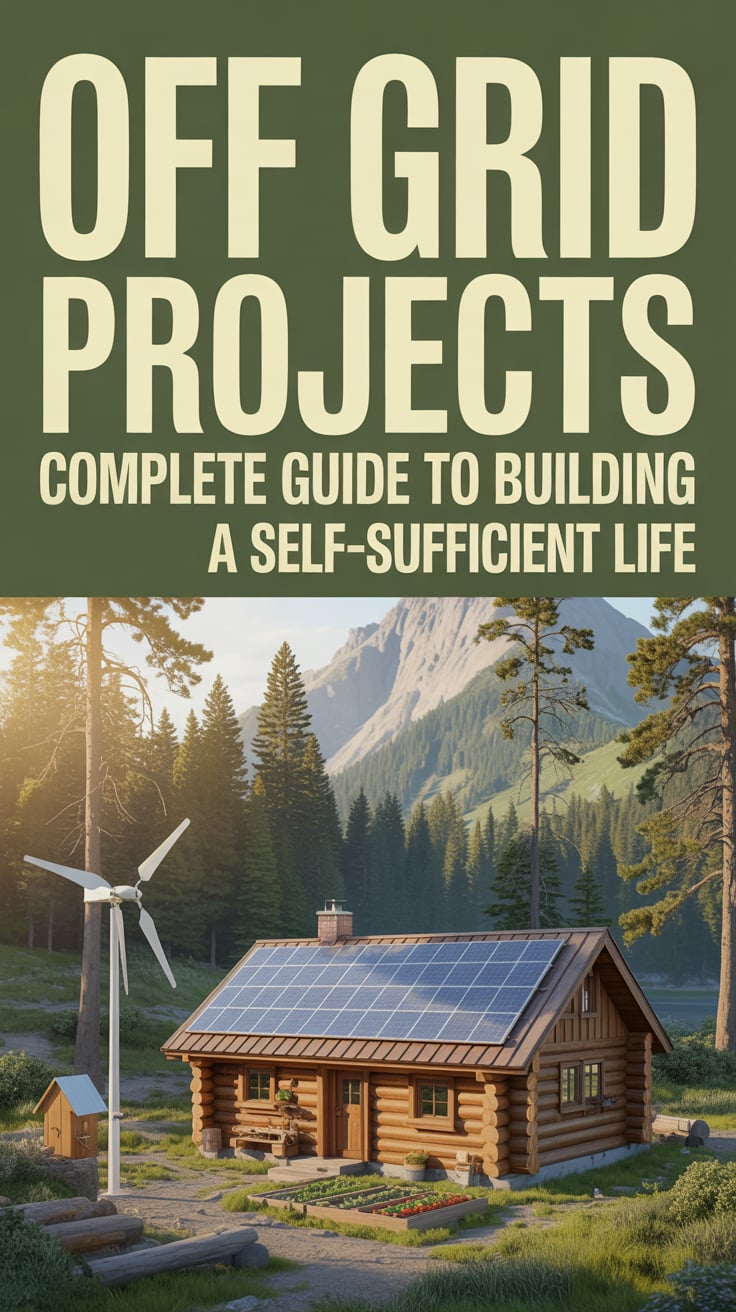
A self-sufficient life is built one practical project at a time. This complete guide walks you through off grid projects that deliver reliable power, water, food, shelter, and safety—so you can design a resilient homestead that fits your land, climate, budget, and skills. Whether you’re planning a remote cabin or a suburban semi-off-grid setup, you’ll find a roadmap you can follow at your own pace.
If establishing water independence is your first milestone, explore the gravity-fed simplicity of the Aqua Tower to jump-start a dependable off-grid water plan.
Table of content
Laying the groundwork for a self-sufficient homestead
Every successful build starts with clarity. Before buying panels or digging a garden, define the why, where, and how of your off grid projects.
- Vision and priorities: Rank your essential needs—power, potable water, food production, sanitation, heating/cooling, communications. Pick one to two priorities per quarter to stay focused.
- Site assessment: Map sunlight hours, wind patterns, slope, soil type, frost depth, water sources, and access roads. Track conditions in all four seasons to avoid surprises.
- Energy and water budgets: Estimate daily kWh for lights, refrigeration, pumping, and tools. Calculate daily gallons for drinking, cooking, hygiene, irrigation, and animals. Right-sizing these budgets keeps systems affordable.
- Legal and insurance: Check local codes for wells, septic, wood stoves, and solar structures. Some jurisdictions allow composting toilets or rainwater capture with restrictions—get approvals early.
- Redundancy thinking: Plan at least two ways to meet critical needs. For example, solar power plus a generator; rainwater plus a shallow well; wood heat plus passive solar.
Start with a simple baseline system that works “good enough,” then iterate. Prototype projects on a small scale to learn quickly and cheaply—like a 200-watt solar starter kit, a 55-gallon rain barrel, or a 4×8 raised bed. As skills grow, scale up to permanent infrastructure.
Set a realistic timeline. A common cadence:
- Month 1–2: Site study, power audit, small solar kit, rain barrel, tool inventory
- Month 3–4: 2–4 raised beds, compost pile, greywater-safe soaps and habits
- Month 5–6: 2–4 kW solar array, 5–10 kWh battery, 1,000+ gallon water storage
- Month 7–12: Greenhouse, wood heat, expanded garden, backup comms and medical
A simple whiteboard or spreadsheet to track materials, costs, and labor turns your vision into concrete steps and helps you avoid decision paralysis.
Power systems that make off-grid life work
Electricity is the backbone that keeps pumps, lights, refrigeration, and tools running. The most common path is a solar-first system, backed by generator and/or wind if your site supports it.
Core components:
- Solar array: Choose modules sized for winter production, the limiting season in most climates. Aim panels at true south (north in the southern hemisphere), optimize tilt for latitude, and keep a safe, shaded combiner box.
- Charge controller: MPPT controllers squeeze more watt-hours from panels and protect your battery bank. Oversize the controller to allow future panel expansion.
- Battery bank: Lithium iron phosphate (LiFePO4) offers long life, deep cycling, and safer chemistry; flooded lead-acid can be economical but requires maintenance. Design for at least one to two days of autonomy in winter.
- Inverter/charger: Pure sine wave inverters protect sensitive electronics. If you have a generator, an inverter/charger makes seamless topping-off simple.
- Distribution and protection: Use proper wire gauges, DC disconnects, grounding, surge protection, and labeled subpanels. Keep DC runs short and tidy.
Sizing tip: Add your daily watt-hours, multiply by a safety factor (1.3–1.5), and size your array and storage accordingly. Design critical circuits (e.g., fridge, water pump, lighting, communications) on a dedicated subpanel so you can prioritize them during low generation.
Efficiency is your cheapest “source” of power:
- DC loads: Consider DC refrigerators, fans, and pumps to avoid inverter losses.
- Lighting: Use LED everywhere; daylight tubes or solar tubes add passive lighting.
- Thermal load swapping: Use propane or wood for major heat tasks (cooking, space heating, domestic hot water preheat), and reserve electric for essentials.
Backup layers:
- Generator: Quiet inverter generators sip fuel and produce clean power. Test monthly, store stabilized fuel, and keep an exhaust-safe shelter.
- Wind or micro-hydro: Only add if you have consistent wind speeds or year-round head and flow; they shine in winter when solar is weakest.
A small but well-planned system that prioritizes efficiency will outperform a larger, sloppy one. Document the system with a laminated wiring diagram and maintenance schedule—future you will thank you.
Water independence for off-grid projects
Water is life, and redundancy is non-negotiable. Combine three pillars: source, storage, and treatment.
Sourcing:
- Rainwater harvesting: Oversized gutters, leaf guards, first-flush diverters, and food-grade tanks form a reliable base. Metal roofs shed debris and are ideal for potable capture once filtered.
- Wells: A drilled or driven well offers consistent supply; a shallow hand-dug well can work where geology permits. If power is down, a manual pump or bucket well head keeps water flowing.
- Surface water: Springs, creeks, or ponds add resilience; treat diligently and consider a sand or charcoal pre-filter to extend filter life.
Storage:
- Modular tanks: Multiple tanks (e.g., 275-gallon IBC totes or 1,000–2,500-gallon poly tanks) create flexibility, easy cleaning, and redundancy.
- Elevation: Store water uphill to create gravity-fed pressure; berms or sturdy stands can provide 5–20 psi without pumps.
- Freeze protection: Bury lines below frost depth, insulate exposed sections, and add drain valves for easy winterizing.
Treatment:
- Multi-stage filtration: Sediment pre-filter, carbon block, then a microbiological filter or UV for pathogens. Regularly sanitize tanks and lines with food-safe methods.
- Point-of-use: Keep a dedicated potable tap and an emergency gravity filter.
To shortcut setup, consider durable, low-tech filtration like the Aqua Tower for everyday use. For well projects, plans such as Joseph’s Well can help you evaluate simple, reliable manual options. If your land favors roof capture or intermittent sources, a modular system like SmartWaterBox can integrate storage, filtration, and distribution in a compact footprint.
Plumbing strategies:
- Color-code lines: Blue for potable, green for irrigation/greywater. Label shutoffs clearly.
- Pumping: A small DC pump, pressure tank, and accumulator smooth pressure; keep a manual backup pump plumbed in parallel.
- Greywater re-use: Laundry-to-landscape and shower drain systems irrigate trees and perennials; use biodegradable soaps and lint filters.
For drought resilience, pair rain capture and well water with deep mulch, shade cloth, drip irrigation, and drought-tolerant plantings. With storage and a gravity-fed loop, you can keep essential water services going even if your power system is down for maintenance.
Food resilience and year-round nutrition
A resilient pantry starts in the soil and ends on a shelf. Aim for a diversified system that spreads risk across seasons, species, and methods.
Grow:
- Raised beds and in-ground rows: Start with 100–200 square feet per person for high-yield staples (potatoes, beans, squash, brassicas, greens). Add herbs for flavor and medicine.
- Perennials: Plant fruit trees, berries, asparagus, rhubarb, and perennial alliums to lock in dependable returns.
- Season extension: Low tunnels, cold frames, and a simple hoop house push fresh produce into shoulder seasons.
- Soil building: Compost, cover crops, and deep mulch improve tilth, water retention, and fertility—your best yield “upgrade.”
Keep livestock only when ready:
- Chickens: Eggs and pest control with minimal land; mobile coops distribute fertility.
- Rabbits or quail: Compact protein sources for small properties.
- Goats or sheep: Milk and meat if your fencing and forage can support them.
Preserve:
- Dehydrating and canning: Turn seasonal gluts into shelf-stable meals. Practice safe water-bath and pressure canning, label jars, and rotate stock.
- Fermentation: Sauerkraut, kimchi, and pickles preserve nutrition with minimal energy.
- Root cellaring: A cool, humid space stores potatoes, carrots, and apples for months.
Knowledge shortcuts matter. A curated collection such as The Lost SuperFoods can introduce time-tested recipes and preservation strategies for shelf-stable meals when fresh harvests are thin.
Irrigation:
- Drip lines and timers reduce water use and leaf wetness.
- Rain gardens and swales slow and sink runoff into your soil.
- Mulch, shade cloth, and windbreaks maintain soil moisture and protect tender crops.
Inventory and rotation:
- Track calories and protein: Aim for a balanced pantry with staples (beans, grains, fats), proteins, and micronutrient-dense foods.
- First-in, first-out: Place new jars and sacks at the back, keep a monthly rotation habit, and run “pantry challenge” weeks to discover gaps.
Food resilience is a mindset as much as a system: plant something new each season, test a new preservation method, and always keep water and heat as part of your garden plan.
Shelter, heating, and comfort without the grid
A comfortable, efficient shelter reduces your system size and your stress. Focus on envelope, passive design, and right-sized active systems.
Envelope and passive gains:
- Insulation: Prioritize roof/attic, then walls and floor. Air-seal before insulating for the biggest comfort upgrade.
- Windows and orientation: Maximize south exposure with roof overhangs to block high summer sun while admitting low winter light.
- Thermal mass: Masonry, cob, or water barrels inside the insulated envelope buffer temperature swings.
Heating:
- Wood stoves: Reliable, fuel-flexible heat. Install outside air intake and compliant chimney. Season firewood 12–18 months for efficiency.
- Rocket mass heaters: Extremely efficient, burn small diameter wood, and provide thermal mass heating where codes permit.
- Backup heat: A small propane heater with oxygen depletion sensor can bridge shoulder seasons—vent properly and keep CO detectors active.
Cooling:
- Cross-ventilation and stack effect: Operable windows high and low; ridge vents and cupolas enhance air movement.
- Shade and evap strategies: Deciduous trees, exterior blinds, and shade sails reduce heat gain. In arid climates, evaporative cooling can be effective with minimal power.
Sanitation and safe water cycling:
- Composting toilets: Reduce water demand and produce safe compost when managed correctly; follow local regulations and proven methods.
- Greywater: Route sinks, showers, and laundry to mulch basins and tree belts; keep it simple and accessible for maintenance.
- Blackwater: If you have a septic system, maintain tanks and leach fields, pump on schedule, and avoid chemical cleaners that harm bacteria.
Fire safety and indoor air:
- Install smoke/CO detectors, keep extinguishers in kitchen, workshop, and mechanical room, and practice an evacuation plan.
- Ventilation: A heat-recovery ventilator (HRV) or energy-recovery ventilator (ERV) maintains indoor air quality in tight homes with modest energy use.
Comfort systems don’t need to be complex. The right combination of passive design, modest active systems, and thoughtful maintenance will keep your home livable through power dips and seasonal extremes.
Safety, medical readiness, and communications resilience
Resilience includes health, security, and a way to call for help. Build layers that scale with your environment and risk tolerance.
Medical readiness:
- First aid kits: Stock trauma supplies, OTC meds, and chronic-condition essentials. Keep kits in the home, vehicles, and workshop.
- Training: Basic first aid and CPR save lives. Practice splinting, wound care, and burns.
- Field guides: A practical manual like Home Doctor helps you handle common issues when clinics are far or closed.
Security and situational awareness:
- Deterrence first: Lighting, gates, and visible cameras. Good neighbor relationships are priceless.
- Perimeter layers: Thorny hedges, sturdy fencing, and clear sightlines reduce hiding spots.
- Tools and training: Radios for coordination, dogs as early warning, and regular drills with household members.
Communications:
- Radio: Handheld VHF/UHF radios for local comms; GMRS licenses are affordable and useful. Consider a mobile radio and base antenna for range.
- Internet redundancy: Cellular router with high-gain antenna or satellite if terrestrial options are limited.
- Power for comms: A small dedicated battery bank or UPS keeps radios and routers running during outages.
Contingency planning:
- Backup plans for prolonged outages or supply chain disruptions. A preparedness framework like Dark Reset can help you think through layered scenarios and recovery steps.
- Urban overlap: If you split time between town and homestead, skills from URBAN Survival Code can improve safety and decision-making when you’re away from your rural base.
Run quarterly drills: simulate a 48-hour power-down, cook from pantry stores, use radios, treat mock injuries, and document what failed. Every drill reveals the next right project to tackle.
Recommended tools and resources for off-grid builders
Curated resources save time and reduce costly mistakes. Consider these for your toolkit and learning library:
- Water independence: Aqua Tower for everyday filtration; Joseph’s Well to explore manual well options; SmartWaterBox for modular storage and treatment.
- Food security: The Lost SuperFoods for shelf-stable recipes and preservation techniques you can practice year-round.
- Health and safety: Home Doctor for practical at-home care; Dark Reset and URBAN Survival Code for layered preparedness planning.
Essential hand tools and instruments:
- Electrical: Multimeter, clamp meter, MC4 crimper, torque screwdriver, and wiring labels
- Plumbing: PEX crimper, pipe cutter, Teflon tape, extra fittings, and food-grade hoses
- Carpentry: Circular saw, impact driver, speed square, chisels, and a sturdy workbench
- Garden: Broadfork or digging fork, quality pruners, hori-hori knife, and wheelbarrow
Reference your build:
- Create a binder with: site map, wiring diagrams, plumbing schematics, serial numbers, receipts, maintenance logs, and emergency contacts.
- QR-code your systems: Link to digital manuals and how-to videos taped near equipment for quick troubleshooting.
Starter project kits:
- Solar: 200–400W panel kit with MPPT controller, 12V LiFePO4 battery, and a small inverter
- Water: 275-gallon tote, gutter diverter, first-flush, inline sediment and carbon filters
- Garden: Two 4×8 beds, compost bin, drip kit with timer, and season-extension hoops
A small library and a well-chosen set of tools can accelerate your learning curve and prevent downtime when you need a part or a plan fast.
Quick-start checklist to launch your first season
Use this action-oriented list to turn off grid projects into progress this month:
- Audit: Log a week of power and water use; list critical and nice-to-have loads.
- Pick one: Choose either power, water, or food as your first focus for 60 days.
- Prototype: Build a mini-version—solar starter kit, rain barrel with filter, or two raised beds.
- Storage: Add at least 7 days of water and pantry staples per person.
- Skills: Schedule a weekend for first aid and radio basics; test comms around your property.
- Maintenance: Create recurring reminders for panel cleaning, battery checks, filter changes, and chimney sweeps.
Get momentum with one meaningful win—clean water on tap, a reliable fridge, or a bed of fresh greens—and you’ll have the confidence to scale.
Get started today
- Water on your terms with Aqua Tower or modular SmartWaterBox
- Stock resilient meals via The Lost SuperFoods
- Strengthen medical readiness with Home Doctor
Conclusion
Off Grid Projects: Complete Guide to Building a Self-Sufficient Life isn’t about perfection—it’s about steady, practical progress. Start with a clear priority, build a simple prototype, and add layers of redundancy as you learn your land and systems. With reliable power, gravity-friendly water, a working pantry, and a safe, comfortable shelter, you’ll enjoy the freedom and satisfaction that self-reliance brings. Each season, improve one component, document your setup, and share knowledge with neighbors. The path to independence is built one project—and one lesson—at a time.
FAQ
What are the best starter off grid projects for beginners?
Begin with a 200–400W solar kit to power lights and devices, a rain barrel with a basic filter for water resilience, and two raised garden beds for fresh produce. These deliver quick wins and teach core skills.
How do I size my solar for a cabin?
Tally daily watt-hours for essentials (fridge, lights, water pump, comms), multiply by 1.3–1.5 for losses and cloudy days, then match array and battery storage to cover at least one to two days of autonomy. Prioritize efficient appliances to reduce system size.
Is rainwater safe to drink off the roof?
Yes, with proper collection and treatment: clean roof and gutters, leaf guards, first-flush diverter, food-grade storage, and multi-stage filtration (sediment, carbon, and pathogen control like UV or a certified microbiological filter). Test periodically and sanitize tanks.
How do composting toilets work in an off-grid home?
They separate or contain waste, promote aerobic decomposition with bulking agents (like wood shavings), and rest finished material to ensure safety before use on non-food plants. Follow manufacturer instructions and local regulations.
What’s a realistic timeline to become mostly self-sufficient?
Many households reach 50–80% self-sufficiency in 12–24 months by focusing on power, water, and food first, then adding heating, sanitation, and communications. Seasonality, budget, and site conditions influence the pace. Use this Off Grid Projects: Complete Guide to Building a Self-Sufficient Life as a roadmap and adapt as you learn.