
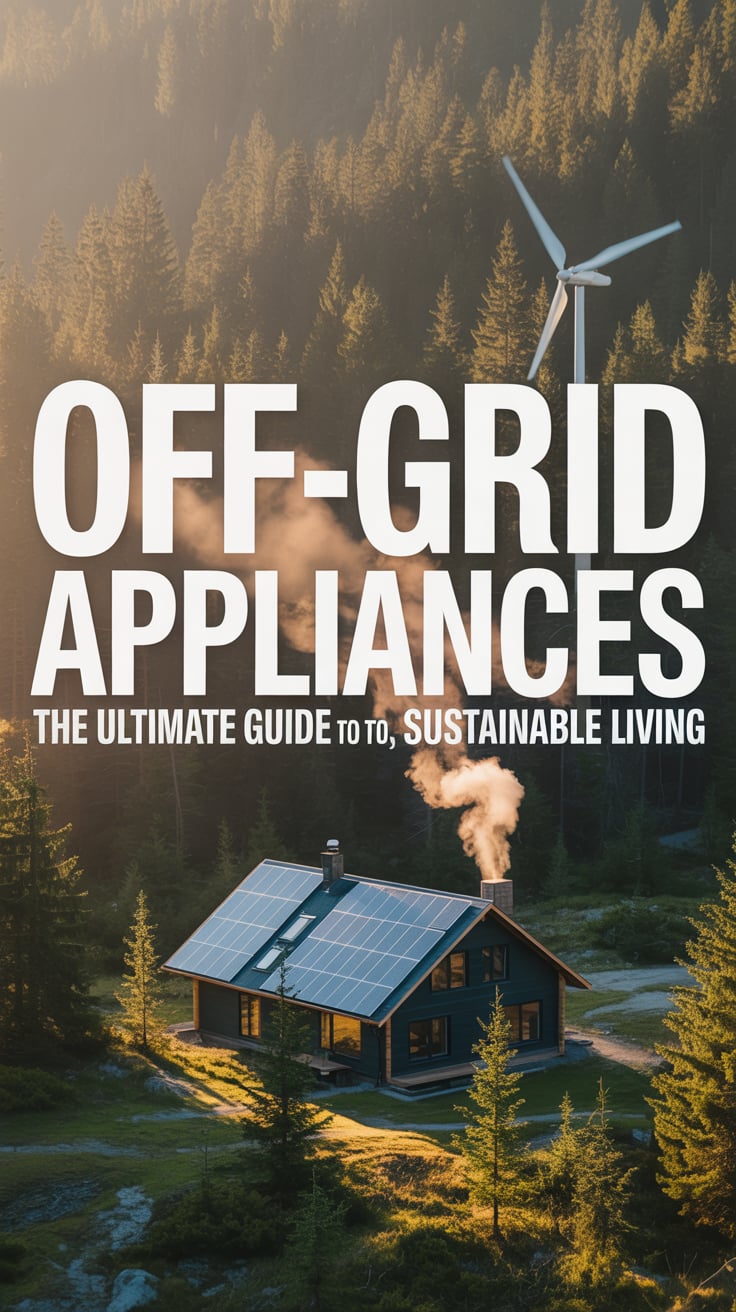
Living off-grid isn’t about hardship; it’s about designing a comfortable, low-impact lifestyle that runs on resilient, right-sized systems. This guide walks you through the core off-grid appliances that make daily life smooth—how to power them, what to prioritize, and how to build systems that sip energy while delivering modern comfort. Whether you’re prepping a cabin, a homestead, or an urban backup plan, you’ll learn how to plan, power, and maintain the essentials.
For water security that integrates with an off-grid setup, explore modular gravity-fed systems like the Aqua Tower.
Energy fundamentals that shape smart off-grid appliances
Before buying any appliance, understand the energy math. Off-grid power systems are finite. The golden rule: measure and match your loads to your generation and storage.
- Track energy in watt-hours (Wh), not just watts. A 100-watt device running for 5 hours uses 500 Wh. This is how you size solar, batteries, and controllers.
- Separate steady loads from surge loads. Motors and compressors (fridges, pumps, power tools) draw a brief surge on startup. Your inverter must handle both surge and continuous ratings.
- Prefer efficient DC appliances when possible. Converting battery DC to AC costs energy via inverter losses. 12V/24V DC fridges, fans, and pumps avoid that overhead.
- Cut “phantom loads.” Chargers, displays, and standby LEDs add up. Use switched power strips or DC circuits with hard off-switches.
- Run heavy loads when the sun shines. Align usage (laundry, vacuuming, power-tool charging) with midday solar for “free” power that doesn’t drain your battery bank.
- Insist on accurate specs. Look for real-world energy use per day (Wh/day or kWh/day), not only nameplate wattage.
Sizing snapshot to keep you honest:
- Estimate daily usage by device: watts × hours = Wh/day.
- Sum loads to find total daily Wh.
- Size solar to produce at least that many Wh on an average day.
- Size batteries to store 1.5–3 days of energy (depth of discharge considered).
- Pick an inverter with headroom for surge (often 2× the highest surge load).
When appliances and energy systems are planned together, everything else—comfort, longevity, and resilience—falls into place.
Power systems that support efficient off-grid appliances
Your appliances are only as reliable as your power backbone. A balanced system mixes generation, storage, and conversion with minimal waste:
- Solar PV as primary generation. High-efficiency modules feeding an MPPT charge controller deliver reliable daily production. Panel tilt and orientation matter more than most people realize; optimize for your latitude and seasonal use.
- Battery storage matched to lifestyle. Lithium batteries offer deep discharge, fast charging, and low maintenance. Lead-acid can still work on tighter budgets if you avoid deep cycling and maintain charging profiles.
- Inverter right-sizing. Pure sine wave inverters run sensitive electronics and compressor loads cleanly. Oversizing wastes idle power; undersizing risks overloads. Consider a hybrid inverter-charger if you’ll occasionally run a generator.
- Backup generation for flexibility. A small, efficient generator fills gaps in poor sun or heavy-use cycles. Use it strategically: bulk-charge batteries up to ~80%, then let solar finish the absorb phase.
- Additional sources if site-appropriate. Microhydro outperforms solar at shady, flowing sites. Wind can work in reliably windy locales but requires careful siting and maintenance.
- Sub-panels and DC circuits. Create a critical loads panel for must-have circuits and keep a DC bus for dedicated DC appliances to avoid inverter idle losses.
Practical tips:
- Cluster high-draw appliances (like cooking or laundry) into solar-rich hours.
- Keep lines short and wire gauges adequate to reduce voltage drop, especially for DC runs.
- Add monitoring: battery voltage, current, state of charge (SOC), and solar production. Even simple shunts and meters help you adjust usage before problems appear.
- Standardize voltages where possible. Decide on 12V, 24V, or 48V architecture early; it affects wire sizing, inverter choices, and appliance selection.
With a solid power foundation, you can confidently choose appliances that feel “normal”—and that’s the hallmark of a successful off-grid home.
Water independence with off-grid pumps, filtration, and hot water
Water is the first pillar of off-grid resilience, and the right appliances ensure safe supply with minimal energy.
Sourcing and moving water:
- Gravity-fed priorities. If you can store water uphill (tanks, towers), gravity becomes your free pump. Even small elevation gains make everyday use effortless.
- Manual and low-power pumps. Hand pumps, foot pumps, and efficient 12/24V DC pumps keep you supplied on minimal energy. Solar direct-drive pumps can push water to storage during the day without taxing batteries.
- Well strategies. Consider a manual backup for well heads or a low-surge soft-start pump that suits battery-based systems. Redundancy ensures a dry spell or inverter issue doesn’t stop your taps.
Filtration and purification:
- Multi-stage filtration. Sediment pre-filters, activated carbon for taste/odor, and a final-stage purifier make water truly potable.
- Batch and gravity systems. Gravity-fed towers require no electricity and scale from household use to larger groups—ideal for emergencies and daily resilience. Explore modular options like the Aqua Tower for flexible deployment.
- Surface and rainwater. Gutters, first-flush diverters, and covered cisterns protect water quality. Always filter and disinfect before drinking.
If you’re planning a well or manual backup, look into practical, hands-on solutions like Joseph’s Well for step-by-step approaches to secure water access without grid power. For compact water resilience that pairs well with small cabins or RVs, the SmartWaterBox can complement primary storage.
Hot water without waste:
- Solar thermal. Simple batch heaters and evacuated tubes deliver excellent hot water per watt. Even pre-warming feed water cuts energy use from on-demand heaters.
- On-demand propane. Efficient, point-of-use units minimize standby losses—great for off-grid bathrooms and kitchens.
- Wood-fired options. In cold climates, integrate hot water coils with stoves for winter months.
Design principles:
- Keep plumbing runs short, insulate hot lines, and use low-flow fixtures to reduce draw.
- Separate potable and non-potable lines (drinking vs. garden/graywater).
- Include manual bypasses and isolation valves for easy maintenance.
When water sourcing, pumping, and purification work together, you earn daily comfort and robust backup in one plan.
Cold storage and cooking made easy in off-grid kitchens
The kitchen is where off-grid design is most visible—and where wise appliance choices pay daily dividends.
Refrigeration that fits your system:
- DC compressor fridges/freezers. Purpose-built 12V/24V units are efficient and avoid inverter losses. Chest-style models with top-opening lids help retain cold air when opened.
- Propane absorption fridges. Useful when electricity is scarce; ensure ventilation and follow safety and manufacturer guidance.
- Chest freezer conversions. With an external thermostat, a super-insulated chest freezer can become an ultra-efficient fridge. This hack reduces cycling and maintains temperature stability.
- Seasonal strategies. In cold climates, “nature-assisted” cooling (root cellars, insulated outdoor boxes) can reduce electrical load in winter.
Food preservation to reduce appliance burden:
- Pressure canning, dehydrating, fermenting, and salting cut refrigerator dependence and build pantry resilience.
- Low-energy dehydrators or solar dehydrators let you put up garden surpluses without ongoing power.
Cooking options optimized for energy:
- Propane cooktops. Clean, controllable heat with no inverter strain. Pair with induction only when you have solar surplus and a strong inverter.
- Wood stoves and rocket stoves. Ideal for winter meal prep and water heating; rocket stoves excel at burning small-diameter biomass efficiently.
- Solar ovens. On sunny days, solar cookers handle slow-cook dishes, bread, and dehydrating without a single watt-hour from your batteries.
- Electric kettles and pressure cookers. They can be energy-smart if run during peak solar hours. Pressure cooking slashes total energy and water use.
Kitchen best practices:
- Use lids and pressure cookers to shorten cook times.
- Batch cook and reheat efficiently.
- Consolidate cold storage: fewer, well-insulated units outperform many small, inefficient ones.
- Add thermometers and power monitors to learn real usage and make data-backed adjustments.
A kitchen with multiple fuels and methods builds flexibility: if clouds roll in or propane delivery is delayed, dinner still happens on schedule.
Heating, cooling, and air quality on minimal energy
Comfort in all seasons depends on a blend of passive design, efficient appliances, and safe air.
Low-energy heating:
- Wood stoves. Time-tested, reliable, and fuel-flexible when sourced locally. Proper sizing, a well-installed chimney, and dry wood are nonnegotiable.
- Pellet stoves. Offer automated control and steady output; require power for augers and fans, so plan for that in your energy budget.
- Heat pumps (mini-splits). In many climates, high-efficiency mini-splits provide superb heating per watt. They’re excellent daytime loads when the sun is strong and can double as cooling.
Cooling and ventilation:
- Passive strategies first. Shade, window orientation, cross-ventilation, and thermal mass reduce active cooling needs.
- DC fans and ceiling fans. Small draw, big comfort. Run on DC where possible.
- Evaporative coolers (swamp coolers). Effective in dry climates with modest energy use.
- Dehumidifiers. Crucial in humid regions to prevent mold and improve comfort—plan for their steady power draw.
Air quality and safety:
- CO and smoke detectors are essential with any combustion appliance.
- Tight homes need deliberate ventilation. Heat recovery ventilators (HRVs) can maintain fresh air with minimal thermal loss.
- Range hoods vented outdoors remove moisture and particulates from cooking.
Thermal envelope upgrades:
- Insulation, air sealing, and window shading pay bigger dividends than any single appliance swap.
- Zonal heating and cooling let you condition only the spaces you use.
When you combine passive design with efficient devices, you reduce energy demand so much that your solar and battery systems suddenly feel bigger—because they are, in effect, serving a lighter load.
Laundry, cleaning, lighting, and daily-use off-grid appliances
Everyday chores can either drain your system or become nearly invisible in your energy budget—choose tools and habits carefully.
Laundry:
- Manual or pedal-powered washers. Great for small loads, delicates, and backup use.
- High-efficiency electric washers. Front-loaders with low water use are ideal. Run cycles midday when solar is abundant.
- Spin or wringer dryers. Extract more water mechanically to reduce drying time.
- Line drying. Free, fast in dry climates, and easier with good airflow and covered lines.
Cleaning and household care:
- Vacuum cleaners. Choose models with efficient motors. For big cleans, again, align with solar peaks.
- Steam cleaners. Effective for sanitation without chemicals; check draw and runtime.
- Composting toilets and graywater. While not “appliances” in the classic sense, these systems reduce water loads and can operate independent of pumps.
Lighting and electronics:
- LED everything. Task lighting over ambient lighting saves energy and improves visibility.
- DC lighting circuits. Simple, efficient, and resilient.
- Device charging stations. Consolidate to a single, well-placed hub to minimize chargers left plugged in.
- Tool batteries. Standardize platforms to simplify charging and reduce the total number of chargers.
Kitchen and small appliances:
- Low-watt kettles, toasters, and immersion heaters are manageable if used during solar surplus.
- Slow cookers and insulated thermal cookers can “carry” heat and reduce peak draw.
- Avoid always-on gadgets and displays; prioritize hard switches.
Behavioral wins:
- Schedule “power hour” chores (laundry, vacuuming, tool charging) for midday.
- Keep a simple whiteboard or app-based checklist for rotating tasks that use energy.
- Use plug-in energy meters to reveal real consumption and uncover phantom loads.
These choices turn daily life into a smooth rhythm that your system can easily support—without feeling like you’re sacrificing modern convenience.
Resilience, maintenance, and smarter systems that still work offline
True off-grid success is less about gear and more about systems thinking: redundancy, maintainability, and clear protocols.
Maintenance mindset:
- Quarterly checks. Clean solar modules, inspect wiring, tighten connections, verify inverter fans and ventilation.
- Battery care. Follow manufacturer charging profiles, keep terminals clean, and log state of health.
- Water system hygiene. Replace filters on schedule, sanitize tanks and lines periodically, and check pump strainers.
Spares and backups:
- Keep consumables on hand: filters, fuses, water treatment supplies, spare pump and fan motors where practical.
- Redundant paths. If one pump fails, can gravity or manual backup keep essentials flowing? If the inverter goes down, do you have DC lighting?
Monitoring and “smart” that truly helps:
- Simple is durable. Favor devices with manual overrides and clear status lights.
- Local-first automation. Timers, thermostats, and relays that don’t depend on the internet avoid single points of failure.
- Data that matters. Daily kWh produced/consumed and battery SOC trends are enough to steer decisions.
Preparedness and medical self-reliance:
- Food resilience reduces pressure on cold storage. If you want time-tested techniques for shelf-stable meals and emergency menus, consider references like The Lost SuperFoods.
- Health resilience matters when clinics are far or the grid is down. Practical, at-home medical guidance such as Home Doctor can complement your first-aid planning.
H3: Recommended tools and resources for building resilience
- Aqua Tower — Gravity-fed water resilience that pairs well with off-grid systems.
- Joseph’s Well — Practical approaches to securing manual access to well water.
- SmartWaterBox — Compact water solution for cabins, RVs, or as a backup module.
- The Lost SuperFoods — Pantry-building strategies to reduce dependence on fridges and freezers.
- Home Doctor — Useful home-based medical know-how for remote living and outages.
Finally, write down your response playbook. If a component fails (pump, inverter, fridge), what’s your immediate workaround, and what’s the order of operations to restore service? Clarity under stress is the most underrated “appliance” in any off-grid home.
Conclusion
The right off-grid appliances make smart, sustainable living feel effortless. Start with energy literacy, then choose devices that align with your power, water, and climate strategies. Prioritize DC efficiency, eliminate phantom loads, add gravity wherever you can, and diversify fuels so a single bottleneck never upends your day. With a balanced system and a modest toolkit of spares and know-how, off-grid appliances deliver the comforts of home—minus the grid.
FAQ
What are the must-have off-grid appliances for a small homestead?
A DC fridge/freezer or an ultra-efficient chest freezer conversion, a reliable water pump with a manual or gravity backup, LED lighting on DC circuits, a propane or wood-based cooking solution, and a backup generator or solar generator. Add CO/smoke detectors and a pressure canner to reduce reliance on cold storage.
How do I size solar and batteries to run off-grid appliances reliably?
Add up daily energy use in watt-hours (Wh), size solar to produce at least that much on an average day, and aim for 1.5–3 days of battery storage depending on your climate and risk tolerance. Remember inverter losses, surge loads, and seasonal sun variability.
Can I run a standard AC refrigerator off solar?
Yes, but it’s often more efficient to use a DC compressor fridge or a chest freezer conversion. If you choose AC, select an efficient model, plan for startup surge, and run it when solar is strong to reduce battery cycling.
What’s the best way to handle hot water off-grid?
Solar thermal is the most energy-efficient; preheat feed water whenever possible. Pair with an on-demand propane heater for cloudy days and winter. Insulate hot water lines and keep runs short to cut waste.
How can I secure water without the grid?
Combine collection/storage (tanks, cisterns), movement (gravity, manual pumps, low-power DC or solar direct-drive pumps), and purification (sediment, carbon, and a final purifier). Gravity-fed systems and batch purifiers are reliable, and manual well options provide resilience if power systems go down.
How do off-grid appliances help in smart, sustainable living?
They reduce energy waste, align with renewable generation, and often work on DC or low-watt modes, cutting your dependence on large inverters or fossil fuels. Properly chosen off-grid appliances make your daily routine efficient, comfortable, and resilient.