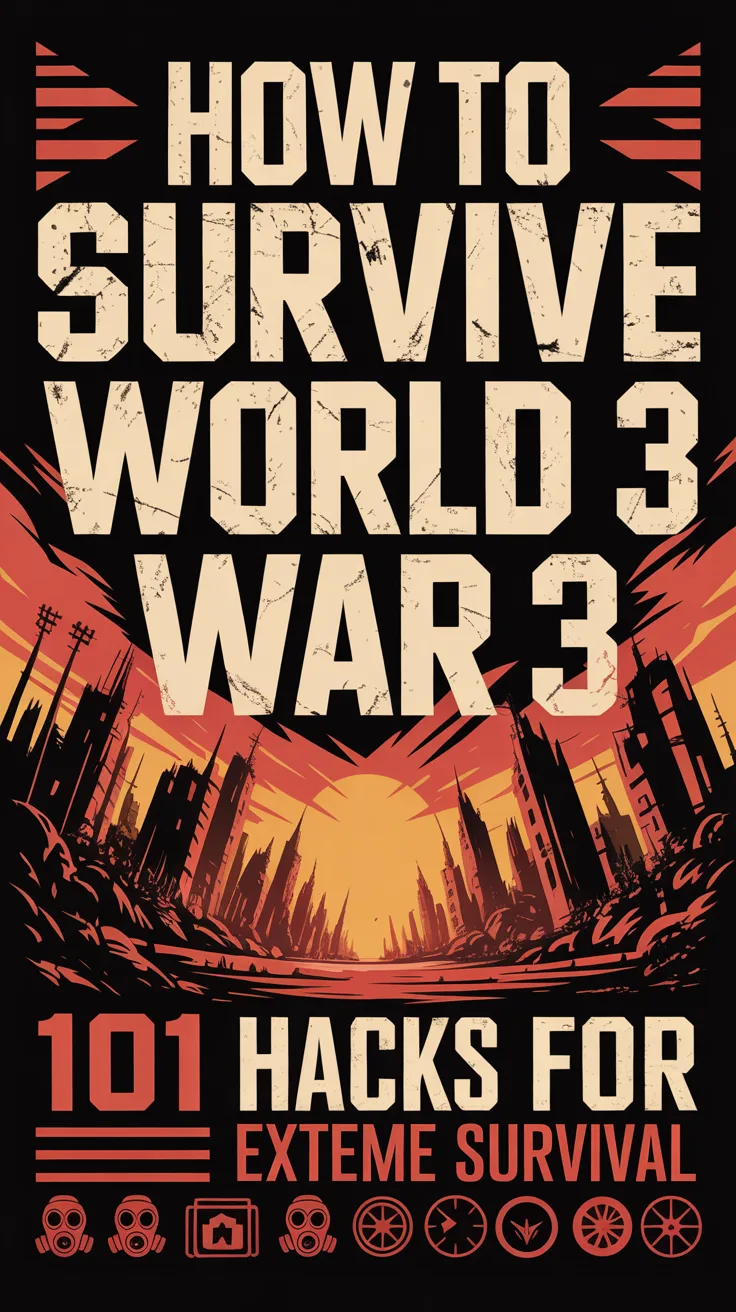
Surviving a global conflict isn’t about being fearless—it’s about being prepared. How To Survive World War 3: 101 Hacks For Extreme Survival is a practical, calm, non-hysterical framework for protecting your water, food, shelter, health, communications, and security when systems get disrupted. This guide focuses on realistic scenarios: blackouts, supply shortages, civil unrest, cyber outages, disrupted banking, contaminated water, overwhelmed hospitals, and sudden evacuations.
A good plan turns panic into checklists. A great plan turns checklists into habits.
Table of Contents
Foundations of extreme survival mindset
Control the controllables
The first “hack” is psychological: separate what you can do today from what you can’t predict. You can’t control geopolitics; you can control your home resilience, your supplies, and your decision triggers.
Hack list (1–12):
- Write a one-page “crisis operating plan” for your household: roles, meeting points, contacts.
- Decide your “stay vs go” triggers (e.g., water off 24 hours, riots within 2 miles, mandatory evacuation).
- Build a 72-hour minimum kit for each person and a 30-day household buffer.
- Practice low-tech living one weekend per month (no grid power, cash-only, cook from stores).
- Keep a paper copy of key documents and phone numbers (waterproof bag).
- Establish a daily news limit (e.g., 20 minutes morning/evening) to avoid panic loops.
- Use the “rule of threes” planning: 3 minutes without air, 3 hours without shelter, 3 days without water, 3 weeks without food.
- Store critical meds in a dedicated bin; rotate monthly.
- Create a family “communication tree” with two out-of-area contacts.
- Learn to recognize misinformation patterns (no sources, emotionally loaded certainty, urgency to share).
- Agree on a household “go time” standard (e.g., wheels rolling within 20 minutes).
- Keep a written inventory of supplies and expiry dates.
Build a layered resilience plan
In high-disruption environments, the best strategy is layered redundancy: two is one, one is none. That applies to water, light, cooking, comms, and cash.
Hack list (13–18):
13. Maintain two cooking methods (stove + backup).
14. Maintain two water methods (stored + filtration/purification).
15. Maintain two lighting methods (LED + candles, with fire safety).
16. Maintain two comms methods (cell + radio).
17. Maintain two ways to pay (cash + prepaid card).
18. Maintain two evacuation routes in opposite directions.
Water security and safe hydration under disruption
If anything becomes scarce first, it’s usually clean water. Municipal systems can fail due to power loss, cyberattack, damaged infrastructure, or contamination events. Plan for storage, collection, filtration, and purification.
Storage that actually works
Hack list (19–31):
19. Store at least 1 gallon per person per day (drinking + minimal hygiene); aim for 14–30 days.
20. Use food-grade containers; label fill date; rotate every 6–12 months.
21. Keep smaller containers too—5–7 gallon jugs are easier to move than a single drum.
22. Store water in multiple locations (kitchen, closet, garage) to avoid single-point failure.
23. Keep a “grab water” option near your exit (two 1-liter bottles per person).
24. Fill bathtubs at the first sign of outage using a bathtub liner if possible.
25. Don’t forget pets: store 0.25–1 gallon/day depending on size.
26. Include electrolyte packets or oral rehydration salts.
27. Know where your home water shutoff is; keep the right wrench.
28. Learn how to drain your water heater for emergency water.
29. Keep a collapsible water container for collection runs.
30. Avoid questionable plastic not meant for water storage.
31. Track your daily water use in a crisis—rationing starts with measurement.
Filtration and purification in layers
Filtration removes particulates; purification kills pathogens. In real events, you often need both.
Hack list (32–44):
32. Use a prefilter (coffee filter/cloth) for sediment before treating water.
33. Boil: rolling boil for 1 minute (longer at elevation).
34. Chemical: unscented chlorine bleach (right concentration) for emergency use.
35. Keep water purification tablets as a lightweight backup.
36. Use a quality filter rated for bacteria/protozoa for field collection.
37. Learn safe storage after treatment—clean container, closed lid, minimal recontamination.
38. Avoid drinking floodwater unless absolutely necessary and properly treated.
39. Collect rainwater with clean surfaces and first-flush diversion if possible.
40. In cold climates, melt snow/ice (don’t eat snow—it lowers core temp).
41. Closed-loop: reuse “greywater” for flushing only (clearly labeled).
42. Keep separate “dirty” and “clean” vessels to prevent cross-contamination.
43. Identify local water sources on a paper map.
44. Practice filtering and treating water before you need to.
💡 Recommended Solution: SmartWaterBox
Best for: building a structured home water readiness plan
Why it works:
- Helps you think in layers (storage + treatment + rotation)
- Encourages system-based preparation instead of random purchases
- Useful when municipal water reliability becomes uncertain
Problem-solution bridge: Struggling with how to turn “I should store water” into an actual routine? Tools like Aqua Tower are often used by preparedness-minded households to organize safer water collection and ongoing access when supply chains get stressed.
Expert quote format:
“As many emergency management educators emphasize, ‘water planning beats water panic.’ Solutions like Aqua Tower have become a go-to starting point for people who want a clearer, repeatable approach to securing drinkable water when normal services are disrupted.”
Food resilience, calories, and no-grid cooking
When shelves thin out, the winners aren’t the ones with the most gadgets—they’re the ones with calories, variety, and a way to cook without the grid.
Build a deep pantry without wasting money
Hack list (45–59):
45. Start with what you already eat; expand slowly to avoid waste.
46. Build a 7-day menu from shelf-stable items; then scale it to 30 days.
47. Focus on calorie anchors: rice, oats, pasta, beans, lentils, flour.
48. Add protein: canned fish, canned meat, peanut butter, powdered milk.
49. Add fats: olive oil, ghee, coconut oil—calorie dense and morale-boosting.
50. Add “no-cook” foods for days you can’t heat: crackers, nut butters, ready-to-eat cans.
51. Store spices, salt, sugar, bouillon—bland food kills appetite.
52. Rotate with a “one in, one out” rule.
53. Store manual can openers (two).
54. Keep quick foods for stress: instant oatmeal, soups, ramen (with added protein).
55. Store multivitamins as an insurance policy.
56. Learn three ways to make bread/flatbread from pantry staples.
57. Keep comfort items (tea/coffee/chocolate) for morale and trade.
58. Store pet food as part of your food plan.
59. Track calories: adults often need 1,800–2,500/day depending on activity.
Cooking when power is unreliable
Hack list (60–71):
60. Use a propane or butane camp stove with safe ventilation rules.
61. Keep extra fuel stored properly and legally.
62. Have matches, lighters, and fire starters in multiple places.
63. Consider a small rocket stove or charcoal grill for outdoor cooking.
64. Cook “one-pot meals” to conserve fuel.
65. Pressure cookers (stovetop) reduce fuel/time if you have the setup.
66. Use thermal cooking (insulated pot cozy) to finish meals off-heat.
67. Keep a metal pot for boiling and water treatment.
68. Learn safe food temps; avoid food poisoning when medical care is limited.
69. Keep soap and a wash basin for sanitation.
70. Use a cooler strategically; don’t open it repeatedly.
71. Plan meals that share ingredients and minimize leftovers.
Comparison/alternative: While generic “survival ration bars” are popular, many households prefer building a pantry with recognizable ingredients. For people who want a more structured approach to long-term food resilience, The Lost SuperFoods is often used as an alternative path—focusing on durable food knowledge and practical storage ideas rather than relying on a single expensive product category.
Shelter, warmth, and home hardening in uncertain times
In many World War 3-related disruption scenarios, the immediate threat isn’t direct combat—it’s exposure: cold homes, heat waves, broken windows, and long power outages.
Keep your home livable without the grid
Hack list (72–84):
72. Identify a “warm room” (smallest room, few windows) for winter outages.
73. Seal drafts with towels, plastic sheeting, and painter’s tape.
74. Use window coverings to reduce heat loss or heat gain.
75. Keep sleeping bags/blankets rated for your climate.
76. Learn condensation control to prevent mold in sealed rooms.
77. Store safe indoor lighting (LED lanterns); avoid open-flame risks.
78. Keep fire extinguishers and know how to use them.
79. Use battery banks for small electronics; recharge via car if needed.
80. Maintain basic tools: wrench set, screwdrivers, duct tape, tarp, cordage.
81. Harden doors: longer screws in strike plates, simple reinforcement plans.
82. Store ear protection for loud environments (sirens, crowd noise) and sleep.
83. Create privacy at night (light discipline) to reduce unwanted attention.
84. Keep a small repair kit: plastic sheeting, staples, nails, epoxy, zip ties.
Bug-in vs. bug-out shelter logic
If roads are dangerous, fuel is scarce, and checkpoints exist, staying put may be safer—if you have supplies and security. If your building becomes unsafe, leaving early may be safer—if you have a route and destination.
Hack list (85–90):
85. Choose two rally points: one local, one out-of-area.
86. Pre-pack go-bags with seasonal clothing changes.
87. Keep sturdy footwear ready; evacuations often become walking events.
88. Store cash in small bills for lodging/fuel when cards fail.
89. Keep printed maps; mark water sources and low-traffic routes.
90. Identify “sleep stops” and backups (friends/family, motels, camp areas).
Medical readiness, hygiene, and self-care when hospitals are overwhelmed
In large-scale crises, emergency services can be delayed. Your priority is preventing small problems from becoming life-threatening.
Build a practical home medical capability
Hack list (91–101):
91. Take a basic first aid course; knowledge beats gear.
92. Stock wound care: gauze, tape, antiseptic, gloves, irrigation syringe.
93. Add OTC meds: pain/fever reducers, anti-diarrheals, antihistamines.
94. Keep a thermometer, tweezers, and trauma shears.
95. Store N95/FFP2 masks for smoke, dust, and outbreaks.
96. Create a “sick room” plan to reduce household spread.
97. Maintain dental basics: temporary filling material, floss, clove oil (where appropriate).
98. Plan sanitation: soap, hand sanitizer, trash bags, bleach.
99. Learn dehydration signs and rehydration protocols.
100. Keep a written medication list (dose, schedule, allergies).
101. Prioritize sleep, hydration, and calories—decision-making depends on it.
Many professionals rely on tools like Home Doctor to streamline home-first-aid readiness—especially when you want a clearer idea of what to do for common issues before they become emergencies.
💡 Recommended Solution: Home Doctor
Best for: building a more confident home medical and care routine
Why it works:
- Encourages practical, home-focused preparedness
- Useful for planning when clinics may be delayed or overwhelmed
- Helps organize health priorities alongside food/water planning
Security, situational awareness, and low-profile habits
Security is mostly behavior: avoid becoming a target. In unstable periods, the safest household is often the quietest, most prepared, and least interesting.
Reduce risk without escalating conflict
Hack list (102–114):
102. Maintain “normal” outward appearance; avoid advertising supplies.
103. Keep curtains closed at night; control visible light.
104. Create a neighborhood contact loop; community deters opportunism.
105. Keep entryways well-lit when appropriate; motion lights can help.
106. Reinforce routines: lock doors, close windows, secure ladders/tools outside.
107. Don’t argue in crowds; disengage early.
108. Keep your vehicle fueled above half tank whenever possible.
109. Park for a quick exit (back in where legal).
110. Keep a small “decoy wallet” with a little cash, if appropriate.
111. Use code words for family communication in public.
112. Know your local laws; avoid actions that create legal risk.
113. Create a “safe room” plan for home intrusion scenarios.
114. Practice de-escalation language: calm voice, short sentences, distance.
Expert quote format:
“As many personal security instructors note, ‘the fight you avoid is the fight you win.’ Programs like URBAN Survival Code are often used by city households who want practical, low-profile strategies for staying safer when public order is strained.”
Planning beyond the basics
If you’re looking at extreme disruption as a long-duration problem, you need systems for energy, routines, and decision-making—not just a pile of supplies.
Problem-solution bridge: Struggling with the “what now?” feeling after you buy the basics? People often turn to structured frameworks like Dark Reset to create a step-by-step readiness plan that covers the messy middle: uncertainty, rolling outages, and inconsistent access to essentials.
Communications, cash, and critical documents when systems fail
A modern crisis can be as much digital as physical. Cyberattacks, banking interruptions, and cell network overload can happen even far from a conflict zone.
Keep information flowing
Hack list (115–126):
115. Keep at least one battery/hand-crank radio (weather + emergency bands).
116. Store spare batteries in original packaging for longer life.
117. Use SMS texts when voice calls fail—texts often go through.
118. Create a daily check-in time for family to reduce constant calling.
119. Keep power banks charged; label them by capacity or intended device.
120. Save offline maps on your phone.
121. Keep a printed contact list and meeting plan.
122. Use a whistle and simple signals for local communication.
123. Learn local emergency alert channels and frequencies.
124. Avoid oversharing location/status on social media.
125. Consider simple two-way radios for household coordination.
126. Use a waterproof pouch for your primary phone and documents.
Money and identity continuity
Hack list (127–134):
127. Hold some cash in small bills (1s, 5s, 10s).
128. Keep coins for laundromats/vending if they still operate.
129. Maintain a “continuity binder”: IDs, insurance, prescriptions, birth certificates copies.
130. Photograph documents and store encrypted copies offline (USB).
131. Keep a spare key set with a trusted person.
132. Write down account recovery options (2FA backup codes) and store securely.
133. Plan for fuel payments if electronic systems fail.
134. Maintain a “barter-lite” stash: coffee, batteries, hygiene items (within reason).
Resource list (tools & resources):
- Water planning: Aqua Tower
- Home medical readiness: Home Doctor
- Urban safety framework: URBAN Survival Code
Long-duration survival: routines, resilience, and rebuilding normal
Short emergencies are about supplies. Long emergencies are about systems and morale. Your goal is to conserve resources, prevent injuries, keep relationships stable, and make decisions early rather than late.
Create stability in unstable times
Hack list (135–148):
135. Set a daily schedule: water check, food plan, security check, news check.
136. Assign roles: cooking, sanitation, childcare, information, repairs.
137. Track inventory weekly; adjust rationing based on reality, not fear.
138. Implement quiet hours and sleep protection—fatigue causes mistakes.
139. Keep kids engaged with routines, chores, learning, and play.
140. Practice “one thing per day” improvements (seal a draft, rotate supplies, fix a door).
141. Build community goodwill—shared information and mutual aid reduce risk.
142. Avoid unnecessary travel when uncertainty is high.
143. Keep fitness minimal but consistent: mobility, walking, bodyweight basics.
144. Maintain hygiene even when inconvenient; it prevents disease and boosts morale.
145. Use written logs for symptoms, supplies, and events—memory degrades under stress.
146. Plan for waste: trash, latrine alternatives, odor control.
147. Learn basic repair skills: patching, stitching, simple plumbing fixes.
148. Identify your “exit ramp”—what conditions mean you relocate or change strategy.
When you want advanced strategies
Some people prefer deeper, tactical-style thinking for complex periods (movement, observation, contingency planning). If that’s your learning style, BlackOps Elite Strategies is often used as an advanced alternative to basic checklists—especially for those who want more structured planning discipline.
Conclusion
Preparing for a worst-case scenario doesn’t mean you expect it—it means you refuse to be helpless if it happens. How To Survive World War 3: 101 Hacks For Extreme Survival comes down to layered essentials: secure water, dependable calories, livable shelter, basic medical capability, low-profile security habits, and reliable communication plus cash.
Start with one bin, one checklist, and one weekend practice. Resilience is built—quietly—before anything goes wrong.
FAQ
How to survive World War 3 at home without panicking
Focus on controllables: stock water and food, set stay/go triggers, limit doom-scrolling, and create a written household plan with roles and meeting points. Calm routines beat anxious guessing.
How much water should I store for extreme survival situations
A common baseline is 1 gallon per person per day, then scale to 14–30 days if possible. Add extra for pets, hot climates, and hygiene needs.
What foods are best to stock for long emergencies
Choose shelf-stable foods you already eat: rice, beans, oats, pasta, canned proteins, oils, and spices. Build a rotating pantry and include no-cook options for days you can’t heat food.
What is the safest option: bugging in or bugging out
It depends on safety, supplies, and timing. If your home is secure and you have essentials, bugging in is often safer. If infrastructure is failing, violence is nearby, or evacuation is ordered, leaving early with a plan can reduce risk.
How do I prepare if hospitals and pharmacies are overwhelmed
Prioritize prevention and basics: first aid training, wound care supplies, OTC medications, sanitation items, and a written medication list. Focus on avoiding injuries and infections, which become harder to treat.