
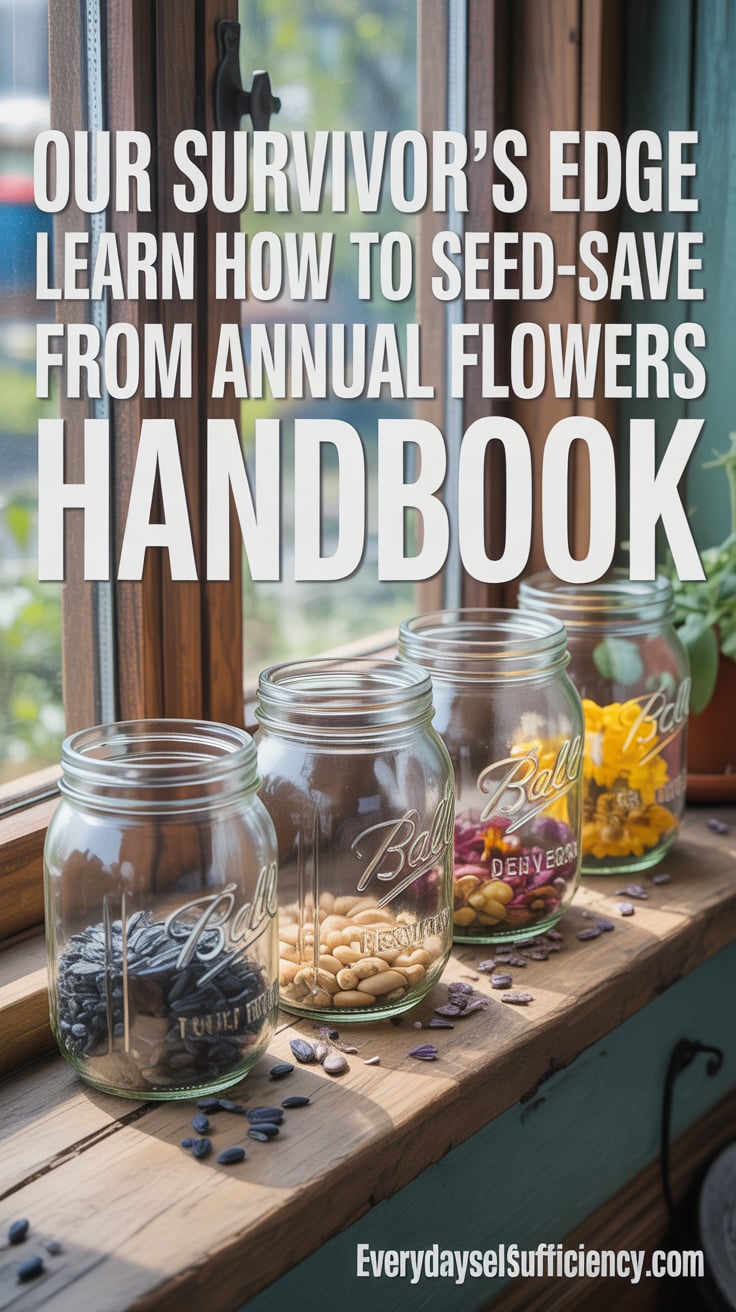
Seed saving is a skill that turns one season’s blossoms into next year’s abundance. When you learn how to seed-save from annual flowers, you multiply beauty, preserve flavor and fragrance, and build a resilient garden that costs less year after year. This guide shows you, step by step, how to choose the right plants, prevent cross-pollination, harvest at peak maturity, dry and clean seeds properly, store them for longevity, and test germination so you can replant with confidence.
Boost your long-term self-reliance while you learn how to seed-save from annual flowers. For deeper pantry resilience and classic preservation know-how, see The Lost SuperFoods—practical, homestead-friendly methods you can use alongside seed saving: The Lost SuperFoods
When you learn how to seed-save from annual flowers, you’re not just saving money; you’re capturing the best genetics in your climate, selecting for plants that thrive in your soil and light, and building your own seed bank. Annual flowers—like zinnia, calendula, cosmos, sunflower, marigold, nasturtium, bachelor’s button, and sweet pea—complete their life cycle in one season, so you can harvest seeds every year and adjust quickly to what performs best. This hands-on guide blends practical seed-saving techniques with self-sufficiency strategies so you can grow a garden that’s more beautiful, more reliable, and more yours.
- Target gardeners: beginners through advanced homesteaders
- Core skills: species selection, isolation and pollination control, harvest timing, drying and cleaning, storage, germination testing, and troubleshooting
- Goal: learn how to seed-save from annual flowers with high viability and predictable traits
Internal resource: Explore the broader self-sufficiency roadmap and find related gardening and preparedness content here: Everyday Self Sufficiency.
Table of Contents
Seed-saving fundamentals—open-pollinated vs. hybrid, selfers vs. crossers
To learn how to seed-save from annual flowers successfully, start with the type of seed you’re growing.
- Open-pollinated (OP): Plants pollinate naturally by wind or insects. If you prevent unwanted cross-pollination, seeds will come true-to-type.
- Heirloom: A subset of OP, typically saved for generations with stable, desirable traits.
- Hybrid (F1): Cross between two inbred lines. Seeds from hybrids often segregate; offspring vary widely. You can still save them, but expect surprises.
Selfers vs. cross-pollinators:
- Predominant selfers: marigold (Tagetes spp.), calendula, bachelor’s button (Centaurea cyanus), many zinnias. These can often be saved with minimal isolation.
- Cross-pollinators: cosmos, certain zinnias, sunflowers (especially multi-branching varieties), nasturtium, and sweet peas can cross readily via insects or wind.
What this means for you as you learn how to seed-save from annual flowers:
- For OP selfers, you can select the best plants and save seeds with simple spacing.
- For crossers, use isolation distances, time separation, bagging, or caging to keep seed lines pure.
Plant selection and roguing:
- Choose the healthiest plants—vigorous, disease-free, well-shaped, and true to the variety’s description.
- Rogue early and often: Remove off-types and weak plants before flowering to keep the seed line strong.
Record-keeping basics:
- Label rows with variety, sowing date, and seed source.
- Tag selected “mother plants” with ribbon or clips. Note traits you love (earliness, color, stem strength, vase life).
As you learn how to seed-save from annual flowers, remember: the seed you save is the garden you’ll grow next year. The intentional choices you make now build your future harvests.
Isolation and pollination control—keeping your varieties true
One of the most common questions when folks learn how to seed-save from annual flowers is: “How do I keep varieties from crossing?” The answer: isolation, timing, or mechanical protection.
Isolation distances (generalized starting points; adjust for your pollinator pressure):
- Selfers (marigold, calendula, bachelor’s button): 10–50 feet between varieties is often sufficient for home gardens.
- Zinnia: 100–200 feet helps, especially with heavy pollinator traffic.
- Cosmos and nasturtium: 200+ feet if you want very high purity.
- Sunflowers: 300+ feet or bag heads for seed purity, since wind and bees carry pollen far.
Time isolation:
- Stagger sowing dates so only one variety of a crossing species blooms at a time. For example, plant a ‘Benary’s Giant’ zinnia early and ‘Queen Lime’ four weeks later, so their peak bloom windows don’t overlap.
Mechanical isolation:
- Bagging: Use mesh organza bags over buds or heads (zinnia and sunflower heads, calendula heads nearing maturity). Remove briefly to hand-pollinate if needed, then rebag until seeds set.
- Caging: Enclose plants in fine mesh or tulle with introduced pollinators (e.g., small flies) for controlled pollination. Useful for compact varieties of cosmos or nasturtium.
Hand-pollination for purity:
- For zinnias and sunflowers, gently open the flower at early anthesis, brush pollen from the chosen plant to the maternal flower, then rebag. Tag the head so you track controlled pollination.
As you learn how to seed-save from annual flowers, these isolation tactics ensure your saved seed reflects the traits you selected—color, height, branching, bloom form, and stem quality—without accidental crosses muddying the results.
Mid-content resource for water-resilient gardens: Reliable water access makes seed production and drying more predictable. Explore smart off-grid options like Aqua Tower or the compact SmartWaterBox to stabilize irrigation during seed set and maturation.
Harvest timing—recognizing seed maturity across common annual flowers
The most underrated step when you learn how to seed-save from annual flowers is waiting long enough. Seeds go through physiological maturity before they look dry. Harvest too early and viability plummets.
General signals of maturity:
- Color change: Seed heads or pods turn from green to tan/brown; backs of sunflower heads yellow then brown.
- Texture and sound: Papery, brittle pods; seeds rattle in pods (bachelor’s button) or rub free easily (marigold).
- Separation: Seeds detach with a gentle rub; achenes on calendula and zinnia feel firm and fully formed.
- Plant cues: Lower leaves yellow; the plant looks “tired” because resources moved into seeds.
Species snapshots:
- Zinnia: Wait until petals fade and the central cone is brown. Pull apart the cone: mature seeds are arrowhead-shaped with a firm seed inside. Immature are flat and empty.
- Marigold: Spent blooms form slender sticks (achenes). Mature seeds are dark at one end, pale at the other, and firm inside.
- Calendula: Seeds are curled “hooks” that turn tan-brown and hard.
- Cosmos: Spiky seeds turn dark and hard, easily stripped from the disk.
- Sunflower: Back of the head goes yellow to brown; seeds plump and striped (depending on variety). A mature seed should be firm with a filled kernel.
- Nasturtium: Seeds drop or turn tan and corky on the plant; collect slightly underripe and finish drying indoors.
- Bachelor’s button: Seed heads dry and seeds shake loose with a rattle.
- Sweet pea: Pods swell, then paper-brown; seeds inside are hard. Harvest before pods shatter.
Weather watch:
- Aim for dry spells to harvest; wet seed heads mold quickly. If rain is coming, cut seed heads early and finish drying in a well-ventilated space.
Tools:
- Sharp pruners or snips
- Paper bags, mesh bags, and labels
- Buckets or trays
- Garden gloves
As you learn how to seed-save from annual flowers, patience is a virtue; fully mature seeds will reward you with strong germination and vigorous seedlings next season.
Drying, threshing, cleaning, and winnowing—turn harvests into clean, storable seed
Once you’ve harvested at the right moment, the next step as you learn how to seed-save from annual flowers is turning raw material into clean, dry, storage-ready seeds.
Initial drying:
- Spread seed heads thinly on screens or trays lined with paper, in a warm, airy, shaded place (60–80°F; 15–27°C).
- Avoid direct sun; it can damage embryos.
- Stir daily for even drying. Most seeds need 1–3 weeks depending on humidity.
Threshing techniques:
- Gentle rub: For zinnia, marigold, calendula, cosmos—rub heads between gloved hands over a tray to break chaff.
- Bag beat: Place dry heads in a labeled paper bag and shake/beat to release seeds.
- Pod popping: For sweet peas and bachelor’s button, crush pods lightly to free seeds.
- Sunflower: Rub across a hardware cloth screen or use gloved thumbs to push seeds from the head.
Winnowing and screening:
- Use kitchen sieves or purpose-made seed screens to separate chaff by size.
- Light winnow: Pour seeds back and forth between bowls in front of a small fan; lighter chaff blows off while seeds fall straight into the bowl.
- Static trick: For very small chaff, rub on a plastic tray; static can help lift dust away.
Drying to final moisture:
- Target dryness: Seeds snap rather than bend; a smashed seed is brittle and dry inside.
- Desiccant finish: Place seeds in breathable envelopes inside a sealed container with fresh silica gel or dry rice for 1–2 weeks.
Cleanliness and labeling:
- Always label: species, variety, harvest date, and location in the garden.
- Clean seed lasts longer; chaff can harbor moisture and pests.
As you learn how to seed-save from annual flowers, keep your workflow simple: harvest clean, dry thoroughly, thresh gently, winnow lightly, and label immediately. Clean, dry seeds are your best insurance for long storage and dependable germination.
Storage that preserves vitality—containers, temperatures, and moisture control
To truly learn how to seed-save from annual flowers, you must master storage. Seed longevity is a function of dryness and cool temperatures.
Golden rule:
- For every 1% drop in seed moisture or 10°F (5–6°C) drop in temperature, seed life roughly doubles—within safe ranges.
Containers:
- Short term: paper coin envelopes inside a sealed jar with desiccant. Paper breathes, preventing residual moisture from trapping inside the seed coat.
- Long term: airtight glass jars or mylar with desiccant. Label clearly and date everything.
Environment:
- Cool and dark: 35–50°F (2–10°C) is ideal for most annual flower seeds.
- Freezing: Many ornamentals tolerate freezing if fully dry, but bring to room temp before opening the container to prevent condensation.
Desiccants:
- Silica gel packets that change color when saturated. Recharge in a low oven and reuse.
- DIY: dry rice or milk powder as interim adsorbents, but silica is more reliable.
Pest prevention:
- Ensure seeds are bone-dry so pantry moths and weevils are not attracted.
- Store in closed containers; check periodically.
Rotation and records:
- Plan to use most flower seeds within 2–4 years for best germination, though many last longer when stored well.
- Keep a simple spreadsheet or notebook with variety, harvest year, storage container type, and test results.
As you learn how to seed-save from annual flowers, you’ll find that even basic storage discipline yields dramatically better results: seeds germinate fast, seedlings are uniform, and you can count on your favorite varieties to return.
Germination testing—verify viability before you sow
The fast way to validate your process as you learn how to seed-save from annual flowers is by testing germination.
Paper towel test:
- Moisten a paper towel until damp but not dripping.
- Place 10–20 seeds evenly; fold and slide into a labeled zip bag with a small air gap.
- Keep warm (65–75°F / 18–24°C) and lit indirectly.
- Check daily; count sprouts when radicles emerge 2–3 mm.
Soil block or plug test:
- Sow 10–20 seeds in a sterile seed-starting mix.
- Maintain even moisture and warmth.
- Count normal seedlings at the end of the normal germination window (often 5–14 days for annual flowers).
Calculating viability:
- 18 sprouts out of 20 = 90% germination.
- Below 60%: increase sowing density or refresh with newer seed.
Vigor assessment:
- Look for strong, symmetrical cotyledons and quick secondary leaf emergence.
- Weak, spindly sprouts may indicate age, poor drying, or storage issues.
When to retest:
- Annually for precious varieties.
- After any storage mishap (heat, humidity, or suspected moisture intrusion).
As you learn how to seed-save from annual flowers, these quick tests prevent crop failures and help you calibrate sowing rates so beds fill evenly and on time.
Species-by-species mini-guides for popular annual flowers
If you want to learn how to seed-save from annual flowers efficiently, use these condensed, field-tested steps for favorite species.
Zinnia (Zinnia elegans)
- Isolation: 100–200 ft or bagging.
- Harvest: Heads brown and dry; seeds are firm arrowheads attached to spent petals.
- Cleaning: Rub cone, winnow lightly.
- Storage: 2–4 years ideal.
Marigold (Tagetes spp.)
- Isolation: 10–50 ft usually adequate.
- Harvest: Spent blooms dry into stiff achenes; dark, firm seeds.
- Cleaning: Pull and separate; discard empty, flat seeds.
- Storage: 3–5 years when cool and dry.
Calendula (Calendula officinalis)
- Isolation: 10–50 ft.
- Harvest: Curled seeds turn tan and hard.
- Cleaning: Strip and screen; easy to sort by hand.
- Storage: 3–5 years.
Cosmos (Cosmos bipinnatus)
- Isolation: 200+ ft or time separation.
- Harvest: Spiky seeds darken and harden.
- Cleaning: Rub and winnow.
- Storage: 2–4 years.
Sunflower (Helianthus annuus)
- Isolation: 300+ ft or bag flower heads.
- Harvest: Head back turns yellow to brown; seeds plump.
- Cleaning: Rub out; dry further on screens.
- Storage: 2–4 years; watch oilier types.
Nasturtium (Tropaeolum majus)
- Isolation: 200+ ft; cross-pollinated by insects.
- Harvest: Seeds drop or turn tan on plants; pick green-tan and finish drying.
- Cleaning: Minimal; ensure complete dryness.
- Storage: 3–5 years.
Bachelor’s Button (Centaurea cyanus)
- Isolation: 10–50 ft.
- Harvest: Heads rattle when dry.
- Cleaning: Simple rub, winnow.
- Storage: 3–5 years.
Sweet Pea (Lathyrus odoratus)
- Isolation: 50–150 ft; mostly selfer but can cross.
- Harvest: Brown, brittle pods; hard seeds.
- Cleaning: Shell pods; ensure very dry.
- Storage: 3–5 years.
As you learn how to seed-save from annual flowers, start with easy selfers (marigold, calendula, bachelor’s button) and graduate to crossers (zinnia, cosmos, sunflower) once you’re comfortable with isolation and bagging.
Small-space and urban strategies—maximize purity and yield without acreage
You don’t need a farm to learn how to seed-save from annual flowers. With a balcony, patio, or small yard, you can still produce reliable seed.
Container isolation:
- Grow one variety per species per season where crossing is a risk (zinnia, cosmos, sunflower).
- Use organza bags on flower heads you’ll save. Leave unbagged blooms for pollinators and cut flowers; keep bagged blooms for seed.
Time separation:
- Sow the seed-saving variety early; sow other varieties 4–6 weeks later for ornamental blooms. This reduces overlapping pollen periods.
Micro-caging:
- Create a cube of PVC or bamboo wrapped in fine mesh to enclose compact plants. Remove mesh briefly for hand-pollination if needed, then re-cover.
Succession and selection:
- Sow extra and ruthlessly select the top 10–20% of plants for seed. Even in small spaces, selection power is real.
Drying and storage in apartments:
- Use stackable mesh drying racks in a closet or spare room with a small fan.
- Store seeds in airtight jars with silica gel in the coolest closet.
For urban resilience while you learn how to seed-save from annual flowers, stabilize your water supply. Balcony gardening thrives with consistent moisture:
- Consider the vertical, space-efficient Aqua Tower for gravity-fed irrigation.
- For off-grid or emergency watering, the portable SmartWaterBox keeps seedlings and seed crops alive during heat waves.
If you have a yard and want deeper redundancy, off-grid well strategies such as Joseph’s Well can complement rain capture and drip systems, helping maintain steady seed set.
Troubleshooting, seed sharing, and staying legal
Even when you learn how to seed-save from annual flowers thoroughly, hiccups happen. Here’s how to solve them fast.
Common problems:
- Mold during drying: Spread seeds thinner, add airflow, and lower humidity. Use desiccant in a sealed bin for 48 hours to rescue slightly damp seeds.
- Insects in stored seed: Freeze fully dry seeds for 3–5 days, then return to cool storage. Prevention is best: airtight containers and low moisture.
- Low germination: Seeds may be immature, improperly dried, or stored warm. Re-test after a week of desiccant drying. Sow heavier where germination is 50–70%.
- Off-types next season: Likely crossing. Increase isolation distance, bag key blooms, or switch to time isolation.
Sanitation and disease:
- Only save seed from healthy plants; avoid any with viral symptoms or severe mildew on seed-bearing parts.
- Clean tools and drying racks with a mild bleach solution (1:10) or alcohol when switching varieties.
Ethics and legality:
- Respect plant patents and PVPA protections; don’t propagate protected varieties for sale. Saving for personal use is typically fine—verify variety status.
- Share seeds of open-pollinated varieties with clear labels for variety and year.
Community:
- Seed swaps and local libraries help you learn how to seed-save from annual flowers by seeing regional selections that already thrive in your climate.
- Keep honest notes: If a batch may be crossed, label it “mixed” or “landrace”—it might still be a treasure for selection projects.
Mid-content preparedness tie-in:
- A garden is part of a resilient home system. Pair seed saving with food preservation skills from The Lost SuperFoods so your blooms, herbs, and edibles support a reliable household pantry.
Product recommendation section: Tools that support seed-saving success
When you learn how to seed-save from annual flowers, reliable water and household resilience ensure you can carry seed crops to maturity and dry them properly. Consider these practical aids:
- Aqua Tower: Vertical, space-efficient water system to keep seed beds and container gardens evenly moist during flowering and seed set. Ideal for patios and small yards. Aqua Tower
- SmartWaterBox: Portable backup water solution for heat waves and outages, useful when you need steady moisture for seed development and drying. SmartWaterBox
- The Lost SuperFoods: Old-world preservation and preparedness methods that complement seed-saving and seasonal abundance. The Lost SuperFoods
Start your next season today
If you want to learn how to seed-save from annual flowers and rely less on store-bought packets, start with one or two varieties this week. Tag your best plants, bag a few flower heads for purity, and set up a simple drying station. Lock in your water resilience too—your future seed harvest depends on consistent moisture during flowering and seed fill. Explore the garden-ready Aqua Tower or portable SmartWaterBox to make the most of every bloom.
Conclusion: Your seeds, your story
When you learn how to seed-save from annual flowers, you take ownership of color, fragrance, and form in your garden. You select what thrives in your microclimate, secure a living seed bank, and reduce costs year over year. Start with easy selfers like calendula and marigold, gain confidence with zinnia and cosmos, then refine purity for sunflowers and nasturtiums using isolation or bagging. Dry thoroughly, clean gently, store cool and dry, and test germination each winter. The results are addictive: more blooms, more diversity, and a garden that truly belongs to you.
FAQ
How to save seeds from flowers?
Choose open-pollinated varieties when possible. Tag the healthiest, truest plants early. Let blooms mature fully on the plant until seed heads or pods turn tan-brown and brittle. Harvest on a dry day. Dry seed heads in a ventilated, shaded spot for 1–3 weeks. Thresh by rubbing or bag beating, then winnow chaff with a sieve and small fan. Label and store seeds in paper envelopes inside an airtight jar with desiccant in a cool, dark place. Test 10–20 seeds for germination before spring sowing. As you learn how to seed-save from annual flowers, patience at the maturity stage and thorough drying have the biggest payoff.
How to get seeds from an annual plant?
Annuals set seed the same season they bloom. Wait for signs of maturity: brown seed heads, rattling pods, firm seeds that separate easily. Cut heads with pruners, dry thoroughly, and clean by hand. For species like sunflower and zinnia, you’ll remove seeds directly from the heads; for marigold, calendula, and cosmos, you’ll rub dry heads to release achenes. If purity matters, isolate varieties by distance or bag individual blooms. This is the core of how to learn how to seed-save from annual flowers and keep varieties true.
How to collect seeds from everlasting flowers?
“Everlasting flowers” typically means varieties that dry well, like strawflower (Helichrysum bracteatum), statice (Limonium), and bachelor’s button. Allow some blooms to remain on the plant past the ideal cutting stage. Seed heads will dry and brown. For strawflower, wait until the center disk matures; the fluffy pappus indicates spreading. Bag seed heads if wind disperses them easily. Snip, dry more on screens, then gently rub to free the seeds. Label and store. Learning how to seed-save from annual flowers like these is similar to others—wait for true maturity, then dry thoroughly before storage.
How to germinate annual flower seeds?
Use a sterile, fine seed-starting mix in trays or soil blocks. Moisten evenly. Sow seeds according to their light needs: many annuals like zinnia and marigold prefer shallow cover or light press; check species specifics. Maintain 65–75°F with consistent moisture—not soggy. Provide bright, indirect light or 14–16 hours under grow lights. Most will sprout in 5–14 days. Thin to the strongest seedlings and provide gentle airflow. Confirm viability with a 10–20 seed germination test beforehand. When you learn how to seed-save from annual flowers and pair it with good germination practice, you’ll get fast, uniform stands.
By following these steps, you’ll not only learn how to seed-save from annual flowers—you’ll build a garden that sustains itself, season after season.