
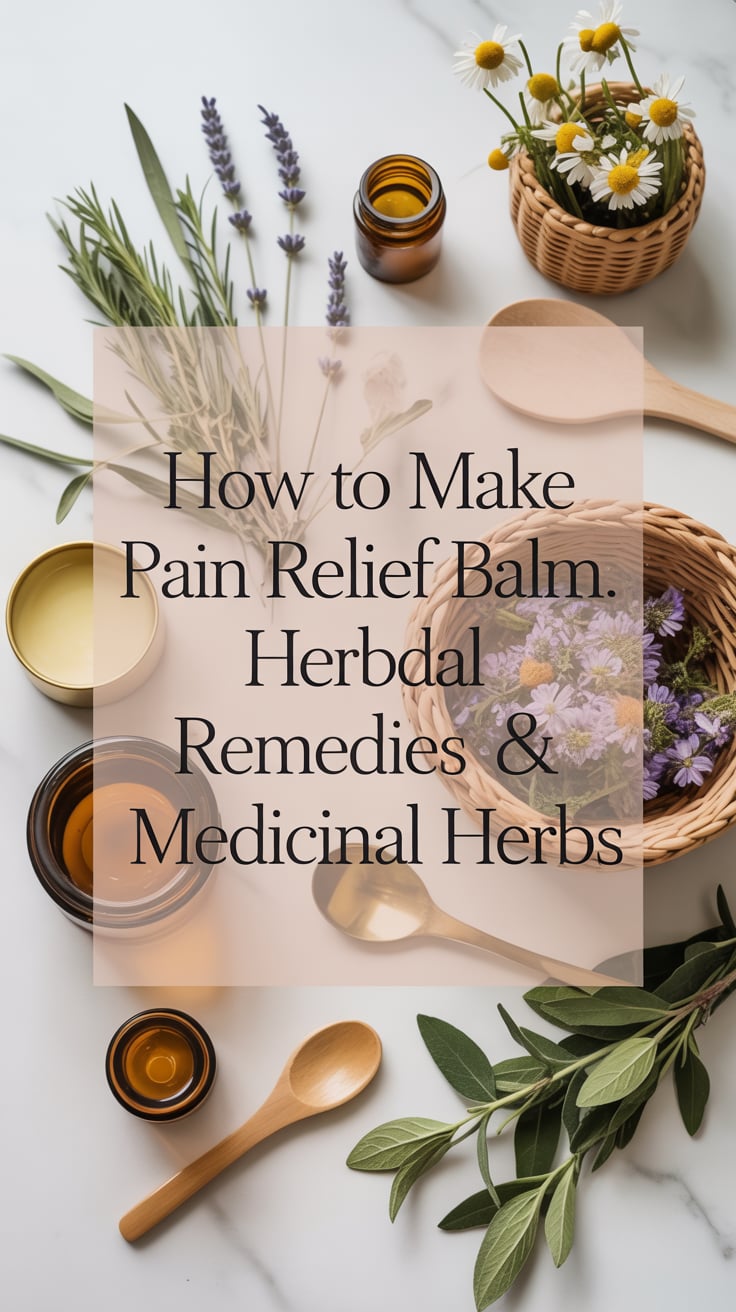
If you want to learn how to make pain relief balm using herbal remedies and medicinal herbs, you’re in the right place. This guide walks you through everything from herb selection and oil infusions to exact balm ratios, scent profiles, and safety for kids and pregnancy. By the end, you’ll know how to make pain relief balm formulas for muscle soreness, joint aches, bruises, and nerve discomfort—using medicinal herbs and simple kitchen tools.
After learning how to make pain relief balm for your home apothecary, you may also want a physician-backed reference for when to use home care vs. when to seek help. The Home Doctor is an excellent companion guide to keep on hand for safe, practical at-home care: Home Doctor
What you’ll get in this guide:
- A master balm formula you can adapt to any herb set
- 4 ready-to-make recipes: cooling, warming, trauma/bruise, and joint-soothing
- Oil infusion methods (quick and slow), shelf-life tips, and scent blending
- Safety notes for children, pregnancy, pets, and medication interactions
- Packaging, labeling, and small-batch business tips
Quick safety note: Herbal balms are for external use only. Avoid broken skin (except specific formulas meant for minor abrasions). Do a patch test first. If pain is severe, unexplained, or worsening, consult a qualified clinician.
Table of Contents
Foundations: Herbal Pain Types and Matching Medicinal Herbs
Knowing how to make pain relief balm begins with understanding pain types and selecting medicinal herbs that match the mechanism of discomfort. Different pain calls for different strategies:
- Muscle strain and overuse: Relief comes from herbs that relax muscle fibers, improve local circulation, and reduce inflammation. Consider arnica (Bruises/Muscle soreness), St. John’s wort (nerve and muscle tension), peppermint and wintergreen (cooling ease), and cayenne/ginger (warming circulation).
- Joint aches and stiffness: Look for anti-inflammatory and cartilage-supportive allies: turmeric, ginger, frankincense, myrrh, rosemary, comfrey leaf (external only), and a touch of cayenne to carry actives deeper.
- Bruises and trauma: Arnica, comfrey leaf (external), yarrow, helichrysum, and St. John’s wort help with tender tissues, superficial capillary damage, and soreness. Do not use arnica on open wounds.
- Nerve-related discomfort: St. John’s wort oil is prized for nerve-soothing topical care; combine with lavender, frankincense, and a lower dose of warming herbs to avoid irritation.
- Tension headaches and neck/shoulder tightness: A light, non-greasy balm with peppermint, lavender, and rosemary can soothe muscles and offer gentle relief. Avoid near the eyes.
Top-herb snapshot when you’re making a pain relief balm with herbal remedies and medicinal herbs:
- Arnica (Arnica montana): For bruises and sore muscles; avoid on broken skin.
- St. John’s wort (Hypericum perforatum): Nerve and muscle support; can interact with some medications if ingested, but topical use is generally well tolerated.
- Comfrey leaf (Symphytum officinale): External support for sore joints and tissues; do not use on deep open wounds; limit duration of use.
- Cayenne (Capsicum spp.) and Ginger (Zingiber officinale): Warming, circulatory; useful for chronic stiffness or cold-type aches.
- Peppermint (Mentha x piperita), Wintergreen (Gaultheria procumbens), Eucalyptus: Cooling, analgesic sensations; excellent post-workout or for tension areas.
- Turmeric (Curcuma longa), Frankincense (Boswellia spp.), Myrrh: Anti-inflammatory allies for joint and muscle balms.
Related concepts and terms to include in your DIY herbal balm vocabulary:
- Carrier oils (olive, sweet almond, jojoba, fractionated coconut)
- Waxes and butters (beeswax, candelilla for vegan, shea, cocoa butter)
- Oil infusion methods (solar/room-temperature maceration, double boiler, slow cooker)
- Essential oil dilution ranges (typically 0.5–3% topical, lower for kids/pregnancy)
- Texture control (beeswax ratios), shelf life (12–18 months), antioxidants (vitamin E)
If you’re building a home herbal toolkit beyond balms, you might also explore tinctures and syrups to complement topical support. For a guided next step, see this internal primer on solvent-based extracts and dosing safety: beginner’s herbal tinctures guide
Ingredients and Tools: Building a Reliable Balm-Making Station
To master how to make pain relief balm with herbal remedies and medicinal herbs, prep a clean, efficient workstation. A consistent setup ensures precise textures, safe handling, and repeatable results.
Core tools:
- Double boiler or heat-safe bowl over a saucepan
- Food scale (preferred for accurate beeswax ratios) and/or tablespoons
- Thermometer (optional but helpful for consistency)
- Fine mesh strainer, cheesecloth, or nut milk bag for filtering plant matter
- Glass jars for infusions; tins or small jars (1–2 oz) for balms
- Spatula, small ladle, labels, and alcohol wipes for sanitizing
- Paper towels, gloves, and a clean tray to set filled tins
Carrier oils: Choose based on skin feel and absorption
- Olive oil: Classic, stable, inexpensive; mid-weight feel; great for arnica or comfrey infusions.
- Sweet almond: Light, mildly emollient; good for everyday balms.
- Jojoba: Technically a liquid wax; excellent stability and skin-compatibility; great in face/neck balms or headache sticks.
- Fractionated coconut oil (FCO): Light, non-greasy; excellent for roll-ons and warmer climates.
- Avocado or grapeseed: Useful alternates; grapeseed is lighter but shorter shelf life—add vitamin E.
Waxes and butters for structure:
- Beeswax: Gold standard for balm firmness. Typical range: 1 part beeswax to 4–6 parts oil depending on texture and climate.
- Candelilla wax: Vegan alternative; harder than beeswax. Start with 50–60% of the beeswax weight and adjust.
- Shea butter: Adds cushion and glide; wonderful for joint and hand balms. Use 10–30% of total fats.
- Cocoa butter: Firmer with a chocolate scent; adds occlusivity and stability. Use 5–20%.
Essential oils and absolutes (optional but potent):
- Cooling profile: Peppermint, eucalyptus, rosemary cineole, lavender
- Warming profile: Ginger CO2, black pepper, cardamom, cinnamon leaf (cautious, very low)
- Resinous anti-inflammatory profile: Frankincense, myrrh, copaiba
- General guideline: 0.5–2% total dilution for most adults; 0.25–0.5% for sensitive skin; avoid menthol-heavy blends for young children
Functional add-ins:
- Menthol crystals: 1–5% for cooling effect; dissolve into warm oil before adding wax.
- Magnesium oil (brine): Requires emulsification; better as a separate spray to avoid stability issues in anhydrous balms.
- Vitamin E (mixed tocopherols): 0.5–1% as an antioxidant to slow rancidity.
Sanitation and shelf life:
- Wipe tins and tools with isopropyl alcohol and let dry before pouring.
- Store completed balms away from heat and light. Properly made balms last 12–18 months; discard if smell or color changes noticeably.
Want to see how balms fit in a broader DIY first-aid approach?
Oil Infusions: Extracting Herbal Power into Your Base
Infused oils are the heart of any medicinal balm. To learn how to make pain relief balm that actually works, nail your infusions. You’re aiming to capture fat-soluble constituents (like sesquiterpenes, resin acids, and some polyphenols) into your carrier oil without scorching or introducing moisture.
Choose your herb(s) and prep:
- Dried vs. fresh: Prefer dried herbs to reduce water content, which can cause spoilage. If using fresh, wilt 12–24 hours to reduce moisture.
- Particle size: Lightly crumble leaves/flowers; avoid powder-fine, which complicates straining and can make the oil cloudy.
- Typical ratio: 1 part herb (by weight) to 5 parts oil (by volume) is a good starting point; adjustments depend on herb density.
Three reliable infusion methods:
- Solar/room-temperature maceration (gentlest flavor, longest time)
- Fill a jar 1/3 with dried herb. Cover with carrier oil to within 1 inch of the rim; stir to release air bubbles; cap.
- Infuse on a shelf away from direct sun for 4–6 weeks. Shake gently every 1–2 days.
- Strain through cheesecloth, then through a fine strainer. Press gently to avoid plant sediment carrying over.
- Double-boiler or slow-cooker quick infusion (2–6 hours)
- Combine dried herb and oil in a heat-safe jar. Place in a water bath at 120–140°F (49–60°C). Keep water below the oil line to prevent water intrusion.
- Steep 2–6 hours, stirring occasionally. Keep temperature low; the oil should feel warm, not hot.
- Strain thoroughly. If you see condensation, let the oil settle; decant the clear layer and discard any watery residue.
- Low-oven infusion (for robust herbs like ginger or turmeric)
- Set oven to 140–170°F (60–77°C) or lowest “warm” setting.
- Place herb and oil in a covered, oven-safe dish; warm 2–3 hours, stirring once or twice.
- Strain and cool. This method can coax resinous elements but requires care to prevent overheating.
Infusion combinations for your pain relief balm:
- Trauma oil: Blend arnica + St. John’s wort + calendula in olive/jojoba.
- Warming joint oil: Ginger + turmeric + rosemary in olive/avocado.
- Cooling muscle oil: Peppermint leaf + comfrey leaf in sweet almond/jojoba.
For a deeper dive into ratios and time/temperature control, see this internal tutorial on making consistent salve bases and infused oils: salve base and infusion guide
Master Balm Formula: Ratios, Texture Tuning, and Pouring
Once your infused oil is ready, the next step in how to make pain relief balm is to set it with wax and fine-tune the texture. Use this reliable master formula, then adapt for climate and skin feel.
Base formula (yields about 8 oz / 225 g of balm):
- 6.5 oz (184 g) infused oil blend (see infusion section)
- 1.2 oz (34 g) beeswax pastilles (about 15–18% of total)
- 0.3 oz (8–9 g) shea butter (optional, ~4%)
- 10–20 drops vitamin E (0.5–1%)
- Essential oils per recipe (typically 0.5–1.5% for general use)
Steps:
- Set up a double boiler. Add the infused oil and shea butter; warm gently.
- Add beeswax. Stir occasionally until completely melted and the mixture looks clear.
- Remove from heat. Let cool 1–2 minutes before adding essential oils and vitamin E to preserve potency.
- Spoon a small amount onto a cold plate to “set” in 30 seconds. If too soft, remelt and add a bit more wax; if too hard, add a touch more oil.
- Pour into tins or jars. Label with name, date, and key contraindications (“external use only; avoid eyes; not for infants,” etc.).
Texture adjustments by climate:
- Hot climates: Increase beeswax to 18–22% to prevent melt in transit.
- Cold/dry climates: Add 5–10% shea or a splash of jojoba for glide and skin feel.
Scent and function tuning:
- Cooling profile: 10 drops peppermint + 6 eucalyptus + 6 lavender per 4 oz (120 ml) balm
- Warming profile: 6 ginger CO2 + 4 black pepper + 2 cardamom per 4 oz balm
- Resinous anti-inflammatory: 8 frankincense + 4 copaiba + 3 myrrh per 4 oz
Patch test: Apply a pea-sized amount to the inner forearm and wait 24 hours before broad use.
Shelf life and storage:
- Keep balms in cool, dark places. Use clean hands or a spatula to avoid contamination.
- Add vitamin E to slow oxidation. Discard if you notice off odors or color changes.
Cooling, Warming, Trauma, and Joint Balms: 4 Proven Recipes
When you’re learning how to make pain relief balm with herbal remedies and medicinal herbs, having plug-and-play recipes speeds results. Start with these four, then personalize.
- Cooling Muscle Recovery Balm (post-workout, tension)
- Infused oil: 4 oz peppermint leaf + 2 oz comfrey leaf in sweet almond/jojoba blend (6 oz total)
- Beeswax: 1.1 oz
- Optional: 0.3 oz shea butter
- Essential oils: 20 drops peppermint, 12 eucalyptus radiata, 10 lavender
- Vitamin E: 10–15 drops
Method: Make as per master formula. Great for neck/shoulder tension, calves, and forearms. Avoid use near eyes and on children under 6 due to menthol.
- Warming Capsaicin-Ginger Balm (chronic stiffness, “cold” aches)
- Infused oil: 3 oz ginger + 2 oz turmeric + 1 oz rosemary in olive/avocado (6 oz total)
- Beeswax: 1.2 oz
- Optional: 0.2 oz cocoa butter
- Essential oils: 8 ginger CO2, 6 black pepper, 4 cardamom, 2 cinnamon leaf (optional; very low to avoid irritation)
- Vitamin E: 10–15 drops
Method: Use sparingly at first. Expect a gradual warming sensation. Wash hands after use; avoid mucous membranes. Not for broken skin.
- Trauma and Bruise Balm (tender tissues, bumps)
- Infused oil: 3 oz arnica + 2 oz St. John’s wort + 1 oz calendula (6 oz total)
- Beeswax: 1.1 oz
- Optional: 0.3 oz shea butter
- Essential oils: 10 helichrysum (if available), 8 lavender, 6 frankincense
- Vitamin E: 10 drops
Method: Apply 2–3x daily to sore, bruised areas. Do not apply to open wounds. This is the classic “trauma oil” set in balm form.
- Joint-Soothing Resin Balm (hands, knees)
- Infused oil: 3 oz comfrey leaf + 2 oz turmeric + 1 oz rosemary (6 oz total)
- Beeswax: 1.2 oz
- Optional: 0.2 oz shea butter
- Essential oils: 10 frankincense, 8 copaiba, 6 myrrh, 4 rosemary ct. camphor
- Vitamin E: 10–15 drops
Method: Apply 2–4x daily to hands and knees. Comfrey is for external, intact skin only; limit long-term continuous use to a few weeks, then take a break.
Pro tips:
- For a “stick” format, pour into deodorant-style twist tubes. Increase beeswax by 10–20% to hold the shape.
- For ultra-fast absorption, replace 10–20% of your oil with jojoba or FCO.
- For ultra-cooling, add 1–3% menthol crystals dissolved into the warm oil before wax addition.
Advanced Enhancements: Potency, Penetration, and Blending
To master how to make pain relief balm beyond the basics, consider these evidence-informed enhancements and practical tricks. Keep safety front and center as you scale potency.
Potency upgrades:
- CO2 extracts: Ginger CO2, turmeric CO2, and arnica CO2 can be more aromatic and potent than steam-distilled or macerated counterparts. Use at low percentages (often 0.1–1%).
- Resin extracts: Frankincense and myrrh resinoids offer stubborn-joint support; they can be sticky—blend into warm oil thoroughly.
- Capsaicin standardization: If using capsicum oleoresin, keep total capsaicin content low; always test carefully for skin tolerance.
Penetration and glide:
- Jojoba increases glide without greasiness; squalane (olive-derived) can boost slip and improve skin feel.
- Make a balm-serum hybrid by reducing wax to 8–10% and adding 20–30% shea or kokum butter for a “butter balm.”
Formulation strategies:
- Layering: For evening routines, apply a magnesium oil spray first (let dry), then your balm. This avoids destabilizing your balm with water.
- Synergy by type: Combine one anti-inflammatory resin (frankincense), one circulatory (ginger), and one cooling or comforting aroma (lavender) to target multiple pathways without overloading the skin.
Essential oil maximums and cautions:
- Wintergreen (methyl salicylate) is extremely potent. Many home formulators choose to avoid it or use minute amounts under professional guidance. Consider rosemary/peppermint as safer cooling stand-ins.
- Cinnamon leaf and clove bud are dermal irritants—if used, keep very low and reserve for stubborn, small-area use.
- Citrus oils are generally not top picks for pain, but if used for scent, choose steam-distilled (non-phototoxic) varieties.
Testing and iteration:
- Keep a formulation notebook. Record exact weights, temperatures, pour conditions, and skin feedback.
- Create 1–2 oz pilot batches to test scent throw, glide, and real-world relief before scaling.
If you want to make your home apothecary more resilient, it helps to plan for water, power, and storage stability. A practical adjunct for household readiness is a clean-water fallback during outages: New Water Offer: SmartWaterBox
Safety, Contraindications, and When to Seek Care
Knowing how to make pain relief balm with herbal remedies and medicinal herbs includes knowing when not to use them. Use this safety checklist to stay on track.
General safety:
- External use only. Avoid eyes, nose, mouth, and mucous membranes. Wash hands after application, especially with warming balms.
- Patch test every new formula. Discontinue if redness, rash, or burning persists more than 10–15 minutes.
- Children: Avoid strong menthol/eucalyptus on children under 6; use gentler dilutions (0.25–0.5%) and avoid warming capsaicin formulas.
- Pregnancy/breastfeeding: Use simple, low-dilution blends (e.g., lavender, frankincense) and avoid strong stimulants and salicylate-rich oils. Consult your prenatal provider.
- Pets: Keep essential-oil balms away from cats and small dogs; they can be sensitive to certain terpenes.
Specific herb notes:
- Arnica: Do not apply to open wounds; limit to intact skin.
- Comfrey: External use only; avoid prolonged continuous use. Not for deep puncture wounds.
- St. John’s wort: Topical use is generally well tolerated; oral use has drug interactions—keep label clear that your product is topical.
- Wintergreen and methyl salicylate: Potent; avoid with salicylate sensitivity, blood thinners, or in kids.
Red flags—seek medical evaluation:
- Severe, sudden pain, swelling, fever, numbness, or loss of function
- Pain following high-impact injury, suspected fracture, or infection
- Persistent pain that worsens or fails to improve with home measures
Mid-content resource to keep at home for clear, stepwise guidance on self-care vs. escalation: Home Doctor
Application routines:
- Post-workout: Cooling balm within 30–60 minutes of activity, then warming balm later if stiffness sets in.
- Chronic joints: Morning warming balm to mobilize; evening resinous anti-inflammatory balm for recovery.
- Bruises/trauma: Trauma balm 2–3x daily until discoloration fades.
Labeling your balms with core cautions helps family members use them safely.
Making Balms at Scale: Gifting, Small Business, and Compliance
As you refine how to make pain relief balm at home, you may want to make larger batches for gifts or a side business. Here’s how to scale responsibly.
Batch sizing and consistency:
- Standardize by weight, not volume, especially for beeswax and butter.
- Make a 16–32 oz master batch of infused oil at a time; split into smaller balm runs with different scent profiles.
- Calibrate hardness with a quick “plate test” for each batch, as herb density and ambient temperature vary.
Packaging:
- 1 oz and 2 oz tins are travel-friendly; amber glass jars convey an apothecary feel.
- For sports kits, consider twist-up sticks. Increase wax to prevent melting in gym bags.
- Label includes: product name, key herbs, “external use only,” dilution percent or age guidance, date/batch, storage, and your contact info.
Costing and margins:
- Typical ingredient cost for a 2 oz high-quality balm ranges $1.50–$4 depending on oils and EOs used.
- Retail ranges commonly $9–$18 for small-batch, artisanal products. Price based on quality, packaging, and market.
Compliance:
- Avoid disease claims. Position as “soothing,” “comforting,” or “for tired muscles and joints.”
- Keep good manufacturing practices: sanitize equipment, document batches, and store ingredients properly.
Product recommendation section: Guides for home health and resilience
- Best step-by-step home medical guide to pair with your herbal workbench: Home Doctor
- Urban readiness and self-reliance fieldcraft for households that want broader resilience: New Survival Offer: URBAN Survival Code
- Pantry planning to support herbal projects (carrier oils, jars, storage) through supply hiccups: The Lost SuperFoods
If you’re also foraging or growing your own medicinal herbs to reduce costs, this primer will help you identify and harvest responsibly: foraging medicinal herbs basics
Troubleshooting, Storage, and Use Schedules That Work
Even when you know how to make pain relief balm, small variables can affect your outcome. Here are the most common issues and fixes:
Common problems and fixes:
- Balm too soft: Remelt gently and add 5–10% more beeswax. Stir thoroughly and re-pour.
- Balm too hard or draggy: Remelt and add 5–10% more infused oil or 5% shea for glide.
- Grainy texture: Often from butters cooling slowly. Melt fully, then cool quickly—place filled tins on a cool surface or briefly in the fridge.
- Oily separation: Overheating or moisture contamination. Keep temps low and ensure herbs are well dried. If water got in, let the oil settle and decant the clear layer before remaking.
- Weak scent: Increase EO blend slightly within safe limits, or switch to CO2 extracts for stronger aroma at lower dose.
Storage and longevity:
- Label with date. Most balms last 12–18 months; resin-heavy blends can last even longer if kept cool and dark.
- Add 0.5–1% vitamin E to slow oxidation.
- Use clean fingers or a small spatula to reduce contamination.
Use schedules for real results:
- Acute muscle soreness: Apply cooling balm post-activity; trauma balm in evening if bruised.
- Chronic joint discomfort: Warm in the morning, resin balm mid-day, gentle cooling at night as needed.
- Nerve tenderness: St. John’s wort–rich balm 2–3x daily for 2–3 weeks, evaluating response.
Layering with other modalities:
- Epsom salt soaks (magnesium sulfate) complement balms after workouts.
- Gentle stretching and heat packs pair well with warming balms; cold packs pair with cooling balms for acute strains.
Label language examples:
- “Soothing herbal balm for tired muscles and joints. External use only. Avoid eyes. Patch test recommended.”
- Age guidance: “Not for use on infants. For children over 6, use sparingly and avoid strong menthol blends.”
If you want a streamlined template to stock your cabinet with the essentials (from wound care to respiratory support) using a practical, evidence-aware approach, the at-home manual many readers rely on is: Home Doctor
Herb Profiles, Sourcing, and Ethical Harvest
Quality in equals quality out. Part of learning how to make pain relief balm with herbal remedies and medicinal herbs is knowing where to get the best raw materials.
Sourcing tips:
- Buy from reputable herb suppliers who provide Latin binomials and origin. Look for bright color and fresh, characteristic aroma.
- Choose organic or sustainably wildcrafted herbs when feasible.
- For oils, pick fresh stock in dark bottles. Olive, jojoba, and fractionated coconut are stable choices.
Quick herb profiles:
- Arnica: Flowers; powerful for bruises. Use only externally on intact skin. Infuse dried flowers in olive or jojoba.
- St. John’s wort: Fresh flowering tops produce the famed red oil; if fresh is unavailable, use high-quality dried material and extend infusion time.
- Comfrey leaf: Moisturizing and soothing for joints; use leaf rather than root for gentler, external-only support.
- Ginger and Turmeric: Dried slices or powder can be infused; strain well. CO2 extracts are potent—use sparingly.
- Frankincense and Myrrh: Resins can be tinctured or infused; gentle warming helps dissolve aromatic compounds into oil.
Sustainability:
- Harvest no more than 10–20% of a stand. Leave the healthiest plants to reseed.
- Prefer cultivated sources for at-risk species.
If you grow your own herbs, plan bed space for perennials like comfrey and St. John’s wort, and annuals like calendula. Dry in small bundles in a shaded, ventilated area, then store in glass away from light.
For a broader homestead resilience plan that includes food and home health storage ideas, this guide offers time-tested pantry strategies: The Lost SuperFoods
Beginner to Pro: From First Balm to Signature Blends
Your first success in how to make pain relief balm will likely come from following the master formula and one of the four recipes above. Then, iterate into signature blends.
Roadmap:
- Batches 1–3: Make one cooling and one warming balm; choose your favorite and refine texture.
- Batches 4–6: Add a resin-rich joint balm and a trauma balm. Compare relief times and user feedback.
- Batches 7+: Introduce scent complexity—e.g., lavender with a hint of balsam and copaiba for calming evenings.
Branding and theme:
- Keep names descriptive and compliant: “Cooling Peppermint Arnica Balm,” “Warming Ginger Joint Balm,” etc.
- Use color-coded labels for easy recognition at a glance.
Community feedback:
- Offer friends 0.5–1 oz samples with a simple survey card: texture, scent, relief rating, any irritation.
- Tweak wax and butter ratios seasonally. Summer formulas can soften; winter ones can firm up.
Documentation:
- Track herb lots, oil batch dates, and essential oil sources. If a batch excels, you’ll be able to reproduce it precisely.
If you’re building toward a more self-reliant household skill set alongside herbal medicine making, urban-specific preparedness skills can round out the plan: New Survival Offer: URBAN Survival Code
Conclusion
You now have a complete roadmap for how to make pain relief balm with herbal remedies and medicinal herbs—from choosing the right plants for each pain type to oil infusions, wax ratios, and four proven recipes. With a clean workstation, quality herbs, and careful safety practices, your balms can deliver consistent, soothing relief for sore muscles, tender joints, bruises, and tension.
Next steps:
- Pick one infusion (trauma or warming) and one balm recipe to make this week.
- Keep a small notebook of formula tweaks, skin feel, and results.
- Build a two-season plan: a cooling blend for warm months and a resin-rich joint balm for cold months.
For confident home care that complements your new herbal skill, keep this physician-written manual in your cabinet. It’s an ideal companion to herbal topical care, especially for triage decisions and step-by-step remedies: Home Doctor
FAQ
How to make pain relief balm?
Infuse dried medicinal herbs (e.g., arnica, St. John’s wort, comfrey, ginger, turmeric) in a stable carrier oil for 2–6 weeks (or 2–6 hours by gentle heat). Melt 15–20% beeswax into your warm infused oil, add optional shea/cocoa butter for texture, cool slightly, then stir in vitamin E and essential oils. Pour into tins, label, and let set. Patch test before wider use.
How to make herbal healing balm?
Start with a purpose: trauma/bruise, cooling muscle relief, warming joint support, or nerve comfort. Choose matching herbs, create an infused oil, then follow a master salve formula (about 1 part beeswax to 4–6 parts oil). Add a gentle, supportive essential oil blend such as lavender, frankincense, and copaiba at 0.5–1% for adults. Use low dilutions for kids and sensitive skin.
What are the ingredients in herbal balm?
Core: infused oils (olive, jojoba, almond), beeswax or candelilla wax, optional butters (shea, cocoa), vitamin E, and a targeted essential oil blend. The infused oil is where the medicinal herbs live—arnica for bruises, St. John’s wort for nerves, comfrey leaf for joints, ginger/turmeric for warming anti-inflammatory support, peppermint/eucalyptus for cooling comfort.
Which balm is best for pain relief?
For bruises and tender tissues: Arnica + St. John’s wort trauma balm.
For post-workout and tension: Cooling peppermint-eucalyptus-lavender balm.
For stiff, cold-feeling joints: Warming ginger-capsaicin balm with frankincense.
For chronic joint discomfort: Resin-rich balm with frankincense, copaiba, myrrh, and comfrey leaf (external only).
Always patch test, avoid broken skin with arnica/comfrey, and use gentler formulas for children and pregnancy.