
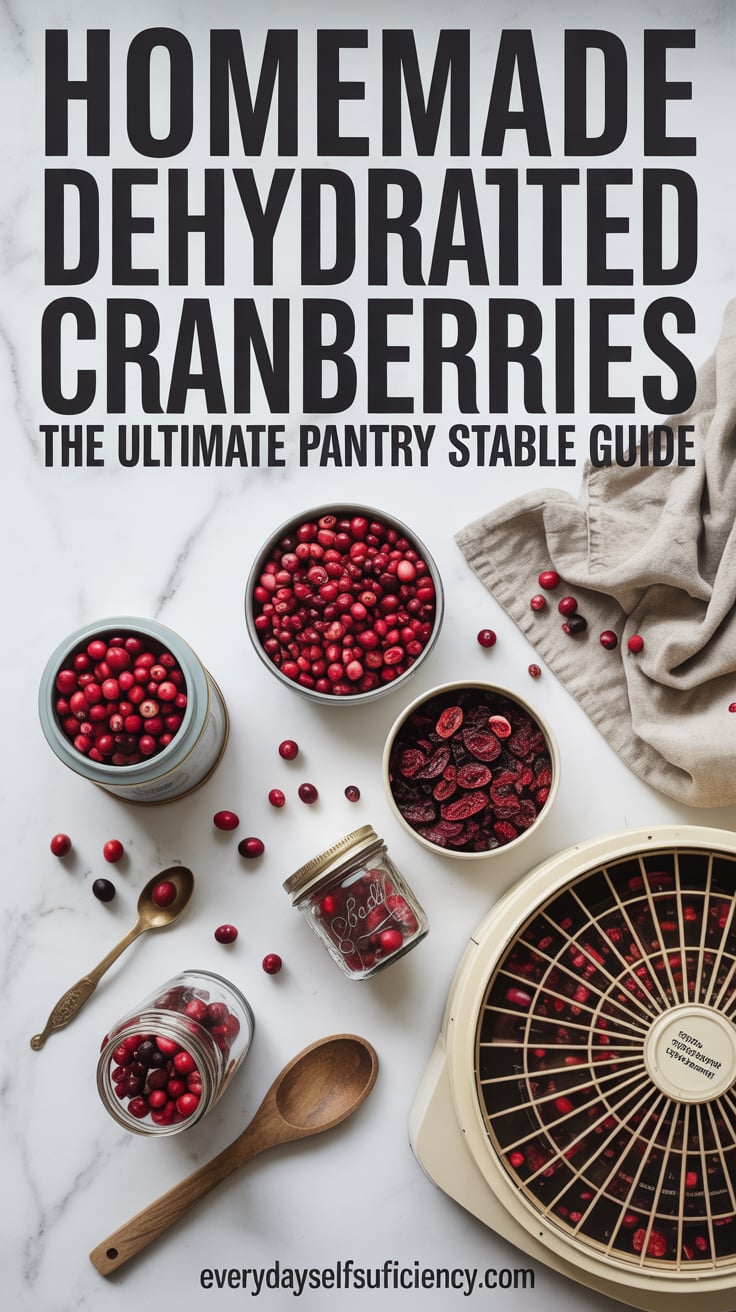
The Homemade Dehydrated Cranberries Recipe you’re about to master will give you tart, jewel-red berries that store for months, add punchy flavor to baking and trail mixes, and save you serious money compared to store-bought “Craisins.” If you’ve ever wondered how to dry cranberries at home so they turn out chewy (not rock-hard), lightly sweet (not cloying), and perfectly preserved, this guide walks you through every step—from popping the skins to drying temperatures, storage, and smart ways to use your new pantry staple.
This article may contain affiliate links. If you purchase through one, we may earn a small commission at no extra cost to you. One of the best resources for resilient pantry planning and old-school preservation methods is The Lost SuperFoods—packed with step-by-step preservation blueprints that pair perfectly with this Homemade Dehydrated Cranberries Recipe. Check it out here: The Lost SuperFoods.
Why this Homemade Dehydrated Cranberries Recipe works:
- It focuses on the science (cranberry skins are waxy and tough; we’ll help you “crack” them properly).
- It offers sweetened and unsweetened routes, including low-sugar options and flavor variations.
- It covers dehydrator, oven, and off-grid-friendly methods, plus storage for long shelf life.
- It builds in practical pantry tips for self-reliant living.
If you’re building a well-rounded homestead pantry or simply trying to cut sugar, learning a reliable Homemade Dehydrated Cranberries Recipe is a powerful, money-saving skill. And if you want more preparedness and food storage strategies beyond this guide, explore the practical how-tos and time-tested techniques on our site: Everyday Self-Sufficiency.
Table of Contents
Ingredients, Tools, and What to Expect
Start with the freshest berries you can find. Firm, bright, fresh cranberries will always outperform soft, wrinkled, or old ones. Frozen cranberries also work beautifully; they have the added benefit of skin cell rupture from freezing, which helps with drying.
Core ingredients and tools for the Homemade Dehydrated Cranberries Recipe:
- Cranberries (fresh or frozen): 1–2 pounds per batch is a good start.
- Optional sweetener: white sugar, honey, or maple syrup. Apple juice and orange juice are great natural alternatives.
- Water for blanching and/or steeping.
- Optional flavorings: orange zest, cinnamon, vanilla, ginger, clove, star anise.
- Equipment: dehydrator with trays and mesh screens, or an oven that can hold 135–170°F (57–77°C). Optional: air fryer with low-temp dehydrate mode.
- Extras that help: parchment or silicone mats, cooling racks, paper towels, slotted spoon, and a large pot for blanching.
Yields and expectations:
- 1 pound (450 g) of fresh cranberries typically yields 1 to 1.5 cups of dried berries depending on sweetness and how much moisture is removed.
- Time: 8–16 hours in a dehydrator depending on pretreatment and humidity; 4–8 hours in an oven at low temp (with door slightly cracked), but watch for case-hardening. Air fryers with dehydrate mode may take 4–8 hours.
Why pretreatment matters:
Cranberries have tough, waxy skins. If you don’t nick or crack the skin, you risk case-hardening—when the outside dries too fast, trapping moisture inside. In the Homemade Dehydrated Cranberries Recipe, we’ll blanch briefly or freeze-thaw to break the skins and help moisture escape.
Storage basics preview:
- Target moisture: leathery and pliable—no visible moisture when pressed. Some prefer a chewier finish; you can go slightly more moist if you plan to refrigerate.
- Packaging: glass jars for short term; Mylar + oxygen absorber or vacuum-sealed jars for long term.
- Shelf life: up to 12–18 months in a cool, dark place when fully dried and well-packed.
The Science of Cranberries and How to Pre-Treat for Perfect Texture
A successful Homemade Dehydrated Cranberries Recipe hinges on understanding how to get moisture out without turning berries into bullets. Cranberries are packed with pectin, fiber, and pockets of air; their peels also repel water. You need to open a pathway for moisture to leave before the drying stage.
Three effective pretreatments:
- Quick blanch and shock:
- Bring a pot of water to a boil.
- Add cranberries for 30–60 seconds until you hear/see light popping or skins start to split.
- Immediately remove to an ice bath to stop cooking.
- Drain and pat dry.
- This classic method creates micro-tears that let moisture out but keeps berries intact and plump. It’s the gold standard for a balanced Homemade Dehydrated Cranberries Recipe.
- Freeze and thaw (no-cook):
- Spread cranberries on a sheet, freeze hard, then thaw in the fridge.
- As they thaw, cell walls rupture, mimicking blanching’s effect. Pat dry before proceeding.
- This route is excellent for unsweetened or low-sugar versions and reduces hands-on work.
- Slit or prick method:
- Use a sharp knife or skewer to pierce each berry once.
- Labor intensive but extremely effective for even drying if you’re doing a small batch.
- Ideal if you prefer an unsweetened Homemade Dehydrated Cranberries Recipe and want consistent chew.
Sweetening options and why they help:
Even if you love tartness, a light sugar or honey steep improves texture and pliability by replacing some water with syrup. It also adds shine and reduces extreme sourness. Choose your path:
- Classic sugar steep:
- Simmer 1 cup water + 1 cup sugar.
- Remove from heat, add pretreated cranberries, and steep 10–15 minutes.
- Drain thoroughly before drying. Reserved syrup can be used in cocktails, sauces, or kombucha.
- Honey or maple syrup steep:
- Warm 1 cup water + 1/3–1/2 cup honey or maple until dissolved.
- Off heat, steep berries 10–15 minutes. Drain well.
- Honey produces slightly tackier skins; use parchment or mesh liners.
- Fruit juice steep (lower refined sugar):
- Simmer 1 cup apple or white grape juice; steep berries 10–15 minutes. Optional: add orange zest or a cinnamon stick for a holiday vibe.
- Drain well. This is a crowd-favorite path for a family-friendly Homemade Dehydrated Cranberries Recipe.
- Unsweetened route:
- Pretreat by blanching or freeze-thaw, then proceed to drying without any syrup. Expect a tarter result.
Flavor infusions:
Add orange zest, split vanilla bean, or warm spices to your syrup or juice while steeping. Strain out solids before draining berries. The result is a deeply aromatic Homemade Dehydrated Cranberries Recipe that feels gourmet.
Important draining step:
After any steep, drain thoroughly and spread on towels to remove surface moisture. Excess syrup delays drying and can cause sticky outcomes. This 5-minute step improves consistency across trays and shortens dehydrator time.
Dehydrator Method — Step-by-Step Homemade Dehydrated Cranberries Recipe
For most home preservers, a dehydrator is the most reliable way to execute this Homemade Dehydrated Cranberries Recipe with consistent texture and color.
Step-by-step:
- Prep the berries:
- Rinse, sort out soft or bruised cranberries, and pretreat (blanch, freeze-thaw, or slit).
- If sweetening, steep and drain well. If unsweetened, pat dry after pretreatment.
- Arrange on trays:
- Line trays with mesh or parchment to prevent sticking.
- Spread berries in a single layer with space between. Avoid clumps; overlapping creates wet spots.
- Set temperature:
- 135°F (57°C) is ideal for fruit in most dehydrators.
- If your model only goes to 125°F (52°C), simply expect more time.
- Avoid jumping above 140–145°F; too hot risks case-hardening.
- Drying time:
- 8–16 hours is typical, depending on sugar content, berry size, humidity, and air circulation.
- Rotate trays every 2–3 hours for even drying, especially with full loads.
- Doneness tests:
- Properly dried cranberries are leathery and pliable with no visible moisture when torn.
- Squeeze a few; they should not squirt or leave syrup on your fingers.
- Cut a couple of the largest berries in half: interiors should be evenly dry, not squishy.
- The all-important “conditioning” step:
- After drying, let cranberries cool to room temperature.
- Place in a clean glass jar loosely filled 2/3 full.
- Seal and store at room temp for 5–7 days, shaking daily.
- Watch for condensation on the jar walls—a sign some pieces are still moist. If you see moisture, return berries to the dehydrator for 1–2 hours and repeat conditioning.
- This step evens out moisture across the batch and greatly improves shelf stability for your Homemade Dehydrated Cranberries Recipe.
- Final storage:
- Once conditioned and dry, pack into clean jars or Mylar bags. Label with date and method (sweetened or unsweetened).
Batch planning tips:
- Large berries take longer; either dry separately or cut in half.
- The sweetened variants will be chewier and slightly tacky; consider a brief 15–20 minute cool-air fan blow before jarring.
- If you want a super-chewy “cran-raisin,” under-dry slightly and refrigerate. For shelf-stable storage, err on the side of fully leathery.
Quality upgrades:
- Use a dehydrator with a rear-mounted fan for even airflow.
- Add a thermostat and timer to older units for precision.
- Mesh mats make retrieval easier and reduce loss of small berries.
Oven and Air Fryer Methods, Plus Off-Grid Options
You can absolutely complete the Homemade Dehydrated Cranberries Recipe without a dehydrator. Ovens and air fryers can do a fine job once you control temperature and airflow.
Oven method:
- Prep berries as above (pretreat + optional sweetening + drain).
- Line baking sheets with parchment or silicone mats.
- Spread berries in a single layer with space between.
- Set oven to 150–170°F (65–77°C). If your oven doesn’t go that low, preheat to the lowest setting, turn off occasionally to keep average temp low, or keep the door propped slightly with a wooden spoon to vent moisture.
- Dry 4–8 hours, rotating sheets and stirring gently every hour.
- Watch for case-hardening; if skins feel too firm early on, lower heat and increase airflow (door cracked).
- Test for doneness and condition as in the dehydrator method.
Air fryer dehydrate mode:
- Many air fryers have a 120–160°F dehydrate function. Use mesh racks and avoid crowding.
- Dry 3–6 hours, rotating trays. Air fryers can run hot; check early and often.
Off-grid and low-power options:
- Solar dehydrator: If you have a solar dehydrator, the Homemade Dehydrated Cranberries Recipe works beautifully on dry, sunny days. Pretreatment is still key, and you’ll want good insect screening.
- Woodstove or pilot-light oven: Place trays on cooling racks a safe distance from the heat source. Turn frequently and test often.
- Box fan + furnace filters hack (for other produce) is less ideal for cranberries due to their shape and stickiness, but can work with pretreatment and liners.
If you’re focused on resilient, urban-friendly preservation systems, you might appreciate the off-grid and low-profile survival concepts in URBAN Survival Code. It complements projects like this Homemade Dehydrated Cranberries Recipe by helping you think through power and space constraints, airflow, and safe storage even in apartments.
Taste and texture adjustments:
- For chewier results in an oven, reduce temperature as much as possible and extend time.
- For brighter flavor, opt for a juice steep (apple or orange juice) and finish with a dusting of orange zest after conditioning.
Troubleshooting with ovens:
- Sticky surfaces: You may have too much syrup. Drain more thoroughly, then line with parchment.
- Burned “hot spots”: Use an oven thermometer; many kitchen ovens run 10–25°F hotter than the display. Shuffle trays and rotate often.
Flavor Variations and Low-Sugar Options
One of the joys of a Homemade Dehydrated Cranberries Recipe is customizing flavor. The base berry is tart, so you can skew sweet, spiced, or even savory.
Classic sweet-tart:
- Orange zest and vanilla: Add zest and a split vanilla bean to the sugar syrup or apple juice steep. Strain before drying. Finish with a tiny pinch of flaky salt after conditioning for a flavor pop.
- Cinnamon holiday blend: Simmer sugar syrup with a cinnamon stick, a few allspice berries, and a strip of orange peel. Steep cranberries 10–15 minutes, then drain and dry.
Low-sugar and unsweetened:
- Apple juice steep: Use 100% apple juice with a piece of vanilla bean or a dash of cinnamon. Drains cleanly and preserves brighter notes.
- Unsweetened (blanch-only): The purest Homemade Dehydrated Cranberries Recipe—blanch, shock, pat dry, and dehydrate. Expect more tang; these are excellent in savory grain bowls and pilafs.
Keto-friendlier:
- Erythritol or allulose syrup: Make a light 1:1 water-to-sweetener syrup, warm to dissolve, steep briefly, then drain and dehydrate. Allulose tends to brown slightly faster; dry at the lower end of your temp range and watch closely. Test a small batch first to dial in sweetness and texture.
Savory/herb options:
- Rosemary-orange: Add a sprig of rosemary to an orange juice steep, then remove before drying. These are incredible in goat cheese salads, chicken salads, and charcuterie boards.
- Chili-lime: After conditioning, toss with a whisper of chili powder, lime zest, and a pinch of salt. Store refrigerated if using zest after drying.
Textural tweaks:
- Split berries: Halving very large cranberries speeds drying and produces a raisin-like shape that blends well in granola.
- Extra-chewy: Slightly under-dry and store in the refrigerator up to a month. For shelf-stable storage, always complete the conditioning step and ensure leathery dryness.
Color and clarity:
- Lemon juice (a teaspoon) in your syrup can help maintain a brighter hue.
- Avoid overcooking in the blanch step; 30–60 seconds is enough. Over-blanching can dull color and produce mush.
Storage, Packaging, and Shelf Life That Really Lasts
Your Homemade Dehydrated Cranberries Recipe shines in the pantry only if you lock in quality after drying. Moisture, heat, light, and oxygen are the enemies. Focus on dry, cool, dark, and airtight.
Short-term storage:
- Mason jars with tight lids kept in a cupboard are perfect for 1–3 months if berries are fully dried and conditioned.
- For slightly chewy (higher-moisture) berries, refrigerate and use within 4–6 weeks.
Long-term storage:
- Vacuum-sealed mason jars: Use a jar sealer attachment. Perfect if you’ll open a jar every month or two.
- Mylar bags + oxygen absorbers: Best for 6–18 months. Use 5–8 mil Mylar and the correct absorber size (typically 100–300cc for quart-size bags). Label with date and flavor.
- Keep stored berries in a cool pantry (50–70°F/10–21°C). Avoid temperature swings.
Moisture monitoring:
- The conditioning step equalizes moisture. If you ever see condensation after sealing, open immediately and return to the dehydrator for a safety “dry” session.
- Consider small desiccant packs for jars if you live in a humid climate. Never eat a desiccant; they’re not food.
Mold prevention:
- Perfect dryness + conditioning + airtight storage prevents mold.
- Always cool before sealing to avoid trapped steam.
- When in doubt, dry a bit longer and store a test jar on the counter for a week, checking daily.
Labeling and rotation:
- Mark “Cranberries—Sweetened/Unsweetened—Orange Vanilla—Month/Year.”
- Practice FIFO (first in, first out). Open your oldest jar first.
Call-to-action for building a resilient pantry:
If you’re expanding beyond this Homemade Dehydrated Cranberries Recipe—think shelf-stable soups, fats, and proteins—having a blueprint library is invaluable. The step-by-step preservation frameworks in The Lost SuperFoods pair well with dehydrating projects and can help you build a balanced, long-term pantry without waste.
Smart Ways to Use Dehydrated Cranberries
Homemade Dehydrated Cranberries Recipe results deserve to shine across sweet and savory dishes. Here are practical uses that maximize flavor.
Baking and breakfast:
- Muffins and quick breads: Toss 1/2–1 cup per loaf with a tablespoon of flour to prevent sinking.
- Scones and cookies: Add 1/3–1/2 cup; cranberries complement white chocolate, orange zest, and almond extract.
- Oatmeal and porridge: Stir in a handful during the last minute of cooking for a pop of tartness.
Granola and trail mixes:
- Combine with toasted nuts (almonds, pecans), seeds (pumpkin, sunflower), coconut flakes, and dark chocolate chips.
- Add 1 teaspoon of orange zest to the granola syrup base for synergy with your Homemade Dehydrated Cranberries Recipe.
Salads and bowls:
- Toss with spinach, goat cheese, toasted walnuts, and a citrus vinaigrette.
- Add to wild rice or farro bowls with roasted squash, kale, and a maple-mustard dressing.
Savory mains:
- Cranberry-studded pilaf: Fold into rice with sautéed onion and herbs.
- Sheet-pan chicken: Rehydrate a little and scatter during the last 10 minutes of roasting with carrots and onions for sweet-tart bursts.
Rehydration how-tos:
- Basic: Soak in hot water or orange juice for 10–15 minutes, drain, and pat dry.
- For baking: Soak in warm water with a splash of vanilla or rum; drain before adding to batter.
- For sauces: Cook into pan sauces with stock and a dab of butter for an instant reduction.
Homemade “craisins” vs store-bought:
- You control sugar and flavor.
- You get better texture and real fruit character when you follow this Homemade Dehydrated Cranberries Recipe.
- Cost savings add up, especially in peak cranberry season or after-holiday sales.
Kid-friendly snacks:
- Blend cranberries into fruit leather or energy bites with dates, oats, and nut butter.
- Mix with apple chips and banana chips for a colorful lunchbox addition.
Troubleshooting and Pro Tips
Even a dialed-in Homemade Dehydrated Cranberries Recipe can throw curveballs. Here’s how to fix common issues.
Problem: Hard on the outside, soft inside (case-hardening)
- Cause: Too high temperature or insufficient pretreatment.
- Fix: Lower temp to 125–135°F, use blanching or freeze-thaw, and ensure space between berries. Return under-dried berries to the dehydrator after conditioning.
Problem: Sticky, tacky berries
- Cause: Excess surface syrup or high humidity.
- Fix: Drain thoroughly, pat dry before drying, and use mesh liners. Dry a little longer and cool fully before sealing.
Problem: Uneven drying
- Cause: Crowded trays or mixed berry sizes.
- Fix: Sort by size, rotate trays often, and stir gently mid-dry. Consider halving very large berries.
Problem: Loss of color or dullness
- Cause: Over-blanching or high heat in the oven.
- Fix: Limit blanch to 30–60 seconds; keep temps stable and low. Add a splash of lemon juice to syrup or juice steep to maintain brightness.
Problem: Mold during storage
- Cause: Trapped moisture or hot packing.
- Fix: Always cool before sealing and complete the 5–7 day conditioning phase. If you ever see condensation, re-dry.
Quality boosters:
- Weigh before and after: Target 75–85% weight loss depending on sweetness to confirm dryness.
- Small-batch tests: Trial one tray with your chosen sweetener to calibrate sweetness and texture before scaling.
- Oxygen absorbers: Use only when fully dried; too much moisture + O2 absorber is a mold risk.
Scaling up:
- Run multiple 1–2 lb batches over a weekend; store in quart jars. A repeatable Homemade Dehydrated Cranberries Recipe routine builds a year-round supply.
- Align batches with other fruit projects (apples, pears) to maximize energy use.
Pantry Planning, Cost Savings, and Recommended Resources
A polished Homemade Dehydrated Cranberries Recipe can save money and reduce waste. Let’s break down practical planning and smart resourcing.
Cost snapshot:
- Fresh cranberries often drop in price during and right after holidays. Stock up and freeze.
- DIY vs store-bought: Store “craisins” often run $4–6 per 5–6 ounces with added sugar and oil. Your homemade version can be significantly cheaper per cup, especially in season.
Batch strategy:
- Prep in stages: Day 1 blanch/steep; Day 1 night to Day 2 dry; Day 2 condition and pack.
- Flavor batches: Run classic, orange-vanilla, and unsweetened back-to-back to diversify your pantry.
Nutrition and control:
- Custom sugar level, real spices, and clean ingredients set your Homemade Dehydrated Cranberries Recipe apart.
- Skip oils and anticaking agents common in commercial products.
Gifting and bartering:
- Package in small jars with labels. Pair with homemade granola for an inexpensive, thoughtful gift.
- In preparedness circles, shelf-stable fruit is a popular barter item.
Product recommendation section:
- The Lost SuperFoods: A practical, illustrated toolkit for old-school food preservation and crisis-ready pantry planning. Ideal if you’re expanding beyond this Homemade Dehydrated Cranberries Recipe into meats, staples, and emergency meals. Explore it here: The Lost SuperFoods.
- URBAN Survival Code: If you’re in an apartment or small space, this guide helps you optimize airflow, storage, and low-power cooking methods that dovetail with dehydrating projects. See details: URBAN Survival Code.
Workflow reminder:
- Keep a simple preservation log with dates, temps, and outcomes. This “lab notebook” makes your Homemade Dehydrated Cranberries Recipe consistent and repeatable.
Conclusion
Mastering a Homemade Dehydrated Cranberries Recipe opens the door to better baking, brighter salads, and smarter pantries. With a simple pretreatment, low-and-slow drying, proper conditioning, and airtight storage, you’ll enjoy tart-sweet cranberries year-round—tailored to your taste and your budget. Keep experimenting with juice steeps, orange zest, and spice blends, and build your self-sufficient kitchen one dependable recipe at a time.
Want step-by-step blueprints for building a resilient pantry that supports projects like this Homemade Dehydrated Cranberries Recipe? Dive into The Lost SuperFoods. And for small-space or urban setups, check out URBAN Survival Code.
FAQ
What is the best way to dehydrate cranberries?
The most reliable method for a Homemade Dehydrated Cranberries Recipe is a dehydrator at 135°F (57°C). First, pretreat to crack the skins—quick blanch (30–60 seconds) and ice bath or freeze-thaw. Optionally steep in a light syrup or juice to improve chew. Dry 8–16 hours until leathery, then “condition” in a jar for 5–7 days, shaking daily. Oven methods work too, but manage heat carefully to avoid case-hardening.
How to use dehydrated cranberries?
Use them like store-bought “craisins,” but better: fold into muffins, scones, and cookies; toss in salads with goat cheese and nuts; add to granola, trail mix, oatmeal, and yogurt; cook into pan sauces; or rehydrate in warm water or orange juice for pilafs and roasted chicken dishes. Your Homemade Dehydrated Cranberries Recipe provides superior flavor control and cleaner ingredients.
How are dried cranberries made?
Commercial versions typically blanch cranberries, sweeten heavily (often with sugar and oil), and dry with industrial airflow. At home, the Homemade Dehydrated Cranberries Recipe follows a similar flow without unnecessary additives: pretreat (blanch or freeze-thaw), optionally steep in sugar, honey, maple, or juice, then dry at low temperature until leathery and condition for even moisture.
What are dehydrated cranberries good for?
They’re excellent for long-term pantry storage, meal prep, and baking. Dehydrated cranberries add color and zing to salads, granola, and trail mixes, and they rehydrate quickly for sauces and savory dishes. With the Homemade Dehydrated Cranberries Recipe, you get customizable sweetness, clean ingredients, and shelf stability that supports self-sufficient living. For more homestead-friendly preservation, explore our site at Everyday Self-Sufficiency.