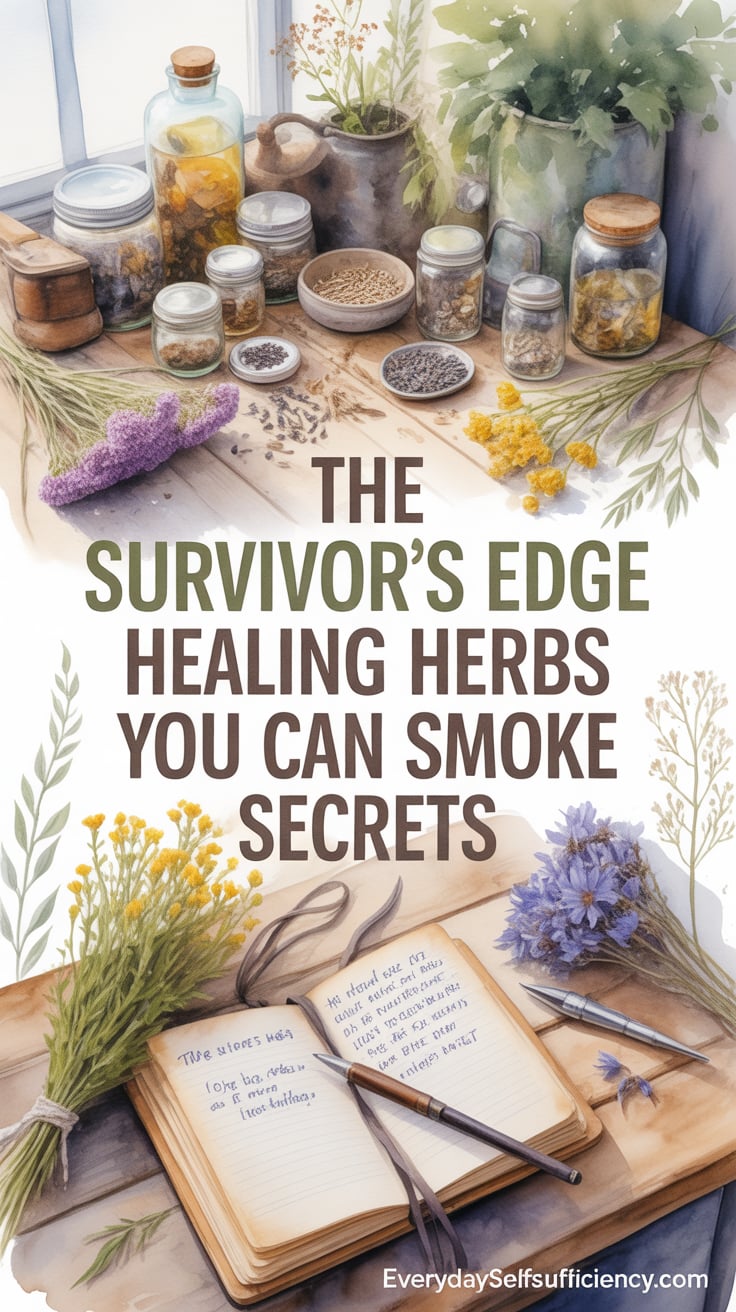
Smoking plants is as old as fire. Across cultures, people have used healing herbs you can smoke for relaxation, ritual, breath support, and social bonding. Today, more folks are turning to nicotine-free, small-batch herbal blends as a mindful alternative to tobacco or as an occasional wellness ritual. This guide walks you through the safest, most respected healing herbs you can smoke, with clear contraindications, blend templates, responsible-use tips, and a harm-reduction mindset. Nothing here is medical advice; if you’re pregnant, have asthma/COPD, cardiovascular disease, or take prescription meds, speak with your clinician before trying any smokeable herb.
Home Doctor is a practical at-home medical handbook many homesteaders and preppers keep on hand to make safer decisions around herbs, breathing issues, and first-aid when a clinic isn’t immediately available.
Tip: If you’re here for quick guidance, skip to “How to Craft a Safe Herbal Smoking Blend” and “Contraindicated Herbs You Should Not Smoke.” If your interest is self-sufficiency, you may also like our guides on herbal medicine at home.
Table of Contents
Safety First: What “Safe” Means When You Smoke Anything
Even healing herbs you can smoke still involve combustion and smoke inhalation, which can irritate and inflame airways. Harm-minimization is the standard:
- Start low, go slow: 1–3 small puffs, observe, and stop at the first hint of irritation.
- Frequency matters: occasional use is safer than daily use.
- Method matters: a clean glass pipe, loose-leaf roll with a paper filter, or a dry-herb vaporizer (lowest heat settings) usually beats improvised devices.
- Your lungs’ health first: if you have asthma, chronic cough, or any lung/heart condition, avoid smoke; consider herbal teas, steams, or tinctures instead.
- Never smoke essential oils or concentrated extracts. Use only properly dried, culinary/aromatic-grade leaf/flower.
- Interactions are real: some herbs mildly sedate; avoid combining with alcohol, driving, or operating equipment.
Harm-reduction alternatives to smoking:
- Vaporize dried whole herb at the lowest temp that releases aroma (less combustion byproduct).
- Use steam inhalations (mullein and thyme are classic allies).
- Make a tea or glycerite/tincture with the same herbs used in healing herbs you can smoke.
If you ever experience chest tightness, dizziness, nausea, or rapid heartbeat from any herb, stop immediately and consult a clinician.
Smooth-Burning Base Herbs That Support the Breath
A good blend begins with a gentle “base” that burns evenly and feels neutral in the lungs. When building healing herbs you can smoke, choose one or two from this base category for 40–50% of your mixture:
- Mullein leaf (Verbascum thapsus): The gold standard respiratory base. Light, fluffy texture; traditionally used to support the lungs. Many people find mullein smoke “dry,” which is why it pairs well with marshmallow.
- Marshmallow leaf (Althaea officinalis): Moistening, soothing, and smooth. It helps counter the dryness of smoke, making healing herbs you can smoke feel far gentler.
- Raspberry leaf (Rubus idaeus): Neutral, balanced burn with a mild, pleasant body; commonly used as a structural base in botanical blends.
- Red clover blossom (Trifolium pratense): Mildly sweet and supportive; adds body to blends, though not as common as the first three.
Basic base-blend template (by weight or volume):
- 25% mullein + 25% marshmallow + 20% raspberry leaf + 10% red clover
- Reserve the remaining 20% for flavor/aromatic or functional allies below.
Keep cut size even: gently crumble by hand or use a coarse grinder to avoid fine dust that burns hot. Heavily stemmy material leads to harsh smoke; remove woody stems. Always purchase from reputable suppliers or grow and properly dry your own; this is crucial for healing herbs you can smoke that you expect to be gentle on respiratory tissues.
Internal tip for DIY storage and drying: if you produce your own herbs, a low-tech dehydrator can preserve quality. See our guide to DIY solar dehydration methods for safe, low-temp drying at home.
Calming Allies and Aromatic Flavors for Pleasure and Ritual
With a smooth base in place, add calming or flavorful aromatics to create a pleasant ritual. Many healing herbs you can smoke also make great teas—another reason to keep them on your shelf.
- Lavender flower (Lavandula angustifolia): Classic relaxation aroma; a little goes a long way. Use sparingly (5–10%) or it can taste perfumey.
- Rose petals (Rosa spp.): Soft, slightly sweet, and aromatic; adds smoothness and gentle uplift. 10–15% is usually enough.
- Peppermint or spearmint (Mentha spp.): Cooling, clarifying, and fresh; excellent for throat feel. 10–15%.
- Chamomile (Matricaria chamomilla): Soothing and calming; pairs well with lavender and rose. 10–20%.
- Skullcap (Scutellaria lateriflora): Known for taking the edge off; a popular nervine people include in healing herbs you can smoke, typically 10–20%.
- Damiana (Turnera diffusa): Traditionally used for mild mood lift and sensual relaxation; tends to burn nicely. 10–20%.
Flavor/aromatic blend example:
- 10% lavender
- 10% rose petals
- 10% peppermint
- 10% chamomile
- 10% skullcap
If you’re sensitive to fragrance, start with rose and chamomile before adding stronger aromatics like mint or lavender. Because these are healing herbs you can smoke that affect mood, avoid combining several sedating herbs if you plan to be active or alert.
Respiratory Support Herbs and When to Avoid Them
Some botanicals are specifically chosen because users find them supportive to the breath. Even so, smoke is smoke; the safest route for lung support is tea or steam. If you do include them in healing herbs you can smoke, use small amounts and pay attention to your body.
- Mullein leaf: The top choice, repeated here because of its long-standing reputation as a gentle respiratory ally. Many people also use mullein as a steam or tea instead of smoking.
- Thyme (Thymus vulgaris): Aromatic and clearing. Strong in taste; keep at 5–10% of a blend.
- Hyssop (Hyssopus officinalis): Warming and aromatic; small amounts support clarity in blends. 5–10%.
- Coltsfoot (Tussilago farfara): Historically used for coughs, but modern safety concerns over pyrrolizidine alkaloids (PAs) are real. Unless you can confirm a PA-free cultivar and proper processing, it’s best to avoid smoking coltsfoot. Prefer steam inhalations or teas with safer alternatives.
Simple steam alternative for the same “feel” without smoke:
- Heat a bowl of clean, near-boiling water; add mullein and thyme; tent a towel and inhale gently for 3–5 minutes. This gives many benefits associated with healing herbs you can smoke without combustion byproducts.
If you prep for off-grid life, reliable water is essential for steams and teas. The compact SmartWaterBox helps ensure clean water on hand for herbal preparations when infrastructure is stressed.
Mood, Dream, and Ritual Herbs: Gentle Psychoactive Profiles
Some non-nicotine botanicals are chosen for ritual, meditation, or dreamwork. Approach these healing herbs you can smoke with extra care: start low, try them at home in the evening, and never combine with driving or risk-heavy tasks.
- Mugwort (Artemisia vulgaris): Associated with vivid dreams and meditation rituals. Taste is earthy and bitter; use sparingly (5–10%). Not for pregnancy.
- Blue lotus (Nymphaea caerulea): Traditionally used for mild, serene mood and dream states. Often blended at 10–20%. Some find it more effective as a tea or tincture than smoke.
- Passionflower (Passiflora incarnata): Gentle, settling nervous-system ally. 10–20% in a blend.
- Hops (Humulus lupulus): Strongly sedating in some people. 5–10% can be plenty; evaluate how it affects you.
- Wild dagga (Leonotis leonurus): Sometimes used as a tobacco alternative; reported as mildly uplifting; taste is unique. 5–15%.
These are healing herbs you can smoke that have psychoactive potential, even if mild relative to controlled substances. Respect set and setting, keep doses low, and avoid combining multiple sedatives. Many find that teas or vaporizing at the lowest viable temperature yields a clearer, gentler experience.
Mid-article resource for self-reliant wellness: If you’re building a comprehensive homestead pantry that includes herbs, consider The Lost SuperFoods for long-keeping staples and techniques that pair well with herbal self-care. Urban dwellers may prefer the compact readiness strategies in URBAN Survival Code.
How to Craft a Safe Herbal Smoking Blend: Ratios, Moisture, and Method
The simplest way to approach healing herbs you can smoke is to follow a ratio-based template and adjust from there. Here’s a reliable starting point:
- 40–50% Base: mullein, marshmallow leaf, raspberry leaf
- 20–30% Functional: skullcap, chamomile, passionflower, damiana (choose 1–2)
- 20–30% Flavor/Aromatic: rose, peppermint/spearmint, a touch of lavender
Step-by-step:
- Prepare your herbs. Lightly crumble by hand or use a coarse grind; remove stems.
- Moisture matters. Too dry burns hot and harsh; too wet won’t stay lit. Aim for springy-dry leaves that don’t powder. If overly dry, add a tiny slice of apple peel to a sealed jar for 2–4 hours, then remove.
- Blend and rest. Combine in a jar and let flavors marry overnight.
- Method. Hand-roll with an unbleached paper and paper filter or use a clean pipe. Take one small puff, let it out slowly, and evaluate. Healing herbs you can smoke should feel gentle; if it scratches, adjust ratios and moisture.
- Frequency and intention. Treat the act like tea-time: occasional, intentional, and restorative.
Vaporizing option:
- A dry-herb vaporizer at the lowest temp that releases aroma can substantially reduce combustion byproducts. Not all herbs vaporize well, but many do, including mullein, peppermint, and damiana. Start low and go slow until you find the sweet spot.
Quit-nicotine helper:
- Some people swap tobacco for healing herbs you can smoke during cessation. Choose a base-heavy, mint/rose blend without sedatives for daytime. Keep expectations realistic and pair with behavioral supports.
Sourcing, Storage, and DIY Harvesting for Self-Sufficiency
Quality control can make or break your experience with healing herbs you can smoke. You’re inhaling this, so standards should be high.
- Buy from reputable herb suppliers or grow your own. Organic or unsprayed is ideal. Avoid craft-store potpourri, dyed petals, or anything treated.
- Identify correctly. If foraging, be 100% confident in plant ID. Some lookalikes are toxic. A regional field guide and a local plant walk go a long way. Start with easy species you already grow.
- Drying protocol. Low heat, good airflow, low light. Fully dry until crisp, then store.
- Storage. Glass jars with tight lids, in a cool, dark place. Label species and harvest date. Most leaf/flower herbs keep best for 6–12 months.
- Testing small batches. Smoke a pinch of each herb solo before blending to learn its taste, burn, and body-feel.
If your long-term plan includes deeper herbal integration, browse our intro to herbal medicine at home and the seasonal foraging basics. Many of the same plants used in healing herbs you can smoke are also lovely as teas and steams.
Responsible Use Cases: Ritual, Relaxation, Breath Support, and Alternatives
Why do people choose healing herbs you can smoke?
- Ritual and mindfulness: A small, intentional practice can mark transitions (post-work unwind, pre-meditation).
- Social replacement: Enjoy a shared moment without nicotine. A rose–mint–mullein blend is popular for this.
- Breath-feel blends: With caution, some enjoy the lightness of mullein-based blends; but again, tea/steam are safer for lung support.
- Sleep wind-down: Chamomile–skullcap blends are common, though tea is equally effective for many.
Alternatives if smoke isn’t right for you:
- Tea: Most herbs here are excellent as tea. For relaxation, chamomile + skullcap + rose. For breath, mullein + thyme.
- Steam: Mullein, thyme, peppermint to open the head.
- Tinctures/glycerites: Passionflower, skullcap, and damiana can be taken as drops.
Remember: the safest way to use healing herbs you can smoke is occasionally, in small amounts, and with attention to your body’s signals.
Recommended guides and tools that pair well with self-reliant wellness:
- For at-home triage, herb interactions, and urgent-care alternatives, the Home Doctor is a solid reference.
- For pantry resilience and DIY staples to complement your herb cabinet, see The Lost SuperFoods.
- Urban apartment? The practical URBAN Survival Code adapts preparedness and wellness to small spaces.
- Ensure clean water for steams and teas with SmartWaterBox if you’re building off-grid capability.
Herbs and Substances to Avoid Smoking (Contraindications and Cautions)
This may be the most important section. Not all “healthy” herbs are safe to burn and inhale. When in doubt, don’t.
Avoid or use only with expert guidance:
- Essential oils or concentrates: Never smoke or vaporize essential oils. They can damage lung tissue.
- Comfrey (Symphytum officinale): Contains PAs; not for internal use, and smoking is particularly inadvisable.
- Coltsfoot (Tussilago farfara): Traditionally used for coughs, but PA content is a modern safety concern. Unless verified PA-free and understood, skip smoking it; choose mullein or thyme teas/steams instead.
- Lobelia (Lobelia inflata): Historically used in some smoking mixtures but can cause nausea, vomiting, and dizziness. Not for casual blends.
- Wormwood (Artemisia absinthium) and strong thujone herbs: Potentially neurotoxic; not recommended as smoke.
- Any herb you’re allergic to, or that interacts with your medications. If you have ragweed allergies, be cautious with chamomile.
- Tobacco mixing: Mixing in tobacco undermines the point of nicotine-free healing herbs you can smoke and adds significant risk.
Populations that should avoid smoking entirely:
- Pregnant or breastfeeding individuals.
- Anyone with asthma, COPD, chronic bronchitis, or cardiovascular disease.
- Children and adolescents.
- People scheduled for surgery (sedating herbs and anesthesia can interact).
- Anyone who needs to remain fully alert (drivers, operators, on-call professionals).
Legal note: Always follow local laws regarding smokeable botanicals. Age restrictions and public-space rules apply even for nicotine-free blends.
For a broader safety net at home—especially where urgent care isn’t guaranteed—keep a reference like Home Doctor close. Pair your herbal interest with responsible, well-researched guidance.
Practical Blend Recipes to Try (And Teas to Match)
A few evidence-informed, beginner-friendly recipes with alternatives for those who prefer tea or steam. These feature well-known healing herbs you can smoke while staying within a conservative safety profile.
Gentle Social Blend
- 40% mullein
- 20% marshmallow leaf
- 15% rose petals
- 15% peppermint
- 10% chamomile
Taste/feel: smooth, floral-mint; low sedative effect. Alternative: Brew as tea (same herbs), 1 tsp per cup, 10 minutes.
Evening Unwind Blend
- 30% mullein
- 20% marshmallow leaf
- 20% skullcap
- 15% chamomile
- 10% rose petals
- 5% lavender
Taste/feel: calming and floral with gentle edges. Use sparingly if sensitive to sedation. Alternative: skullcap + chamomile tincture at bedtime.
Breath-Feel Blend (occasional use; tea/steam preferred)
- 40% mullein
- 20% marshmallow leaf
- 10% thyme
- 10% peppermint
- 10% rose petals
- 10% raspberry leaf
Taste/feel: clearing and light. Alternative: mullein + thyme steam for 3–5 minutes.
Dream Ritual Blend (evening only)
- 35% raspberry leaf
- 25% mullein
- 15% mugwort
- 15% blue lotus
- 10% rose petals
Taste/feel: earthy-floral with subtle dream-tone. Do not drive; not for pregnancy. Alternative: Mugwort pillow sachet + blue lotus tea.
If your aim is self-reliance—growing, drying, and storing these botanicals—our guides on survival gardening and water purification at home complement the know-how you need to use healing herbs you can smoke responsibly across seasons.
Troubleshooting Harshness, Throat Scratch, and Off-Flavors
If a blend of healing herbs you can smoke is harsh, adjust these variables:
- Moisture: Rehydrate slightly in a sealed jar with a tiny apple peel for 1–2 hours, then remove. Overly dry material burns hot and scratchy.
- Cut size: Too fine equals fast, hot burn. Aim for fluffy, even pieces.
- Base ratio: Increase marshmallow or mullein; decrease strong aromatics like mint or thyme.
- Paper/pipe: Try an unbleached rolling paper with a paper filter, or a simple glass pipe. Dirty hardware adds acrid flavors.
- Puff size: Micro-puffs with full exhale. Don’t hold smoke in; longer holding increases irritation, not benefits.
- Frequency: If it only feels good once a week, honor that limit. Daily use is more likely to cause irritation.
- Swap to tea or vaporizer: If nothing solves harshness, smoke isn’t your route—tea, steam, or a low-temp dry herb vape may suit you better.
For bigger-picture resilience—from pantry to first-aid—consider building a small reference library. The Lost SuperFoods and Home Doctor together cover practical, non-digital guidance you can use anytime.
Conclusion: Respect the Plant, Respect Your Lungs
Healing herbs you can smoke can be an intentional, nicotine-free ritual when chosen and used with care. The safest experiences come from:
- Gentle bases (mullein, marshmallow, raspberry leaf)
- Light-handed aromatics (rose, peppermint, chamomile) and cautious use of sedatives
- Occasional, mindful sessions with small puffs and clean hardware
- Safer alternatives like tea, steam, or a low-temp vaporizer when smoke doesn’t sit right
- Clear boundaries: not for pregnancy, lung/heart conditions, or when you need to be alert
A final word on self-reliance and safety: Keeping a reliable home reference is wise if you’re exploring healing herbs you can smoke alongside other DIY wellness practices. Start with Home Doctor for actionable, common-sense medical guidance and add The Lost SuperFoods for food resilience that pairs with your herbal cabinet.
Frequently Asked Questions
What can happen if you smoke herbs?
Even with healing herbs you can smoke, you’re inhaling combustion byproducts that can irritate airways. Short term, you may feel throat scratchiness, coughing, dizziness, or sedation depending on the herb. Longer-term, frequent smoke exposure can aggravate lungs. Reduce risk by keeping sessions occasional, taking small puffs, and switching to tea, steam, or a low-temp dry-herb vaporizer if you notice irritation. If you have asthma/COPD, avoid smoking entirely.
What herbs give a high?
Some legal botanicals have mild psychoactive effects—more “soothing” than “high.” Common inclusions in healing herbs you can smoke for mood/ritual are damiana, blue lotus, mugwort, passionflower, hops, and skullcap. Effects vary by person and dose, and sedation is possible. Start low, try at home in the evening, and never combine with driving or alcohol. Follow local laws and avoid any plant you don’t fully understand.
How to smoke herbs safely?
“Safest” is relative—smoke inherently carries risk. If you choose to include healing herbs you can smoke in your routine:
Choose gentle bases (mullein, marshmallow, raspberry leaf).
Keep blends dry-but-springy; avoid fine powdery grinds.
Take 1–3 small puffs and fully exhale; don’t hold the smoke.
Space out sessions; consider tea or steam for regular use.
Avoid contraindicated herbs (essential oils, comfrey, lobelia in high amounts, wormwood, unverified coltsfoot).
Don’t mix with tobacco. Avoid if pregnant, if you have lung/heart issues, or if you must remain alert.
What leaves are okay to smoke?
Leaves and petals often used in healing herbs you can smoke include mullein, marshmallow leaf, raspberry leaf, rose petals, peppermint/spearmint, chamomile, skullcap, and damiana. Quality and source matter: organic or unsprayed, properly dried, and correctly identified. If unsure, stick to reputable vendors. If an herb has known liver-toxic compounds (e.g., comfrey, unverified coltsfoot), avoid smoking it altogether.