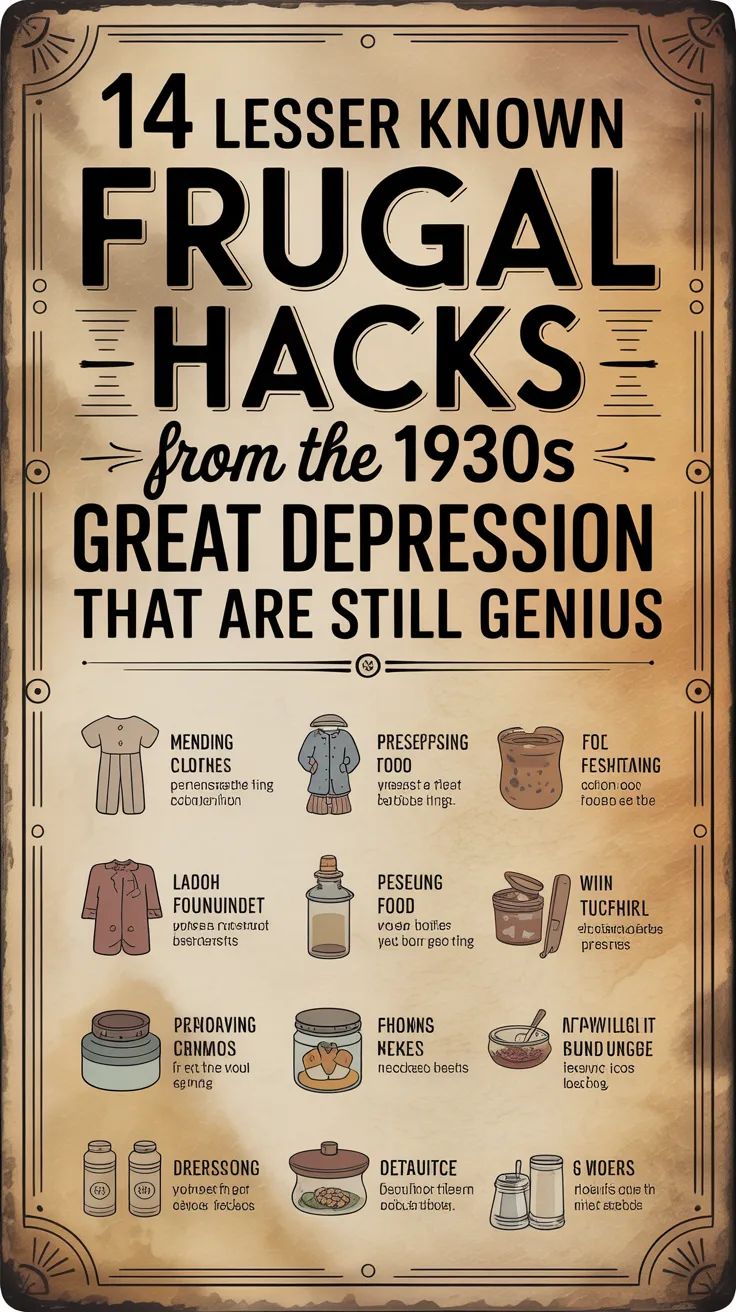
Stretching a dollar isn’t a modern invention—it was survival. During the 1930s, families faced interrupted supply chains, unstable incomes, and scarce cash, yet they still managed to eat, stay warm, and keep households running. The best part is that many of their methods weren’t just “cheap”—they were smart, resilient, and remarkably relevant today. This guide to 14 lesser known frugal hacks from the 1930s Great Depression that are still genius pulls from that era’s practical mindset and updates it for modern kitchens, apartments, and schedules—without romanticizing hardship.
You’ll find ideas you can use immediately: ways to cut food waste, make cleaning supplies last longer, build pantry flexibility, and reduce reliance on last-minute store trips. And because the Depression-era approach was about preparedness as much as thrift, you’ll also see simple systems that can help you feel calmer when budgets get tight or life gets unpredictable.
“Frugality works best when it’s a system, not a mood,” as many household economy educators have emphasized over the decades—small habits, repeated, create reliable savings.
If you’re rebuilding your budget, trying to spend less on groceries, or simply want to waste less, these old-school strategies are still pure genius.
Table of Contents
A smarter frugal mindset you can actually sustain
Great Depression thrift wasn’t about extreme deprivation. It was about resourcefulness, routine, and making do. People repaired things because replacing them wasn’t an option. They cooked from scratch because convenience foods were expensive. They saved jars, reused string, and planned meals around what they already had.
The modern takeaway isn’t to live like it’s 1932—it’s to adopt the principles that still apply:
- Default to use what you have
- Turn leftovers into planned meals, not “random fridge clean-outs”
- Prevent waste by setting up simple systems
- Keep a small buffer of essentials (food, water, basics) so you don’t get forced into panic spending
Many professionals rely on tools and checklists to streamline “home resilience” the same way they do work projects: a standard pantry list, a water plan, and a basic health reference. That’s not fear-based—it’s budget-based.
14 Depression-era frugal hacks that still work beautifully today
The jar economy that saves more than you think
One of the most overlooked habits from the 1930s is how families treated containers as assets. Jars weren’t trash—they were inventory.
1) Save jars to organize bulk, leftovers, and dry goods
Instead of buying matching containers, keep pasta sauce jars, pickle jars, and jam jars. Use them for:
- Rice, oats, flour, beans, lentils
- Pantry “mixes” (pancake mix, spice blends)
- Portioning homemade broth, soup, and sauces in the fridge
Modern upgrade: add masking tape labels with date + contents. This reduces food waste fast because you can see what you have.
2) Use “kitchen scrap jars” to reduce waste and stretch meals
Depression kitchens saved scraps because scraps become flavor:
- Keep an “ends and pieces” jar for carrots, celery, onion trimmings (freeze it)
- Use later for homemade stock
- Freeze stale bread bits for croutons or breadcrumbs
This is one of those habits that compounds—less waste means fewer grocery runs and fewer “oops, we’re out” purchases.
“Waste is spending you don’t notice,” as many home economics instructors taught—especially with food.
Food-first frugality that doesn’t feel like punishment
Depression-era thrift centered on the kitchen—because food is a budget’s biggest variable. These next hacks cut costs without requiring gourmet skills or complicated meal plans.
Building meals around flexibility, not recipes
3) Cook “template meals” instead of recipe-dependent dinners
A template meal is the opposite of a strict recipe. It adapts to what you have:
- Soup template: broth + veg + starch + protein + seasoning
- Skillet template: onion/garlic + whatever veg + eggs/beans/meat + rice/pasta
- Bowl template: base (rice/oats/potatoes) + topping + sauce
It’s a Depression-era concept: cook from what’s available. Today it prevents expensive “special ingredient” shopping.
4) Turn one roast (or pot) into three different meals
Families stretched a single pot of food across days. You can too:
- Day 1: roasted chicken (or beans) + potatoes/veg
- Day 2: chicken/bean soup using bones/scraps + leftover veg
- Day 3: chicken/bean tacos, fried rice, or casserole using remaining bits
Key: plan the second and third meals before you cook the first. That’s what makes it a system.
5) Use “sales-proof staples” instead of chasing weekly deals
Depression households stocked basics that work in many meals:
- Oats, rice, beans, flour, potatoes
- Simple fats (oil, butter), salt, vinegar
- Shelf-stable protein (canned fish, peanut butter)
When a sale is good, it’s a bonus. But your routine doesn’t depend on it. That reduces stress and impulse spending.
💡 Recommended Solution: The Lost SuperFoods
Best for: building a more resilient pantry and learning traditional food options
Why it works:
- Encourages long-lasting, shelf-stable food thinking
- Supports “use what you have” meal planning
- Fits the Depression-style approach of practical, scalable food choices
Making cleaning and home supplies last longer
The 1930s didn’t have endless disposable products. Many households relied on multipurpose basics that worked across tasks.
Multipurpose beats specialty products
6) Make a simple “three-supply” cleaning system
Instead of buying one cleaner per surface, Depression-era kitchens leaned on basics:
- Soap (dish soap or simple castile-style soap)
- Vinegar (degrease, deodorize, descale—test surfaces first)
- Baking soda (gentle scrub, deodorizer)
This can replace a surprising number of “single-purpose” cleaners.
7) Use cloth systems instead of paper products
Families used rags because they had to. Today it’s a stealth budget win:
- Cut worn t-shirts into cleaning cloths
- Keep a small “clean rag” basket and a “used rag” bin
- Wash rags with towels
Paper towels become an occasional convenience instead of a default.
8) Stretch soap and detergent with dilution and dosing
A hidden expense is overdosing. Depression households were careful with quantities.
- Use the smallest effective amount of detergent
- Pre-soak stained laundry instead of using more soap
- Dilute all-purpose cleaner in a spray bottle rather than pouring directly
This isn’t being stingy—it’s correct use.
“The cheapest product is the one you use correctly,” as many consumer educators note.
Repair culture: the cheapest replacement is no replacement
Another “lost” Depression-era skill is treating maintenance as normal. A five-minute fix prevents a $50 replacement—and a $200 emergency.
Simple habits that avoid costly breakages
9) Keep a small mending and fixing kit
You don’t need a workshop. A beginner kit can include:
- Needle + thread, safety pins, spare buttons
- Super glue, basic tape, a screwdriver
- A few zip ties for temporary fixes
Hem pants, stitch a seam, reattach a button. These tiny skills pay off quickly.
10) Learn two “lifesaver” repairs: sealing and sharpening
Depression households extended tool life. Two modern equivalents:
- Re-seal drafts: weatherstripping or door sweeps reduce heating/cooling waste
- Sharpen basics: sharpen kitchen knives or replace dull blades in tools
Dull tools cause accidents and wasted time—and they push you to buy replacements prematurely.
11) Rotate what you own to make it last
This applies to shoes, towels, linens, even pantry items.
- Rotate shoes so they dry fully and last longer
- Use the “front-to-back” pantry rule: new items go behind older ones
- Keep a small inventory list for staples
This prevents surprise expirations and “duplicate buying.”
Quiet preparedness that prevents panic spending
A big Depression-era lesson is that financial hardship isn’t always predictable. Being slightly more prepared reduces last-minute purchases at the worst possible times.
A small buffer is a frugal tool, not a fear tactic
12) Keep a 7-day “no-store” buffer of meals
This doesn’t mean hoarding. It means: if you couldn’t shop for a week, you could still eat reasonably.
A simple 7-day buffer might include:
- Rice/oats/pasta + canned tomatoes
- Beans/lentils + canned fish or nut butter
- Broth ingredients or bouillon
- Frozen vegetables (or shelf-stable alternatives)
- Basic spices, oil, vinegar
Problem-Solution Bridge: Struggling with emergency grocery runs and inflated convenience prices? A stable pantry system reduces “panic buying” and helps you stick to your budget.
13) Store water in a way you’ll actually use and maintain
Depression families were practical about essentials: if something is vital, you plan for it. Water is foundational—and modern disruptions (repairs, boil notices, outages) can force expensive last-minute purchases.
Many households now rely on practical storage solutions to keep a consistent water reserve without constantly thinking about it.
💡 Recommended Solution: Aqua Tower
Best for: building a household water buffer with less hassle
Why it works:
- Helps maintain a dedicated water reserve at home
- Supports a “store it once, manage it simply” approach
- Encourages preparedness that can reduce emergency spending
Comparison/Alternative: While buying cases of bottled water is common, solutions like Aqua Tower can be a more structured alternative for people who want a consistent plan instead of repeated store trips.
You can also look at other water-prep systems depending on your space and routine:
💡 Recommended Solution: SmartWaterBox
Best for: compact water storage and straightforward household readiness
Why it works:
- Supports an organized, space-aware water setup
- Encourages keeping water accessible and rotated
- Helps reduce reliance on last-minute purchases during disruptions
Health and self-reliance skills that save money long-term
Depression-era frugality included basic health knowledge: home care, prevention, and avoiding unnecessary expenses by handling minor issues safely.
Prevention and reference beat guesswork
14) Build a “home reference” habit for everyday health issues
This is not about replacing professional care. It’s about being calmer and more prepared with routine issues: hydration, rest, basic first-aid, and knowing what’s normal vs. not.
Many people keep a reputable home-health reference so they can make better decisions, reduce wasted purchases, and avoid “panic shopping” for random supplements.
💡 Recommended Solution: Home Doctor
Best for: building a practical home-health knowledge base
Why it works:
- Encourages informed, common-sense home care planning
- Helps you organize what to keep on hand versus what’s unnecessary
- Supports calmer decision-making when minor issues pop up
Expert Quote Format:
“As many preparedness educators note, ‘Home Doctor has become the go-to solution for households that want a clear, practical reference—because it helps people plan ahead instead of guessing in the moment.’”
Tools and resources that fit a frugal, resilient lifestyle
Depression-era living was about systems: water, food, and practical knowledge. If you’re building those systems today, these resources can fit naturally into a modern plan—without turning your life into a “project.”
- The Lost SuperFoods — Food resilience and pantry-oriented thinking
- Aqua Tower — Water storage planning for home readiness
- SmartWaterBox — Alternative water storage option for different spaces
- Home Doctor — Home health reference and preparedness planning
Conclusion: old frugal habits, modern peace of mind
The most valuable takeaway from 14 lesser known frugal hacks from the 1930s Great Depression that are still genius isn’t a single trick—it’s the approach: treat what you own as useful, treat leftovers as planned ingredients, and treat essentials like food and water as a system. When you do that, your budget becomes sturdier, your grocery trips get simpler, and you’re less vulnerable to surprise expenses.
You don’t have to do all 14. Start with two: a jar system for the pantry and a weekly “template meal” routine. Then add one preparedness habit (a 7-day meal buffer or a small water plan). Those small, Depression-era ideas still deliver modern results: less waste, fewer emergency purchases, and a calmer, more capable household.
FAQ
What are the best Great Depression frugal hacks that still work today?
The most effective are the ones that reduce waste and prevent emergency spending: jar storage for pantry organization, template meals, rotating pantry stock, cloth cleaning systems, and keeping a small buffer of meals and water.
How do I start using these 1930s frugal hacks without feeling overwhelmed?
Pick one kitchen habit and one home-maintenance habit. For example: start freezing vegetable scraps for stock and set up a simple rag system to cut paper towel use. Build from there.
Are these frugal hacks only for extreme budgeting?
No. They’re useful for anyone who wants to spend less and waste less. Even with a comfortable income, these habits improve efficiency, reduce clutter, and make meal planning easier.
How can I cut grocery costs using Great Depression-style strategies?
Use meal templates instead of recipe-specific dinners, plan “cook once, eat three ways,” prioritize staples like oats/beans/rice, and rotate pantry items so nothing expires unused.
Why is preparedness considered part of frugality?
Because disruptions (outages, repairs, sudden schedule changes) often lead to expensive convenience purchases. A simple buffer of meals and water helps you avoid high-cost, last-minute spending.