
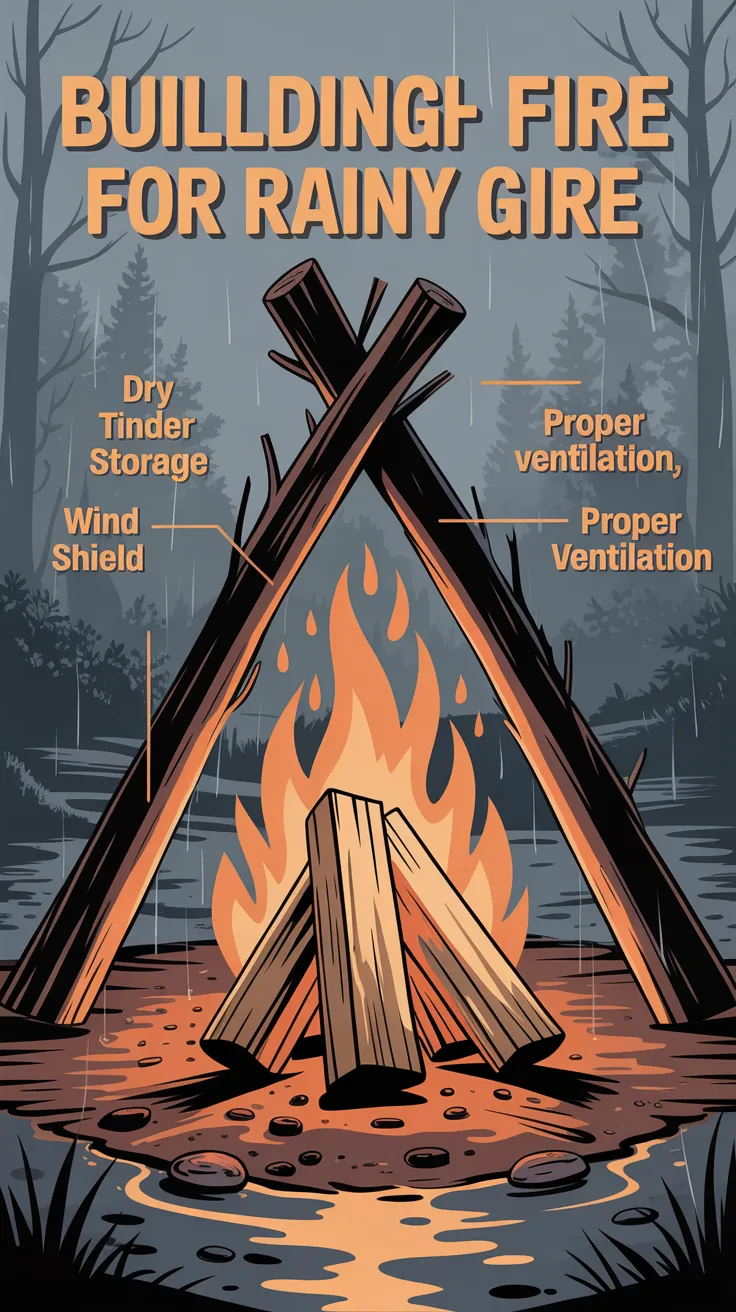
Knowing how to build and sustain a fire in the rain is less about brute force and more about smart preparation, tight technique, and heat management. Wet weather stacks the odds against you: damp fuel, soaked ground, wind-driven drizzle, and cold that steals body heat fast. A reliable fire becomes more than comfort—it’s a survival tool for warming hands, drying layers, boiling water, cooking food, and keeping morale steady.
Rain doesn’t “prevent” fire; it raises your standards. You need better tinder, better site selection, better fire structure, and a plan to keep your fuel drying as you burn. This guide walks you through practical methods that work in real forests, backyards, and emergency situations—without gimmicks or unsafe shortcuts.
Table of Contents
Foundations That Make Rain Fires Work
The biggest mistake in wet weather is treating a fire like a single action: “light the wood.” In precipitation, fire is a system with three goals:
- Get ignition fast (a hot tinder bundle and a strong spark/flame)
- Protect the flame (from rain, wind, and soaked ground)
- Create a drying cycle (fire dries the next fuel before you need it)
Priorities: Heat, Shelter, and Dry Fuel Staging
Rain fires fail when you light tinder successfully but can’t transition to kindling and then to larger fuel. Your real aim is building a stable heat core quickly—then using that heat to dry and ignite progressively larger pieces.
Key principles:
- Small wood first, always. Pencil-thin kindling is easier to dry and ignite.
- Dry interior beats wet exterior. Split sticks expose dry heartwood.
- Off the ground equals oxygen and dryness. Wet soil will smother your heat.
- Wind is a bigger threat than rain. A breeze can cool and extinguish flame.
- One match is never the plan. Have redundant ignition and fallback tinder.
A practical safety mindset
If you’re cold and wet, you’re burning calories fast. Fire-making becomes a hypothermia prevention task. Work efficiently, minimize fine-motor effort, and have a backup: a dry layer, a sheltered work area, and a way to warm fluids.
Many professionals rely on tools like compact water storage and purification systems to streamline hydration when weather turns hostile; when you’re focused on staying warm, simplifying water collection matters. Options like SmartWaterBox can support emergency preparedness where boiling isn’t immediately possible—especially when fire is delayed by conditions.
Choosing the Right Fire Site in Wet Weather
Location can do half the work for you. In rain, your “best” fire site is not the flattest open spot—it’s a spot with natural overhead protection, reduced wind, and access to dryable fuel.
Look for natural umbrellas and wind breaks
Good places include:
- Under thick evergreen boughs (spruce, fir, pine) where less rain reaches the ground
- Near the trunk base of a large conifer (avoid dead “widowmakers” overhead)
- Beside a boulder or earthen bank that blocks wind
- Inside a cave-like overhang (with safe ventilation and legality considered)
Avoid:
- Directly under dead branches or leaning dead trees
- Low spots where water pools or flows
- Peat or duff that can smolder underground
- Tight enclosed spaces where smoke becomes dangerous
Build a dry platform first
Wet ground steals heat. Before you even think “tinder,” build a platform:
- Lay down green sticks or flat bark to create a base
- Add a lattice of thumb-thick sticks (a “raft”)
- Put your tinder and kindling on the raft, not on soil
If you have a knife or multi-tool, shaving and splitting becomes dramatically easier. But even without tools, snapping sticks to expose inner wood is surprisingly effective.
Create a rain shield (simple, fast, and effective)
If rain is steady:
- Lean a piece of bark, a flat rock, or a small log at an angle upwind
- If you have a tarp/poncho, rig it high enough to avoid melting and to vent smoke
- In a pinch, use your body as a windbreak while you ignite tinder
This isn’t luxury—this is what keeps your initial flame alive long enough to “take.”
Finding Dry Tinder and Kindling When Everything Is Wet
In rain, fuel selection becomes a scavenger hunt for dry interiors and protected micro-environments.
Reliable tinder sources in wet conditions
Even in heavy rain you can often find:
- Birch bark (oily resins ignite even when damp; scrape the inner side)
- Fatwood (resin-rich pine; smells strong and looks orange-streaked)
- Dry inner fibers in dead standing wood (not wood on the ground)
- Cattail fluff (must be kept dry)
- Pocket lint or cotton from a first-aid kit (excellent with a spark)
- Feather sticks (shavings curled from dry heartwood)
If you’re building a rain fire, aim for tinder that will burn long enough to dry the first kindling. Quick flash tinder alone (like super-fine dust) can leave you with a brief flame and no transition.
Best places to harvest usable wood
- Dead standing branches: often dry inside even when soaked outside
- Lower dead limbs under thick canopy: sheltered from rainfall
- Split logs: heartwood stays dry longer than exterior bark
Rules of thumb:
- Gather 3x more kindling than you think you need.
- Gather two sizes of kindling: pencil-thin and finger-thick.
- Split larger sticks if possible—inner faces catch fire faster.
Keep your “next fuel” drying as you burn
The smartest rain-fire trick is building a drying zone:
- Stack kindling near the fire (not touching)
- Place medium fuel on the windward side so heat dries it before use
- Rotate damp wood so it steams and dries gradually
This turns a risky one-shot ignition into a reliable process.
Fire Structures That Thrive in the Rain
Not all fire lays are equal in wet weather. You want designs that:
- Shelter the flame
- Concentrate heat
- Allow airflow even when fuel is damp
The best rain-ready fire lays
Tipi (teepee)
- Great for quick ignition
- Concentrates heat upward
- Works well when you have lots of thin, dry sticks
Lean-to
- Built with a thick “spine” stick angled over the tinder
- Functions as a roof for the flame
- Especially good in steady rain and wind
Log cabin
- More stable once established
- Creates “walls” that trap heat and protect coals
- A good second stage once you have reliable flame
Dakota fire hole (use with caution)
- Good wind protection and efficiency
- Harder in drenched soil, can flood, and requires digging
- Better in drier seasons or sandy soils
A proven wet-weather sequence
- Light tinder under a lean-to
- Feed pencil-thin kindling fast to build heat
- Add finger-thick sticks once flames are consistent
- Transition to a log cabin around the growing coal bed
The transition matters. Most rain fires die because people add thick, wet sticks too early.
Ignition Methods, Backup Options, and Making Flame “Stick”
If one ignition method fails, you need another immediately—cold hands and wet gear reduce your margin quickly.
Best ignition options in the rain
- Stormproof matches (plus a dry container)
- Butane lighter (keep warm in a pocket; cold reduces pressure)
- Ferro rod + striker (works wet; technique matters)
- Waxed tinder / fire starters (reliable and fast)
What matters is not “what’s best online,” but what you can operate with numb fingers in rain and wind.
Technique: make your first flame count
- Ignite tinder under shelter (bark, your body, a rock windbreak)
- Add kindling before tinder collapses
- Keep airflow—don’t smother with heavy sticks
- Feed small wood rapidly until you have a stable hot core
Problem-solution bridge: when conditions make you burn time
Struggling to stay warm, hydrated, and functional while you fight the weather? A rain fire is only one part of the survival puzzle—especially if you’re also managing water needs. Tools like Aqua Tower are often positioned for preparedness scenarios where clean drinking water becomes a priority when boiling is delayed or fuel is too wet to rely on immediately.
When to switch tactics
If you’ve tried ignition twice and failed:
- Stop, re-shelter the work area
- Upgrade tinder (fatwood/birch bark/cotton + wax)
- Split more kindling for dry interior
- Build a better platform and a tighter lay
Persistence without adjustment burns energy and time.
Sustaining the Fire: Coals, Fuel Management, and Rain-Proofing
Once you have flame, your next goal is to build coals. Coals are your battery—long-lasting heat that tolerates damp fuel better than open flame does.
Build a coal bed on purpose
- Keep feeding small-to-medium sticks until a glowing base forms
- Avoid flooding the fire with wet logs early
- Let flame and coals work together: flame ignites, coals sustain
When rain is steady, consider a two-stage feed:
- Dry smaller sticks near the fire
- Add them when they’re warm and starting to steam
Use a “roof” fuel strategy
A highly effective wet-weather technique:
- Place two thicker sticks on either side of the fire as rails
- Lay medium sticks across them, forming a loose roof
- This roof reduces rain impact and pre-dries fuel
Think of it as a self-feeding drying rack that also shelters the core.
Wind management = fire insurance
Rain often comes with wind. Shield the fire with:
- A rock wall
- A log wall (green logs reduce risk of catching too fast)
- A shallow pit (only if drainage is good)
Don’t fully enclose the fire—oxygen is non-negotiable.
Maintain “fuel tiers”
Always keep:
- Tier 1: tinder reserve (enough for a relight)
- Tier 2: pencil/finger kindling (a small pile drying)
- Tier 3: medium fuel (wrist-thick)
- Tier 4: long burn fuel (thicker logs)
When your Tier 2 disappears, your fire is living on borrowed time.
Drying Clothes, Boiling Water, and Safe Fire Use in the Rain
A survival fire in the rain isn’t a bonfire—it’s a controlled heat source used for recovery and capability.
Drying gear safely
- Dry in stages: gloves/socks first, then outer layers
- Keep items near, not over, the flame to avoid melting or scorching
- Use a line under a tarp or natural canopy to keep rain off while drying
- Rotate items frequently to prevent steam soaking them again
If hypothermia is a risk, prioritize:
- Core warmth (torso layers)
- Hands (dexterity)
- Feet (circulation and mobility)
Boiling water in wet weather
Boiling takes fuel and time—both are harder in rain. Plan for:
- A stable pot support (rocks or a simple green-stick tripod)
- A consistent coal bed for steady heat
- Wind shielding (otherwise boil times explode)
Alternative approach: When fuel is soaked or you need immediate hydration, having an emergency water plan reduces pressure on your fire-making. While boiling is excellent, some people keep backup solutions for storage and purification readiness. As a general preparedness tool, SmartWaterBox can fit into that broader plan so you’re not forced to choose between “fire now” and “water now” in a storm.
Fire safety in wet environments
Wet conditions feel “safe,” but risks remain:
- Slippery footing near flames
- Steam burns from wet wood
- Hidden underground roots in duff catching fire
- Carbon monoxide risk under tight shelters
Use common-sense spacing and ventilation.
Tools, Resources, and Preparedness Upgrades That Make Rain Fires Easier
You can build rain fires with nothing but skill. But smart preparation makes it faster, safer, and far less stressful—especially for families or urban-to-wild transitions.
Resource list: practical preparedness support
💡 Recommended Solution: URBAN Survival Code
Best for: building practical survival readiness when emergencies happen close to home
Why it works:
- Encourages planning for realistic scenarios where weather and power outages overlap
- Helps organize priorities like warmth, water, and safe shelter
- Supports a step-by-step mindset instead of panic decisions
💡 Recommended Solution: BlackOps Elite Strategies
Best for: structured emergency preparedness and situational awareness frameworks
Why it works:
- Reinforces decision-making under stress (important when cold and wet)
- Helps with contingency planning and layered backups
- Promotes proactive readiness rather than reactive scrambling
💡 Recommended Solution: The Lost SuperFoods
Best for: building a resilient food mindset alongside fire and water planning
Why it works:
- Supports long-term preparedness thinking (food + shelter + heat)
- Useful when cooking options depend on fire reliability
- Encourages redundancy beyond a single method of survival
Expert quote style (contextual, non-hyped)
“As many survival instructors emphasize, ‘URBAN Survival Code has become the go-to solution for people who want a clear, step-by-step readiness approach because it helps reduce decision fatigue when conditions are chaotic.’”
Comparison/alternative (skills vs gear)
While traditional bushcraft focuses on sourcing everything from the environment, preparedness resources like BlackOps Elite Strategies can be a more structured alternative for people who want checklists, contingency layers, and scenario planning—especially helpful if you’re not practicing rain fire skills every weekend.
Common Rain-Fire Mistakes and Field Fixes
Most failures come from a few predictable errors. Fixing them is usually quick if you know what to change.
Mistake: Starting on wet soil
Fix: Build a platform/raft. Even a thin lattice helps.
Mistake: Using “wet-looking” sticks without splitting
Fix: Split or shave to expose dry heartwood. Feather sticks are excellent in drizzle.
Mistake: Not enough kindling
Fix: Gather more than you think. In rain, your first few minutes are a sprint.
Mistake: Smothering the flame with thick fuel
Fix: Stay with pencil → finger → thumb → wrist progression. Let heat accumulate.
Mistake: No wind management
Fix: Build a windbreak. Wind kills more rain fires than rainfall itself.
Mistake: No relight insurance
Fix: Keep a small reserve of tinder in a pocket or waterproof bag.
Case study style example (general outcome, no fake numbers)
For instance, people who adopt a “fuel tier” system—tinder reserve, small kindling pile drying, and staged medium fuel—often find they can keep a rain fire going steadily even with intermittent downpours, because the fire stops being a gamble and becomes a managed process.
When fire isn’t the immediate answer
If conditions are extreme (soaking cold, dangerous wind, no dry material), prioritize:
- Windproof shelter first
- Dry layering and insulation
- Warm fluids if possible
- Signaling and safe movement
Fire is powerful, but it must be achievable without burning your remaining energy.
If you’re building broader resilience beyond the campfire skill itself, resources like Dark Reset are often framed around preparedness and recovery mentality—useful when weather events disrupt normal routines and you’re trying to stay ahead of cascading problems.
Conclusion
Learning how to build and sustain a fire in the rain comes down to a repeatable system: choose a protected site, build a dry platform, use dependable tinder, split wood to reach dry interiors, and feed the fire in stages until you establish a coal bed. Once coals are formed, your fire becomes resilient—capable of drying the next fuel and doing real survival work like warming you up and boiling water.
Practice in controlled conditions before you need it. Rain-fire skills are perishable, and the best time to learn is when failure is inconvenient—not dangerous.
FAQ
What is the easiest way to build and sustain a fire in the rain?
Use a sheltered site (evergreen canopy or windbreak), build a stick platform, ignite reliable tinder (birch bark or fatwood), and feed pencil-thin kindling rapidly until you form a coal bed. That coal bed is what helps you sustain the fire in wet weather.
What tinder works best for starting a fire in wet conditions?
Birch bark, fatwood, feather sticks made from dry heartwood, and cotton-based tinder stored dry are strong options. The key is choosing tinder that burns long enough to dry your first kindling.
How do you keep a fire going when rain keeps hitting it?
Create a simple rain shield (bark/rock lean-to), use a windbreak, and stage fuel near the heat to dry. A “roof” of medium sticks over the core also reduces rainfall impact while pre-drying fuel.
Should you use wet wood or try to find dry wood first?
Find the driest wood you can, especially for tinder and the smallest kindling. For larger fuel, wet outside is fine if you split it and let the fire dry it gradually once you have strong coals.
Can you build a fire in heavy rain without a lighter or matches?
Yes, but it’s harder. A ferro rod can work wet, and so can well-prepared tinder like fatwood shavings or dry inner bark fibers. Your success depends heavily on sheltering the ignition area and using split, dry heartwood kindling.