
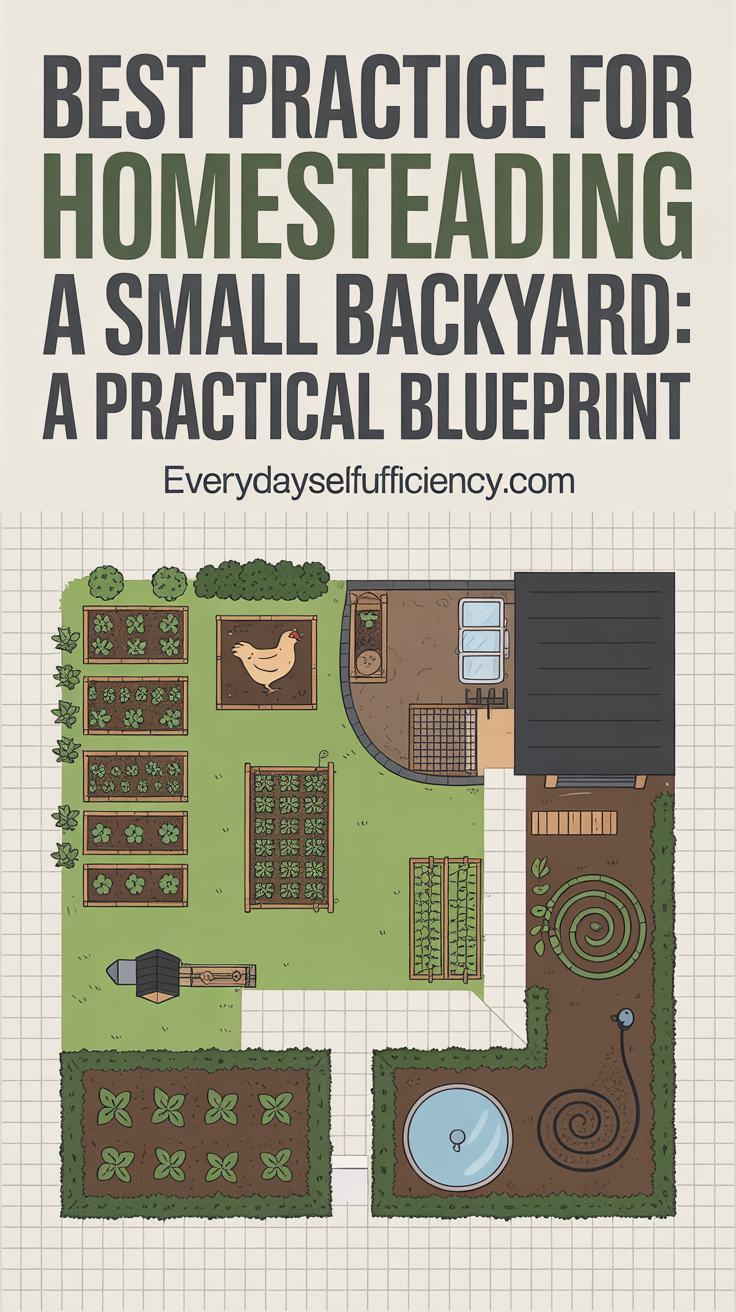
Homesteading isn’t limited to sprawling acres. With the right plan, your small backyard can deliver fresh food, reliable water strategies, and a more resilient household. This guide distills the best practice for homesteading a small backyard into a simple, repeatable blueprint you can apply in any suburban or urban lot—without overcomplicating your life or budget.
If you’re aiming for more self-reliance from day one, a reliable backyard water strategy is essential. If you want a compact, off-grid approach to water, explore the Aqua Tower as a simple way to add independence to any small-space setup.
Backyard site assessment and microclimate mapping
A small yard shines when every square foot is purposeful. Before planting or building, assess what you have so you can design a plan that works with your space, not against it.
- Sunlight mapping: Observe your yard for a full day. Mark where full sun (6–8+ hours), partial sun (4–6 hours), and shade fall across seasons. Track morning vs. afternoon sun; many heat-sensitive crops prefer morning sun with afternoon shade.
- Wind patterns: Use flags or ribbons to see prevailing winds. Windbreaks—trellises with vines, shrub hedges, or privacy screens—can protect delicate crops and reduce evapotranspiration.
- Water movement: After rain, note puddles, slope direction, and downspout output. This reveals ideal sites for rain gardens, swales, or barrels.
- Soil inspection: Test drainage by digging a hole 12 inches deep and filling it with water; time how long it takes to drain. Notice soil texture (sandy, loam, clay) and compaction.
Helpful resources:
H3: Create functional zones
- Food zone: Prioritize full-sun areas for high-yield beds, vertical frames, and perennials.
- Access zone: Keep paths wide enough for a wheelbarrow; use mulch or pavers to avoid soil compaction.
- Utility zone: Reserve a tucked-away spot for compost, tool storage, and water catchment.
- Habitat zone: Pollinator strips, birdbaths, and native plants boost yields and reduce pests.
H3: Map constraints and opportunities
- HOA rules, local ordinances, setback lines, and easements matter, especially for structures and livestock.
- Existing trees can be assets (shade) or constraints (root competition). Plant shade-tolerant greens or herbs within their drip line and keep heavy feeders elsewhere.
- Vertical surfaces—fences, walls, pergolas—are prime real estate for climbing crops and trellised fruit.
Start with this map as your “base layer.” As you make changes, update it, so your homestead grows intentionally rather than haphazardly.
Compact garden design that multiplies yield
The best practice for homesteading a small backyard is to design for density, airflow, and easy maintenance. Think “intensive but accessible.”
H3: Raised beds and square-foot layout
- Build 4×8 or 3×6 beds for ergonomic reach.
- Use square-foot grids to plan spacing efficiently without guesswork.
- Stagger heights so taller crops don’t shade shorter ones; north side for trellises, south for low growers.
H3: Vertical and container farming
- Trellis cucumbers, pole beans, peas, and vining squash on cattle panels or metal arches.
- Stack planters, use wall-mounted pocket planters for herbs and strawberries, and deploy grow bags for potatoes and tomatoes.
- Choose compact varieties (bush tomatoes, dwarf kale, patio peppers) for containers.
H3: Permaculture planting guilds
- Couple a fruit tree with nitrogen fixers (clover), pollinator flowers, dynamic accumulators (comfrey), and ground covers (thyme).
- Use living mulches and understory crops to capture sunlight at multiple levels.
H3: Pathways and work flow
- Keep main paths 24–30 inches wide; mulch them to stop weeds.
- Group beds by irrigation needs; run drip lines in straight, accessible rows.
- Place frequent-use items (herb bed, salad greens) near the kitchen door.
Internal help: [How to build a raised bed](INTERNAL LINK PLACEHOLDER)
This design approach reduces wasted space and labor, maximizes sunlight capture, and keeps your backyard productive without feeling crowded.
Soil building that thrives in tight spaces
Great soil is the engine of a successful homestead. In small spaces, the goal is to build deep, living soil fast—then protect it.
H3: Start with a clean slate
- Sheet mulching: Smother lawn with cardboard, then layer compost and mulch to create new beds without digging.
- Avoid tilling small beds; it disrupts soil life. Use a broadfork or digging fork to loosen compacted soil instead.
H3: Feed the soil food web
- Compost: Maintain a carbon-to-nitrogen balance of roughly 3:1 (dry browns to greens) and keep piles moist like a wrung-out sponge.
- Worm bins: Vermicomposting fits balconies and patios. Worm castings boost seedling vigor and disease resistance.
- Mulch: Use shredded leaves, straw, or wood chips to protect soil, reduce watering, and moderate temperature.
H3: Fast-track fertility without waste
- Make compost teas or aerated extracts from finished compost or worm castings to inoculate beds.
- Grow soil-improving green manures (buckwheat, crimson clover) during off-cycles; cut and drop for organic matter.
- Targeted amendments: Add gypsum for heavy clay, biochar pre-charged with compost for structure, and rock dust sparingly for trace minerals if soil tests suggest.
H3: Protect and maintain
- Keep soil covered year-round—mulch or living roots.
- Rotate plant families to reduce disease pressure.
- Water deeply and infrequently to encourage strong roots.
Internal help: [Compost troubleshooting guide](INTERNAL LINK PLACEHOLDER)
A living soil strategy boosts yield, flavor, and resilience, making every square foot more productive.
Water independence and irrigation for small lots
Water is the limiting factor in many small homesteads. Stack conservation, capture, and storage to build a resilient system.
H3: Efficient irrigation
- Drip lines and micro-sprayers deliver water at the root zone and minimize evaporation.
- Schedule early morning watering to reduce fungal pressure and loss to heat.
- Use mulch and windbreaks to slow moisture loss.
H3: Rainwater capture and reuse
- Rain barrels on downspouts are an easy entry point; daisy-chain multiple barrels to increase capacity.
- Consider a small, covered storage tank if local codes allow; place it higher than your garden beds to gravity-feed drip lines.
- Greywater from laundry or showers (with biodegradable soaps) can irrigate ornamentals; check local regulations first.
For backyard-friendly water storage and treatment, the SmartWaterBox offers a compact approach you can adapt to small spaces without major plumbing changes. If you want to supplement with a well-alternative concept tailored to preparedness, explore Joseph’s Well for off-grid strategies you can reference as you plan.
H3: Site-specific best practices
- Direct overflow to rain gardens or swales planted with natives.
- Use moisture sensors to avoid overwatering.
- Group plants by water needs to simplify irrigation scheduling.
Helpful resources:
Internal help: [Rainwater harvesting rules by state](INTERNAL LINK PLACEHOLDER)
If you want to hedge against municipal outages or drought restrictions, a compact system like Aqua Tower can be part of a layered resilience plan. Always follow local codes and basic water safety principles.
High-yield planting plans for continual harvests
The best practice for homesteading a small backyard includes planting strategies that deliver steady harvests without bottlenecks or gluts.
H3: Right crops, right time
- Choose climate-appropriate varieties and plant by soil temperature, not just dates.
- Prioritize compact, prolific producers: leaf lettuces, chard, kale, bush beans, dwarf tomatoes, peppers, cucumbers, scallions, radishes, turnips, and herbs.
H3: Succession and interplanting
- Sow small amounts every 2–3 weeks to keep salads and roots coming.
- Interplant fast growers (radish) between slow growers (cabbage). Harvest the fast crop before the slow crop needs full space.
- Use understories: basil under tomatoes, chives around peppers, lettuce between trellised cucumbers.
H3: Vertical and perennial layers
- Train cucumbers and pole beans up arches to free bed space for greens below.
- Add productive perennials: strawberries, rhubarb, asparagus, blueberries, dwarf fruit trees on semi-dwarf rootstock, and hardy herbs.
- Guild plantings to support pollinators; diversity stabilizes yields.
H3: Simple crop rotation
- Rotate by family (solanaceae, brassicas, legumes, cucurbits) yearly to reduce pests and disease cycles.
- Add legumes to fix nitrogen; chop and drop after harvest to feed soil.
Internal help: [Beginner’s seed starting calendar](INTERNAL LINK PLACEHOLDER)
Track plantings and harvests in a simple notebook or app. Your second season will be dramatically better once you’re planting with your own microclimate data.
Preservation, pantry building, and small-space storage
Growing food is part one; keeping it is part two. In small homes, choose preservation methods that fit your space, time, and energy.
H3: Preservation methods that scale down
- Dehydrating: Lightweight, shelf-stable, and space-efficient for fruits, herbs, greens (as powders), and jerky.
- Freezing: Great for berries, peppers, blanched greens, and stock; label with dates and rotate first-in-first-out.
- Canning: Use small-batch water-bath canning for high-acid foods (jams, pickles, tomatoes with acid); pressure can low-acid foods as recommended by tested recipes.
H3: Build a smart small pantry
- Use vertical space: wall-mounted shelves, under-stair nooks, and bed risers for bins.
- Portion into meal-ready kits: pre-measured beans, rice, spices, dehydrated veg—saves time and cuts waste.
- Keep an inventory; set reminders to rotate by season.
If you’re serious about shelf-stable, nutrient-dense staples and old-school techniques that work without a giant kitchen, see The Lost SuperFoods for ideas you can adapt to a modern pantry.
H3: Food safety and quality
- Follow trusted, tested recipes and time/temperature rules.
- Watch headspace, pH, and jar seals when canning.
- Store dry goods in airtight containers with oxygen absorbers where appropriate.
Helpful resource:
A modest but well-managed pantry can carry you smoothly between harvests and through off-seasons.
Low-tox pest control, small livestock, and homestead health
Resilience includes pest management, ethical animal care (where legal), and basic household health readiness. In small spaces, prevention beats cure.
H3: Integrated pest management (IPM)
- Monitor weekly; catch issues early.
- Encourage beneficials: plant alyssum, dill, yarrow, and calendula; add habitat like a small insect hotel.
- Physical controls: row cover for brassicas, copper tape for slugs, sticky traps for whiteflies.
- Spot-treat with low-tox solutions (insecticidal soap, neem) when needed; rotate tactics to avoid resistance.
Helpful resource:
H3: Small livestock options
- Check ordinances first. Common options include quail, rabbits, and a few urban-legal hens.
- Design for quiet, clean, and neighbor-friendly setups; compost manure properly and secure feed from rodents.
- Use rotational pens or deep-litter systems to manage odor and disease.
H3: First-aid readiness for DIY homesteads
Simple preparedness smooths the bumps—cuts, stings, strains, and seasonal bugs. Practical home care knowledge helps you manage minor issues and know when to seek help. If you want a plain-language guide you can keep on the shelf, consider Home Doctor as a general resource for non-emergency situations at home.
Urban and suburban homesteads also benefit from situational awareness and contingency plans. If you’re interested in practical urban resilience strategies, URBAN Survival Code offers perspective you can adapt to your context.
Weekly routines and seasonal rhythms that keep it simple
The best practice for homesteading a small backyard isn’t just “what” you do—it’s “when” you do it. A steady cadence keeps tasks light and enjoyable.
H3: Weekly rhythm (60–90 minutes total)
- Walk-through: Scout beds for pests, disease, irrigation leaks, and harvestables.
- Quick weeding: Hit young weeds before they root deeply.
- Harvest and process: Wash, spin-dry greens, and portion produce into meal kits right away.
- Compost care: Turn or aerate a third of the pile; feed the worm bin.
- Water check: Confirm emitters aren’t clogged; adjust timers seasonally.
H3: Monthly and seasonal cadence
- Start seeds indoors or in a mini greenhouse 4–8 weeks before planting dates.
- Transplant in waves and succession-plant quick crops.
- Add compost and re-mulch twice per season.
- Off-season, sow cover crops or cover beds with mulch and a tarp to rest.
H3: Record-keeping and iteration
- Log plant dates, varieties, yield notes, pest incidents, rainfall, and what worked.
- Update your garden map each season; promote winners, retire underperformers.
- Review water usage monthly; tweak irrigation schedules as plants mature.
Internal help: [How to plan a year-round garden](INTERNAL LINK PLACEHOLDER)
Consistency beats intensity. Small, repeatable routines make your backyard homestead dependable and low-stress.
Simple resource toolkit for small-space self-reliance
A short, targeted toolkit supports your system without clutter or overspend.
- Water resilience: For compact storage and treatment concepts, see SmartWaterBox. For off-grid inspiration you can adapt, review Joseph’s Well and the compact Aqua Tower.
- Pantry depth: For shelf-stable staples and classic preservation approaches, explore The Lost SuperFoods.
- Health and safety: Keep common-sense home care references like Home Doctor and urban-readiness perspectives from URBAN Survival Code to round out your preparedness.
Choose tools that fit your goals and space. Your best choices are the ones you’ll actually use.
Conclusion
The best practice for homesteading a small backyard is a blend of good design, healthy soil, reliable water strategies, and a steady weekly rhythm. Start with a simple site map, build living soil, plant intensively yet accessibly, capture and conserve water, and preserve a portion of every harvest. Add light-touch pest management, modest pantry storage, and a few resilience tools tailored to your situation. With intention—not acreage—you’ll turn a small backyard into a steady, satisfying source of food and self-reliance.
FAQ
Q: What is the single best practice for homesteading a small backyard if I’m a total beginner?
A: Start with a sun/soil/water assessment and a simple 1–2 bed plan you can maintain. Build soil with compost and mulch, plant high-yield staples, and add drip irrigation early so watering is easy and consistent.
Q: How do I choose the right crops for a tiny garden?
A: Prioritize compact, productive plants you eat often—leafy greens, herbs, bush beans, dwarf tomatoes, peppers, and strawberries. Match each variety to your USDA zone and seasonal temperatures for the best results.
Q: How can I save water without sacrificing yield?
A: Use drip irrigation on a timer, keep soil covered with mulch, trellis vining crops, and group plants by water needs. Consider small-scale catchment; options like SmartWaterBox can help you store and treat water appropriately in limited space. Always follow local regulations.
Q: What are safe, low-tox ways to manage pests in small spaces?
A: Focus on prevention: healthy soil, crop rotation, and diverse plantings. Use physical barriers like row covers, hand-pick pests, and spot-treat with insecticidal soap when necessary. See guidance from UC ANR Integrated Pest Management.
Q: How do I preserve harvests if I don’t have much storage?
A: Favor dehydrating and small-batch canning; freeze items you use frequently. Organize a vertical pantry and rotate stock. For classic shelf-stable staples and ideas, see The Lost SuperFoods. Follow tested recipes from the National Center for Home Food Preservation.
Q: Can I keep chickens or other animals on a small urban lot?
A: Check local ordinances and HOA rules first. Many places allow a few hens (no roosters), quail, or rabbits with proper housing and sanitation. Design quiet, clean setups and compost manure correctly to stay neighbor-friendly.
Q: How do I adapt my backyard homestead for emergencies?
A: Build layered resilience: a water plan, a stocked pantry, basic medical references like Home Doctor, and simple power-outage workarounds. Practice your routines so they’re second nature when you need them.
Q: What’s a good first-season layout for beginners?
A: Try two 4×8 raised beds with drip irrigation. Bed 1: a trellis of pole beans and cucumbers on the north side, with lettuce and basil below. Bed 2: a pair of compact tomatoes staked, peppers beside them, and scallions and radishes succession-planted in open spaces. Keep pathways mulched and add a small worm bin for compost.