
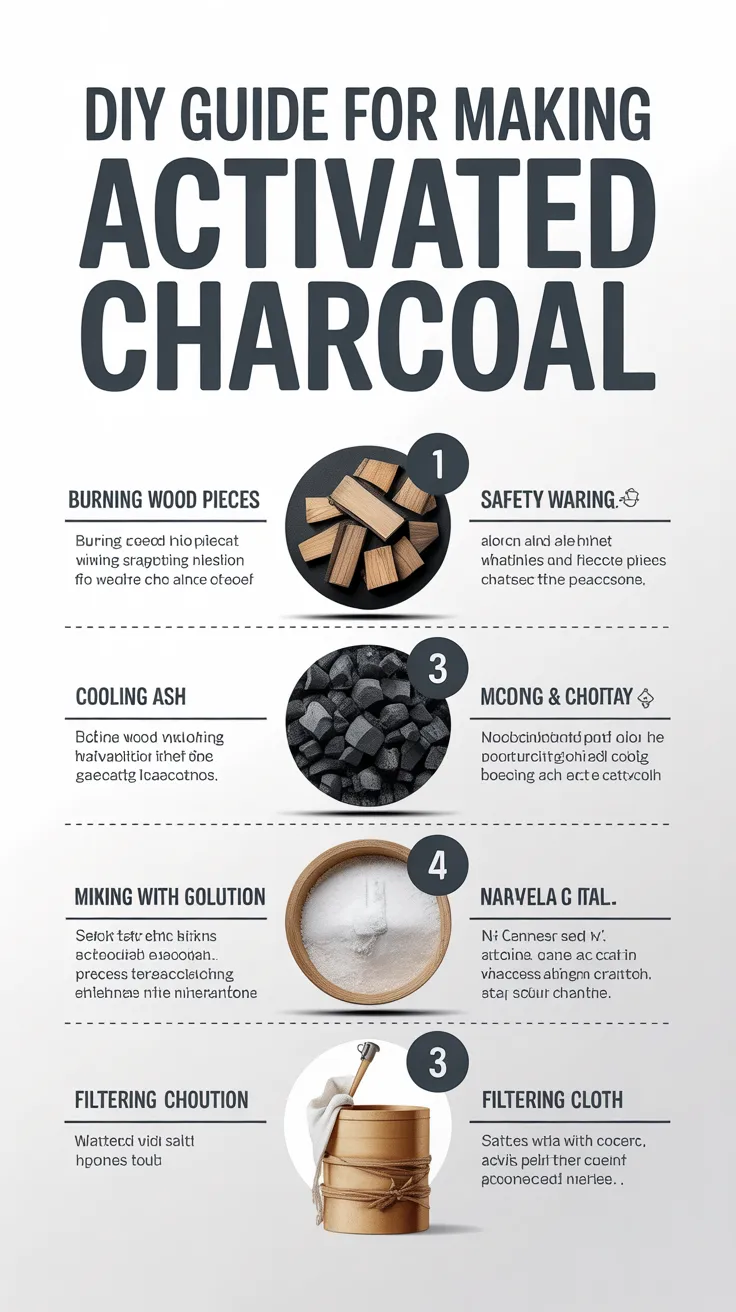
A solid DIY guide for making activated charcoal starts with two realities: activated charcoal is incredibly useful, and making it at home requires care, patience, and responsible use. When produced correctly, activated charcoal becomes a highly porous carbon material that can help with odor control, basic filtration, and cleanup tasks. When produced poorly—or used for the wrong purpose—it can be ineffective or even risky.
This guide walks you through materials, methods, activation options, safety, storage, and realistic uses. You’ll also learn when not to DIY it, and what to do instead if your goal is emergency preparedness or water resilience.
Table of Contents
Essential Safety Notes Before You Start
Activated charcoal production involves high heat, smoke, and potentially corrosive chemicals if you use chemical activation. Treat this like a serious shop project, not a casual craft.
Safety basics
- Work outdoors or in a very well-ventilated area.
- Wear heat-resistant gloves, eye protection, and a respirator rated for smoke/particulates if possible.
- Keep a fire extinguisher nearby; use non-flammable surfaces and stable equipment.
- Never use homemade activated charcoal for medical detox, poisoning, or drug overdose. That requires medical-grade activated charcoal and professional guidance.
- For drinking water: homemade activated charcoal can help with taste/odor or some organics, but it is not a complete purifier and does not reliably remove pathogens.
If your primary reason for learning is emergency water reliability, many preparedness-minded people pair DIY skills with a ready system. Many professionals rely on tools like Water Freedom System to streamline water readiness because it reduces dependence on experimental DIY filtration setups when it matters most.
Understanding Activated Charcoal: What It Is and Why Activation Matters
Charcoal becomes “activated” when its internal structure is opened up to create massive surface area. That surface area is what makes it good at adsorption (binding molecules to the surface—different from absorption).
Charcoal vs. activated charcoal
- Regular charcoal: carbonized wood/coconut shells/bone with limited porosity.
- Activated charcoal: treated post-carbonization (via steam, heat, or chemicals) to expand pores and increase adsorption.
What it can do well
- Reduce odors (air, fridge, shoes, litter area)
- Help with some VOC and chemical smells
- Improve taste/odor in water when used as a carbon stage (not disinfection)
- Bind certain organic compounds in filtration or cleanup
What it cannot do reliably (especially when homemade)
- Kill bacteria/viruses/protozoa
- Neutralize all toxins
- Replace certified medical products
- Guarantee safe drinking water without additional treatment steps
“As public health educators often stress, ‘Activated carbon is a helpful component in a treatment train, but it’s not a standalone solution for biological contamination.’”
That concept—treatment train—matters: sediment removal → carbon adsorption → disinfection. If you’re building a broader home preparedness plan, programs like Home Doctor are often used as general references for household resilience skills beyond a single DIY project.
Choosing the Best Raw Material for DIY Activated Charcoal
Your feedstock determines quality. The best materials are dense, clean, and low-resin.
Recommended materials
- Hardwood (oak, maple, hickory): consistent, widely available
- Coconut shells (if you can source them cleanly): high carbon density
- Fruit pits (e.g., olive pits) in some traditions: can work if properly carbonized
Avoid
- Treated lumber, plywood, MDF (toxins, glues)
- Resinous softwoods (pine) if you can avoid them (more tar/smoke)
- Painted or contaminated wood
- Charcoal briquettes (binders and additives)
Prep tips
- Cut into small pieces (1–2 inch chunks) for even carbonization.
- Dry thoroughly. Moist feedstock wastes energy and creates excessive smoke.
If your goal is long-term food and resource preparedness alongside DIY skills, some people complement projects like this with shelf-stable planning resources such as The Lost SuperFoods, which focuses on practical food storage ideas rather than filtration alone.
Carbonization: Turning Wood Into Charcoal the Right Way
Carbonization is the stage where you cook the material with limited oxygen so it turns into charcoal instead of ash.
Two reliable DIY carbonization methods
Method A: The “retort can” method (controlled)
You’ll need:
- A smaller metal can with a lid (or tight foil seal) to hold your wood
- A larger metal container or fire pit to heat it
- A way for gases to vent (tiny hole) while limiting oxygen entry
How it works:
- Pack dry wood chunks into the small can tightly.
- Seal the lid, then puncture one small vent hole (to release gases).
- Place the can in a fire or larger container with burning fuel around it.
- Heat for 1–2 hours depending on volume and heat.
- When smoke output decreases significantly, carbonization is nearing completion.
- Remove and allow to cool fully sealed. Opening while hot can cause it to ignite.
Method B: Pit method (less consistent)
This is workable but harder to control and easier to over-oxygenate (turning charcoal into ash). Use only if you’re practiced with fire control.
Signs you did it right
- Charcoal is lightweight, black, and rings slightly when tapped.
- It breaks cleanly and leaves black dust (normal).
- Minimal brown tar residue.
Signs it needs improvement
- Brown, sticky tar smell: under-carbonized
- Crumbly gray/white: burned or ashed due to too much oxygen
At this stage you have charcoal, not activated charcoal yet. Next comes activation—the “make it useful” step.
Activation Methods: Heat/Steam vs. Chemical Activation
There are two common approaches for DIY activation. Both can work, but each has tradeoffs.
Heat/steam activation (preferred for DIY safety)
This approach uses high heat and moisture (steam) to open up pores.
Basic concept: Reheat charcoal at high temperature and expose it to steam or very humid conditions in a controlled way.
DIY-friendly approach (practical version):
- Crush your charcoal into small granules (rice to pea size).
- Rinse quickly to remove dust; drain well.
- Place charcoal in a metal pot with a tight lid (or a lidded steel container).
- Heat on an outdoor burner or in a very hot fire.
- Introduce steam carefully:
- One method is to place a small water tray nearby inside a larger sealed chamber so steam circulates (advanced).
- Another is to dampen the charcoal slightly and heat in a covered vessel (less effective but simpler).
Pros
- Avoids corrosive chemicals
- Lower risk of residual contamination (if done properly)
Cons
- Requires high heat for best results
- DIY setups can be inconsistent
Chemical activation (effective but higher risk)
Common chemicals used in industry and hobby contexts include calcium chloride (often sold as moisture absorber), sometimes phosphoric acid (not recommended for casual DIY).
Important note: Chemical activation must be followed by thorough rinsing and drying to remove residues. Do not use unknown chemicals.
General approach with calcium chloride (overview, not a lab protocol):
- Make a calcium chloride solution in water.
- Soak carbonized charcoal granules for many hours.
- Drain and rinse repeatedly until rinse water is clear and not salty.
- Dry completely.
- Heat again to “set” the pore structure.
Pros
- Can increase porosity compared to low-temperature heat-only activation
Cons
- Risk of residues if rinsing is insufficient
- Requires careful handling and disposal practices
- Not ideal if you don’t have good water for rinsing (a common preparedness issue)
Problem-solution bridge: Struggling with reliable water for rinsing and safe processing? A dedicated preparedness water plan can reduce the temptation to cut corners. Some households use systems like SmartWaterBox as a broader strategy for water security when DIY processes require a lot of clean rinse water.
Step-by-Step DIY Guide For Making Activated Charcoal (Practical Home Method)
Below is a practical workflow aimed at safer DIY results. This is designed for odor control, general adsorption, and non-medical uses.
Tools and materials
- Dry hardwood chunks (clean, untreated)
- Metal retort can (small can with lid + pinhole vent)
- Fire pit or outdoor burner
- Metal pot/container with lid for activation heating
- Stainless sieve or mesh
- Clean water for rinsing
- Mortar/pestle or a sturdy bag + mallet for crushing
- Optional: calcium chloride (only if doing chemical activation)
- PPE: gloves, eye protection, mask/respirator
Workflow
1) Carbonize the wood
Use the retort can method (most consistent).
- Heat until smoke reduces.
- Cool sealed.
2) Crush and size the charcoal
- Aim for granules, not powder, for filtration/odor uses.
- Keep some powder if you specifically want deodorizing powder (messy but effective).
3) Rinse out the dust
- Rinse granules quickly in a bucket until water runs less black.
- Drain thoroughly.
4) Activate (choose one)
Option A: Heat/steam-style activation (simplified)
- Slightly dampen charcoal (not dripping).
- Heat in a covered metal container outdoors for 45–90 minutes.
- Let it cool sealed.
Option B: Calcium chloride activation (only if you can rinse well)
- Soak granules in solution for many hours.
- Rinse repeatedly until you’re confident residue is removed.
- Dry fully.
- Reheat in a covered metal container to finish.
5) Dry completely
Spread on a tray and air-dry in sunlight, or low heat outdoors. Store only when fully dry.
6) Store properly
- Airtight jar/bucket to prevent it from adsorbing random household odors and humidity.
- Label the container with date, feedstock, and activation method.
Expert quote format:
“As many preparedness instructors note, ‘Activated carbon is most useful when you keep it dry, sealed, and dedicated to a single purpose—once it adsorbs odors or chemicals, it’s already spent for that job.’”
Testing and Using Homemade Activated Charcoal (Realistic Expectations)
You can’t easily measure surface area at home, but you can do functional checks.
Simple performance checks (non-lab)
- Odor jar test: Place a small open cup of activated charcoal in a closed container with an odor source (e.g., sliced onion). Compare to a container without charcoal.
- Color reduction test: Activated charcoal can reduce some color in water (e.g., tea tint) over time. This does not prove safety—only adsorption of some compounds.
- Flow test (granules): If used in a small filter tube, water should pass through evenly. If it clogs instantly, you have too much fine powder.
Best uses for homemade activated charcoal
- Deodorizing: shoes, gym bags, trash area, fridge (in a breathable pouch)
- Shop/garage odor reduction
- Pre-filter stage: for taste/odor improvement, paired with other treatment steps
- Gardening/non-edible uses: odor management in compost containers (sparingly)
Uses to avoid or treat cautiously
- Ingesting (do not DIY for internal use)
- Critical drinking water dependence without disinfection and verification
- Unknown chemical spills (you need appropriate PPE and disposal steps)
Comparison/alternative: While DIY charcoal is useful for household tasks, a dedicated water strategy is more reliable than hoping a homemade carbon stage covers every scenario. Water Freedom System is often considered when you want a more structured approach to water readiness rather than a purely experimental setup.
Building a Simple Charcoal Filter Stage (For Non-Critical Use and Learning)
If you want to apply your activated charcoal in a basic filtration setup, think of it as a carbon stage, not a complete purifier.
Basic layered concept (learning setup)
A simple gravity column might include:
- Cloth/mesh pre-screen (keeps granules in place)
- Coarse gravel (supports layers)
- Sand (sediment reduction)
- Activated charcoal granules (adsorption)
- Cloth/mesh final screen
Key tips
- Rinse media (sand/gravel) thoroughly first.
- Avoid using charcoal powder alone; it compacts and blocks flow.
- Replace charcoal once it’s “spent” (odors return, taste changes, flow issues).
Don’t skip disinfection if water safety matters
If treating questionable water, you still need steps like:
- Boiling (where feasible)
- Chemical disinfection
- Certified filtration methods
If you’re approaching this from a broader urban preparedness angle—where space, time, and complexity are constraints—some people look into structured resources like URBAN Survival Code to prioritize the most practical, high-impact actions first.
Tools, Resources, and Preparedness Add-Ons (Optional but Helpful)
Activated charcoal is one skill inside a wider readiness toolkit: water storage, sanitation, food resilience, and household medical know-how.
Resource list (presented equally)
💡 Recommended Solution: Water Freedom System
Best for: building a more structured water readiness plan
Why it works:- Helps reduce reliance on trial-and-error DIY filtering
- Supports a broader “system” approach to water resilience
💡 Recommended Solution: SmartWaterBox
Best for: households that want a dedicated water preparedness option
Why it works:- Useful when clean rinse water and storage become limiting factors
- Creates redundancy alongside DIY skills
💡 Recommended Solution: Home Doctor
Best for: general home preparedness reference beyond filtration
Why it works:- Encourages practical, stepwise household preparedness
- Broadens focus to common home and emergency scenarios
Case study/example (general outcome):
For instance, people who pair a DIY adsorption material (like homemade activated charcoal) with a defined water plan often report feeling more confident within a weekend—because they know which problems DIY can solve and which require a dedicated system.
Common Mistakes and How to Fix Them
Mistake: Turning everything into ash
Cause: Too much oxygen during carbonization.
Fix: Use a sealed retort with a tiny vent; cool sealed.
Mistake: Charcoal smells like tar or barbecue smoke
Cause: Under-carbonized wood or resin-heavy feedstock.
Fix: Extend carbonization time; choose hardwood; keep heat steady longer.
Mistake: Filter clogs immediately
Cause: Too much fines/powder.
Fix: Sieve granules; rinse; use layered media and a pre-filter cloth.
Mistake: Expecting it to purify unsafe water fully
Cause: Misunderstanding activated carbon’s role.
Fix: Use a treatment train concept: sediment → carbon → disinfection.
Mistake: Storing it unsealed
Cause: Activated charcoal adsorbs moisture/odors from the air.
Fix: Use airtight storage and label intended use.
Expert quote format:
“As many emergency preparedness educators put it, ‘Redundancy beats perfection—DIY is great, but a backup plan is what keeps small problems from becoming big ones.’”
If your focus is comprehensive resilience rather than one-off projects, guides like The Lost SuperFoods or broader security resources can help round out your planning.
Conclusion
A dependable DIY guide for making activated charcoal is less about shortcuts and more about controlled steps: choose clean feedstock, carbonize with limited oxygen, activate carefully, rinse and dry thoroughly, and store it airtight. Homemade activated charcoal can be genuinely useful for odor control, basic adsorption tasks, and learning filtration principles, but it’s not a magic solution—especially for medical use or guaranteed water safety.
If your end goal is preparedness, consider combining DIY skills with a clearer water and household resilience strategy. Activated charcoal is a strong supporting tool in a system, not the system itself.
FAQ
How long does it take to make activated charcoal at home?
Most DIY batches take half a day to a full day including carbonization, cooling, crushing, activation, and drying. Cooling time matters—rushing can cause the charcoal to ignite when exposed to air.
Can I use homemade activated charcoal for drinking water?
Homemade activated charcoal may help with taste and odor, but it does not reliably remove pathogens. If water safety is the goal, use a complete treatment approach (sediment removal + carbon + disinfection) and avoid over-relying on DIY carbon alone.
What is the best wood for a DIY guide for making activated charcoal?
Clean, dry hardwoods (like oak or maple) are typically best because they carbonize more consistently and produce less tar than resinous softwoods.
How do I know if my charcoal is actually activated?
At home, you can’t easily measure surface area, but you can check functional behavior: better odor reduction, improved taste/odor in non-critical water tests, and less “tar smell” compared to under-carbonized charcoal. Proper activation plus good storage usually improves performance.
How should I store activated charcoal so it stays effective?
Store it completely dry in an airtight container away from household fumes and humidity. Activated charcoal will adsorb odors from the air even when you’re not using it, which “spends” it prematurely.