
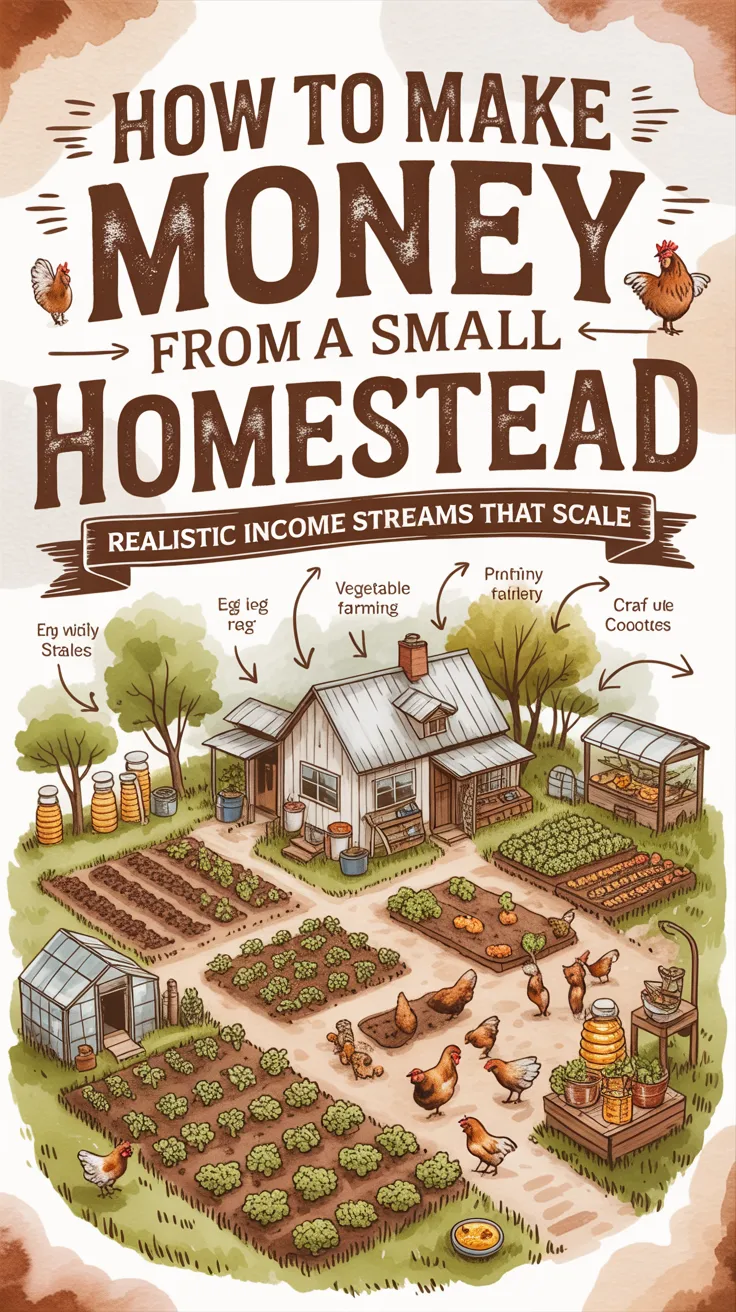
Learning how to make money from a small homestead isn’t about one magical cash crop—it’s about stacking a few reliable income streams that fit your land size, climate, skills, and time. The good news: you don’t need 40 acres and a tractor to earn real income. Many profitable homesteads start on 1–5 acres (or even a backyard) by focusing on high-value products, repeat customers, and systems that reduce labor.
The goal of this guide is to help you build a practical, diversified plan—so your homestead can generate cash while still supporting your lifestyle and food security.
Table of Contents
Building a Small Homestead Business That Actually Works
A small homestead becomes profitable when you treat it like a micro-business with clear priorities. Before you pick animals or plant orchards, get the fundamentals right:
Choose the right “profit engine” for your constraints
Your land and time are the two biggest limits. Use them wisely:
- If you have limited space: focus on vertical growing, microgreens, herbs, mushrooms, cut flowers, eggs, and value-added products.
- If you’re time-poor: lean into systems that repeat (subscriptions, CSA add-ons, weekly egg routes, seasonal bundles).
- If you’re cash-poor: start with products that need minimal infrastructure (microgreens, seedlings, compost worms, herbal teas).
Price for profit, not just sales
A common small-homestead trap is pricing like a hobbyist. Calculate:
- Inputs (feed, seeds, packaging)
- Infrastructure depreciation (coops, fencing, tools)
- Your labor (even a modest hourly rate)
- Losses (spoilage, mortality, weather)
If the math doesn’t work on paper, it won’t work in real life.
Build a “stack” instead of a single income stream
The best small homestead income plans usually combine:
- Weekly/recurring sales (eggs, microgreens, herb bundles)
- Seasonal cash spikes (seedlings, holiday crafts, fall produce)
- Value-added margin (soap, jam, tinctures, dehydrated goods)
- Education or experiences (workshops, tours, digital guides)
That stack creates stability even when a crop fails or demand shifts.
High-Margin Crops for Small Spaces
If you’re working with a small footprint, crops with fast turnover and high value per square foot are your best friend.
Microgreens and baby greens
Microgreens are one of the most scalable small-homestead products because they:
- Grow fast (often 7–21 days)
- Use minimal space
- Sell well to health-focused customers and local restaurants
You can start small (a shelf and lights) and scale as demand grows. The key is consistency: chefs and repeat customers want the same quality every week.
Culinary herbs and specialty herbs
Basil, cilantro, dill, parsley, mint, thyme, oregano, and chives can be profitable if you:
- sell in bunches,
- offer “kitchen bundles,”
- or dry them for teas and seasoning blends.
Specialty options like lemon balm, holy basil (tulsi), and chamomile can add value when marketed for wellness—just be careful with medical claims.
Garlic and niche alliums
Garlic is slow, but it’s a reliable high-value crop in many climates. Profit improves dramatically when you also sell:
- seed garlic
- braided garlic
- garlic powder (dehydrated)
- garlic scapes (seasonal)
Mushrooms (a strong small-space contender)
Oyster mushrooms (and other beginner-friendly varieties) can be grown in controlled environments like a shed or garage depending on your setup. They sell well at farmers markets and to chefs.
Cut flowers (often overlooked—very profitable)
Cut flowers can outperform vegetables in revenue per square foot. Even a small bed can produce:
- bouquets,
- wedding buckets,
- dried arrangements,
- seasonal wreaths.
Flowers also sell on emotion, which often supports higher pricing than produce.
Animals That Pay Their Way on a Small Homestead
Animals can be profitable, but they’re not automatically profitable. Feed costs and labor can eat income quickly—so choose species that produce frequent saleable outputs or high-margin products.
Laying hens and egg sales
Eggs are one of the most dependable homestead cash streams because demand stays consistent. Profit improves when you:
- offer weekly “egg subscriptions”
- upsell add-ons (herbs, greens, sourdough starter kits)
- build a route (repeat pickups)
To make eggs work, track feed costs and protect against losses (predators, disease, seasonal lay changes). Your brand story—pasture-raised practices, animal welfare, clean feed—matters in marketing.
Meat rabbits (small space, efficient feed conversion)
Rabbits can work well where zoning allows and space is tight. They can be a good option for families who want both home meat and potential sales, but local regulations and customer demand vary widely.
Bees (honey + value-added products)
Beekeeping can be a solid small-homestead side income:
- honey
- comb honey
- beeswax
- candles
- lip balm
Bees also improve pollination and overall production, which indirectly increases profitability.
Dairy (goats) and dairy-adjacent products
Dairy is labor intensive and regulated in many places. But there are still income options depending on your area:
- herd shares (where legal)
- soap and lotion (using goat milk)
- cheese-making classes (education income)
Check local laws carefully—dairy is not a “wing it” category.
Value-Added Products That Increase Your Profit Per Hour
For many small homesteads, value-added products are the difference between “busy” and “profitable.” The basic concept: take a raw product and turn it into something shelf-stable, giftable, or premium.
Strong examples of value-added homestead products
- Jam, jelly, fruit spreads (from imperfect fruit)
- Pickles, ferments, sauerkraut (small batches sell well)
- Dehydrated herbs, spice blends, teas
- Salves and body products (with careful labeling and compliance)
- Beeswax candles
- Soup mixes (dry blends in jars)
- Homemade vinegars, shrubs, syrups (again, label honestly)
Packaging and branding matter more than many realize
People buy with their eyes. Invest in:
- consistent labeling
- simple, readable ingredients lists
- batch dates and storage guidance
- clean presentation for photos and market displays
A resilience angle can expand your market
Many customers want practical preparedness without doom-and-gloom. If that’s your audience, educational resources can pair well with your products and your homestead brand.
Expert quote format:
“As many resilience educators emphasize, ‘A simple pantry plan beats a complicated one.’ Tools like The Lost SuperFoods are often used as idea libraries for shelf-stable foods you can add to your homestead routine—especially when you’re trying to reduce waste and preserve seasonal abundance.”
(Keep your messaging grounded: you’re sharing planning ideas, not making medical or emergency guarantees.)
Services and Experiences: The Fastest Way to Earn on a Small Homestead
If you want income without waiting for a crop cycle, services and experiences can pay quickly.
Plant starts and seasonal seedlings
Selling seedlings is a classic early-season income stream. People happily pay for:
- healthy starts (tomatoes, peppers, herbs)
- rare varieties
- ready-to-plant bundles (3 tomato + 3 basil + pollinator flowers)
You can grow starts in a small greenhouse or even indoor racks with lights.
Homestead services based on your skills
Consider:
- garden bed installation
- compost setup
- pruning and orchard care
- chicken coop consulting (layout, predator-proofing)
- rainwater catchment planning (where legal)
Workshops and micro-events
You don’t need a big venue. Small workshops can be high-margin:
- sourdough basics
- herb drying
- backyard chickens 101
- raising seedlings
- composting
- beginner beekeeping (with a local mentor)
If your county has agritourism regulations, follow them. Keep it simple and safe.
Digital products (scale beyond your local area)
Document what you’re already doing and turn it into:
- a printable planting calendar
- a “small homestead income planner”
- email mini-courses
- simple video lessons
The first version doesn’t have to be perfect. It has to be useful.
Water, Storage, and Infrastructure: Profit Protectors (Not Just Costs)
Infrastructure doesn’t sound exciting, but it prevents losses—and on a small homestead, preventing losses is often the same as increasing profit.
Water reliability protects your production
If you grow for income, water is not optional. Even a short interruption can wipe out seedlings, reduce yields, or raise animal stress.
💡 Recommended Solution: Water Freedom System
Best for: Homesteaders who want a clearer plan for water resilience on limited space
Why it works:
- Helps you think through water access and storage so your production is less fragile
- Supports planning a more reliable routine for gardens and livestock
- Useful as a preparedness-minded complement to rain capture and bulk storage
Many homesteaders also like to keep a backup plan focused on mobile or home-based water readiness.
💡 Recommended Solution: SmartWaterBox
Best for: Backup water readiness and contingency planning
Why it works:
- Encourages building a “what if” plan for water interruptions
- Complements (not replaces) wells, rainwater systems, and stored water
- Helps reduce the panic factor when something breaks mid-season
Storage is part of your monetization strategy
If you can store more, you can:
- sell later when prices are higher
- reduce spoilage
- create value-added products year-round
Think in layers:
- pantry storage (jars, dry goods)
- cold storage (root cellar, fridge/freezer capacity)
- shelf-stable preservation (dehydration, canning, fermentation)
Health preparedness protects your ability to work
On a small homestead, one injury or illness can derail your workflows and income. Having basic home-reference resources is a practical business move.
Many people keep guides like Home Doctor as a general educational reference for home preparedness—especially when you’re far from town or managing daily livestock chores.
Marketing and Sales Channels That Move Your Products Consistently
You can grow the best products in the county and still struggle if you can’t sell consistently. A small homestead wins with relationship-based marketing and simple systems.
Start with the easiest channels
- Direct-to-neighbor sales (Facebook groups, Nextdoor, community boards)
- Farmers markets (great for feedback and repeat customers)
- Local restaurants (best for consistent weekly sales—especially greens, herbs, mushrooms)
- CSA add-ons (partner with an existing CSA if you’re too small to run your own)
Build a “repeat buyer loop”
Your goal is to reduce the time spent finding customers. Good tactics:
- egg subscriptions (weekly pickup)
- text-message list for “harvest drops”
- loyalty bundles (buy 4 weeks, get week 5 discounted)
- seasonal pre-orders (seedlings, holiday wreaths, garlic braids)
Use simple storytelling (without oversharing)
Customers buy from small homesteads because they want:
- transparency
- local community
- quality
- values
Share:
- what you’re harvesting this week
- how you grow it
- how to use it (recipes, storage tips)
- behind-the-scenes photos (clean, clear, consistent)
A note on “survival” branding
Preparedness sells—but keep it practical. Focus on:
- self-reliance
- food storage
- water resilience
- seasonal planning
If your audience is more urban or suburban, you can position it as household resilience rather than off-grid survival.
Comparison/alternative style:
While generic “prep checklists” can be overwhelming, resources like URBAN Survival Code are often positioned for people who want a more structured starting point—especially if they’re building readiness alongside a small homestead or backyard production.
A Practical 30–90 Day Plan to Start Earning From Your Homestead
This is where many guides get vague. Here’s a realistic way to start earning without burning out.
Days 1–30: Pick one weekly product + one seasonal product
Choose:
- One weekly seller (eggs, microgreens, herb bundles)
- One seasonal spike (seedlings, garlic, cut flowers)
Then do three tasks:
- Identify your first 20 customers (neighbors, coworkers, local groups)
- Create a simple offer (price, pickup day, payment method)
- Set up a repeatable production schedule
Days 31–60: Add a value-added product
Pick something that uses your byproducts:
- extra herbs → tea blend
- blemished cucumbers → pickles
- surplus wax → candles
- fruit seconds → jam
Keep it legal: labeling, ingredients, cottage food rules.
Days 61–90: Systematize and protect the bottlenecks
At this stage, focus on:
- water reliability
- storage
- packaging
- a basic customer list (email or SMS)
Problem-solution bridge:
Struggling with “everything depends on me” stress? Many homesteaders calm the chaos by building checklists and contingency plans. Resources like Dark Reset and BlackOps Elite Strategies are sometimes used as structured planning frameworks for resilience-minded households—useful if your homestead income depends on staying operational in messy real life.
Use these as planning aids, not as substitutes for practical systems like water storage, backup power, and community connections.
Track the three numbers that matter
- Weekly revenue
- Weekly costs (especially feed and packaging)
- Hours worked
Your goal is to steadily increase profit per hour, not just gross sales.
Tools & Resources for a More Resilient, Profitable Homestead
A small homestead business is a lot easier when your fundamentals (water, food planning, and home reference) are solid.
- Water Freedom System — water resilience planning support
- SmartWaterBox — backup water-readiness framework
- The Lost SuperFoods — shelf-stable food idea resource for seasonal preservation
- Home Doctor — general home reference for preparedness-minded households
Conclusion
If you’re serious about how to make money from a small homestead, the most dependable approach is to stack complementary income streams: a weekly seller (eggs, greens, herbs), a seasonal surge (seedlings, flowers, garlic), and a value-added product line that increases your profit per hour. Then protect your production with reliable water, smart storage, and simple systems that keep you selling consistently.
Start small, sell sooner than you think, and improve one bottleneck at a time. A profitable homestead isn’t built in one season—but it can absolutely be built on a small footprint with the right strategy.
FAQ
How much land do I need to make money from a small homestead?
You can start earning on very little land—sometimes a backyard—if you focus on high-value products like microgreens, herbs, seedlings, eggs (where allowed), mushrooms, or cut flowers. The business model matters more than acreage.
What is the most profitable thing to sell from a small homestead?
It depends on your market, but common high-margin options include microgreens, cut flowers, specialty herbs, seedlings, mushrooms, and value-added goods like teas, spice blends, and candles. The most profitable item is usually the one you can produce consistently and sell repeatedly.
How do I find customers for my homestead products?
Start with community channels: local Facebook groups, Nextdoor, farm stands, and farmers markets. Then build repeat systems like subscriptions, weekly pickup days, and a simple text/email list to announce harvest availability.
Can I make money homesteading without farming full-time?
Yes. Many people build a part-time stack—like seedling sales in spring, weekly egg sales, and occasional workshops—without going full-time. Track hours and pick products that fit your schedule.
How do I make my homestead income more stable year-round?
Add shelf-stable value-added products, extend your season with simple protection (low tunnels/greenhouse), and build recurring sales like subscriptions. Also reduce risk with water and storage planning so weather or interruptions don’t wipe out your output.