Most homes don’t need more storage—they need fewer “maybe someday” items. If you’ve ever stared at a closet shelf full of random cables, half-used bottles, and mystery parts and thought, I can’t deal with this today, you’re exactly who professional organizers help. The good news: you can get the same results by removing the right kinds of clutter first.
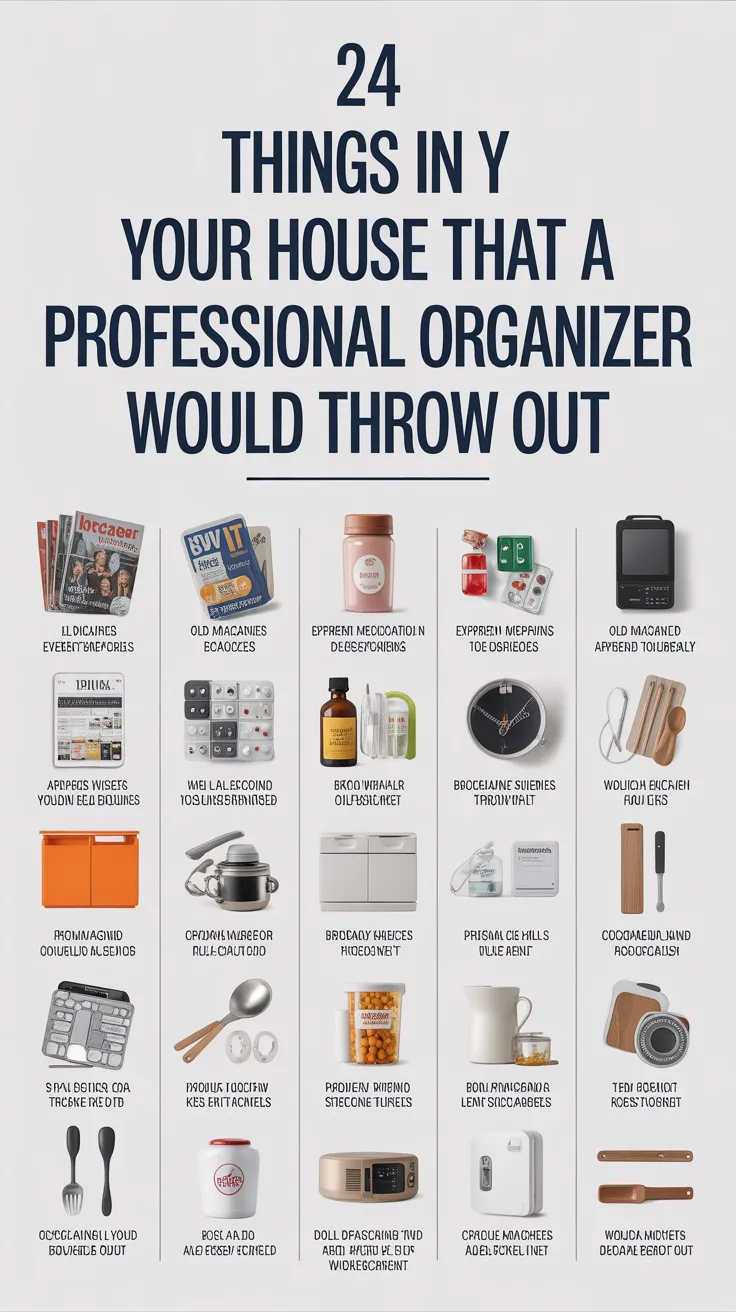
This guide to 24 things in your house that a professional organizer would throw out isn’t about being wasteful or harsh. It’s about clearing what’s expired, broken, obsolete, duplicative, or aspirational—and keeping what actually supports your life now. When you toss (or recycle/donate) the right items, cleaning becomes faster, storage suddenly “works,” and your home feels calmer without buying a single bin.
As a rule of thumb, professionals focus on: safety, function, frequency of use, and whether an item truly earns its space. Use the list below as a rapid decluttering checklist, and don’t worry—where disposal is tricky (electronics, chemicals, documents), you’ll get options.
Table of Contents
Clearing Principles Professional Organizers Use Before Tossing Anything
Professional organizers don’t randomly throw your stuff away. They follow simple criteria that remove emotion from the decision, so you can move quickly without regret.
When something is an easy “out”
Look for items that are:
- Expired (food, meds, skincare, warranties)
- Broken or missing critical parts
- Duplicated beyond what your household realistically uses
- Obsolete (old tech, outdated media, incompatible accessories)
- Low-value but high-space (bulky packaging, outdated manuals)
- Aspirational clutter (projects, clothes, hobbies for a “future you”)
A fast, organizer-approved sorting setup
Before you start, create four zones:
- Trash (true garbage)
- Recycle (paper, cardboard, eligible plastics, e-waste staging box)
- Donate/Sell (usable items)
- Decide Later (small box only—if it overflows, you’re keeping too much)
If you work best with a safety-first mindset, keep water, a marker, and gloves nearby. Many organizers also recommend addressing “emergency basics” while decluttering: when you remove piles, you’ll see what’s missing and what should be stored properly.
Many people pair a declutter pass with a simple preparedness reset—clean water storage, basic home-reference info, and a small set of multi-use tools—so the space you regain stays functional.
💡 Recommended Solution: SmartWaterBox
Best for: setting aside a simple home water plan while organizing
Why it works:
- Helps you think in terms of essential storage vs. random stockpiles
- Encourages a designated “preparedness zone” instead of scattered clutter
- Supports a cleaner, more intentional use of space
The Bathroom and Medicine Cabinet Items That Need to Go
Bathrooms are clutter magnets because they hold small items that “might still be good.” Organizers toss aggressively here because expired products can irritate skin, harbor bacteria, or simply waste storage.
1) Expired medications and vitamins
Check dates, then dispose properly. Keep only what’s current and medically necessary. If you’re unsure, pharmacists can advise. Don’t keep old prescriptions “just in case.”
2) Half-used products you don’t actually like
That conditioner that never worked, the face cream you stopped using, the fancy mask that smells odd—out. Professionals know these linger forever and block what you do use.
3) Duplicates opened at the same time
Three open shampoos, two toothpastes, multiple deodorants—choose one, backstock one, donate unopened extras if appropriate. The rest becomes daily chaos.
4) Old makeup and dried-out tools
Mascara, liquid eyeliner, sponges, and old brushes are common offenders. If it’s dried, smells off, or you can’t remember when you opened it, it doesn’t deserve a spot near your face.
5) Hotel toiletries and “free samples” piles
A couple for travel is fine; a gallon-sized bag of tiny bottles is not. Organizers either create a small travel kit or discard the rest.
Expert quote format:
“As many home-safety educators emphasize, ‘A clear, updated bathroom cabinet is one of the fastest ways to reduce daily stress and improve home hygiene.’”
If you’re building a more capable home setup while removing the fluff, resources like Home Doctor can help you focus on practical, calm decision-making rather than keeping “random just-in-case items” that never get used.
Kitchen Clutter Professionals Toss Immediately
Kitchens get messy not because people own too much food, but because they own too many formats of the same thing and too many tools that don’t earn space.
6) Expired pantry items and stale spices
Yes, spices technically last a while—but stale spices sabotage cooking and encourage takeout. Organizers toss duplicates, anything expired, and any jar you never reach for.
7) Mystery containers without lids (and lids without containers)
This is a classic. If there’s no matching part, it’s not a “system,” it’s clutter. Keep a small, matching set that stacks well.
8) Worn-out plastic cutting boards and cracked utensils
If it’s stained, deeply grooved, warped, or cracked, it’s done. Professionals prioritize safety and hygiene.
9) Single-use gadgets that never get used
Avocado slicers, banana cutters, novelty tools. If it hasn’t been used in a year, toss or donate. Most tasks can be done with a knife and a cutting board.
10) Water bottles and travel mugs you avoid
Favorites stay. The rest go. A cabinet full of mismatched bottles looks like storage, but functions like a jammed drawer.
Problem-solution bridge:
Struggling with kitchen overflow because you’re trying to store “everything”? A better approach is keeping only what supports your daily routine—then having one designated spot for true essentials like safe water. Many minimal-prep households rely on tools like Water Freedom System to streamline their water plan so the kitchen doesn’t become a cluttered staging area for random bottles and jugs.
Paper, Mail, and “Admin” Piles That Create Hidden Mess
Paper clutter is heavy, time-consuming, and emotionally draining—because every sheet feels like a decision. Organizers reduce paper by creating simplified rules.
11) Old manuals you can find online in seconds
Appliance manuals, gadget instructions, and setup guides are often searchable by model number. Keep only what’s rare or truly necessary, and recycle the rest.
12) Expired coupons, old receipts, and outdated event flyers
If the date has passed, the paper has no job. This is low-hanging fruit that clears drawers fast.
13) Bank statements and bills you no longer need in hard copy
If you have secure digital access, keep only what’s required for taxes, warranties, or legal needs. Shred the rest.
14) “To file” stacks older than 30 days
Professionals consider these a sign the system is broken. Either create a tiny file box with clear labels or digitize. A pile is not a system.
15) Random notebooks with a few pages used
Keep the one you actually write in. Consolidate notes if needed. Most homes have five half-used notebooks and no working place to store them.
Comparison/alternative:
While a big filing cabinet seems like the solution, organizers often prefer a small “current” file box plus a shred routine. If you’re also trying to improve home readiness without accumulating junk binders and printouts, Home Doctor can be a more streamlined alternative to keeping stacks of “just in case” papers that you never reference.
Closet and Bedroom Items That Quietly Steal Space
Closets look full long before they’re functional. Organizers don’t aim for empty; they aim for breathing room and easy retrieval.
16) Clothes that don’t fit your current body and lifestyle
If something hasn’t fit in a year and doesn’t support your current routine, it usually becomes guilt-clutter. Keep a small, intentional “maybe” capsule if you must—no more than one bin.
17) Uncomfortable shoes you keep for “special occasions”
If you avoid them, they don’t belong in your daily environment. This includes shoes that hurt, pinch, or require repairs you keep postponing.
18) Socks and underwear past their prime
Stretched waistbands, holes, missing pairs—professionals toss these quickly because they’re visual noise and daily frustration.
19) Old hangers that snag or don’t match your storage
Mismatched hangers waste space and make closets feel chaotic. Choose one style if you can. Donate or recycle the rest where possible.
20) Bedding you don’t use (or that irritates you)
Scratchy sheets, extra flat pillows, mismatched sets. Keep what you actually like and use. Guests don’t need ten backup blankets.
Expert quote format:
“As productivity coaches often note, ‘Your closet should reduce morning decisions, not multiply them.’”
To reinforce that mindset, some people pair a declutter with a simple “low-noise readiness” resource—so the home feels lighter, but still capable. Guides like URBAN Survival Code are sometimes used as a reference framework so you keep fewer random objects and more intentional basics.
Garage, Utility Room, and “Junk Drawer” Culprits
These spaces are where decisions go to die. Organizers treat them like high-value real estate because clutter here spreads into the rest of the home.
21) Unknown cords, obsolete chargers, and ancient tech
If you don’t know what it belongs to, it’s already costing you time. Keep a small, labeled tech pouch for current devices only. Recycle e-waste responsibly.
22) Old paint, leaking chemicals, and mystery cleaners
If it’s leaking, unlabeled, or you haven’t used it in years, it’s a hazard. Check local disposal guidelines—many cities have hazardous waste drop-offs.
23) Broken tools you “mean to fix”
If a repair hasn’t happened in 6–12 months, it’s unlikely to. Either fix it this week with parts on hand, or let it go.
24) Boxes from purchases “in case you return it”
This is one of the fastest wins. Keep boxes only during the return window—and only for expensive items that are truly likely to be returned. Otherwise, break them down and recycle.
Case study/example (general outcome):
For instance, households that clear just one garage shelf of old boxes, mystery cords, and broken items often report the space becomes usable again within a weekend—making it easier to store essentials in one place instead of scattered piles.
Problem-solution bridge:
If your garage or utility room is stuffed with “emergency” things that aren’t actually usable, you may benefit from a clearer plan instead of more stuff. Some people use resources like The Lost SuperFoods to focus on practical fundamentals—so your preparedness choices don’t turn into clutter you never touch.
Simple Routines to Keep Clutter from Coming Back
Once you’ve removed the obvious “outs,” the next step is preventing rebound clutter. Organizers rely on routines, not willpower, and those routines are small on purpose.
Build a one-touch rule for common items
- Mail: open over a recycling bin, discard junk immediately
- Shopping: break down boxes the same day
- Bathroom: one-in-one-out for skincare and makeup
- Kitchen: if you buy a new bottle, finish the open one first
Create micro-zones so items don’t roam
Professional organizers love zones because they reduce visual noise:
- A single charging station (not chargers in every room)
- One health bin (not medicine bottles in three drawers)
- One pantry backstock shelf (not duplicates spread everywhere)
Use the “container boundary” method
Pick a container (drawer, bin, shelf) and let the container set the limit. When it’s full, something leaves. This approach prevents slow accumulation.
Tools & resources that support a calmer, more functional home
A declutter isn’t only about removing; it’s about replacing chaos with a simple plan.
💡 Recommended Solution: Home Doctor
Best for: keeping practical home-reference knowledge without piles of paper
Why it works:- Encourages a “less stuff, more capability” mindset
- Helps reduce hoarding of random “just in case” items
- Supports decision-making when organizing priority areas
💡 Recommended Solution: SmartWaterBox
Best for: a simple, designated water-prep zone that doesn’t sprawl
Why it works:- Helps prevent clutter from scattered bottles and jugs
- Encourages intentional storage in one place
- Complements a clean, organized utility setup
💡 Recommended Solution: URBAN Survival Code
Best for: a streamlined “readiness” framework that won’t overwhelm your home
Why it works:- Keeps you focused on essentials rather than accumulating gadgets
- Reduces panic-buying that leads to clutter
- Fits well with a minimalist organizing approach
Conclusion: A Lighter Home Starts with the Right 24 Items
Decluttering works best when you remove what’s easiest to decide on first: expired products, broken items, duplicates, outdated papers, and “I’ll fix it someday” clutter. That’s exactly why this list of 24 things in your house that a professional organizer would throw out is so effective—it targets the items that create mess without providing value.
If you do nothing else, choose five items today: one expired product category, one paper pile, one drawer of duplicates, one box of old tech, and one bag of worn-out textiles. Your home will feel different faster than you expect. Then, lock in the win with a small routine and clear zones—so the space you reclaimed stays clear.
FAQ
How do I declutter without throwing away useful things?
Start with low-risk categories: expired items, broken items, duplicates, and papers past their relevance. Professional organizers focus on function and safety first, then evaluate sentimental items last.
What are the easiest wins on the “24 things in your house that a professional organizer would throw out” list?
Expired meds, old makeup, lidless containers, outdated coupons, random cords, and empty boxes are typically the fastest. These items are high clutter, low value.
Should I donate or trash items I don’t want?
Donate anything clean, safe, and functional that someone else can realistically use. Trash items that are broken, stained, expired, or unsafe. Recycle electronics and hazardous materials through local programs.
How do I stop clutter from coming back?
Use container limits, one-in-one-out rules for toiletries and clothing, and micro-zones (one place for mail, charging, backstock). If you buy something new, decide what leaves the same day.
What if I feel anxious getting rid of “just in case” items?
Create a small, intentional essentials zone and keep it contained. Replace vague “just in case” piles with a simple plan—so your home stays calm and usable instead of crowded.