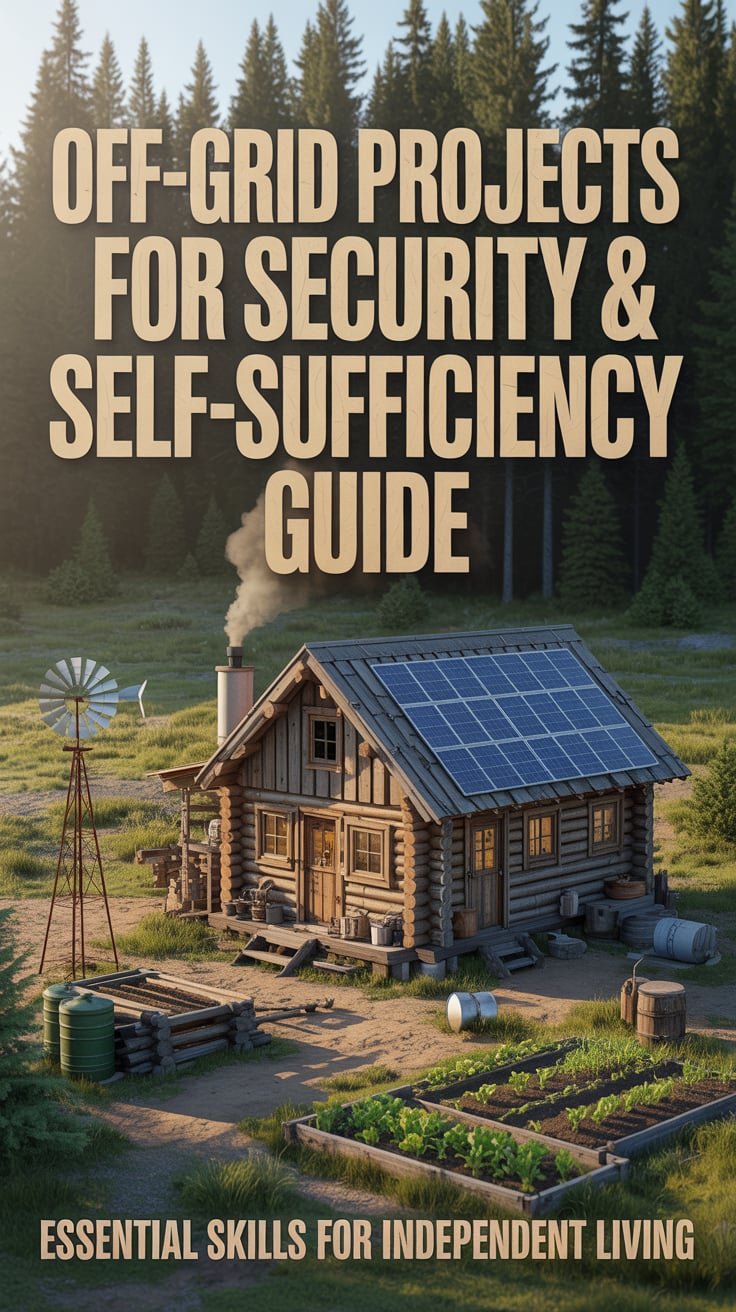
Building true independence isn’t about a single gadget—it’s the sum of reliable systems you can run, repair, and sustain. This Off-Grid Projects for Security & Self-Sufficiency Guide is a blueprint for practical, buildable projects that protect your water, food, power, health, and security—so your home keeps working when the grid doesn’t. You’ll find step-by-step frameworks, materials lists, and maintenance tips designed to deliver results fast, with a focus on resilience over complexity.
Kickstart your water independence with compact, modular setups you can deploy in a weekend. If you want a portable, self-contained option to bridge the gap while you build larger systems, consider the Water Freedom System as a simple, flexible upgrade to your water readiness.
Table of Contents
Water Systems in the Off-Grid Projects for Security & Self-Sufficiency Guide
Water is your most fragile link. Aim for three layers—collection, storage, and purification—so a single failure doesn’t take you offline.
- Collection: A roof-based rain catchment system is the fastest first project. Use food-grade gutters, leaf screens, and a first-flush diverter (to send the initial dirty runoff away). Target a minimum of 1 gallon of storage per square foot of roof area as a baseline.
- Storage: Stackable food-grade barrels or a buried cistern keep water cool and stable. Store containers in shaded locations and off concrete where possible to buffer temperature swings. Label fill dates and rotate monthly.
- Distribution: Gravity wins. Elevate tanks 6–10 feet for simple flow to taps and garden beds. Use braided hose or PEX with shutoff valves in each branch to isolate problems without draining the system.
- Purification: Redundancy matters. Pair mechanical filtration (sediment and carbon) with chemical purification (unscented bleach or calcium hypochlorite) and a boil/UV backup. Keep a test kit for turbidity and chlorine residuals.
- Wells and hand-pump readiness: If you have a shallow water table, a driven sand point or existing well with a hand pump provides drought-proof redundancy (observe local regulations). Learn proper shock chlorination and pull tools for maintenance.
Small footprint, modular options are perfect for apartments or as a bridge system while you scale:
- The SmartWaterBox is a compact way to add flexible storage and filtration capacity to your existing setup.
- If you’re exploring hand-well or low-tech water access approaches, Survival Water Box offers guidance-oriented resources that can help you plan a DIY-friendly water solution.
Maintenance routine:
- Monthly: Inspect gutters, flush diverter, sanitize taps, check for algae in translucent tubing.
- Quarterly: Drain and clean one tank at a time; cycle stored water; test seals and replace O-rings.
- Annually: Replace carbon filters, pressure-test lines, and expand storage capacity with your usage data.
Cold climate tip: Bury supply lines below frost depth or route interior, insulate tanks, and add an indoor fill/dispense station to avoid winter stagnation.
Food Resilience in the Off-Grid Projects for Security & Self-Sufficiency Guide
Food security is a portfolio: fast calories now, steady harvests this season, and shelf-stable stores for the long haul. Build in layers so you’re never waiting on a single system to succeed.
Immediate output (30–60 days):
- Wicking beds: Self-watering containers that stabilize yields under heat or neglect. Use a perforated pipe at the base, landscape fabric barrier, and soil-compost mix above.
- Vertical stacks/trellises: Grow peas, beans, cucumbers up and out to maximize square footage.
- Salad succession: Plant small batches every 10–14 days for consistent greens.
Mid-term (season-long):
- Raised beds with hoop tunnels: Extend your season and anchor pest netting. Aim for intensive spacing with interplanting (e.g., carrots under tomatoes).
- Guild planting: Combine perennials like berries with nutrient accumulators (comfrey), insectaries (yarrow, dill), and ground cover (strawberries) for a self-sustaining mini-ecosystem.
- Small livestock: A pair of rabbits or a half-dozen quail provide compact protein and compost inputs with minimal space.
Long-term staples:
- Root crops and calorie-dense options: Potatoes, winter squash, dry beans, and dent corn create reliable storable calories.
- Food preservation: Mix dehydrating, canning, fermenting, pickling, and cold storage. A buried barrel root cellar or insulated porch locker extends shelf life.
For time-tested preservation and storage techniques, a reference like The Lost SuperFoods can help you diversify your pantry with shelf-stable, low-tech-friendly staples that complement what you grow.
Seed security:
- Choose open-pollinated varieties for seed saving.
- Store seeds in a cool, dry place with desiccant; rotate annually.
- Keep a garden log: planting dates, varieties, yield notes, and pest/disease observations.
Calorie planning:
- Track family consumption for 30 days.
- Build a “base pantry” for 60–90 days (rice, beans, oats, oil, salt, sugar, powdered milk) and layer in your preserved harvest.
- Allocate 10–20% of garden space to herbs and medicinal plants (garlic, thyme, calendula) for added resilience.
Power and Energy Hardening for Grid-Down Durability
Electricity is the difference between “camping” and “living.” Design your system around essential loads first, then expand as resources allow.
Energy audit:
- List critical loads (well pump, fridge/freezer, communications, lights, medical devices).
- Note starting vs. running wattage; prioritize DC loads for efficiency (12/24V for lighting, fans, pumps).
- Target 20–30% headroom above your daily watt-hour usage for bad-weather days.
Solar basics:
- Panels: Start with a 400–800W array you can expand in 200W increments.
- Charge controller: MPPT for better performance in partial shade/cold.
- Battery bank: LiFePO4 offers deep cycles and lighter weight; AGM is simpler and rugged. Size for 2–3 days of autonomy.
- Inverter: Pure sine for sensitive electronics; place near batteries with proper ventilation.
Wind and water:
- Microturbines shine in windy zones; micro-hydro is king if you have consistent head/flow. Even partial production overnight flattens battery cycling and extends lifespan.
Protection and safety:
- DC disconnects and fusing on every segment (panels, controller, batteries, inverter).
- Surge protection and proper grounding per code; consider a Faraday bag for critical handheld electronics.
- Fire safety: Class C-rated extinguisher near power gear; keep battery documentation accessible.
Fuel backups:
- A small, efficient inverter generator sips fuel for battery charging only—don’t run household loads direct unless necessary.
- Stabilize gasoline; rotate every 6 months. Propane stores longer and is multipurpose (cooking, heat).
For training that focuses on surviving prolonged outages and reconfiguring daily life during a systemic failure, the guide Dark Reset offers strategies you can layer onto your energy plan so your household routines remain practical when the grid is unpredictable.
Routine maintenance:
- Monthly: Visual inspect connections, check battery SOC, clean panel surfaces.
- Quarterly: Torque-check lugs, update load audit, prune shading, run generator under load.
- Annually: Test inverter efficiency, equalize lead-acid if applicable, and add one new energy-saving device.
Physical Security, Property Layout, and Perimeter Layers
Security is a system, not a sign. Blend natural design, deterrence, and detection before you ever need to respond.
Property design:
- Sightlines: Trim shrubs near doors/windows; avoid blind corners.
- Barriers: Use thorny hedges under windows, gravel paths (audible), and gated fencing with reinforced posts.
- Lighting: Motion-activated, shielded to avoid glare. Light the approach, not just the building.
Entry hardening:
- Doors: Solid-core or metal, 3-inch screws in strike plates and hinges, quality deadbolts. Add door braces for forced-entry resistance.
- Windows: Laminated film, secondary locks, and interior dowels on sliders.
- Safe room: Reinforced interior door, communications, first-aid, water, and chargers.
Detection and alerting:
- Layered sensors: Door/window contacts, interior motion, and driveway alerts. Battery-backed cameras or trail cams can log activity even during outages.
- Canine deterrence: A well-trained dog is both companionship and a living alarm.
Situational awareness:
- Practice “baseline” observation: what’s normal in your area, at what times.
- If you want to deepen your mindset and scenario planning for modern risks, BlackOps Elite Strategies provides tactics-oriented training that complements physical upgrades with cognitive preparedness.
Fire and hazard defense:
- Create a defensible space: clear combustible material 5–30 feet from structures; store fuels in ventilated, detached areas.
- Redundant extinguishers (ABC and K-class in the kitchen), smoke/CO detectors on battery backup, and clear egress plans.
Community layer:
- Join or organize a neighborhood observation group; use low-key shared signals (whistles, lights) and check-in schedules during storms or outages.
Medical Self-Reliance and Sanitation Systems
Health security keeps every other system running. Build medical capability around prevention, basic care, and safe waste handling.
Medical supplies:
- Tier 1 (everyday carry): gloves, bandages, antiseptic wipes, tourniquet.
- Tier 2 (home kit): pressure dressings, SAM splint, irrigation syringe, oral rehydration salts, antihistamines, pain relievers, thermometer, pulse oximeter.
- Tier 3 (extended care): suture strips, wound closure alternatives, topical antibiotics, burn gel, hemostatic gauze.
Training and references:
- Take a certified first-aid/CPR course; practice splinting and wound care on schedule.
- A practical home medical manual like Home Doctor can guide non-emergency procedures and when to escalate.
Water, hygiene, and waste:
- Handwashing stations: Foot-pump sink or gravity jug at kitchen and latrine areas; soap dispensers plus a bleach spray bottle.
- Composting toilet or dry latrine: Use a urine-diverting setup or sawdust cover system to reduce odors and pathogen risk. Follow local regulations and composting best practices.
- Greywater routing: Dish and laundry water to subsurface infiltration trenches or mulch basins; avoid direct contact with edible portions of plants.
- Vector control: Seal gaps, use screens and covers on waste, manage standing water.
Medication planning:
- Track essential prescriptions and ask providers about extended refills if possible.
- Store medications in cool, dry places; use lockable containers, and maintain a rotation log.
Public health readiness:
- Respiratory protection (N95/KN95), eye protection, and nitrile gloves for outbreaks.
- Set aside sick-room supplies: electrolytes, hydration gear, PPE, disinfectants, and a pulse oximeter with spare batteries.
Monthly drill:
- Simulate a 24-hour “no tap, no flush” day to test hygiene systems.
- Review medical kit contents and replace used or expired items.
Communications and Intelligence for Informed Decision-Making
Information is a force multiplier. Build a comms stack that works without cellular or internet service.
Core equipment:
- Handheld radios: GMRS/FRS for family coordination; label radios, pre-program channels, and add simple laminated cheat sheets.
- HAM radio: Technician license unlocks local repeaters and regional links. Keep a small roll-up antenna and spare battery pack.
- Scanners and weather radios: Program local services and NOAA alerts. Use an external antenna for reception gains.
Power independence:
- DC charging: Run radios directly from your battery bank or a dedicated 12V line to avoid inverter losses.
- Solar battery pack: As a pocket backup for handhelds and phones.
Information routines:
- SKEDs: Set standard communication windows (e.g., 0700/1900 daily) to conserve power and improve link reliability.
- Net logging: Maintain a notebook for received reports, requests, and contacts. Accuracy matters under stress.
- Local intel: Build a network with neighbors, CERT, and amateur radio operators. Swap weather, road, and supply status.
Physical message options:
- Dead drops: Pre-agreed containers at secure locations for passing notes or memory cards.
- Signal plan: Whistle codes, light flashes, or flagging for non-verbal communication at distance.
Security basics:
- Practice radio discipline: brevity, plain language, no sensitive details.
- Backup privacy: Use code words for locations and family members. Don’t share personally identifying information on open channels.
Test cycle:
- Weekly radio checks with a friend or neighbor on two different frequencies.
- Quarterly “off-grid comms day” using only radios and printed maps to navigate and coordinate.
30-Day Action Plan and Recommended Resources
Turning plans into projects is about sequence. This 30-day plan gives you quick wins while laying foundations for bigger builds.
Week 1: Water and power basics
- Install gutter screens and a first-flush diverter.
- Set up two food-grade barrels with an elevated stand and spigot.
- Add a portable filtration unit and chlorine/calcium hypochlorite for disinfection.
- Mount a 200–400W solar starter kit with an MPPT controller and a small LiFePO4 battery.
Week 2: Food and security
- Build one 4×8 raised bed and one wicking bed; plant fast-maturing greens and herbs.
- Install motion lights at entries and a driveway alert.
- Reinforce exterior doors and window locks; add 3-inch screws to hinges/strikes.
Week 3: Communications and medical
- Program GMRS/FRS radios; set family SKEDs and channel cards.
- Assemble a Tier 2 home medical kit and sanitize a handwashing station.
- Conduct a 12-hour grid-down drill and record performance gaps.
Week 4: Scale and refine
- Add two more barrels or a cistern; plumb a gravity-fed garden line.
- Expand solar by 200W or add a DC lighting circuit.
- Conduct a night-time perimeter walk; adjust lighting and cover blind spots.
- Document SOPs: water rotation calendar, generator run schedule, comms windows, and evacuation routes.
Recommended resources to accelerate your build:
- Water independence: SmartWaterBox for modular storage/filtration, Survival Water Box for DIY well concepts, and Water Freedom System for compact, flexible water capability.
- Food security: The Lost SuperFoods for long-shelf-life staples and preservation methods that complement your garden.
- Grid-down living: Dark Reset for strategies to adapt routines when power and services are unreliable.
- Medical readiness: Home Doctor as a practical home reference.
- Urban and travel resilience: If your daily life spans city and suburb, URBAN Survival Code can help you translate off-grid principles into real-world mobility and safety.
Call to action:
- Schedule your first 24-hour off-grid test within 14 days.
- Pick one “big lever” project (rain catchment or solar starter kit) and one “no-regret” skill (first aid or radio basics).
- Document everything. Your notes become your family’s continuity playbook.
Conclusion
Resilience is built, not bought. This Off-Grid Projects for Security & Self-Sufficiency Guide gives you layered systems—water, food, power, security, medical, and communications—that work together to weather outages, disasters, and supply hiccups. Start with the simplest build that delivers the biggest daily benefit, add redundancy where a single failure would hurt most, and turn maintenance into a routine. Each project you complete reduces risk, grows confidence, and proves that self-reliance is a practical, achievable goal for any household.
FAQ
u003cpu003eWhat’s the first project to start from this Off-Grid Projects for Security u0026amp; Self-Sufficiency Guide?u003cbru003eu003c/pu003e
u003cpu003eBegin with rain catchment and a basic filtration/disinfection setup. It’s low-cost, fast to build, and covers the most critical need. Pair it with a small solar/battery kit to keep lights and communications online.u003c/pu003e
u003cpu003eHow much water should I store for a family of four?u003cbru003eu003c/pu003e
u003cpu003eAim for a minimum of 1 gallon per person per day for drinking and minimal hygiene, stored for 14 days (56 gallons). More is better. Use rotation and multiple containers to avoid single-point failure.u003c/pu003e
u003cpu003eDo I need a large solar system to be off-grid-ready?u003cbru003eu003c/pu003e
u003cpu003eNo. A 400–800W starter system and a small battery bank can power lights, device charging, radios, and even a compact fridge under careful management. Design around essential loads first and expand as you learn.u003c/pu003e
u003cpu003eHow do I keep food production steady year-round?u003cbru003eu003c/pu003e
u003cpu003eStagger plantings, mix fast crops with storage varieties, add season extension (hoop tunnels/cold frames), and combine garden harvests with preserved pantry staples. A reference like u003ca href=u0022https://71abf79ge2qqzy5f2ownjy9m7n.hop.clickbank.netu0022u003eThe Lost SuperFoodsu003c/au003e helps fill seasonal gaps.u003c/pu003e
u003cpu003eWhat’s a simple way to improve home security without high tech?u003cbru003eu003c/pu003e
u003cpu003eReinforce doors and window hardware, add motion lighting on approaches, keep shrubs trimmed for visibility, and establish a neighborhood check-in routine. A dog and clear house rules for nighttime are powerful, low-tech upgrades.u003c/pu003e