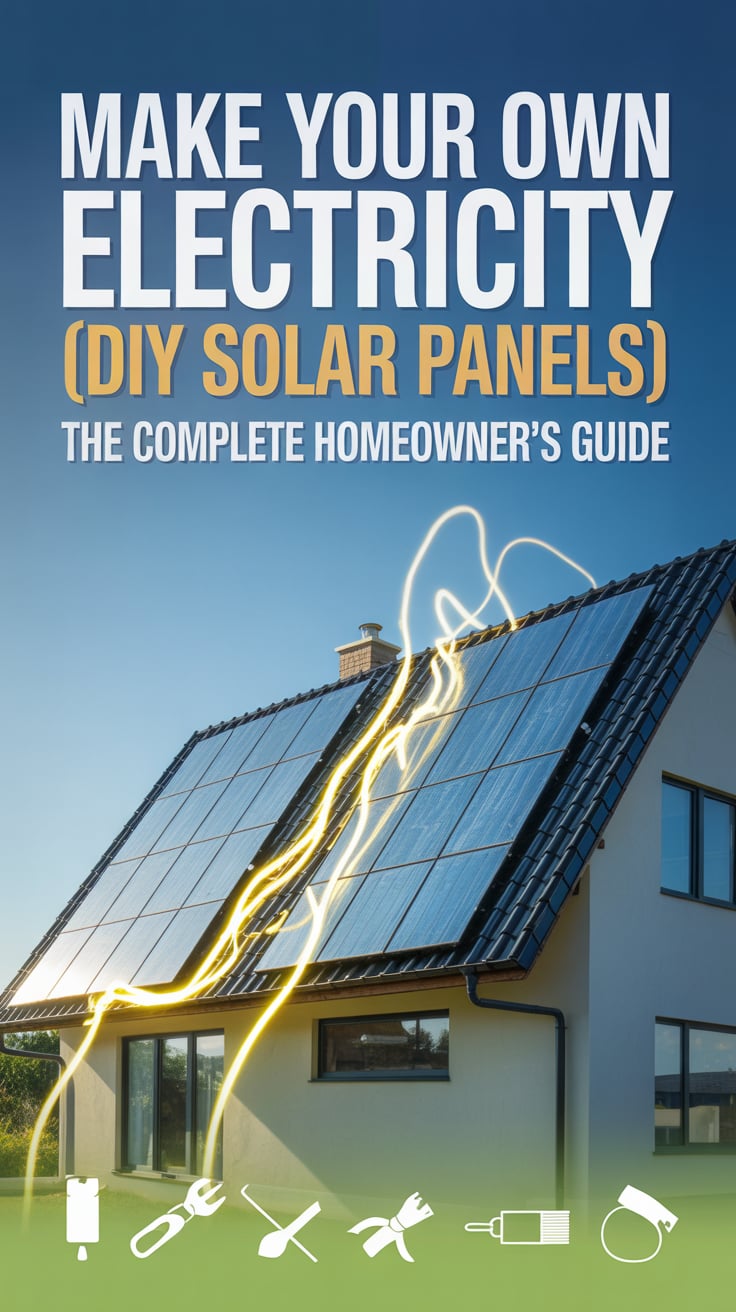
If you’ve ever wished to make your own electricity (DIY solar panels) so your home can stay powered during outages, reduce bills, or build off‑grid independence, you’re in the right place. This comprehensive guide walks you from first assessment through system design, safe installation, optimization, and ongoing maintenance—so you can create a reliable solar setup that fits your goals and location.
For broader blackout preparedness that complements a home solar build, explore the New Survival Offer: Dark Reset.
Table of Contents
Clarifying goals and assessing your site
Before you buy anything, get crystal‑clear on what you want your system to do. Your goal defines everything—from the type of solar system to the size of your battery bank.
- Bill reduction: Grid‑tied solar without batteries focuses on offsetting daytime usage and leveraging net metering (where available).
- Backup power: Hybrid systems add batteries to keep essentials running during grid outages.
- Full independence: Off‑grid systems handle your entire daily energy, storage, and surge needs.
Site assessment is the next big step. Solar output depends on sun exposure, roof orientation, shading, and climate.
- Orientation and tilt: In the northern hemisphere, south‑facing arrays with a tilt near your latitude typically maximize annual production. East/west roofs can still work, often with a slight production penalty but a broader generation curve.
- Shading: Even partial shade can disproportionately cut output. Map shade across seasons and times of day using tools or a simple time‑lapse survey. Tree trimming or microinverters/optimizers can mitigate shading losses.
- Roof condition: Solar lasts 25+ years. If your roof needs replacing soon, do that first, then mount solar to avoid rework later.
- Space: Calculate the available square footage. Modern modules are commonly 350–450 W each; a kilowatt of panels usually needs 50–70 square feet depending on module efficiency and spacing.
Safety and permitting should shape your plan from day one. Your local authority may require permits, inspections, and National Electrical Code (NEC) compliance. Some neighborhoods need HOA approval. Early conversations with your building department and utility (for grid‑tie) save headaches later.
Budget your time and learning curve, too. You’ll need to understand load calculation basics, DC/AC wiring, grounding, overcurrent protection, and safe working practices. If anything goes beyond your comfort zone—especially the grid interconnection—hire a licensed electrician for those parts.
Choosing the right way to make your own electricity with DIY solar panels
There are three main system families, each optimized for different outcomes:
- Grid‑tied (no batteries): The simplest and often most cost‑effective for bill reduction. Panels feed a grid‑tie inverter that syncs with utility power and may export surplus via net metering. When the grid goes down, standard grid‑tied systems must shut off to protect line workers—no backup power unless you add storage and islanding capability.
- Hybrid (grid‑interactive with batteries): Panels charge a battery bank through a hybrid inverter, allowing you to power loads during outages and time‑shift energy to reduce peak charges. Your system can both export to the grid and sustain essential circuits when utility power fails.
- Off‑grid (standalone): Everything runs independently of the grid. You size panels, inverter, and batteries to meet all daily and seasonal needs, often coupled with a generator for extended cloudy periods.
Core components to understand:
- Solar modules: Photovoltaic (PV) panels convert sunlight into DC electricity. Module specs (wattage, voltage, current) determine string configurations.
- Mounting system: Roof or ground mounts with rails, clamps, flashings, and hardware designed for your roof type and wind/snow loads.
- Combiner box and overcurrent protection: Consolidates strings with fuses or breakers and may include a rapid shutdown transmitter where required.
- Charge controller (off‑grid/hybrid DC‑coupled): MPPT controllers optimize panel output for battery charging; PWM is less efficient and uncommon in larger systems.
- Inverter: Converts DC to AC. Types include string inverters, microinverters, and hybrid/battery inverters. Rapid shutdown and arc‑fault features are often integrated in modern equipment.
- Battery bank (hybrid/off‑grid): Chemistry options include lithium iron phosphate (LiFePO4), sealed lead‑acid (AGM), and flooded lead‑acid. Lithium offers high cycle life, depth of discharge, and efficiency.
- System monitoring: Inverter portals and shunt‑based battery monitors provide data on production, consumption, state of charge, and grid interaction.
Your wiring topology (series vs. parallel) sets string voltage and current. Series increases voltage; parallel increases current. In cold weather, PV voltage rises; ensure string Voc at the record low site temperature stays below inverter and equipment limits. This is a crucial design check you’ll conduct before finalizing your array layout.
Sizing your system for real‑world performance
Solar sizing starts with understanding your loads. A clear picture prevents underbuilding (leading to frustration) or overbuilding (wasting budget).
- Measure energy use:
- Grid‑connected homes: Review 12 months of utility bills to capture seasonal highs/lows. Note total kWh per month and daily averages.
- Off‑grid or sub‑panel approach: List each device’s wattage and estimated hours used per day. Calculate daily watt‑hours (Wh) and sum to daily kilowatt‑hours (kWh).
Identify essential loads:
Decide what must stay powered during an outage (e.g., fridge, lighting, modem, medical devices, well pump). For hybrid/off‑grid designs, create a critical‑loads sub‑panel that your inverter can support. Check surge ratings; compressors and pumps can demand 3–6x their running watts on startup.Map solar resource:
Your production depends on sun hours (irradiance) by season. Look up average daily “peak sun hours” for your location. Winter values matter most for off‑grid reliability. Multiply system DC capacity by peak sun hours and system efficiency (commonly 70–85% after real‑world losses) to estimate daily AC output.Choose system size:
- Grid‑tied goal: Offset a percentage of your annual kWh. Space, budget, and net‑metering policies shape the target array size.
- Hybrid/off‑grid: Size panels for worst‑case season or include a backup generator to cover extended cloudy periods.
- Battery capacity:
Base your battery bank on daily kWh needs, desired days of autonomy, and depth of discharge (DoD). Lithium batteries typically allow deeper DoD than lead‑acid, so you need fewer kWh of nameplate capacity for the same usable energy. Consider:
- Daily kWh x days of autonomy / allowable DoD = required usable storage
- Ensure inverter continuous power and surge ratings match your critical loads.
Voltage and current decisions:
Higher system voltages (24 V or 48 V) reduce current for the same power, allowing smaller conductors and higher inverter capacities. Many modern hybrid inverters operate at 48 V for efficiency and scalability.Allow room to grow:
If you plan to add panels or batteries later, choose equipment that supports expansion and reserve physical space on rails and in electrical enclosures. Keep in mind that mixing battery chemistries or different‑age lithium packs can be problematic; plan expansions with matched components whenever possible.
Finally, document all assumptions: load profiles, sun hours, component efficiencies, and temperature considerations. This “design baseline” keeps your project aligned as you move into hardware selection and installation.
Designing a safe, code‑aware solar architecture
Clean designs start with a one‑line diagram. It shows how DC and AC subsystems connect, where overcurrent protection lives, and how devices are grounded and bonded. It’s also vital for permitting.
Key design decisions and protections:
- String sizing: Confirm cold‑weather Voc and inverter voltage windows. For microinverters, verify the number of modules per branch circuit and trunk cable ampacity.
- Overcurrent protection: Use DC string fuses/breakers sized for module Isc with appropriate safety factors. AC breakers should follow inverter manufacturer guidelines and NEC. If your inverter can backfeed a panel, ensure bus and main breaker ratings and any required derates are addressed.
- Disconnects and rapid shutdown: Many jurisdictions require visible DC and AC disconnects and rapid shutdown devices for first responders. Most modern systems integrate rapid shutdown transmitters with the inverter; ensure the transmitter and rooftop devices are compatible.
- Grounding and bonding: Bond rails, modules (if needed), and equipment using listed grounding lugs or integrated bonding clamps. Connect to a grounding electrode system per code.
- Conductor management: Use outdoor‑rated, UV‑resistant wire and proper strain reliefs. Protect roof penetrations with flashed, sealed mounts. Route conductors neatly, avoiding abrasion and drip loops that might channel water into enclosures.
- Surge protection: DC and AC surge protective devices (SPDs) can reduce the risk from lightning or switching transients, especially in storm‑prone regions.
- Battery safety: Provide ventilation and clearance as required by the manufacturer. Protect terminals, use properly rated battery cables, and install a main battery disconnect and Class T or listed fusing sized for the prospective fault current.
- Generator integration: If you’re off‑grid or hybrid with a generator, use the inverter’s supported generator input and follow the recommended wiring, grounding, and neutral bonding practices.
When in doubt, consult product installation manuals and a licensed electrician. Utilities may also require anti‑islanding certifications, production metering, and specific disconnect placements. Thoughtful planning here avoids permit delays and ensures a safe, robust system.
If water resilience is part of your homestead plan alongside solar, you might also consider complementary solutions like the Water Freedom System and the New Water Offer: SmartWaterBox for off‑grid water options. For well‑based setups, Survival Water Box offers a self‑reliance angle that pairs naturally with solar‑powered pumping.
Installation essentials from roof to breaker
Once designed and permitted, you’re ready to build. Approach installation as a sequence: mechanical, DC, then AC—testing at each stage.
Mechanical mounting:
- Layout rails according to the racking manufacturer’s span tables for your roof type and snow/wind zone.
- Locate rafters with a stud finder or pilot holes, then set flashed roof attachments into solid structure.
- Keep rail runs square and level; use bonding hardware to create a continuous equipment grounding path.
- For ground mounts, set posts in concrete or helical piles per engineering requirements; align rows to minimize inter‑row shading.
Module placement and wiring:
- Install optimizers or microinverters per manufacturer instructions before setting modules, where applicable.
- Make MC4 connections with proper polarity; tug‑test each connection and protect cabling with clips and UV‑stable ties.
- Route home‑run conductors to a combiner or junction box, maintaining drip loops and strain reliefs.
DC side checks:
- Measure open‑circuit voltage (Voc) and short‑circuit current (Isc) for each string to verify expected values against your design.
- Land conductors in the combiner with correct polarity and fuse ratings; label all enclosures and conductors per code.
Inverter and AC wiring:
- Mount the inverter/hybrid unit on a solid backing with adequate clearances. Follow torque specs for terminals.
- Install AC disconnects and run conduit to your service equipment or critical‑loads sub‑panel.
- If required, set up production meters or CTs for consumption monitoring. Label service equipment to show PV backfeed.
- Commission using the manufacturer’s app/portal: configure grid profiles, battery settings (chemistry, capacity), charge/backup priorities, and rapid shutdown pairing. Update firmware before final functional tests.
Final inspections:
- Perform a full function test on a sunny day if possible: confirm PV production, battery charging, and AC output. Simulate a grid outage (if hybrid) to verify your essential circuits stay powered.
- Take photos of nameplates, labels, and the one‑line diagram for your records and inspectors.
Safety reminders: Work with fall protection, shut off circuits before servicing, and use insulated tools. If you’re not fully comfortable with AC service connections or code nuances, bring in a pro for that stage.
Operating, monitoring, and maintaining a high‑performing array
A well‑installed system should run quietly for decades, but proactive care preserves output and battery health.
Monitoring and alerts:
- Use the inverter’s monitoring portal to track daily kWh, historical trends, and any fault codes.
- For battery systems, monitor state of charge (SoC), cycle counts, and charge/discharge limits. Ensure temperature sensors are installed and accurate.
Seasonal adjustments and optimization:
- If you have an adjustable tilt ground mount, you can change tilt a few times per year to chase the sun’s angle.
- Trim vegetation that encroaches into the array’s sun window. Even a small eastern tree can shave off valuable morning harvest.
Cleaning:
- Dust, pollen, and bird droppings reduce yield. In many climates, rain suffices, but a gentle rinse with deionized or soft water on cool mornings can help. Avoid high pressure and harsh detergents; protect wiring while cleaning.
Battery care:
- Lithium iron phosphate batteries appreciate moderate temperatures and sensible charge limits. Follow manufacturer settings for absorption/float and low‑temperature charging protections.
- Lead‑acid users should perform periodic capacity checks and equalization (if specified), and keep terminals clean and tight.
Troubleshooting:
- If production seems low, compare string‑level data (or module‑level if you use microinverters/optimizers). Mismatched strings, a single bad connector, or shading on one module can drag down output.
- Watch for nuisance trips of breakers or GFCI devices; arcs or ground faults require immediate attention.
- Update inverter and battery firmware as recommended to gain new features and fixes.
Performance expectations:
- Degradation is normal—panels might lose 0.3–0.7% output per year. Keep records to spot trends; a sudden drop may indicate a fault rather than natural aging.
- For hybrid setups, tune charge/discharge windows to capture cheap/solar energy and avoid peak pricing where applicable.
Document changes and keep your one‑line diagram updated. Good records pay off during service, upgrades, or property sales.
Integrations that amplify resilience and comfort
Solar shines brightest when paired with smart loads and complementary systems:
- Critical‑loads sub‑panel: Move essentials (fridge, lighting, network, select outlets, furnace blower, well pump) onto a backed‑up panel so your inverter can support them without overloading.
- Load shifting: Use timers and smart plugs to run washers, dryers, or water heaters during peak solar hours. Consider heat pump water heaters to store thermal energy from midday solar.
- EV charging: Dial charging rates to absorb midday production. Some inverters coordinate with smart chargers to maximize self‑consumption.
- Solar‑powered pumping: For off‑grid wells, a soft‑start or VFD‑equipped pump reduces surge demand. Coordinate pump cycles with sunny periods to preserve battery capacity for evening loads.
- Efficient appliances: Every watt saved reduces the size and cost of your system. LED lighting, inverter‑driven fridges, and induction cooking can dramatically lower daily kWh needs.
- Microgrids and generators: In remote builds, a generator set sized to your inverter’s input can carry heavy loads or recharge batteries during extended low‑sun stretches.
Urban or suburban? You can still build meaningful resilience with a modest hybrid system that keeps communications, refrigeration, and lighting available through outages. If you’re honing a broader urban preparedness plan, resources like the New Survival Offer: URBAN Survival Code offer complementary strategies beyond the energy domain.
Ultimately, the art is matching your infrastructure to your lifestyle—using solar generation, storage, and smart controls to deliver comfort and security without waste.
A practical toolkit for resilience beyond electricity
Energy independence is one pillar; water, food, medical, and situational know‑how round out a true resilience stack. Consider these complementary resources:
- For comprehensive blackout readiness that dovetails with a home solar plan, see New Survival Offer: Dark Reset.
- To diversify water strategies—rain, storage, filtration—review the Water Freedom System, New Water Offer: SmartWaterBox, and Survival Water Box.
- Build pantry depth and long‑term nutrition planning with The Lost SuperFoods.
- For at‑home care knowledge that’s valuable during disruptions, explore Home Doctor.
- If you’re interested in security and situational strategy as part of your preparedness posture, see BlackOps Elite Strategies.
These resources complement a DIY solar build by reducing the overall load on your system (through smarter resource use) and increasing your ability to thrive during longer disruptions.
Budgeting expectations, timelines, and common pitfalls
Timelines:
- Design and permitting: Expect several weeks for research, drawings, and approvals, especially with utility interconnection.
- Procurement and scheduling: Lead times vary; plan for a few weeks to gather components and align help for roof and electrical tasks.
- Installation and commissioning: DIYers often spread work over a couple of weekends, with professional oversight for final AC tie‑ins.
Typical pitfalls to avoid:
- Undersizing batteries: For backup goals, too little storage leads to frequent brownouts when the sun sets. Balance storage to your actual overnight needs.
- Ignoring surge loads: Inverters can trip if a well pump or AC unit starts while other loads run. Check continuous and surge ratings.
- String voltage miscalculations: Cold‑weather Voc can exceed inverter limits if not properly modeled.
- Roof leaks: Every penetration must be flashed and sealed per the racking manufacturer’s instructions. Skipping this leads to expensive repairs.
- Cable management: Dangling wires rub, chafe, and eventually fail. Use listed clips and secure routing.
- Assuming net metering is universal: Policies vary by utility and can change. Model your economics for buy‑all/sell‑all or reduced export credits if needed.
Documentation pays off:
- Keep spec sheets, manuals, and your one‑line diagram organized.
- Label everything—strings, disconnects, combiner circuits, sub‑panel circuits. Future you (or the next owner) will thank you.
Finally, consider a phased approach: start with a small hybrid system backing essentials, then expand arrays or batteries later. This spreads cost and learning over time while delivering immediate resilience.
Conclusion
When you set out to make your own electricity (DIY solar panels), you’re investing in far more than hardware. You’re building a tailored, resilient energy system that fits your goals, your site, and your lifestyle. By clarifying objectives, sizing accurately, designing for safety and code compliance, installing methodically, and maintaining proactively, you can enjoy reliable, quiet, and clean power for decades. Pair your solar with smart loads, sensible storage, and complementary resilience resources, and your home becomes not just energy‑independent, but truly self‑reliant.
FAQ
What do I need to make my own electricity (DIY solar panels) at home?
A typical system includes solar modules, racking, DC/AC disconnects, overcurrent protection, an inverter (or microinverters), wiring, and for backup/off‑grid systems, a battery bank and charge controller. Permits and inspections are usually required.
How big should my battery be for backup?
Size storage around your essential loads and desired hours or days of autonomy. Calculate daily kWh for critical devices, choose an allowable depth of discharge, and size the battery so usable capacity meets that need with margin.
Can I install solar panels myself?
Many homeowners handle racking, module placement, and low‑voltage wiring. For grid interconnection and service equipment work, it’s wise—and often required—to involve a licensed electrician. Always follow manufacturer instructions and local code.
Is grid‑tied or off‑grid better?
Grid‑tied is typically most cost‑effective for bill reduction where net metering exists. Off‑grid is for full independence or remote sites. Hybrid systems blend both: they reduce bills and keep essentials powered during outages.
How do I maintain a DIY solar system?
Monitor production and battery health, keep modules clean as needed, trim shading vegetation, and update inverter/battery firmware when recommended. Inspect wiring and roof penetrations periodically to ensure everything stays secure and watertight.