
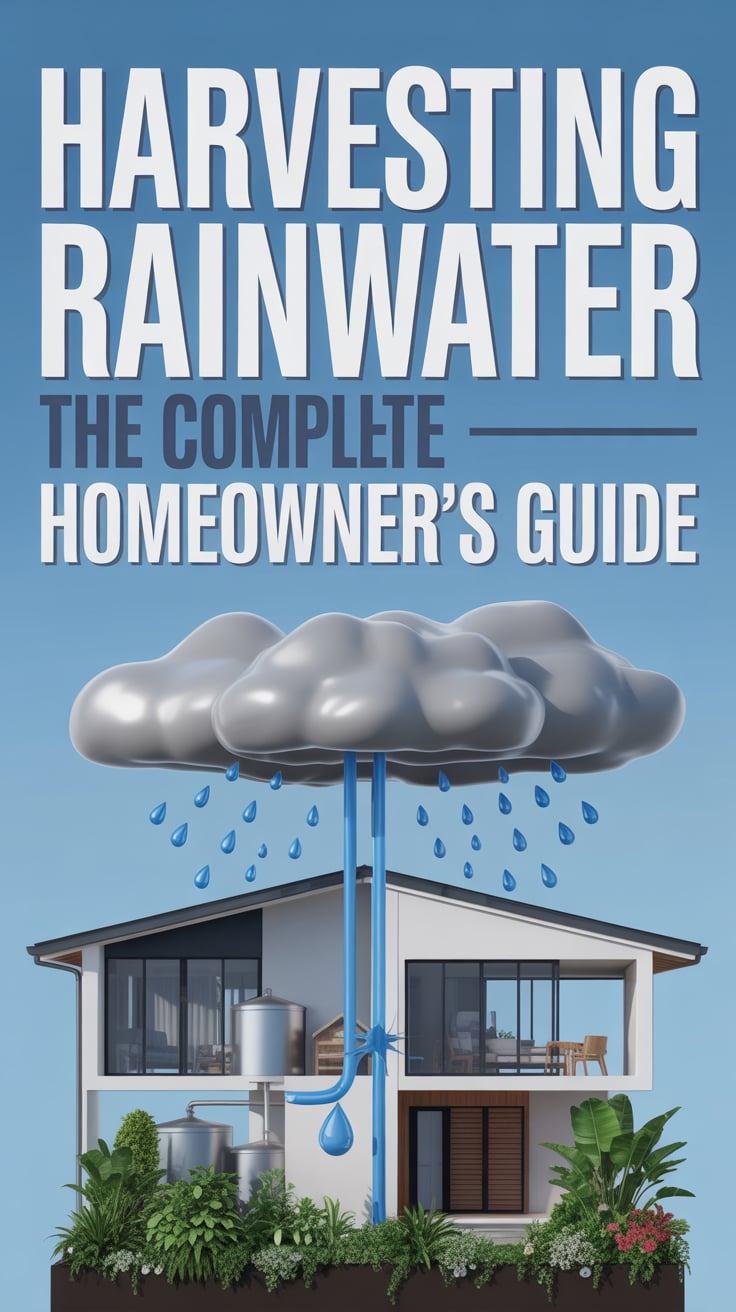
If you’re exploring harvesting rainwater, you’re in good companyv. From homesteads to city balconies, more households are capturing rainfall to cut utility bills, water gardens during droughts, and bolster emergency resilience. This guide walks you through planning, sizing, building, treating, and maintaining a safe, code-conscious rainwater collection system—whether for irrigation, household cleaning, or potable use with proper treatment. If you want a compact, plug-and-play option to speed up your build, consider the New Water Offer: SmartWaterBox as you read through the steps below.
Table of Contents
Foundations for a safe, legal, and effective system
Before you drill a single hole, establish your why, what, and where. Why are you harvesting rainwater—garden irrigation, livestock, toilet flushing, laundry, or drinking water (with treatment)? What volume do you realistically need each week? Where can you place a secure, shaded tank that’s easy to access for cleaning and protected from UV and freezing?
Legal landscape and codes: Laws vary by region. Some areas fully support rainwater collection, while others set limits, require permits for plumbing connections, or dictate potable treatment standards. Search your city and state “rainwater harvesting code” and review local water rights. Note especially:
- Potable use: Typically requires a multi-stage filtration + disinfection process, food-grade materials, and in some cases a permit and inspection.
- Backflow protection: Any tie-in to indoor plumbing often mandates an air gap or backflow preventer to protect municipal lines.
- Setbacks and overflow: Many codes require draining tank overflow to a safe area that won’t erode soil or impact neighbors.
Benefits worth the effort: Rainwater is soft (low in dissolved minerals), great for irrigation and appliances. You can cut stormwater runoff, reduce your water bill, build drought resilience, and gain a dependable backup supply. If you live in wildfire or grid-down risk zones, a dedicated cistern paired with a manual or solar-powered pump can be invaluable.
Good project candidates: Homes with 400–2,000 square feet of roof area, gardens or landscape that rely on irrigation, seasonal droughts, or unreliable municipal wells. Even small setups (like a single 275-gallon IBC tote on a balcony-fed downspout) can carry planters and raised beds through dry spells.
Sizing the system with climate, roof area, and demand
Right-sizing your harvesting rainwater setup ensures you store enough without overspending on oversized tanks. Use three inputs: roof catchment area, local rainfall patterns, and your weekly or monthly demand.
Key formula: Estimated gallons = Roof area (sq ft) × Rainfall (inches) × 0.623 × Efficiency. The 0.623 factor converts inches of rain over square feet to gallons. Efficiency (0.75–0.95) accounts for losses due to roof surface type, splash, and first-flush.
Example: A 1,000 sq ft roof with 1 inch of rain yields roughly 1,000 × 1 × 0.623 × 0.85 ≈ 530 gallons captured.
Know your rainfall pattern: Average annual totals are less helpful than monthly distribution. A climate with long dry summers pushes you toward larger storage (to bridge dry months). A region with frequent, smaller storms benefits from smaller tanks because turnover is frequent. Use a “water budget” by month:
- Supply: Use your local rain data (NOAA or your national weather service) to estimate monthly gallons captured.
- Demand: Estimate monthly water needs (irrigation, toilet flushing, etc.). For gardens, plan 0.5–1 inch of water per week in summer; for drip irrigation, estimate roughly 0.2–0.4 gallons per plant per day depending on species and weather.
- Storage target: Aim to carry enough to span the longest expected dry spell (e.g., 4–8 weeks in Mediterranean climates).
Catchment efficiency factors:
- Roof material: Metal and tile shed water well; aged asphalt shingles collect more grit, lowering efficiency and adding sediment.
- Pitch and overhangs: Steeper slopes move water faster but can increase splash losses if gutters are undersized or misaligned.
- Pre-filtration: Gutter guards, leaf screens, and first-flush diverters reduce debris, raising system efficiency and lowering maintenance.
Mind freeze and heat: In cold climates, insulate or bury lines, use freeze-proof spigots, and consider underground tanks. Hot climates benefit from shaded tanks and opaque materials to prevent algae.
To future-proof, consider starting with modular storage (e.g., two 500-gallon tanks manifolded together) so you can add capacity later without redoing plumbing.
Roof surfaces, gutters, and pre-filtration
The catchment area is your roof, and a clean, roof-safe setup sets the tone for water quality and system longevity.
Roof considerations:
- Material safety: For potable aspirations, metal roofs with food-safe coatings are ideal. Newer asphalt shingles can be acceptable for non-potable; however, some contain compounds you don’t want to drink without robust treatment. Avoid roofs with lead flashing or zinc/copper algaecide strips for potable use.
- Maintenance: Blow off leaves and needles each season. Wash roofs after pollen bursts. Keep chimneys and vents in good repair to avoid contaminants.
Gutters and downspouts:
- Size and slope: A typical 5-inch K-style gutter handles most residential flows; 6-inch offers extra margin during cloudbursts. Aim for 1/16 to 1/8 inch slope per foot so water moves without overflowing.
- Screens: Install leaf screens or micro-mesh guards to stop large debris. Clean them as part of your seasonal routine.
- Downspout filters: Use a debris excluder or basket at the top of the downspout to catch twigs and leaves before they clog elbows.
First-flush diverter:
- Purpose: The first minutes of rain wash dust, pollen, and bird droppings off your roof. A first-flush (with a ball float and drain) diverts this initial dirty water away from your tank.
- Sizing: For typical roofs, divert 0.5–1.0 gallons per 100 sq ft of roof area as a starting point; adjust based on roof debris load and storm intensity.
- Maintenance: Empty and rinse first-flush chambers regularly, especially during leaf season or after long dry spells.
Mosquito and pest control:
- Screens: Cover every opening with fine stainless-steel mesh (0.7 mm or finer) including inlet, overflow, and inspection ports.
- Seals and gaskets: Use tight, UV-resistant gaskets and keep lids secured to block light and pests.
- Overflow: Route overflow to a safe area or a rain garden; screen the end to block insects and rodents.
Plumbing material safety:
- Use potable-grade PVC, HDPE, PEX, or stainless-steel fittings when potable is a goal.
- Choose UV-resistant piping and paint exposed PVC to extend life and limit algae growth.
Well-sorted catchment and pre-filtration cut downstream filter costs and give you clearer, better-smelling water for landscape, washing, and with proper treatment, drinking applications.
Storage options, bases, and overflow management
Your storage tank is the heart of harvesting rainwater. Choose capacity and material based on climate, budget, and intended use.
Common tank types:
- Polyethylene (poly) tanks: Affordable, widely available, UV-stabilized, opaque colors reduce algae. Great for above-ground installs.
- Corrugated steel with liners: Durable and scalable for large volumes (thousands of gallons). Require a solid, level base and careful assembly.
- Concrete cisterns: Excellent for underground installs and temperature stability; higher upfront cost and weight.
- IBC totes: Budget-friendly 275–330 gallon containers. Choose food-grade, single-use totes; avoid unknown prior contents. Box or shade them from sun.
- Modular slimline tanks or “walls”: Fit narrow side yards or along fences in urban lots.
Placement and base:
- Foundation: Tanks need a compacted, level base—think 4–6 inches of compacted gravel topped by pavers, or a poured concrete pad for larger units. A full 1,000-gallon tank weighs over 8,300 pounds; plan accordingly.
- Shade: Reduces algae growth and limits expansion/contraction cycles. Consider a shade sail or plantings that don’t drop heavy debris.
- Access: Ensure room for cleaning, valve replacement, and reading water level indicators.
Connections:
- Inlet: Direct downspout into an inlet screened with fine mesh; a calming inlet (elbow pointing down) reduces sediment disturbance.
- Outlet: Install a bottom outlet for maximum useable volume, plus a higher “hose bib” outlet for gravity flow to watering cans.
- Sight tube or gauge: A clear sight tube or floating indicator tells you your current water level at a glance.
- Overflow: Critical safety feature. Size equal to or larger than your inlet. Route away from foundations to bioswales, rain gardens, or infiltration trenches. Screen for pests.
Climate protection:
- Freezing regions: Drain and isolate above-ground lines before hard freezes; add insulation to exposed valves; consider burying lines below frost depth. Underground tanks provide excellent freeze protection.
- Hot/dry zones: Opaque, UV-stable tanks with tight lids prevent algae; consider a light-colored tank or shade to reduce temperature swings.
Safety:
- Ladders and children: Secure ladders and keep tank tops locked. Treat tanks like deep water—no unsupervised access.
- Seismic strapping: In quake-prone areas, strap tall tanks to prevent tipping.
Whether you start with a single IBC tote or a 5,000-gallon corrugated cistern, think modular: adding parallel tanks later is as simple as teeing into the manifold and sizing your overflow appropriately.
Filtration, disinfection, and pressure for potable and non-potable uses
Treatment needs depend on use. For irrigation and outdoor cleaning, sediment control is often sufficient. For indoor non-potable uses (toilets, laundry), add finer filtration to protect valves and appliances. For drinking and cooking, a complete multistage system is essential.
Non-potable baseline:
- Screen at inlet + first-flush to cut debris.
- 100–200 micron spin-down or wye strainer on the outlet to catch grit.
- Optional 5–20 micron cartridge filter before sensitive appliances.
Potable-ready treatment stack (typical):
- Sediment filtration (e.g., 20 micron then 5 micron) to remove particulates.
- Activated carbon block to reduce tastes, odors, and many organic compounds.
- Disinfection: UV sterilization is common; chlorination is another method (requires careful dosing and contact time).
- Optional RO (reverse osmosis) at a drinking tap for extra assurance and taste preference, especially where roof materials add dissolved compounds.
Pumps and pressure:
- For hose bibs and drip irrigation, gravity may suffice if the tank sits high. For indoor fixtures or long irrigation runs, a pump plus a small pressure tank (or a variable-speed booster) provides steady flow.
- Off-grid-friendly power: Consider 12/24VDC pumps powered by a small solar array and battery. Install a manual bypass line and a bucket-friendly spigot for no-power days.
System hygiene:
- Keep light out: Opaque tanks and sealed lids limit algae.
- Regular filter changes: Follow manufacturer intervals, adjust based on turbidity and flow drop.
- Sanitize tanks periodically: Drain to a safe area, scrub sediment, and sanitize with appropriate tank-cleaning methods.
If you want a ready-to-deploy option for compact setups, the Water Freedom System offers an approachable path to stored, treated water. For more rugged, well-like resilience in emergencies, Survival Water Box focuses on practical water access strategies you can adapt to your site.
Distribution for gardens and home, plus urban adaptations
Once you’ve captured and treated water, make it work for you. Distribution planning ensures efficient use and code-safe connections.
Landscape and gardens:
- Drip irrigation: Combine an in-line filter (150–200 mesh), pressure regulator (10–25 psi for drip), and a timer or manual valve. Drip delivers water at the root zone, minimizing losses.
- Mulch and soil: Mulching reduces evaporation; amend soil with compost to increase water-holding capacity—your rainwater stretches further.
- Rain gardens: Overflow can feed a planted depression that absorbs storm surges, filters runoff, and supports pollinators.
Household non-potable:
- Toilet flushing: A dedicated line from the tank with a pump, backflow prevention, and labeling. Some jurisdictions require purple-colored pipe and signage.
- Laundry: Soft rainwater reduces detergent use and prevents scale. Install an in-line sediment/carbon filter to protect valves.
- Cleaning and car washing: Hose bibs tied to your tank provide gentle, spot-free rinses thanks to low mineral content.
Potable integration:
- Point-of-use: Run a dedicated line to a kitchen tap through your final treatment stages (carbon + UV or RO). Label clearly and keep a separate municipal tap if codes require.
- Backflow and air gaps: Absolutely essential when any part of your indoor plumbing touches a rainwater line. Follow local code to the letter.
Urban and small-space strategies:
- Balcony barrels and slim tanks: Tap a building downspout with permission, using compact, vertical storage. Ensure a stable base and secure mounting.
- Modular linking: Connect multiple small tanks at the base for even fill/drain; keep overflows screened.
- Noise and neighborly design: Pumps can hum—use vibration pads, enclosures, or daytime timers.
Preparedness and grid-down:
- Manual access: Add a gravity-fed spigot even if you use a pump day-to-day.
- Redundancy: Store a portion of water in smaller containers for easy transport. A hand pump is a simple backup.
For city dwellers looking to extend resilience and safety in constrained spaces, New Survival Offer: URBAN Survival Code provides adaptable strategies you can pair with a slimline rainwater setup.
Installation steps, maintenance routines, and common mistakes to avoid
With your plan in place, build methodically and keep maintenance simple but consistent.
Step-by-step overview:
- Prepare the base: Level and compact the site; set pavers or pour a pad. Confirm room for valves, hoses, and inspection.
- Fit gutters and downspouts: Clean, seal joints, and set correct slope.
- Add screens and first-flush: Install leaf screens and a properly sized first-flush diverter with drain.
- Place the tank: Orient inlet and overflow smartly; connect a calming inlet pipe.
- Plumb the outlets: Add a low outlet, hose bib, and a drain. Install a spin-down filter to protect downstream gear.
- Route overflow: Size equal/larger than inlet; screen the terminus; send to a safe infiltration area.
- Add pump and treatment (as needed): Mount close to the tank with unions and isolation valves for service.
- Test and sanitize: Fill partially, check for leaks, flush lines, and sanitize before potable use.
Maintenance schedule:
- Monthly (in season): Check screens, clear debris, inspect for leaks, confirm overflow path is clear.
- Quarterly: Rinse first-flush chambers, clean spin-down filters, check pump strainers, verify pressure.
- Biannually: Inspect roof and gutters; sanitize tank if needed; replace filter cartridges per manufacturer guidance.
- After big storms: Walk the system—fix displaced downspouts, reset diverters, and look for erosion at overflow.
Common mistakes:
- Undersized overflow: Causes backing up and foundation issues. Always upsize.
- Too much sun: Leads to algae growth and brittle plastics. Shade tanks and paint exposed PVC.
- Ignoring backflow: Risky and code-violating. Install backflow prevention where required.
- Not planning for freeze: Burst pipes are expensive—drain, insulate, or bury lines in cold climates.
- Skipping first-flush: Leads to dirty tanks, more maintenance, and higher filter costs.
Costs and budget ranges vary by scale. Start small with a barrel or IBC tote, learn your patterns, and scale as you refine your water budget. To accelerate setup, the New Water Offer: SmartWaterBox offers a compact, systemized path from catchment to use.
Quick-start plans, ROI math, and recommended tools
A measured start plus iterative upgrades beats analysis paralysis. Use these scenarios as templates.
Starter balcony/urban plan:
- One 200–300 gallon slim tank or IBC tote on a reinforced, level base.
- Gutter tap kit, inlet screen, small first-flush.
- Gravity-fed hose bib for watering cans; optional 12V micro-pump for balcony drip.
- Seasonal drain-down if freezing is common.
Suburban garden plan:
- 500–1,500 gallons total storage via one large tank or multiple 250–500 gallon units.
- Leaf screens, first-flush, spin-down filter, 1/2 hp booster pump with pressure switch.
- Dedicated drip zone with filter/regulator; hose bib for chores.
- Optional point-of-use potable treatment for an outdoor kitchen tap.
Homestead potable plan:
- 2,500–5,000+ gallons storage; steel or poly tanks on a dedicated pad.
- Multi-stage filtration (20 → 5 micron), carbon block, UV disinfection.
- Pressure tank, well-laid PEX distribution, code-compliant backflow protection.
- Gravity-fed emergency spigot plus a hand pump.
ROI snapshot:
- Irrigation savings: If you offset 2,000–6,000 gallons per summer at $0.01–$0.02 per gallon (varies widely), you reclaim $20–$120 per season. Larger gains come from appliance life extension, drought insurance for landscaping, and reduced stormwater fees (in some municipalities).
- Resilience value: Hard to quantify, but a year with water restrictions or a multi-day outage can justify the system in comfort alone.
Action checklist:
- Verify legality and permits.
- Measure roof catchment and get local monthly rainfall.
- Define your top two uses (e.g., garden + toilet flushing).
- Start with modular storage and a robust pre-filter/first-flush.
- Add treatment stages aligned with your end use.
- Document a simple maintenance routine on your calendar.
Recommended tools and resources:
- For compact, streamlined builds: New Water Offer: SmartWaterBox.
- For emergency water access strategies: Survival Water Box and Water Freedom System.
- For urban resilience playbooks: New Survival Offer: URBAN Survival Code.
- For grid-down planning: New Survival Offer: Dark Reset.
These resources can complement your DIY approach without locking you into any single design or vendor.
Conclusion
Harvesting rainwater is a practical, scalable upgrade for almost any home. With a clean roof, well-sized gutters and first-flush, secure storage, and right-sized treatment, you’ll supply gardens, appliances, and—even with proper filtration and disinfection—drinking taps. Start with your water budget and local codes, build modularly, and refine as you learn your site’s rhythms. The payoff is resilience during droughts and outages, healthier plants, softer water for appliances, and a lighter stormwater footprint. If you’re ready to move from planning to action, a compact system like the New Water Offer: SmartWaterBox or a resilience-focused guide such as New Survival Offer: URBAN Survival Code can help you launch quickly and safely.
FAQ
u003cpu003eIs harvesting rainwater legal where I live?u003cbru003eu003c/pu003e
u003cpu003eLaws vary by state and city. Many places allow it freely, while others set limits or require permits, especially for indoor or potable use. Search your municipality’s rainwater harvesting guidelines and follow backflow and plumbing codes.u003c/pu003e
u003cpu003eHow much rainwater can I collect from my roof?u003cbru003eu003c/pu003e
u003cpu003eUse gallons = roof area (sq ft) × rainfall (inches) × 0.623 × efficiency (0.75–0.95). A 1,000 sq ft roof in a 1-inch storm yields roughly 470–590 gallons depending on roof and pre-filtration.u003c/pu003e
u003cpu003eCan you drink rainwater from a home system?u003cbru003eu003c/pu003e
u003cpu003eYes, with correct treatment: sediment filtration, activated carbon, and a reliable disinfection stage (UV or chlorination). Use food-grade materials, maintain filters, and meet local potable water codes and inspection requirements.u003c/pu003e
u003cpu003eWhat roof materials are best for harvesting rainwater?u003cbru003eu003c/pu003e
u003cpu003eMetal roofs with food-safe coatings are ideal, shedding debris and minimizing contaminants. For potable goals, avoid roofs with lead flashing or algaecide strips. Asphalt shingles are generally fine for non-potable use.u003c/pu003e
u003cpu003eHow do I stop mosquitoes and algae in my tank?u003cbru003eu003c/pu003e
u003cpu003eScreen all openings with fine mesh, keep the tank opaque and covered, route overflow with a screened end, and maintain pre-filtration. Shade reduces algae growth; clean filters and first-flush chambers regularly.u003c/pu003e
u003cpu003eWhat’s the difference between rainwater and graywater use?u003cbru003eu003c/pu003e
u003cpu003eRainwater is captured precipitation, typically clean after treatment. Graywater is lightly used household water (from sinks, showers, laundry), regulated differently and generally limited to subsurface irrigation with specific plumbing rules.u003c/pu003e