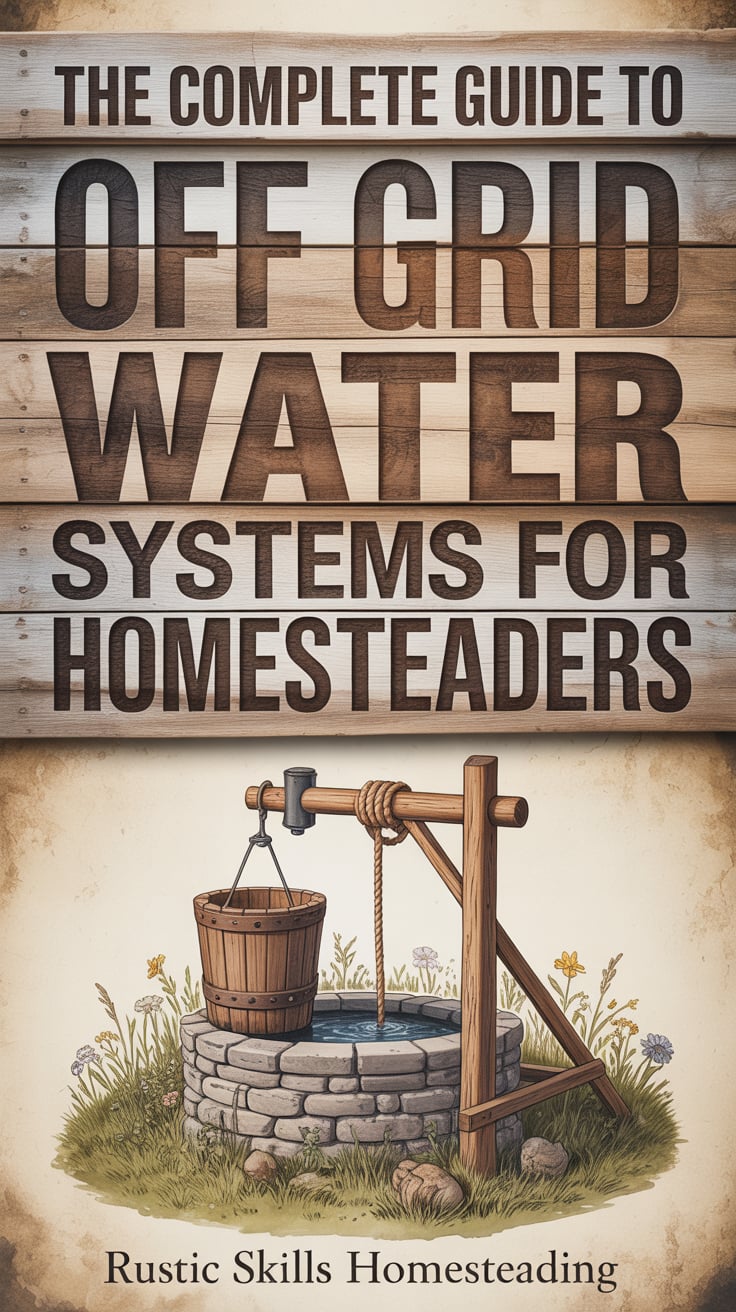
Building a reliable water setup is one of the most empowering milestones for any homestead. In this complete guide to off grid water systems for homesteaders, we’ll cover how to assess your site, harvest and store water, purify it for drinking, pressurize and distribute it in the home and garden, maintain it year-round, and build redundancy for droughts and emergencies—all with a practical, step-by-step mindset you can apply on day one.
If you want a ready-to-deploy backup kit to stabilize your water plan while you build the long-term system, consider the compact, modular SmartWaterBox. It’s a simple starting point you can expand as your homestead grows.
Table of Contents
How to size and plan an off grid water system
Before you buy tanks or drill a well, quantify your needs and constraints. Getting the math right up front saves you money, time, and rework later.
Calculate daily demand
- Drinking and cooking: 1–2 gallons per adult per day.
- Hygiene and laundry: 10–20 gallons per person per day (varies by habits).
- Livestock: chickens 0.1–0.2 gal/day, goats/sheep 1–3, pigs 2–5, cattle 10–20 (weather and feed change this).
- Garden and orchard: 0.5–1.5 inches per week in the growing season. Convert to gallons using 0.62 gallons per square foot per inch of water.
- Tools and cleaning: add a buffer of 5–10 gallons per day.
Peak vs. average flow
- Most homesteads need enough pressure and flow for a shower, sink, and possibly a washing machine simultaneously. A practical target is 3–6 GPM at 30–50 PSI.
Storage targets
- For resilience, store at least 2 weeks of water for people and critical animals. For household-only usage, 500–1,500 gallons is common; with garden irrigation and livestock, 2,500–10,000+ gallons is typical.
Site and source inventory
- Roof area for rain capture: square footage × 0.623 = gallons per inch of rain.
- Well depth/quality or presence of springs/creeks.
- Elevation changes for gravity feed.
- Soil type and frost line for trenching and freeze protection.
- Local codes and water rights.
Quality goals
- Potable water for drinking and cooking.
- Utility water for washing and irrigation.
- Keep the streams separate but allow for treatment upgrades if sources change.
Once you have numbers, you can mix and match sources—rainwater, wells, springs, and surface water—then layer in treatment, pumping, and storage so the system is simple, robust, and easy to maintain.
Rainwater collection for off grid water systems
Rainwater is one of the easiest, cleanest sources to capture, especially if your well is marginal or you don’t want to overdraw an aquifer. A good rainwater system is modular: you can start with a few barrels and scale up to multi-thousand-gallon cisterns.
Catchment surfaces
- Metal roofing is best: smooth, inert, and easy to keep clean.
- Asphalt shingles work but may add grit; plan for extra pre-filtration.
- Keep roofs free of moss and debris.
Gutters and conveyance
- Use gutter guards or screens to keep out leaves.
- Slope gutters 1/16–1/8 inch per foot toward downspouts.
- Oversize downspouts to handle heavy storms and minimize overflow.
First-flush diverter
- The first few gallons of a storm wash dust, pollen, and bird droppings off the roof. A first-flush diverter sends that “dirty first water” to waste, improving tank water quality.
Storage
- Start small with food-grade barrels or IBC totes.
- Scale to polyethylene tanks or buried cisterns for thermal stability and freeze protection.
- Opaque tanks reduce algae growth. Keep all caps tight and screened against mosquitoes and rodents.
Pre-filtration and treatment
- Install a leaf screen at the downspout and a sediment filter ahead of the tank or at the tank outlet.
- For potable use, add a final treatment train: sediment → carbon → micro/ceramic or membrane filter → optional UV or chemical disinfection.
Freeze protection
- In cold climates, bury lines below frost depth, insulate exposed pipes, and use freeze-proof tank fittings. Consider a dark-colored tank or a tank shelter.
Overflow and erosion control
- Route tank overflow to swales or berms to prevent erosion and recharge your groundwater.
If you prefer a modular approach to scale rain capture and filtration, a purpose-built vertical system like the Water Freedom System can help you integrate collection, storage, and treatment without overbuilding on day one.
Quick capacity check
- Gallons captured per inch of rain = roof area (sq ft) × 0.623 × collection efficiency (typically 0.75–0.9).
- Annual yield = that number × average annual inches of rain.
Design for the heaviest typical storm so your gutters, downspouts, and first flush can keep up.
Wells, springs, and groundwater on the homestead
Where available, groundwater offers year-round supply. The tradeoffs are drilling cost, energy for pumping, and water quality variability.
Types of wells
- Dug wells: shallow, hand-dug or machine-dug; easier to install but vulnerable to surface contamination.
- Driven point wells: shallow sand-point wells in suitable sandy soils.
- Drilled wells: deeper, cased wells into aquifers; more reliable but costlier.
Yield and recovery
- Gallons per minute (GPM) is key. A 5–10 GPM well suits many homesteads, but even 1–2 GPM can work with adequate storage.
- Recovery rate matters: a low-yield well can be managed with a large cistern and slow, continuous pumping.
Pumps and power
- Submersible pumps for deep wells; jet pumps for shallow wells.
- Off-grid options include solar-powered pumps, wind-driven mechanisms, or hand pumps for redundancy.
- Protect pumps with intake screens and foot/check valves to maintain prime.
Water quality
- Common issues: iron, manganese, hardness, hydrogen sulfide, and microbial contamination. Test annually and any time taste or clarity changes.
- Treatment strategies: sediment filtration, carbon for taste/odor, softening for hardness, and disinfection if microbes are present.
Springs and seeps
- Develop with spring boxes and screened intakes.
- Protect the recharge area from livestock and runoff.
Even if you have a powered deep-well pump, consider adding a manual backup. A simple hand-pump solution like Survival Water Box can provide emergency draw capability without electricity and peace of mind during outages.
Siting and sanitary protection
- Maintain setback distances from septic systems, barns, and fuel storage.
- Ensure proper wellhead grading and sanitary seals.
- Keep a dedicated well log, including depth, static level, pump model, service dates, and test results.
Treatment and purification for reliable potable water
Water treatment should be right-sized to your sources and goals. Many homesteads treat drinking/cooking water to a higher standard while using untreated or lightly filtered water for washing, livestock, and irrigation.
Sediment control
- Pre-filters (30–50 micron) protect downstream filters and pumps.
- Step-down filtration (e.g., 20 → 5 micron) balances flow with clarity.
Activated carbon
- Improves taste and odor; reduces chlorine and some organics.
- Place after sediment filters to extend carbon life.
Micro/ceramic filtration
- Captures fine particulates and many microbes. Flow rates are slower; often used at point-of-use (kitchen sink) for drinking water.
UV purification
- Inactivates bacteria, viruses, and protozoa without chemicals. Requires clear water (low turbidity) and electricity; pair with solar power or battery backup if off grid.
Chemical disinfection
- Chlorination (shock or maintenance) addresses microbial contamination. Carefully follow dosage, contact time, and neutralization steps for drinking water.
Reverse osmosis
- Useful for high TDS or specific contaminants but wastes some water and requires pressure/energy. Often a point-of-use solution.
Thermal methods
- Boiling is reliable for small volumes during emergencies.
Redundancy
- Use layered defenses. For example: rainwater → leaf screen → first flush → tank → 20 micron → 5 micron → carbon → UV at the point of entry, plus a ceramic countertop or under-sink filter as a final barrier.
Document your system so anyone on the homestead can maintain it: filter sizes, change intervals, UV bulb model and replacement schedule, and sanitary procedures. A small, modular kit like the SmartWaterBox can also serve as a portable purification backup during maintenance or outages.
Pumping, pressure, and gravity-fed distribution
An off grid water system needs dependable pressure for everyday living. The simpler your pressure plan, the more reliable it will be in real life.
Gravity first
- Elevate storage tanks to create static pressure (PSI ≈ elevation in feet × 0.433). A tank 50 feet uphill yields ~22 PSI—enough for sinks, not ideal for showers. Combine gravity with booster pumps for comfort.
- Gravity remains invaluable during power failures.
Pressure with pumps
- Use a pressure tank and switch to maintain 30–50 PSI (or 40–60 PSI). A larger pressure tank reduces pump cycling and extends pump life.
- For off grid power, size pumps to your solar array and battery capacity. Convert high head/low-flow wells into steady supply by pumping to a cistern during daylight, then boosting from the cistern on demand.
Protecting pumps
- Install low-water cutoffs to prevent dry running.
- Use foot valves in wells and check valves near pumps to maintain prime and prevent backflow.
- Add sediment filtration before pumps to limit wear.
Freeze-proofing and layout
- Bury supply lines below frost depth.
- Use PEX for flexibility and freeze tolerance.
- Heat tape or drain-back designs for exposed sections and seasonal cabins.
Garden and livestock lines
- Run separate lines with lower-pressure needs for irrigation and troughs.
- Add hose bibs and hydrants strategically; install shutoffs and unions for easy maintenance.
Hot water off grid
- Options include propane on-demand heaters, wood-fired water heaters, and solar thermal collectors with tempering valves.
Aim to keep critical functions working manually: gravity feed for drinking, manual shutoffs everywhere, and at least one unpressurized tap at the tank or spring box so you can draw water even if a pump fails.
Storage, tanks, and cistern strategies for resilience
Storage is the heart of an off grid water system. It bridges dry spells, smooths low-yield wells, and buys you time during repairs or disasters.
Choosing tanks
- Above-ground poly tanks are affordable and easy to install.
- Buried concrete or poly cisterns offer freeze protection and temperature stability.
- Use NSF/food-grade materials for potable water. Keep tanks opaque and sealed to limit algae and insects.
Sizing for seasons
- Match tank capacity to your longest expected dry period and your source yield. In arid climates, oversized storage is the cheapest insurance you’ll ever buy.
Multiple tanks vs. one large tank
- Multiple smaller tanks allow isolation for cleaning/repairs and add redundancy.
- One large tank is often cheaper per gallon and reduces fittings.
Plumbing for flexibility
- Install three-way valves and unions to reroute flow, isolate leaks, or swap tanks without cutting pipe.
- Place sample taps before and after treatment components for easy testing.
Fire and emergency reserves
- In wildfire-prone areas, keep a dedicated reserve with a clearly marked fire outlet.
- Maintain non-potable reserves for cleaning and dust control even when potable reserves are low.
Maintenance access
- Choose tanks with access ports large enough for cleaning.
- Keep a simple maintenance kit: tank brush, non-scented bleach for sanitizing, spare gaskets, and screened vents.
Safety and sanitation
- Never connect non-potable lines to potable lines without approved backflow prevention.
- Label all tanks and valves clearly.
If you’re starting from scratch or need to add a portable backup reserve for a cabin or bug-out shelter, a compact, modular system like the Water Freedom System can help you establish storage and basic treatment that scales up over time.
Water for the garden, orchard, and livestock
Not all water needs to be drinking-quality. Designing separate pathways for irrigation and animals saves filter life and energy.
Irrigation efficiency
- Drip and micro-sprinklers minimize evaporation.
- Mulch deep to reduce watering needs and keep soil biology healthy.
- Water early morning or late evening to cut losses.
Harvest and store for plants
- Use dedicated rain tanks and swales to slow, spread, and sink water into the landscape.
- Greywater from laundry and showers (with appropriate soaps) can be routed to trees and ornamentals in many jurisdictions—check local codes.
Livestock systems
- Insulated automatic waterers reduce waste and freeze-ups.
- Gravity-fed troughs are reliable backups; place upstream float valves to prevent overflows.
- Keep animals away from natural water sources to prevent bank erosion and contamination; pump to a trough instead.
Nutrient management
- Avoid irrigating vegetable beds with raw surface water; if you must, use subsurface drip and a fallow period before harvest.
- Compost teas and fertigation need filters to keep emitters clear; flush lines regularly.
Drought playbook
- Prioritize perennials and high-value crops.
- Rotate and rest annual beds; use shade cloth and windbreaks.
- Cull or sell animals early if water becomes critically short.
Separating potable, utility, and irrigation lines and storages keeps your whole system simpler and safer. It also makes maintenance easier—when the garden filter clogs with fine silt, your kitchen sink won’t notice.
Operations, testing, and long-term maintenance
A water system is only as reliable as its maintenance routine. Simple checklists, labeled valves, and spare parts will keep you online.
Testing cadence
- Annually test for bacteria (total coliform and E. coli) and nitrates; more often after floods or if taste/odor changes.
- For wells, periodically test for iron, manganese, hardness, and pH; adjust treatment as needed.
Filter and UV routine
- Change sediment filters when pressure drop increases or on a schedule (e.g., 3–6 months).
- Replace carbon cartridges per manufacturer guidance or when taste returns.
- Replace UV bulbs annually; clean quartz sleeves as needed.
Seasonal tasks
- Pre-winter: insulate exposed lines, drain nonessential runs, verify heat tape, and service pressure tanks.
- Pre-summer: clean gutters, test first-flush, inspect tank screens and vents, and ensure overflow routing is clear.
Record-keeping
- Maintain a binder (or digital log) with a schematic, valve map, component specs, and service history.
- Keep spares: filter cartridges, UV bulbs, pump switches, gaskets, hose washers, pipe tape, and unions.
Emergency drills
- Practice shutting off and isolating tanks.
- Verify you can switch to gravity feed or manual draw.
- Keep a portable treatment option on hand for rapid deployment.
For medical and sanitation resilience during outages, having practical guidance at home helps. A resource like Home Doctor can complement your water preparedness with at-home care strategies when professional help is delayed.
Tools and resources to build your water resilience
Wherever you are on your homesteading journey, the right tools and references can accelerate your build and add redundancy.
Portable backup and modular storage
- SmartWaterBox: A compact, modular water solution you can deploy quickly as a backup or foundational system while you build out your full setup.
Rain capture and scalable treatment
- Water Freedom System: A vertical, modular approach to rainwater collection and filtration that can expand with your needs.
Manual draw and power-free redundancy
- Survival Water Box: A straightforward, manual option to access well water without electricity for true off-grid resilience.
These resources fit naturally into a layered water plan: start with a simple, portable kit; add rain capture and treatment; then integrate a manual backup for power-free operation.
Build your resilient water plan
Off grid water systems don’t have to be complex or expensive from day one. Start with a simple map of your sources and needs, capture the easy water (rain and springs), store enough to bridge your longest dry spells, and treat only to the level needed for each end use. Add pressure with gravity and small pumps, keep your filters clean, and practice switching to backups.
As you build, consider adding a quick-deploy backup like the SmartWaterBox so everyday life stays comfortable while you refine the long-term system. For broader household preparedness—especially in remote areas—practical guides such as Home Doctor round out your readiness.
Conclusion
The complete guide to off grid water systems for homesteaders boils down to five pillars: assess needs honestly, harvest from multiple sources, treat appropriately, store generously, and maintain with simple routines. When you layer these pillars with gravity-fed backups and manual draw options, your water plan becomes resilient against drought, power outages, and equipment failures. Start small, iterate with the seasons, and document as you go. Your homestead’s most vital resource will quickly become the most reliable part of your daily life.
FAQ
u003cpu003eWhat size tank do I need for an off grid homestead?u003c/pu003e
Size storage for your longest dry period and daily demand. A household without irrigation often uses 500–1,500 gallons; with garden and livestock, 2,500–10,000+ gallons is common. If your source is low-yield (e.g., 1–2 GPM well), oversize storage to capture slow, steady pumping.
u003cpu003eIs rainwater safe to drink on a homestead?u003c/pu003e
Yes—if properly collected and treated. Use clean roofing, leaf screens, and a first-flush diverter, then filter (sediment and carbon) and disinfect (UV or appropriate chemical treatment) before drinking. Keep tanks opaque and sealed to reduce algae and pests, and test periodically.
u003cpu003eHow can I get water pressure off grid without grid power?u003c/pu003e
Elevate a storage tank for gravity pressure (PSI ≈ feet of head × 0.433) and supplement with a small, efficient booster pump powered by solar and a battery. A pressure tank and switch smooth demand. Keep one gravity-fed or manual draw option as a failsafe.
u003cpu003eWhat’s the best off grid water system for homesteaders on a budget?u003c/pu003e
Start with rainwater: gutters, first-flush, and a couple of food-grade tanks. Add basic sediment and carbon filtration for utility water, and a point-of-use filter for drinking. As funds allow, expand storage, add UV, and consider a low-yield well with a cistern and solar pump.
u003cpu003eHow often should I test and maintain my system?u003c/pu003e
Test annually for microbes and nitrates or after flooding or water-quality changes. Replace sediment filters every 3–6 months (or by pressure drop), carbon per taste/odor, and UV bulbs annually. Clean gutters and first-flush devices seasonally, and document everything in a maintenance log.