
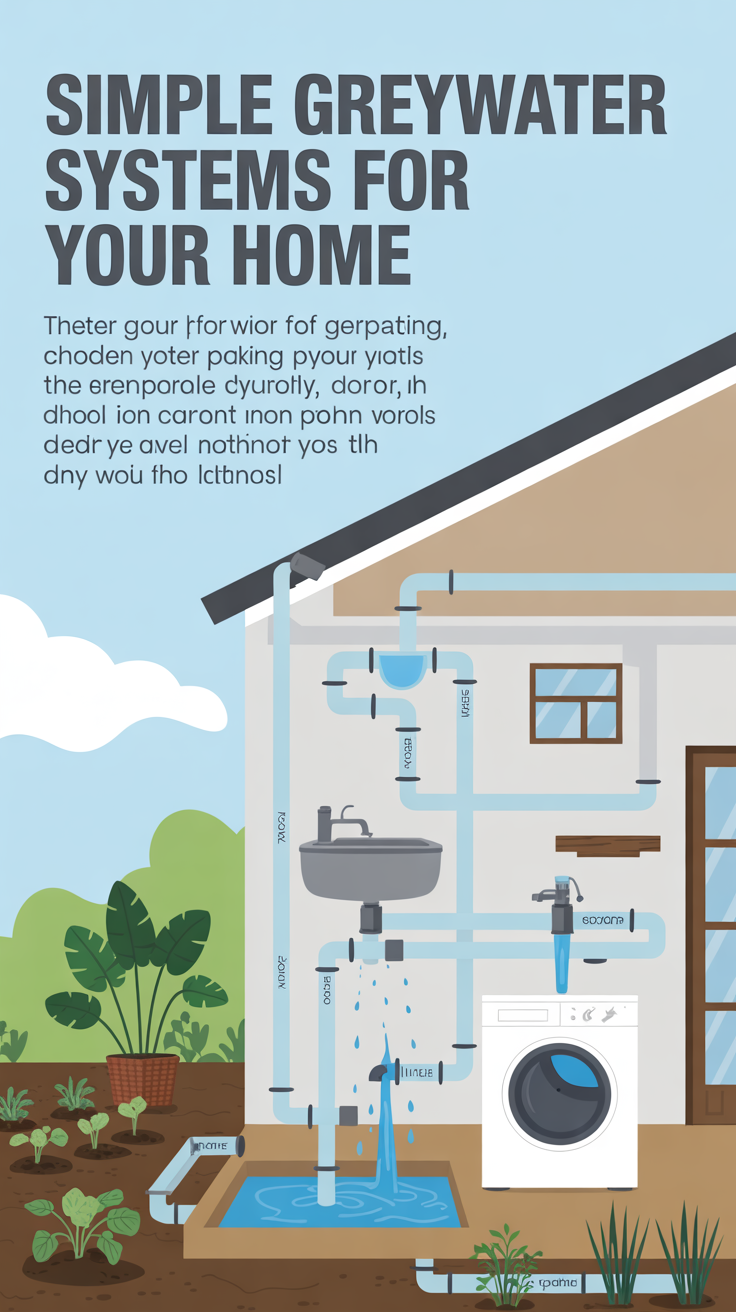
Water bills and drought cycles keep pushing homeowners to look for smarter ways to use every drop. Simple greywater systems for your home let you safely redirect lightly used water from sinks, showers, and laundry to nourish your landscape instead of sending it down the drain. With a little planning, a few valves, and gravity on your side, you can build a reliable system that’s low-maintenance, code-aware, and surprisingly affordable.
Greywater is best seen as one pillar of a broader water-resilience plan. While you reuse water for gardens, you can also improve storage and access for dry spells or emergencies. If you’re building that “stack,” solutions like the SmartWaterBox can help you organize and store water in a complementary way to your greywater setup. Explore SmartWaterBox here: SmartWaterBox.
Table of Contents
What Greywater Is and Why It’s Worth Using
Greywater is the gently used water from showers, baths, bathroom sinks, and laundry—distinct from blackwater, which comes from toilets and kitchen waste lines. In many regions, code treats kitchen sink and dishwasher water as blackwater because of food scraps, grease, and higher bacterial loads. A simple rule: use greywater from bathing, handwashing, and laundry; avoid toilet discharge and kitchen waste streams.
The case for greywater is strong:
- Landscape hydration: Subsurface irrigation with greywater keeps root zones moist, particularly during hot seasons, without tapping municipal supplies as heavily.
- Soil health: When routed through mulch basins, greywater helps maintain soil moisture, supporting microbial life and improving texture over time.
- Cost control: Every gallon reused reduces consumption from the meter, which can lower bills and buffer you during watering restrictions.
- Resilience: Greywater is on-demand; you produce it whenever you shower or wash clothes. That predictability pairs well with a drought-tolerant landscape and supplemental rainwater capture.
In practice, the safest and easiest greywater systems are gravity-fed. They avoid electrical components and pumps, rely on a diverter valve that allows you to send water to the sewer or the garden, and discharge below the surface in mulch basins. Gravity keeps maintenance low, and subsurface dispersal reduces human contact and avoids aerosolizing water.
Before you begin, check your local codes and guidelines. Many jurisdictions have simple permits or exemptions for “laundry-to-landscape” systems and outline straightforward requirements like a 3-way diverter valve, backflow prevention, and subsurface discharge distances from structures or property lines. The goal is a system that’s not just effective, but also compliant and safe.
Safety Principles That Keep Greywater Low-Risk
Greywater reuse is safe when you respect a few key principles that minimize contact, avoid odors, and protect plants and soils.
- Keep it subsurface: Always discharge below mulch or soil. Avoid sprinklers or sprayers that aerosolize water. Subsurface discharge reduces exposure and keeps odors down.
- Use it quickly: Do not store greywater. If held stagnant, it can go anaerobic and smell. Systems should distribute within 24 hours, typically immediately after production.
- Go easy on soaps: Choose biodegradable, low- or no-boron detergents and soaps. Boron harms plants; chlorine bleach can also damage soil life. Many “plant-friendly” or greywater-safe products exist—opt for those explicitly labeled as such, especially for laundry.
- Respect setbacks: Keep discharge away from foundations, basements, wells, waterways, and neighbor property lines as specified by local code. Maintain clearances from edible crops, especially root vegetables.
- Separate kitchen flow: Kitchen sinks and dishwashers usually belong in blackwater by code. Grease and food solids cause clogs, odors, and health risks—don’t route them into your greywater line.
- Include a sewer bypass: A diverter (3-way) valve lets you route flow to the sewer/septic when needed—for instance, during heavy laundry soap use, illness in the household, or winter conditions.
- Prevent backflow: Anti-siphon or vacuum breaker components help protect household plumbing and keep contaminants out of potable lines.
Soaps and detergents to use or avoid
- Use: Mild, biodegradable soaps and detergents advertised as plant-safe or greywater-friendly. Powdered detergents can contain more salts; many liquid options are gentler.
- Avoid: Products containing boron/borax, chlorine bleach, heavy duty degreasers, or antibacterial agents. These can harm plants and disrupt soil biota over time.
What not to irrigate and where to discharge
- Don’t irrigate edible leaves or root vegetables you plan to eat raw. Aim for ornamental beds, fruit trees, vines, shrubs, and lawn subsurface zones.
- Discharge in mulch basins—shallow basins filled with wood chips—around perennials. The mulch filters lint and spreads flow, while soil organisms do the rest.
- Keep all outlets below the surface and covered with mulch to reduce mosquito risk and smell.
Planning Your First Simple Greywater System
A little preparation saves a lot of rework. Here’s how to frame your greywater plan.
Local codes, permits, and basic compliance
- Check your city or county’s residential greywater rules. Many places offer a streamlined path for laundry-only systems and require minor permitting or a simple notification.
- Expect rules like a required diverter valve, backflow prevention, and subsurface discharge. Some regions limit pipe size or require access points for inspection.
- Know your distances: Common setbacks include space from property lines, structures, wells, and storm drains. Follow minimum separations to protect foundations and waterways.
- Septic systems: If you’re on septic, confirm any additional requirements. Greywater can be helpful by reducing septic load, but routing and distances still matter.
Site assessment, soil, and plant selection
- Map your sources: Laundry, shower, bath, and bathroom sink are the usual candidates. The closer the source is to your target plants—and the more slope you have to work with—the easier the install.
- Soil infiltration: Very clay-heavy soils accept water slowly; sandy soils drain quickly. A simple infiltration test (small test hole filled with water to see how fast it drops) helps size mulch basins and outlet numbers.
- Choose the right plants: Fruit trees, vines, hedges, shrubs, and perennial beds are top candidates. Group plants by water needs: higher-use plants near outlets, lower-use farther away.
- Plan for expansion: Start with one source (like laundry). Include unions and cleanouts so you can extend branches later to additional basins or zones.
Easiest No-Permit Ideas You Can Start Today
Not every solution needs a plumbing overhaul. These starter methods help you learn the basics and see results fast.
Carry-and-pour “bucket method” done right
- Start simply: Place a bucket in the shower while water warms up; use the captured water for trees or shrubs. If code allows, you can also scoop from a tub after bathing.
- Discharge correctly: Pour into mulch basins, not directly at the trunk or onto exposed soil. Keep the basin 6–12 inches from trunks to avoid rot and encourage outward roots.
- Soap awareness: Even with buckets, stay plant-safe. If you used heavy cleaners or bleach, skip greywater reuse that day and pour down the drain.
Tub and shower capture with gravity assist
- Temporary drain hose: In some layouts, you can place a shallow pan or temporary funnel in a tub or shower and run a hose outside to a mulch basin. Ensure the hose outlets below the soil surface under mulch, and keep everything watertight and secure to prevent spills.
- Air gap and safety: Never create cross-connections to potable lines. Maintain an air gap where appropriate; keep any funnels or pans solely for non-potable discharge.
- Seasonal sense: Use this during warm months when plants are actively growing. In cold seasons or wet spells, route back to the drain to avoid waterlogging.
These low-tech methods introduce flow patterns, mulch basin behavior, and the rhythm of using water quickly and safely. They also show you where to best place permanent outlets before you commit to cutting pipes or burying lines.
A Step-by-Step Laundry-to-Landscape System
Laundry-to-landscape is widely recommended because it is simple, gravity-friendly, and often allowed by streamlined guidelines. It uses a 3-way diverter valve on the washing machine drain line so you can send water either to the sewer or to the garden.
Core components and safe routing
- Diverter valve: A 3-way valve installed so you can toggle between sewer and landscape at any time.
- Vacuum breaker / anti-siphon: Helps prevent siphoning and protects the appliance and household plumbing.
- Discharge line: Typically flexible or rigid piping rated for drain use. Keep it downhill with gentle slopes to encourage gravity flow.
- Outlets: Multiple small outlets into separate mulch basins distribute flow, reduce pooling, and protect soil structure. Include simple filters or lint socks as needed.
- Cleanouts and unions: Strategically placed so you can clear lint, adjust routing, and expand the system without major work.
Installation walkthrough and testing
- Map the route: From washer to first branch to basins. Stay as straight and downhill as possible, avoiding sharp bends. Aim for 2% slope where feasible.
- Place basins: For each chosen plant, dig a shallow basin and fill with coarse wood chips. Keep basins a safe distance from structures and ensure they’re below grade.
- Assemble above-ground first: Dry-fit components from the diverter valve to the first branch, confirming lengths and slopes. Add unions for future access.
- Add the vacuum breaker: Follow orientation guidelines and keep it above the highest water level in your system to break siphon reliably.
- Test in sewer mode: Run a full cycle to ensure no leaks at the valve or connections. Then switch to landscape mode and observe flows at outlets. Adjust branches to balance distribution.
- Maintain: Clean lint filters, refresh mulch annually, and exercise the diverter valve regularly so it doesn’t seize.
A quick note on discharge limits: Laundry pumps have modest pressure. Keep runs short and slopes gentle so the machine isn’t overworked. If you encounter backpressure or slow drainage, reduce outlet count, shorten runs, or split zones.
Branched Drain and Mulch Basins for Garden Beds
If you want to route bath or shower water outside, a branched drain system can split flow evenly without pumps. The principle is simple: gentle slopes and symmetrical “double ells” or wyes that halve the flow repeatedly until it reaches multiple basins. It’s elegant, passive, and durable.
Distributing flows without pumps
- Start with a diverter valve: As with laundry, install a 3-way valve near the source to keep a sewer bypass available at all times.
- Plan the tree: The main line runs downhill from the valve to the first split. Each branch splits again, forming a tree with 4–8 outlets (or more if your slopes and soil allow).
- Keep branches symmetrical: Equal lengths and slopes help balance distribution. Where perfect symmetry isn’t possible, use flow restrictors or slightly smaller outlets on the “fast” branches.
- End in mulch basins: Each outlet terminates below mulch. Consider small splash zones of gravel beneath outlets to spread flow and reduce erosion.
Sizing and seasonal adjustments
- Sizing basins: In higher clay content, enlarge basins and use deeper wood chips to allow infiltration. In sandy soils, you can use smaller basins but watch for over-drying between events.
- Seasonal use: Plants drink more in warm months. In wet seasons or dormancy, divert to sewer to avoid waterlogging. Fruit trees appreciate frequent summer greywater; reduce or pause in winter.
- Maintenance: Sediment and soap scum are controlled by mulch. Top up wood chips annually. Clear cleanouts, and flush branches periodically by temporarily routing a bit of fresh water if permitted.
Code reminders: Keep outlets a safe distance from property lines, foundations, and edible garden beds. Subsurface discharge and a reliable bypass are non-negotiable safety features that also make your system easy to live with.
Maintenance, Troubleshooting, and Upgrades
Long-term success with greywater is about simple routines and occasional tune-ups.
Filters, cleanouts, and winterizing
- Lint management: Use a washable lint sock or in-line filter at the laundry drain if lint is overwhelming. Clean frequently—clog prevention is easier than line clearing.
- Cleanouts: Add capped tees at key points. If a branch slows, open the cap and flush with a small volume of water to restore flow.
- Mulch refresh: Wood chips gradually break down, which is part of the filtration. Replenish annually so outlets remain covered and infiltration stays strong.
- Cold-weather strategy: In freezing climates, use the diverter to route to sewer in deep winter. Bury lines below frost depth where possible and keep outlets insulated by mulch.
- Soap discipline: If you need to use bleach once in a while, switch the diverter to sewer mode for that load.
Common issues and how to fix them
- Odors near outlets: Usually caused by stagnation. Improve slopes, reduce outlet count per branch, and ensure flows are immediate after production. Refresh mulch.
- Puddling: Basins too small or soil infiltration too slow. Enlarge basins, add more outlets, or use more coarse mulch to spread flow.
- Slow laundry drainage: Excessive backpressure or long runs. Shorten runs, reduce elbows, or split into multiple shorter branches.
Complementary water-resilience tools
Greywater shines when paired with other strategies: drought-tolerant plantings, drip irrigation for potable top-ups, and rain capture. Midway through building your system, you might realize your landscape would benefit from a more comprehensive water plan. A modular solution like the Water Freedom System can complement greywater by helping with general water management and storage, especially for areas greywater can’t reach or during periods when you divert to sewer. Use such tools to create layered redundancy rather than relying on a single source.
Design Examples You Can Build This Weekend
To make the concepts tangible, here are three simple configurations you can adapt to your site and climate.
Shower-to-mulch basin gravity line
- Use a diverter under the bathroom sink or shower drain to send flow to either sewer or garden (as permitted).
- Run 1–1.5 inch drain-rated pipe through an exterior wall at a slight downward slope. Immediately outside, transition to a branched drain with two to four outlets.
- Terminate each outlet in a mulch basin at least several inches below the surface. Keep clear of edible beds and foundations.
- This setup is great for shrubs and fruit trees near the bathroom exterior wall, taking advantage of short runs and natural slope.
Laundry-to-landscape two-zone split
- Add a 3-way valve and vacuum breaker to the laundry standpipe area.
- Run a short main line to a wye splitter that feeds two zones: Zone A for near beds, Zone B for a row of trees.
- Each zone ends in two to three basins. Both zones include cleanouts near the split for quick maintenance.
- This design spreads water evenly, reduces backpressure, and gives you a valve-controlled way to rest one zone during rainy weeks by diverting more to the other.
Portable tub capture with hose outlets
- For renters or those not ready to cut plumbing, use a fitting that temporarily collects tub drain water into a hose during baths and directs it outside to a covered mulch basin.
- Keep the connection temporary and never hard-plumbed to potable lines. Always maintain an air gap and follow local rules for temporary setups.
- This approach teaches flow patterns and basin sizing without drilling or permanent modifications.
Planting Strategies That Maximize Greywater
The best greywater systems are matched to appropriate plantings and soil structures.
- Perennials over annuals: Focus on perennial shrubs, ornamental grasses, fruit trees, berries, and vines. Their established root systems appreciate regular subsurface moisture.
- Ring basins: For trees, a wide ring basin just outside the dripline encourages outward root growth. Place outlets so water spreads around the tree, not just in one spot.
- Group by thirst: Keep high-water-demand species clustered around the closest outlets; place low-demand species on the farthest outlets or on branches you can valvetighten seasonally.
- Mulch is mandatory: A thick mulch layer stabilizes moisture, filters lint, and moderates soil temperature. Freshen yearly.
- Blend with rain capture: Greywater runs when you use water indoors; rain capture runs when clouds cooperate. Both together let you irrigate more consistently with less potable top-up.
Materials and Tools Checklist
Gathering the right components ahead of time makes installation smooth. Always choose parts rated for drain use and compatible with your local plumbing code.
- 3-way diverter valve appropriate for drain lines
- Vacuum breaker or anti-siphon device
- Drain-rated piping (rigid or flexible) and compatible fittings
- Wye or double-ell fittings for balanced branching
- Unions and couplers for serviceability
- Cleanout tees with caps
- Pipe straps or hangers to maintain slope
- Coarse wood chips for mulch basins
- Gravel for splash pads beneath outlets (optional)
- Lint filter or sock for laundry line (as needed)
- Basic tools: pipe cutter or saw, deburring tool, drill/bit for exterior penetration, level for slope, shovel and rake for basins, safety gear
Build a Resilient Water Setup at Home
Greywater is the engine that runs whenever you bathe or wash clothes, but resilience also means having water available when supply is uncertain or irrigation demand spikes. Pair your simple greywater systems with practical storage and access tools so you can irrigate responsibly even during outages.
- For organized, modular storage and a cleaner water management workflow, consider SmartWaterBox.
- If you’re thinking about off-grid or supplemental water access, Survival Water Box can fit into a broader resilience plan for periods when municipal delivery is interrupted.
Use these as complementary layers—greywater for day-to-day reuse, plus additional storage or access solutions for dry spells and emergencies.
Recommended Products for a Balanced Water Plan
- SmartWaterBox: A modular approach to organizing and storing water that complements greywater irrigation when you need extra reserves.
- Water Freedom System: A general-purpose solution for improving on-site water management where greywater lines don’t reach.
- Survival Water Box: A resource for accessing water when grid-dependent supply is unreliable, rounding out your home’s water independence.
Keep these picks in perspective: your landscape benefits most from consistent subsurface irrigation, code-aware installations, and ongoing maintenance. Products like the above are there to enhance, not replace, a sound greywater foundation.
Conclusion
Simple greywater systems for your home can be built with accessible materials, a few key safety features, and careful attention to slopes and outlets. The payoff is a healthier landscape, better soil moisture, and lower dependence on municipal irrigation. Start with the easiest wins—the bucket method and a basic laundry-to-landscape—then expand to branched drains and multiple mulch basins as your confidence grows. Combine your greywater system with smart storage and access tools to build a complete water-resilience stack that serves you in every season.
FAQ
Is it legal to install simple greywater systems for your home?u003cbru003e
Legality varies by location. Many jurisdictions allow laundry-to-landscape systems under simplified rules, provided you include a diverter valve, subsurface discharge, and proper setbacks. Always check local codes or consult your building department before installing.
Can I store greywater in a tank for later use?u003cbru003e
Avoid storing greywater. It becomes anaerobic and odorous when held. Instead, distribute immediately into subsurface mulch basins. If you want storage, store rainwater or potable water separately and use greywater for on-demand irrigation.
Which plants are best to irrigate with greywater?u003cbru003e
Perennials like fruit trees, vines, shrubs, and ornamental grasses respond well. Avoid irrigating edible leaves or root vegetables you’ll eat raw. Group plants by water needs and keep discharges below mulch.
Do I need a filter for a laundry-to-landscape system?u003cbru003e
A simple lint filter or sock can reduce clogs, especially if you wash linens or fleece. More complex filtration is usually unnecessary if you maintain mulch basins, refresh wood chips annually, and include cleanouts.
Can I include my kitchen sink in a simple greywater system?u003cbru003e
In most places, kitchen sinks and dishwashers are considered blackwater due to grease and food solids. They’re typically excluded from residential greywater systems. Stick to showers, baths, bathroom sinks, and laundry for simple, code-friendly installs.