
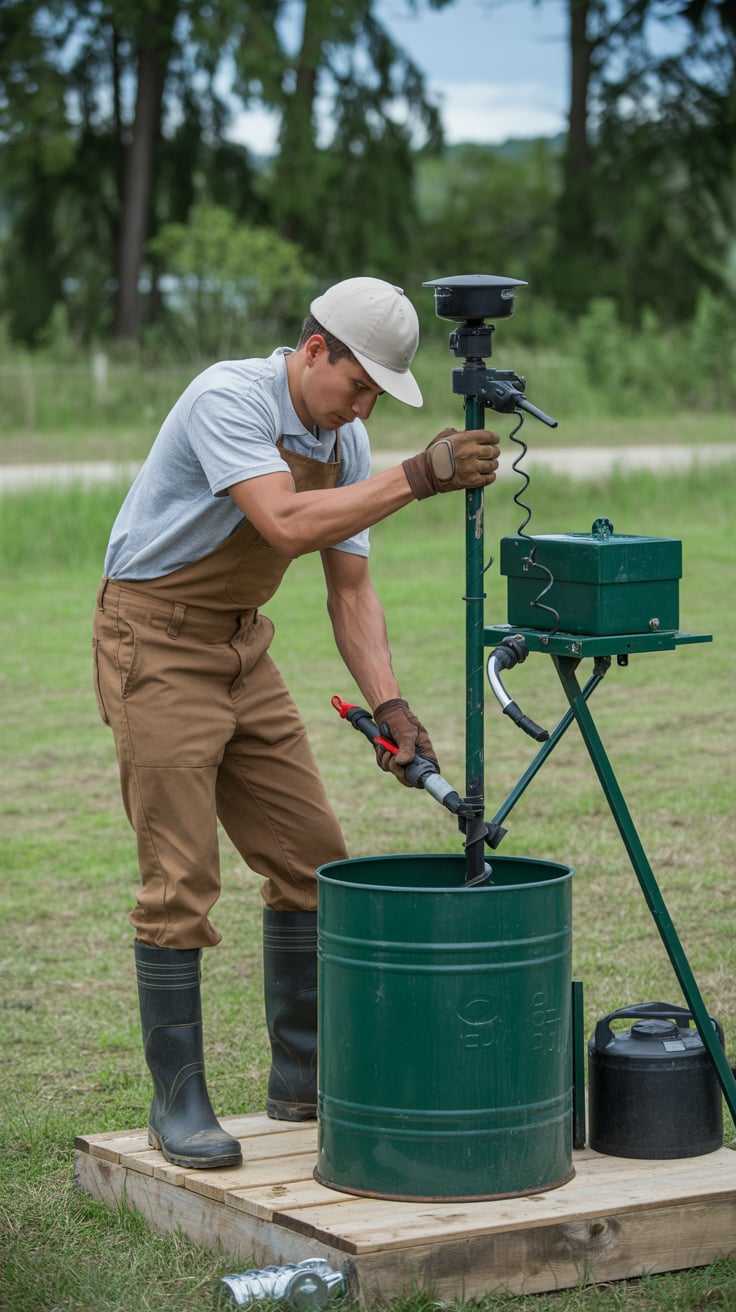
Resilient homesteads, cabins, and bug-out locations all depend on one thing first: water. This complete off-grid DIY guide explains how to drill a water well, from rules and safety to geology, tools, drilling methods, casing, sealing, pumps, water testing, and maintenance. If you take it step by step, you can plan, drill, and commission a clean, dependable water source that powers your independence. If you want a blueprint-style walk-through while you read, explore Survival Water Box for a structured approach to manual well projects and emergency water planning.
Your location’s geology and local laws determine what’s realistic for a DIY build versus when to hire a licensed driller. This guide helps you recognize those boundaries and shows you practical, low-tech paths to water security. Use it to plan, price, and execute a well that fits your land, skills, and timeline.
Table of Contents
Safety and permits for how to drill a water well off-grid
Before you bring out a shovel or auger, put safety and legality first. Groundwater is a shared resource; many regions regulate how you drill and complete a well to protect aquifers and public health.
- Permits and codes: Check your county or state water resources department, environmental health office, or building authority for permits. Some areas require a licensed driller for any well; others allow DIY shallow wells with size and depth limits. Ask about required setbacks, maximum depths, sealing standards, and documentation.
- Utility locates: Call 811 (or your local equivalent) before any digging to mark buried electric, gas, fiber, and pipelines. Even remote land can hide utilities.
- Setbacks: Typical minimum distances include 50–100 ft from septic systems and leach fields, 50–100 ft from animal pens and manure piles, and away from fuel storage, chemical sheds, or runoff ditches. Local rules prevail; exceed minimums if you can.
- Contamination pathways: Your construction choices can either protect or pollute your aquifer. The sanitary seal (annular grout between borehole and casing), the well cap, and surface grading all matter. Poor seals allow bacteria and surface water to short-circuit into your well.
- Stability and lifting: Drilling even a shallow well uses heavy, awkward gear. Wear PPE: toe-protected boots, gloves, eye protection, and hearing protection for powered rigs. Stabilize tripods, hoists, and ladders. Never stand under a suspended tool string.
- Drilling fluids and cuttings: Bentonite muds and drill cuttings must be managed on-site to avoid runoff into streams or neighbors’ land. Use sediment pits or tubs to settle solids.
- When to call a pro: Bedrock wells, deep sand formations, collapsing holes, artesian conditions, or the need for high-capacity supply often require rotary or cable-tool rigs operated by licensed drillers. DIY methods are best for shallow aquifers, typically under ~50–80 ft, depending on your geology and skills.
Document everything: site map with setbacks, drilling log (depth, formation changes, water strikes), casing and screen specs, grout details, water test results. Good records protect your property value and help with permits and maintenance later.
Groundwater, geology, and siting your well
Groundwater lives within the pores, fractures, and bedding of subsurface formations. Understanding your site’s hydrogeology is the difference between a productive well and a dry hole.
Aquifers and formations:
- Unconfined sand and gravel aquifers produce well with screened PVC casing; ideal for many DIY wells.
- Confined aquifers lie under low-permeability layers, can be pressurized, and may require deeper, professional drilling.
- Fractured bedrock (granite, basalt, limestone) can deliver excellent yields if you intercept fractures, but locating them and drilling straight is tougher for DIYers.
Reconnaissance:
- Study nearby wells. County records, neighbors, or well logs can reveal average depths to water, yield, and formations you’ll meet.
- Read topography. Low terraces near streams often overlie shallow alluvial aquifers, while hilltops are typically drier. Avoid floodplains where contamination risk rises.
- Look for vegetation clues. Lush, water-loving plants (willow, cattail) can hint at shallow groundwater; salt crusts or stunted growth can signal poor quality.
Siting principles:
- Choose high, well-drained ground upslope from contaminants. Grade the pad to shed rain away from the wellhead.
- Maximize setbacks. Even if code says 50 ft, going 100–150 ft from a septic field is prudent.
- Plan logistics. Allow space for tools, a tripod, sediment pit or tanks, and sealed storage for casing and screens to keep them clean.
Water table dynamics:
- Seasonal fluctuations can move the water table several feet. Aim to set the screen across the saturated zone in the driest season depth to ensure year-round supply.
- Perched water tables may appear at shallow depths above a clay layer—often unreliable. Know the difference between a perched lens and a regional aquifer by logging multiple wet intervals and cross-checking nearby well data.
Map your intended borehole with GPS coordinates, note bearing to setbacks, and mark a clean staging area. A thoughtful site plan reduces headaches, contamination risk, and drilling time.
Tools and materials you’ll need to drill a small-diameter well
DIY wells rely on lightweight, scalable methods and materials chosen for the local formation. Assemble and stage everything before you break ground.
Drilling methods:
- Hand auger: Best for cohesive soils like clays and some silts up to modest depths. You add extensions as you go; advance slowly and clean often.
- Drive-point (sand point): A screened point is driven into shallow, clean sand with a post driver or jack. Simple but limited to certain sediments and shallow depths.
- Sludging/percussion: A bailer or sludging tool surges cuttings out while water assists; often used with a tripod and rope. Effective in sands.
- Jetting: Pressurized water jets loosen sandy formations while you lower casing and a screen; you’ll need a pump and recirculation pits.
- Small mud rotary: A portable rig rotates a bit while circulating drilling mud to carry cuttings; faster in a range of formations but requires more setup.
Core tools:
- Tripod or A-frame and block-and-tackle for lifting tools and casing.
- Auger flights, bailers, or a sludging tool appropriate to your method.
- Drilling fluid supplies: clean water, bentonite powder or pre-mix for rotary/jetting.
- Temporary tanks or pits to settle and recirculate drilling fluids.
- Casing and screen: Commonly PVC (schedule appropriate for depth) or steel. Screens must match grain size; too coarse lets in sand, too fine restricts flow.
- Centralizers, tremie pipe (for placing grout), and gravel-pack material (washed silica sand graded to formation).
- Sanitary well cap, vented and screened; slab or pad for wellhead protection.
- Pump and system components: hand pump or solar submersible, drop pipe, safety rope, pitless adapter (where allowed), check valves, pressure tank (for pressurized systems), storage tanks.
Consumables and PPE:
- Thread tape, solvent cement (for PVC), disinfectant (for tools and final shock).
- Marking paint, survey flags, tarps, buckets, and scrub brushes to keep components sanitary.
- Gloves, safety glasses, ear protection, steel-toe boots, and dust mask/respirator for cement and bentonite powders.
Stage materials on clean tarps, cap pipe ends, and keep screens bagged until installation. Dirt that lands on your casing can later wash down into the gravel pack. Organization and cleanliness are as important to well performance as the drilling itself.
Step-by-step: how to drill a water well by hand or with light rigs
Below is a generalized sequence adaptable to hand auger, sludging, jetting, or small rotary methods. Adjust specifics to your method and geology.
Prepare the site:
- Mark the borehole center, clear vegetation, and level a 6–8 ft working pad. Set up erosion control and a small sump or settling pit if circulating fluids.
- Assemble your tripod or A-frame over the borehole and test-lift your heaviest component safely.
Start the pilot hole:
- With an auger or rotary bit, open the hole through the topsoil and any hardpan. Keep the hole vertical—use a level or plumb line often.
- If jetting, set up your pump, hoses, and return channels so you can recirculate water and minimize mess.
Advance through formations:
- Log each change in soil: clay, silt, fine sand, coarse sand, gravel. Note moisture and any water inflow.
- In sands, use water-assisted methods (sludging or jetting) to prevent collapse and carry cuttings up. In clays, advance slowly and clean the tool frequently.
Manage cuttings and fluids:
- Keep the borehole open by maintaining fluid level a few feet above groundwater level if using drilling muds. Don’t overthicken mud; heavy gels can plug the formation.
- Shovel solids from settling pits regularly. Keep runoff contained.
Identify the water-bearing zone:
- Pay attention to sustained inflow, not just wet cuttings. A sudden drop in fluid level or increased return flow suggests a permeable layer.
- Continue a few feet below the first major water strike to fully penetrate the aquifer. Plan to set your screen across the most productive interval.
Prepare for casing:
- Ream the borehole to the final diameter, 2–3 inches larger than your casing outside diameter, allowing room for gravel pack and grout.
- Pre-assemble casing and screen joints cleanly on tarps. Dry-fit centralizers.
Set the casing and screen:
- Lower the screen first, then casing, keeping joints clean and straight. Avoid pounding the screen through tight sections; you’ll distort slots and invite sand.
- For jetting methods, you may advance casing and screen while jetting—ensure the screen ends up across the target zone, not above it.
Temporarily stabilize:
- Hold the casing plumb. Keep fluid in the hole while you prepare to install gravel pack and seal. Check screen depth against your log.
Work patiently and avoid shortcuts. Most DIY well failures come from rushing the last 20% of the process—screen placement, gravel packing, and sanitary sealing.
Casing, screens, seals, and developing a productive well
A clean, productive well depends on correct screen sizing, proper gravel packing, and a tight sanitary seal.
Screen selection:
- Slot size should retain 40–70% of formation grains. Use a sieve or simple jar test to estimate grain size from your cuttings. Too-wide slots let sand invade; too-narrow slots reduce yield and plug quickly.
- Screen length should span the most permeable, saturated interval. It’s common to set 5–10 ft of screen in shallow sands; tailor to your log.
Gravel pack:
- Use clean, washed, rounded silica sand slightly coarser than the formation. This forms a graded filter around the screen, increasing effective porosity and keeping fines out.
- Place gravel via a tremie pipe from bottom up, filling the annulus around the screen to 2–3 ft above its top. Avoid dumping from the surface, which bridges and leaves voids.
Annular seal:
- Above the gravel pack, install a seal (often bentonite pellets or cement-bentonite grout) to block surface water and contaminants. Place it by tremie from the bottom of the seal zone up, in one continuous pour if possible.
- Continue grout to within a foot or two of the surface, per code, or as required for a pitless adapter zone. Let grout hydrate and set as specified by the material.
Wellhead protection:
- Cut casing to height, mount a sanitary well cap with screened vent, and pour a sloped concrete pad that sheds water away from the casing.
- Grade soil to prevent ponding. Protect the area from livestock and vehicles.
Well development:
- After construction, the screen and pack will contain fines that restrict flow. Develop the well by alternately surging and pumping to pull fines through the screen. Methods include hand surging with a plunger, air-lift surging, or a development pump.
- Continue until water runs clear and sand content drops to acceptable levels. Proper development often doubles or triples yield versus an undeveloped well.
Test pumping:
- Pump at a steady rate for several hours while monitoring water level drawdown and recovery. Choose a sustainable yield—often far less than the absolute maximum—to preserve long-term performance.
- Record data: rate, drawdown, time to stabilize. This guides pump selection and helps diagnose issues later.
Finally, disinfect the well (initial shock) before placing it into service. Clean construction and careful development drastically reduce future maintenance.
Pumps, power, and off-grid water systems
Your pump and system configuration should match well depth, yield, and your daily demand. For off-grid, reliability and energy efficiency beat sheer horsepower.
Pump options:
- Hand pumps: Simple lever-action or deep-well hand pumps deliver water without electricity—ideal for redundancy and shallow to moderate depths with static water within the pump’s range. Pair with a frost-proof head in cold climates.
- DC solar submersibles: Efficient brushless pumps powered by dedicated panels lift water to storage tanks. They shine when you can pump slowly into elevated or ground-level tanks, then rely on gravity or a small booster.
- Jet pumps: Surface-mounted pumps suitable for shallow wells (with a foot valve) or deep jets with ejectors; less efficient than submersibles and more prone to priming issues.
- AC submersible pumps: High-output workhorses powered by grid or generator. For off-grid, they require sizable battery/inverter systems.
Storage and pressure:
- Gravity systems: Pump to an elevated tank and use gravity for household flow. Combine with sediment and carbon filtration at the point of use.
- Pressure systems: Use a pressure tank and switch to maintain a pressurized line. Solar pumps can feed a storage tank, with a small booster pump pressurizing the home when needed.
Filtration and treatment:
- Always test before selecting treatment. Common needs include sediment filters, activated carbon, UV disinfection, or specialty media for iron, manganese, or hardness.
- Protect your pump with an intake screen and ensure the well cap vent is screened to keep insects out.
For compact, resilient off-grid setups, tools that integrate pumping, storage, and filtration can shorten your build time. A modular approach like SmartWaterBox can be useful when you want a ready-to-deploy filtration/transfer plan you can adapt to your well and rainwater backup. And if you’re building a gravity-fed system, designs like Water Freedom System can help you conceptualize elevated storage and passive pressure without increasing your electrical load.
Recommended off-grid water resources
- Survival Water Box: A step-by-step framework for manual wells and emergency water planning.
- Water Freedom System: Ideas for gravity storage and low-power delivery in resilient water systems.
- SmartWaterBox: Modular filtration/transfer strategies to pair with well or rain catchment.
Use these as planning aids; tailor every selection—pump, pipe, tank, and treatment—to your test results, yield, and climate.
Testing, disinfection, maintenance, and troubleshooting
A well isn’t “done” until it’s tested and proven safe. Keep it safe with a simple maintenance routine and an eye for early warning signs.
Initial and routine testing:
- At minimum, test for total coliform/E. coli bacteria, nitrate/nitrite, and basic chemistry (pH, hardness, iron, manganese). In agricultural or industrial regions, add VOCs, pesticides, and heavy metals as advised by your health department.
- Test after construction, after any repairs, and annually. More frequent tests if taste, odor, or color changes occur.
Shock chlorination:
- After development, disinfect the well, drop pipe, and distribution lines. Use a measured dose of unscented chlorine based on well volume, recirculate until you smell chlorine at taps, let stand, then flush until the odor dissipates. Follow local health department guidance for concentrations and contact time.
- Retest for bacteria after disinfection to confirm success.
Routine maintenance:
- Inspect the well cap, vent screen, and electrical/pitless connections annually. Keep the wellhead area clean and graded.
- Exercise the pump periodically if it’s a backup unit. Check pressure tank pre-charge, pressure switch contacts, and any sediment filter pressure drops.
- In freezing climates, insulate exposed lines and use frost-proof hydrants.
Troubleshooting:
- Sand in water: Could indicate an undersized screen slot, inadequate gravel pack, or screen damage. Reduce pumping rate, redevelop the well, or consult a pro for a pack/screen retrofit.
- Low yield or sputtering: Check static and pumping water levels. Lower the pump if the water level dropped seasonally, reduce flow rate, or consider a storage-first strategy with slower pumping.
- Iron/manganese staining or sulfur odor: Treatment options include oxidation/filtration systems, aeration, or media filters selected after testing.
- Air or gas: A leaky suction line (for surface pumps) or natural gas presence in some formations. Vent properly and consult your health department if gas is detected.
- Bacterial slime: A sign of iron bacteria or biofilm. Shock chlorination and, if recurring, targeted treatment may be needed.
Keep logs of tests, maintenance, and pump performance. A simple notebook can save hours when diagnosing changes years later.
Off-grid budgeting, timelines, and realistic expectations
Planning the budget and schedule for a DIY well ensures you finish strong. Costs vary widely with geology and the method you choose, but you can model ranges and plan contingencies.
Budget factors:
- Method choice: Hand auger or drive-point setups are inexpensive but limited in depth and formations. Jetting or small rotary requires pumps, hoses, bentonite, and more hardware.
- Materials: Casing, screens, gravel pack, grout, cap, and wellhead slab add up. Buy quality screens; they’re the heart of your well.
- Pumps and power: A durable hand pump plus a modest solar submersible and storage tank can be more cost-effective off-grid than one high-demand AC pump and large inverter.
- Testing and treatment: Budget for lab tests and any needed filtration or disinfection systems.
Time estimates:
- Reconnaissance and permitting: 1–4 weeks depending on your jurisdiction.
- Drilling and construction: A few days to two weeks for shallow wells, more if you hit collapsible sands or need to change methods midstream.
- Development and testing: 2–4 days including shock chlorination and lab result turnaround.
Risk management:
- Expect at least one “plan B.” If an auger stalls in wet sand, switch to sludging/jetting. Keep adapters and fittings to mix and match.
- Stage a backup water source—totes or rain catchment—during construction so you’re not rushed.
- Respect your limits. If the borehole collapses repeatedly, your rig can’t keep a hole open, or you encounter artesian pressure, stop and call a licensed driller.
Long-term value:
- A reliable, clean well plus a gravity storage system gives your homestead resilience against power outages and supply chain shocks.
- Documented construction, test results, and maintenance improve property value and simplify future upgrades.
A realistic plan pairs conservative assumptions, a modest daily demand (e.g., 30–50 gallons per person), and storage-first thinking. That keeps pumps small, energy needs low, and the system robust.
Conclusion: your path to water independence
Learning how to drill a water well is as much about planning and protection as it is about digging. This complete off-grid DIY guide showed you how to evaluate geology, meet codes, choose the right drilling method, set screens and seals, develop the well, select pumps and storage, and keep your water safe with testing and maintenance. Start with permits and reconnaissance, choose the lightest method that fits your formation, and finish meticulously with proper gravel pack and sanitary sealing.
If you’re ready to move from planning to action, resources like Survival Water Box can accelerate your learning curve, while system concepts such as Water Freedom System and modular kits like SmartWaterBox help you stitch together pumping, storage, and filtration for true water independence. Build patiently, protect your aquifer, and your well will serve for decades.
FAQ
u003cpu003eHow deep can I go with a DIY method?u003cbru003eu003c/pu003e
u003cpu003eDepth depends on geology and your chosen method. Hand augers may reach a few tens of feet in cohesive soils; jetting or sludging can push deeper in sands. Bedrock or very deep aquifers typically require professional rotary or cable-tool rigs.u003c/pu003e
u003cpu003eIs it legal to drill my own well?u003cbru003eu003c/pu003e
u003cpu003eIt varies by state/country and sometimes by county. Some jurisdictions allow homeowner-drilled shallow wells under specific standards; others require licensed drillers for any depth. Always check permits and setbacks before you begin.u003c/pu003e
u003cpu003eWhat’s the best method for how to drill a water well in sandy soil?u003cbru003eu003c/pu003e
u003cpu003eIn clean sands, jetting or sludging paired with a properly sized screen and gravel pack works well. Drive-point wells can work in shallow, uniform sand, but they’re limited in depth and can be prone to sand production if not sized correctly.u003c/pu003e
u003cpu003eHow do I keep sand out of my well water?u003cbru003eu003c/pu003e
u003cpu003eCorrect screen slot size, a properly graded gravel pack, thorough well development, and conservative pumping rates are the keys. If sand appears later, redevelop the well and verify that your pump intake isn’t set too low or too close to the screen.u003c/pu003e
u003cpu003eDo I still need filters after my water tests clean?u003cbru003eu003c/pu003e
u003cpu003eIf bacteriological and chemical tests are clean, you may not need treatment beyond basic sediment control. Many owners still add point-of-use carbon filters for taste/odor and a sediment pre-filter to protect fixtures and appliances.u003c/pu003e