
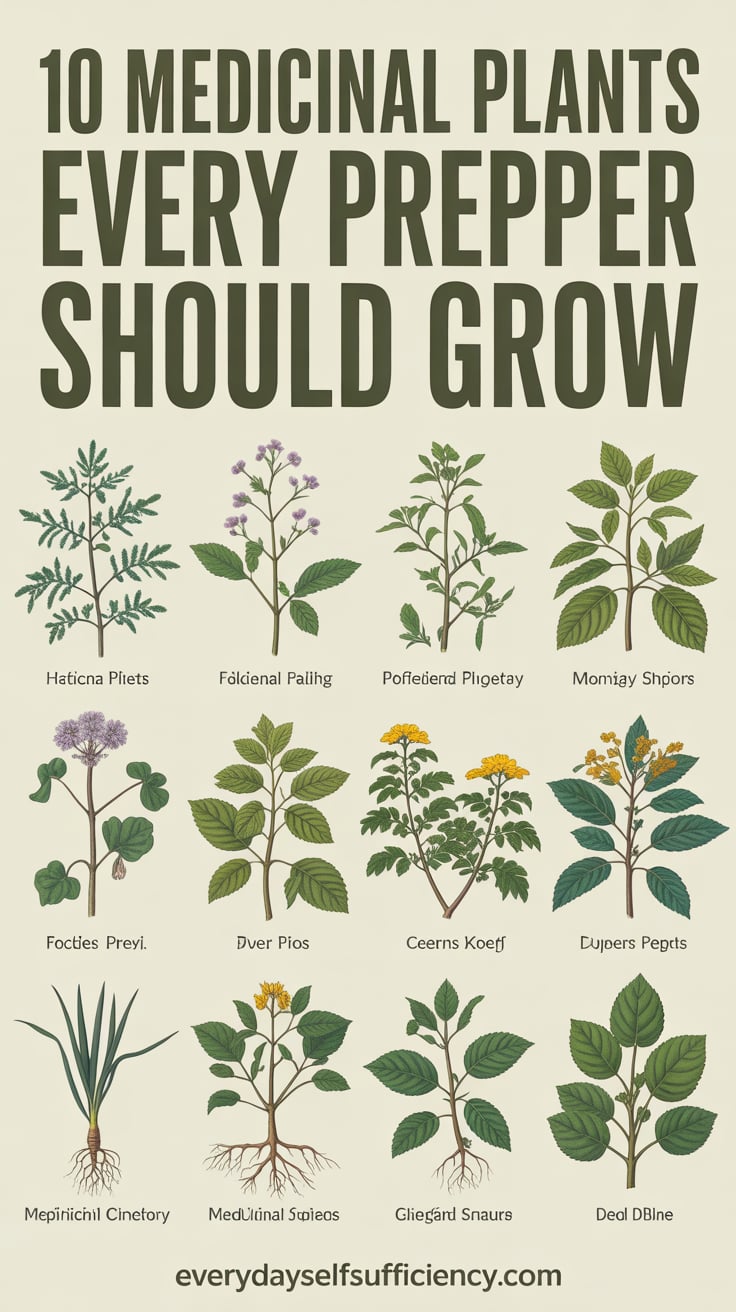
Self-reliance starts in the soil. When supply chains break or the grid goes down, having a living pharmacy in your backyard can be the difference between discomfort and control. This guide shows you exactly which 10 medicinal plants every prepper should grow, how to raise them in different climates, and how to turn your harvest into safe, effective remedies.
If you want a practical, no-fluff home reference to complement your garden, consider the field-tested Home Doctor as a companion resource for at-home care.
A resilient blueprint for your survival herb garden
Preparedness gardening is different from ornamental or kitchen gardening. You’re building redundancy and reliability, not just variety. Start with a layout that prioritizes the most-used species within arm’s reach and groups plants by water and sunlight needs.
- Site and sun: Most medicinal herbs prefer 6–8 hours of sun. In hot regions, give afternoon shade to delicate herbs (chamomile, yarrow). In cooler regions, use reflective surfaces and south-facing beds to extend warmth.
- Beds and containers: Raised beds warm faster in spring and drain well. Deep containers are ideal for apartment or patio setups; choose 5–15 gallon pots for perennials like lavender or comfrey. Containers also let you move tender plants indoors before frost.
- Soil: Most herbs want well-drained soil with moderate fertility. Mix 40% compost, 40% topsoil, and 20% coarse sand or perlite to avoid soggy roots. Avoid heavy nitrogen—too much leaf growth can dilute medicinal compounds.
- Water: Install drip lines or ollas, and add mulch to reduce evaporation. If you depend on stored or harvested rainwater, prioritize drought-tolerant herbs like thyme and lavender.
- Redundancy: Plant backups in multiple microclimates—some in raised beds, some in containers, some tucked under partial shade—so one weather event doesn’t wipe out your pharmacy.
- Open-pollinated seeds: Use open-pollinated or heirloom varieties so you can save seeds. Hybrid lines may not breed true, which limits your long-term independence.
- Security: Low-profile gardens reduce attention during unstable times. Interplant medicinal herbs with culinary herbs and pollinator flowers to keep your beds looking ordinary.
Start small with a “core bed” of 6–8 square feet for your most-used species, then expand. If you’re brand-new to herbal layouts, see [How to build a medicinal herb garden](INTERNAL LINK PLACEHOLDER). For seed readiness, review [Best survival seed vaults](INTERNAL LINK PLACEHOLDER).
10 Medicinal Plants Every Prepper Should Grow: the foundational five
These five grow in a range of climates, are easy to propagate, and cover common issues like cuts, colds, aches, and digestive upsets. Always research contraindications and talk with a healthcare professional, especially if pregnant, nursing, or on medication.
- Plantain (Plantago major/lanceolata)
- Why it’s essential: A classic “first-aid leaf” for cuts, bites, stings, and splinters. Traditionally used as a drawing poultice and to calm irritated skin.
- Growing: Hardy, tolerates poor soil and partial shade. Direct sow in spring or fall; self-seeds readily.
- Harvest: Young leaves throughout the season. For poultices, chew or crush fresh leaves; for salves, dry leaves thoroughly before infusing in oil.
- Safety: Generally well-tolerated; rare allergies possible.
- Yarrow (Achillea millefolium)
- Why it’s essential: Traditionally used to support healthy bleeding response on minor cuts, and as a sweaty tea at the first sign of a cold.
- Growing: Perennial that loves full sun and poor, well-drained soil. Drought-tolerant once established.
- Harvest: Tops when in early bloom for best potency; dry on screens.
- Safety: May cause skin sensitivity in some people; avoid during pregnancy.
- Calendula (Calendula officinalis)
- Why it’s essential: Classic for soothing minor skin irritations and supporting wound care; excellent in salves and washes.
- Growing: Easy annual. Sow after frost or start indoors. Deadhead to keep flowers coming.
- Harvest: Pick fresh blooms daily; dry quickly to avoid mold.
- Safety: Generally gentle; possible sensitivity for those with Aster family allergies.
- Peppermint (Mentha x piperita)
- Why it’s essential: Supports digestion, eases gas and nausea, and clears sinuses when steamed. Cooling liniment for achy muscles.
- Growing: Vigorous; best grown in containers to prevent spread. Prefers moist, fertile soil and partial sun in hot regions.
- Harvest: Cut before flowering for peak oils; dry in bundles upside down.
- Safety: May aggravate reflux; avoid for infants around the face due to menthol.
- Garlic (Allium sativum)
- Why it’s essential: Time-honored for culinary and wellness uses; supports normal immune function and has broad applications in home remedies.
- Growing: Plant cloves in fall for summer harvest in most climates; needs full sun and loose, fertile soil.
- Harvest: When lower leaves brown; cure bulbs in a dry, airy place.
- Safety: Can irritate skin if used topically; may interact with blood-thinning medications.
Tip: Start with these five to cover the most common minor issues you’ll encounter in the field—wounds, colds, gut upsets, aches—then expand to the next five for deeper versatility.
10 Medicinal Plants Every Prepper Should Grow: the next five for full coverage
Round out your garden with these reliable, time-tested herbs. They fill gaps for sleep, stress, respiratory support, and wound care.
- Echinacea (Echinacea purpurea/angustifolia)
- Why it’s essential: Traditionally taken at the first sign of seasonal challenges; many preppers keep it for immune-season support.
- Growing: Full sun, well-drained soil. Perennial; blooms in summer. Start from seed or transplants.
- Harvest: Roots of 2–3-year-old plants; flowers and leaves in bloom.
- Safety: May cause reactions in those with Aster family allergies; consult provider if autoimmune conditions are present.
- Chamomile (Matricaria chamomilla or Chamaemelum nobile)
- Why it’s essential: Gentle tea for rest, nerves, and upset stomach—perfect for stressful times and sleepless nights.
- Growing: Prefers sun and light soil; German chamomile is an annual that self-seeds, Roman is a perennial groundcover.
- Harvest: Pick fresh flower heads regularly; dry on screens.
- Safety: Possible Aster family allergy; use with care in pregnancy.
- Thyme (Thymus vulgaris)
- Why it’s essential: Aromatic herb often used for respiratory steam, teas, and as a culinary antimicrobial.
- Growing: Loves sun and very well-drained soil; drought-tolerant. Keep pruned to prevent woodiness.
- Harvest: Cut stems before flowering; dry loosely to preserve aroma.
- Safety: Concentrated oils can be strong; stick to culinary-strength preparations unless trained.
- Lavender (Lavandula angustifolia)
- Why it’s essential: Calming scent for stress and sleep; soothing in skin washes and compresses.
- Growing: Requires sun and excellent drainage—raised beds or gravelly soil are ideal. Trim after bloom.
- Harvest: Cut spikes when a third of buds are open; dry in small bundles.
- Safety: Essential oil is potent—dilute properly.
- Comfrey (Symphytum officinale)
- Why it’s essential: Traditional external-only plant for supporting tissue comfort and recovery; valued in salves and poultices.
- Growing: Hardy perennial, deep roots; prefers moist, fertile soil and part sun. Spreads—choose a dedicated corner.
- Harvest: Cut leaves several times per season; allow to re-grow.
- Safety: Generally for external use only. Avoid internal use due to pyrrolizidine alkaloids; do not use on deep puncture wounds.
For an at-a-glance list of what to plant and why, bookmark this plan and customize it by climate. If you also stock long-lasting calories to reduce daily stress during disruptions, pair your herb plot with shelf-stable staples and see The Lost SuperFoods for food security strategies.
Harvesting, drying, and storage that preserve potency
Good harvest and handling can double the effectiveness and lifespan of your herbs. The rules are simple: pick at peak, keep it clean, dry it fast, and store it airtight.
- Timing:
- Leaves: morning after dew dries, before heat drives off oils.
- Flowers: just as they open (calendula, chamomile, lavender).
- Roots: in fall of year two or three (echinacea), when energy concentrates below ground.
- Sanitation: Use clean pruners and baskets. Avoid harvesting near roads or treated turf. Shake off dust; don’t wash unless visibly dirty, as moisture slows drying.
- Drying: Spread thinly on screens in a dark, ventilated area at 90–110°F. A dehydrator on the lowest setting works during humid spells. For step-by-step technique, see Penn State Extension’s guide on drying herbs.
- Doneness test: Leaves crumble; stems snap; flowers feel crisp. If it bends, it’s not dry.
- Storage: Glass jars with tight lids, kept cool, dark, and dry. Label with plant, part, date, and origin. Avoid plastic bags for long-term storage.
- Shelf life:
- Leaves/flowers: 1 year
- Seeds/bark: 2 years
- Roots: 2–3 years
- Mold prevention: Never overfill drying racks; stir daily. If you detect off-odors, discard.
- Rotation: Use “first in, first out.” Set a reminder to refresh stock annually after your main harvest.
If you plan to craft tinctures, oils, or salves later, dry extra now while plants are at their best. For a step-by-step recipe set, save this [DIY tinctures guide](INTERNAL LINK PLACEHOLDER).
Turning harvest into remedies: teas, tinctures, salves, and syrups
With a handful of tools and safe techniques, you can turn your garden into a practical medicine cabinet. The principles below are traditional prepper favorites—simple, scalable, and shelf-stable.
- Infusions (teas): Best for leaves and flowers like peppermint, chamomile, yarrow, and thyme.
- Method: Pour near-boiling water over 1–2 teaspoons dried herb per cup; cover 10–15 minutes; strain.
- Tip: Water quality matters. In grid-down scenarios, ensure clean brew water. A compact off-grid purifier like Water Freedom System can help you keep teas and washes safe to use.
- Decoctions: Best for tougher roots and bark (e.g., echinacea roots).
- Method: Simmer 10–20 minutes, covered; strain.
- Tinctures: Alcohol-based extracts that store for years.
- Method: Fill a jar halfway with dried herb (or two-thirds with fresh chopped). Cover with 80–100 proof alcohol by at least an inch. Label and store in a dark cabinet, shaking daily for 4–6 weeks. Strain and bottle.
- Infused oils: For salves and skin applications (calendula, plantain, comfrey).
- Method: Fill a jar halfway with thoroughly dried herb; cover with quality oil (olive, jojoba). Infuse 2–6 weeks or warm gently on a double boiler for faster results. Strain, then add beeswax to make a salve.
- Syrups: Soothing for scratchy throats (thyme, ginger when available).
- Method: Make a strong tea, then combine 1:1 with honey once cooled. Bottle and refrigerate.
- Topicals: For minor scrapes and bruises, clean first with safe water, then apply salves made from calendula or plantain.
- Dosage safety: Start small; more is not always better. Some herbs can interact with medications or underlying conditions. See trusted references such as NCCIH’s Herbs at a Glance and MedlinePlus on Herbs and Supplements, and consult a professional for personalized guidance.
Label every preparation with ingredients and date. In stressful moments, clear labels reduce errors.
Water, sanitation, and field hygiene for herbal medicine
Herbal first aid depends on clean water and clean tools. Without them, you risk turning a minor scrape into a bigger problem.
- Safe water hierarchy:
- Source: Protected well or spring if available.
- Pretreat: Settle and prefilter turbid water through cloth or a coffee filter.
- Purify: Boil for 1 minute (3 minutes above 6,500 ft) or use a certified purifier.
- Store: Keep in sanitized containers away from sunlight. See [Prepping for long-term water storage](INTERNAL LINK PLACEHOLDER).
- Tool hygiene:
- Dedicate one small kit for herbal prep: scissors, a folding knife, tweezers, alcohol wipes, small dropper bottles, muslin or coffee filters, and a compact strainer.
- Disinfect gear before and after use with boiling water or 70% isopropyl alcohol.
- Wound workflow:
- Wash hands or use a sanitizer.
- Rinse the wound with safe water.
- Apply gentle pressure for bleeding; consider a sterile dressing. Herbs like yarrow or plantain can be used adjunctively for minor issues once clean.
- Monitor for redness, heat, or pus.
- Contamination avoidance:
- Keep raw plant matter out of your sterile bandage container.
- Use separate cutting boards for edible prep vs. salve-making.
- Storage and transport in the field:
- Use tinted glass bottles for tinctures; store salves in tins. Protect from heat in summer.
- Keep a small cloth bag with your daily-carry kit that includes a few core herbs in compact forms: a 1 oz tincture (echinacea), a 1 oz salve (calendula/plantain), and a small bag of tea mix (peppermint/chamomile/thyme).
For home or homestead, redundancy is key. Rain catchment, wells, and manual filtration give you layers of protection when filters clog or parts fail. Train your household so anyone can execute the sanitation basics.
Year-round resilience: seed saving, propagation, and overwintering
A prepper’s herb garden is a living system, not a single-season project. Build your cycle so each season increases your supply and skill.
- Seed saving:
- Calendula and chamomile: Let some blooms mature on the plant; harvest dry seed heads and store cool and dark.
- Echinacea and yarrow: Collect seed heads when dry; sow in fall for natural stratification.
- Mint and thyme: Easier by cuttings or division; seeds can be slow or variable.
- Propagation:
- Cuttings: Lavender and thyme root readily from semi-hardwood cuttings in summer. Dip in rooting powder and keep humid for 2–3 weeks.
- Division: Plantain, yarrow, comfrey, and mint can be divided in spring or fall to multiply stock.
- Overwintering:
- Mulch perennials heavily after first frost.
- Move potted tender plants (aloe, if you add it, and some lavenders in very cold climates) indoors before freezes.
- Use cold frames or row covers to extend harvest of mint and thyme.
- Pests and disease:
- Favor airflow—space plants adequately.
- Bottom-water containers to reduce fungal issues.
- Encourage beneficial insects with mixed plantings; calendula and yarrow attract allies.
- Inventory and rotation:
- Keep a simple ledger: what you have, where it’s stored, and expiration targets.
- Schedule quarterly checks to rotate tinctures and salves and top off your most-used remedies.
Integrate your herb plan with your broader preparedness: off-grid lighting, food stores, water, and first-aid training. Urban dwellers can scale all of this to balconies or windowsills—container herbs, compact filters, and small-batch tinctures still add up. For urban contingency strategies, see URBAN Survival Code.
Packing the herbal first-aid kit and training for real-world use
An herbal kit complements, not replaces, standard first-aid supplies. Carry both, and learn when to use each.
- Core kit items:
- Clean water solution: tablets, a small filter, or boiled water in a sealed bottle.
- Antiseptic wipes, gauze, bandages, tape, and a tourniquet.
- Herbal add-ons: 1 oz calendula-plantain salve; 1 oz echinacea tincture; peppermint tea bags; chamomile tea bags; 10 ml lavender essential oil (properly diluted before skin use).
- Tools: tweezers, safety pins, small scissors, nitrile gloves, fine-mesh strainer, and a tiny funnel.
- Field workflows to rehearse:
- Bite/sting: Clean, apply plantain poultice, then a light bandage.
- Minor cut: Cleanse, yarrow compress, sterile dressing; monitor.
- Tension/stress: Lavender inhalation; chamomile tea before rest.
- Queasy stomach: Peppermint tea; hydrate.
- Cold-weather sniffles: Thyme steam and tea; warm fluids; rest.
- Documentation and safety:
- Pack simple instruction cards for each remedy.
- Note medication interactions (e.g., anticoagulants with garlic) and allergies.
- Keep emergency contacts and any medical conditions on a card.
- Training:
- Practice herbal prep when times are calm—don’t wait for emergencies.
- Hold a quarterly “skills day” to make teas, tinctures, and salves with your family or group.
- Use reputable resources to guide safe usage. Start with NCCIH and MedlinePlus.
Build redundancy by keeping a compact at-home medical reference like Home Doctor within reach. For broader pantry resilience to match your herb cabinet, explore The Lost SuperFoods.
Next-step checklist and gear you might consider
- Start 3–5 of the easiest herbs this week: calendula, peppermint (in pots), thyme, yarrow, and plantain.
- Set up a simple drying station and label jars.
- Make one infused oil and one tincture to learn the process.
- Secure water purification for remedies and hygiene. If you need an off-grid, family-ready option, review Water Freedom System.
- Add a compact, practical survival reference for your home binder: URBAN Survival Code and Home Doctor.
Recommended products (curated for this topic):
- Home Doctor – Practical at-home care reference to pair with your herbal kit.
- Water Freedom System – Off-grid water solution for safe teas, washes, and daily hydration.
- The Lost SuperFoods – Ideas for shelf-stable foods to complement your herb pantry.
- URBAN Survival Code – Compact tactics for city dwellers and small-space preppers.
Authoritative references for further reading:
- NCCIH – Herbs at a Glance: https://www.nccih.nih.gov/health/herbs-at-a-glance
- MedlinePlus – Herbs and Supplements: https://medlineplus.gov/herbsandvitamins.html
- Penn State Extension – Drying Herbs: https://extension.psu.edu/drying-herbs
- World Health Organization – Hand Hygiene Tools: https://www.who.int/teams/integrated-health-services/infection-prevention-control/hand-hygiene
If you’re compiling internal resources, also see [DIY tinctures guide](INTERNAL LINK PLACEHOLDER) and [How to build a medicinal herb garden](INTERNAL LINK PLACEHOLDER).
Conclusion
Preparedness is the art of converting everyday skills into crisis resilience. With the 10 medicinal plants every prepper should grow—plantain, yarrow, calendula, peppermint, garlic, echinacea, chamomile, thyme, lavender, and comfrey—you can cover a surprising range of minor issues with simple, low-tech methods. Start with a small bed or a few containers, practice harvesting and drying, and make one remedy at a time. Layer in clean water and good hygiene, keep your tools simple, and build the habit of labeling and rotating stock. Each season, your living pharmacy becomes stronger, more abundant, and more reliable.
FAQ
What are the easiest picks from the 10 medicinal plants every prepper should grow?
- Start with calendula, peppermint (in containers), thyme, and plantain. They’re forgiving, produce quickly, and cover skin support, digestion, respiratory comfort, and first-aid poultices.
Can I rely on foraging instead of growing my own medicinal plants?
- Foraging is a useful supplement, but identification risk, seasonal scarcity, and access issues make it unreliable as a primary plan. Growing ensures purity, correct species, and year-round availability.
How do I store herbs so they last?
- Dry quickly in a dark, ventilated space until crisp, then store in airtight glass away from heat and light. Label with plant, part, and date. Leaves and flowers last about a year; roots up to three years.
Are these herbs safe for kids and pets?
- Many are gentle, but sensitivities exist. For example, peppermint’s menthol isn’t appropriate around infants’ faces, and some pets are sensitive to certain herbs. Check reliable sources like NCCIH and MedlinePlus and consult a professional before using herbs with children or animals.
What interactions or cautions should I know?
- Garlic can interact with blood thinners; echinacea may not be appropriate for some autoimmune conditions; chamomile may trigger Aster family allergies; comfrey is for external use only. Review NCCIH and MedlinePlus and speak with a healthcare provider.
How much space do I need to start?
- A single 4×4 ft bed or five large containers can produce a surprising amount: a season’s worth of calendula blooms, enough peppermint for tea, and plenty of thyme, plantain, and yarrow for first aid. Scale up as you gain experience.
What if I don’t have access to clean water for teas and wound washing?
- Prioritize purification through boiling or a reliable off-grid filter. Clean water is non-negotiable for safe herbal use. Systems like Water Freedom System can add resilience when municipal supplies are compromised.
Do I really need both standard first aid and herbal remedies?
- Yes. Think “both/and,” not “either/or.” Keep a conventional first-aid kit for acute issues and use herbs as supportive care for minor problems. Training and judgment matter more than gear.