
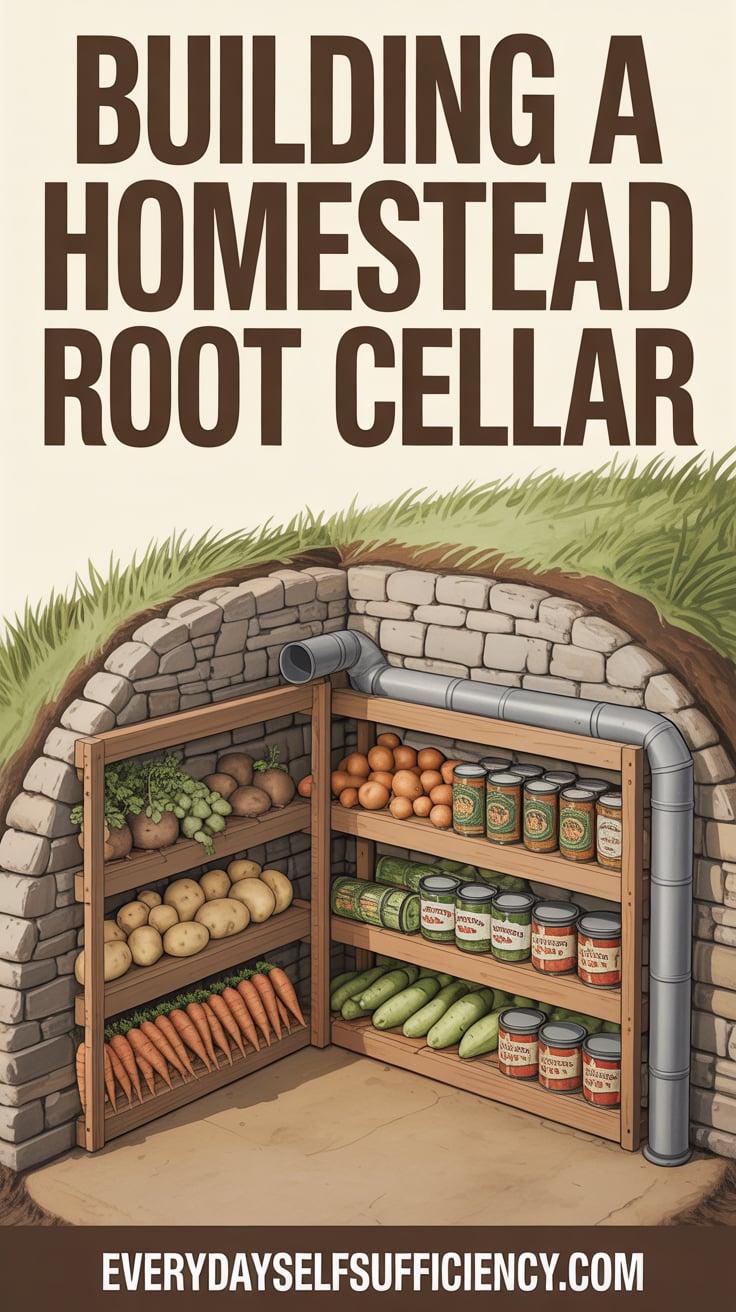
A well-built root cellar is one of the most cost-effective, reliable ways to store food without electricity—perfect for homesteaders aiming for resilience and year-round self-reliance. In this complete guide to building a homestead root cellar, you’ll learn how to choose the best site, design for temperature and humidity control, pick materials that last, and manage your harvest through every season. Whether you’re working with a hillside, a flat yard, or a basement, you’ll find practical plans to make Building a Homestead Root Cellar realistic and affordable for your land and climate. For long-term food planning and preservation ideas to stock your cellar wisely, see The Lost SuperFoods.
Why a root cellar still matters on the modern homestead
Before refrigeration, most homesteads relied on a root cellar to carry produce through winter and spring. That wisdom still holds. A good cellar naturally maintains cool temperatures and high humidity to slow respiration and decay, protect nutrients, and keep staples like potatoes, carrots, beets, cabbages, apples, and canned goods ready to eat. It saves energy, reduces waste, and stabilizes your food budget.
What makes a root cellar work is simple physics: earth is a natural insulator and thermal mass. Below the frost line, soil temperatures are stable—often in the 45–55°F (7–13°C) range in many temperate regions. By embedding your storage room in the ground and controlling airflow, you create a stable environment for months-long storage. You can fine-tune humidity to prevent wilt and shrivel, and adjust ventilation to control ethylene gas and mold pressure.
Key benefits:
- Energy-free, quiet food storage with minimal ongoing costs.
- Extends harvest windows “from garden to table” into spring.
- A safe place for produce, ferments, stored grains, and home-canned foods.
- Adds resilience during power outages and extreme weather.
If you’re new to the concept, start with the basics: focus on proper siting (cool, shaded, well-drained), solid waterproofing and drainage, two-vent airflow with dampers, and shelving that separates crops by their preferred temperature and humidity ranges. For foundational best practices, consult the University of Minnesota Extension (Root Cellars) and NDSU Extension, both of which provide practical, climate-aware guidelines.
External sources:
- University of Minnesota Extension — Root Cellars
- NDSU Extension — Root Cellars
- Penn State Extension — Storing Vegetables in a Root Cellar
Choosing the best location and right size for your land
Site selection sets you up for success. The goal is the coolest, driest location with stable ground and good drainage.
What to look for:
- Slope or hillside: A north- or east-facing slope is ideal to reduce solar heat gain. Hillsides simplify earth-sheltering and drainage by letting you build into the grade.
- Shade: Trees or structures that provide afternoon shade help lower summer heat.
- Soil and drainage: Well-drained soils (sandy loam, gravelly subsoil) are best. Heavy clay holds water and increases hydrostatic pressure; consider extra drainage measures.
- Groundwater level: Avoid high water tables and seasonal flooding. Dig test pits to check moisture and depth to groundwater during wet seasons.
- Frost line depth: Know your region’s frost depth to plan wall/roof insulation and footing details.
- Access: Keep the cellar reachable in snow and mud. A short, protected path from house or kitchen is valuable.
Sizing: Work backward from the food you intend to store and the number of people you feed. As a rough guide, 10–15 cubic feet of storage space per person can cover many staples for winter, assuming you also use freezers and pantry shelves. For root-heavy diets or larger families, plan 20–30 cubic feet per person. Add headroom (6.5–7.5 feet), an airlock if possible, and generous aisle space (minimum 30 inches).
Floor choices:
- Compacted gravel: Breathable, drains well, easy to level. Pair with a vapor barrier and sump drain if groundwater is a concern.
- Concrete slab with perimeter drains: Durable and cleanable; add insulation under or around the slab in cold climates to reduce freezing risk.
- Natural earth floor: Traditional and humidity-friendly, but prone to rodents if not armored; use gravel layers and wire mesh as needed.
If your homestead water plan is still evolving, consider exploring a dedicated off-grid water strategy at [Off-grid water systems guide](INTERNAL LINK PLACEHOLDER) so construction, drainage, and long-term use work together.
Selecting the root cellar type that matches your climate and property
Different homesteads call for different cellar styles. Pick the form that fits your land and weather.
Common types:
- Hillside or cut-and-cover: Built into a slope with a retaining front wall and an earthen roof. Excellent thermal stability, straightforward drainage, and classic aesthetics. Great in cold to temperate climates.
- Earth-bermed chamber: On flat land, you build a concrete or masonry room and berm soil over the top and sides. Requires careful waterproofing and drainage but performs well if planned correctly.
- Culvert or tank cellar: Repurposed large concrete or corrugated steel culverts laid horizontally, capped, and bermed. Quick to install, very strong, and naturally arch-shaped for load-bearing soil.
- Basement conversion: A corner of a cool basement outfitted with insulated walls, a vapor barrier, and dual vents to the outside. Easy to access, but you must isolate moisture from the rest of the house and carefully manage airflow.
- Barrel or pit cellars: Small-scale, budget-friendly options using buried barrels or bins for specific crops (like carrots in sand). They don’t replace a full cellar but add flexible capacity.
Climate considerations:
- Cold climates: Prioritize frost protection and entrance design. Add an insulated door and possibly a small vestibule or airlock to reduce warm air intrusion in fall and cold shocks in winter.
- Warm climates: Increase insulation and shading, and consider deeper burial. A properly designed vent system with night-flush capability (bringing in cool night air) helps cool the space.
- Wet climates: Overbuild your drainage. Use a perimeter French drain, heavy-duty waterproof membranes on walls/roof, and a slope that carries water away from the entrance.
Don’t forget code and safety: Check local building requirements, locate utilities before digging, and consider structural loads from soil and snow. For background reading, see University of Minnesota Extension and Penn State Extension for climate-specific advice.
Designing temperature, ventilation, and humidity for long-term storage
A stable environment is the secret to months-long storage. Aim for cool temperatures and high humidity for most roots, and use shelving to create micro-zones for items that prefer slightly different conditions.
Target ranges (general):
- Most root crops (potatoes, carrots, beets, rutabagas): 32–40°F (0–4°C), 90–95% relative humidity.
- Cabbage, Brussels sprouts: 32–40°F, 90–95% RH.
- Apples: 30–35°F, 90% RH; store away from potatoes (apples emit ethylene).
- Onions, garlic, winter squash: 45–55°F, 50–70% RH; prefer drier, warmer conditions.
Ventilation basics:
- Two vents: A low intake vent near the floor at the entrance end, and a high exhaust vent near the ceiling at the far end. This uses the stack effect—cool air enters low, warm/CO2-laden air exits high.
- Pipe sizing: Many small cellars do well with 4–6 inch (100–150 mm) diameter vents. Larger spaces may need multiple vents. Include adjustable dampers to throttle airflow through the seasons.
- Airlock: A small vestibule or a second interior door reduces temperature swings during access.
Humidity management:
- Wet zone: Use gravel floor sections you can wet down to raise humidity. Damp sand bins for carrots and beets also stabilize moisture.
- Dry zone: Upper shelves and separate compartments help keep onions and squash drier.
- Containers: Use perforated crates, burlap, and wooden bins to allow airflow around produce.
Monitoring:
- Hygrometer and thermometer at multiple heights. A data logger helps you learn how your cellar behaves through shoulder seasons.
- CO2 and ethylene management: Vent more when off-gassing is strong in early storage periods.
If you’re building off-grid and want reliable water on tap for cleaning produce and managing humidity, see Survival Water Box for a practical homestead water approach. For modular storage and emergency filtration that complements cellar operations, SmartWaterBox can add resilience to your overall system.
For a deeper dive into airflow math and layout ideas, see [DIY ventilation calculator](INTERNAL LINK PLACEHOLDER).
Materials and a step-by-step building plan that lasts decades
The strongest cellars start with good drainage and waterproofing, then add a durable shell and thoughtful insulation.
Materials commonly used:
- Structure: Poured concrete walls/roof, reinforced CMU block with rebar and filled cores, or a precast/culvert solution for arch strength.
- Waterproofing: Elastomeric membranes, bituminous coatings, or peel-and-stick membranes. Protect membranes with dimpled drainage boards before backfill.
- Insulation: Rigid foam (XPS or EPS) on exterior walls and roof in cold or hot climates; prioritize continuous coverage and thermal breaks at edges.
- Floor: 4–6 inches of compacted gravel with a vapor barrier; optional slab on grade depending on climate and budget.
- Drains: Perimeter French drain at footing level sloped to daylight or a dry well. Add a sump if needed.
- Venting: PVC or insulated ducting with rodent-proof screens and adjustable dampers.
Build sequence overview:
- Layout and excavation: Stake the footprint, dig to footing depth plus space for drains. Slope the surrounding grade away from the structure at 5% or more.
- Drainage bed: Install geotextile, 4–6 inches of washed gravel, and a perforated drain line around the footing tied to daylight. Add a sump crock if gravity drainage isn’t possible.
- Foundation and walls: Pour footings, then walls; or build CMU walls with rebar and grout-filled cores. Leave openings or sleeves for intake and exhaust vents.
- Roof: For flat roofs, pour a reinforced slab; for arch roofs (culvert style), cap and seal ends. Avoid organic roofs that invite leaks unless properly detailed.
- Waterproof: Apply membrane to walls and roof. Add dimple board for drainage protection.
- Insulate: Install rigid foam outside the waterproofing (where climate-appropriate), protect with foam-compatible adhesive and terminations.
- Backfill and berm: Use free-draining soil. Compact in lifts to avoid settlement and structural stress.
- Door and airlock: Install an insulated exterior-grade door; consider a small internal door to form an airlock.
- Vents and dampers: Fit the intake low and exhaust high, finish with weather hoods and critter screens.
- Interior: Lay a gravel floor or slab, build shelving, and add hooks for hanging crops.
Budget tips:
- Repurpose materials when safe (e.g., used food-grade crates, salvaged doors).
- Use a culvert or precast chamber to simplify structure and reduce labor.
- Keep the footprint modest; vertical shelving maximizes storage without expanding square footage.
If you’re combining the build with broader homestead improvements, see [How to plan your homestead layout](INTERNAL LINK PLACEHOLDER) to align access, drainage, and service lines.
Shelving, layout, and organizing crops for peak quality
A well-organized cellar preserves quality and reduces waste. Design shelves and zones that match your crops’ needs.
Layout principles:
- Wet and cool zone near intake: Store carrots, beets, parsnips, and rutabagas in damp sand or perforated bins. Potatoes go here too but away from apples.
- Slightly warmer, drier zone up high: Onions, garlic, and winter squash prefer it here.
- Ethylene-sensitive separation: Keep apples away from potatoes, carrots, and brassicas. Apples emit ethylene that accelerates sprouting and yellowing.
- Aisles and access: 30–36 inches of aisle space and sturdy, shallow shelves (12–18 inches deep) reduce bruising and make rotation easier.
Shelving choices:
- Wood framing with slatted shelves promotes airflow. Use rot-resistant species (cedar) or seal with a food-safe finish. Avoid treated lumber where produce touches.
- Metal wire shelving is strong and cleanable; consider rust-resistant coatings in humid spaces.
Storage media and containers:
- Damp sand or sawdust: Nest root vegetables to stabilize humidity and reduce shrivel.
- Crates and slatted boxes: Stackable, breathable, easy to rotate.
- Mesh bags: For onions and garlic; hang to keep air moving around bulbs.
- Hooks and racks: Hang cabbage by the stem, cure squash before storing on shelves.
Rotation and labeling:
- Label shelves and bins with harvest date and variety. Keep a simple ledger or digital note for inventory.
- First-in, first-out: Pull older produce forward; top off bins rather than mixing new with old.
For planning your cellar stocklist, preservation recipes, and calorie-dense staples that complement fresh produce, The Lost SuperFoods is a helpful resource for building a resilient pantry strategy around your root cellar.
Seasonal operation, maintenance, and troubleshooting
Your cellar’s behavior will change from fall cool-down through deep winter and spring warm-up. Small adjustments go a long way.
In autumn:
- Pre-cool: Open vents during cool nights to pull down temperature; close partially during warm days.
- Cure crops properly: Cure potatoes, squash, onions, and garlic at appropriate temperatures before storage. Bring only clean, unblemished produce into the cellar.
- Set humidity: Wet the gravel floor or add water trays to reach 90–95% RH for roots.
In winter:
- Fine-tune ventilation: Keep a slight trickle of fresh air to manage CO2 and ethylene. Use dampers to prevent overcooling during extreme cold.
- Freeze protection: Insulate and weather-strip the door; use an insulated plug for vents if temperatures plunge. An interior thermometer helps you respond in time.
- Rodent vigilance: Maintain door sweeps, hardware cloth on vents, and tight seals. Keep the area around the cellar clear of debris and vegetation that harbor pests.
In spring:
- Watch for condensation and mold: Increase airflow on milder days to reduce humidity if mold appears on walls or shelves. Wipe affected areas with a mild vinegar solution and dry thoroughly.
- Sprouting management: Potatoes and onions sprout as days lengthen; cooler temps and darkness help. Remove sprouts regularly to extend storage.
Troubleshooting quick hits:
- Too warm: Increase night ventilation, add exterior shading, check for insulation gaps, and reduce frequent door openings.
- Too dry (shriveling roots): Add water trays, wet gravel, or use sand bins; reduce airflow temporarily.
- Too humid (condensation, mold): Increase airflow, space bins apart, and remove standing water.
- Strong odors or CO2 headaches: Vent more and avoid storing highly aromatic or off-gassing items together.
Safety and monitoring:
- Place a battery CO2 monitor if your cellar is large or heavily loaded.
- Use low-heat, sealed lighting and keep electrical components corrosion-protected.
- Maintain a simple log of temperatures and humidity to learn seasonal patterns.
For homestead emergency readiness alongside your cellar operations, consider keeping medical guidance on hand like Home Doctor so minor injuries and ailments don’t derail your harvest or build timeline.
Smart upgrades, off-grid integration, and long-term resilience
Modern tools can make a traditional root cellar even more dependable without sacrificing low-tech charm.
Useful upgrades:
- Data logging: Bluetooth or Wi-Fi thermometers/hygrometers track trends; alarms help you respond to heat waves or cold snaps.
- Solar assist: A small solar-powered fan can boost exhaust on hot days without grid power. Size it modestly to avoid overdrying crops.
- Modular bins and zones: Slide-in crates, color coding, and labeled rows make rotation fast and intuitive.
- Airlock shelves: Use the vestibule for short-stay items to avoid dumping warm air into the main chamber every time you grab something.
Off-grid water and sanitation:
- Dedicated water storage near the cellar simplifies washing produce and adjusting humidity. SmartWaterBox is one option to integrate filtration with modular storage.
- For reliable well access and independence from grid-powered pumps, explore Survival Water Box as a homestead-focused approach to water resilience.
Food strategy and knowledge:
- Pair your cellar with preservation methods—canning, fermenting, dehydrating—for a balanced larder. See [How to can food safely](INTERNAL LINK PLACEHOLDER).
- Build a harvest plan and crop calendar to stagger maturity dates and avoid overloading your cellar at once. If you want inspiration for high-value staples that store and travel well, browse The Lost SuperFoods.
Maintenance for the long haul:
- Annual inspection: Check waterproofing edges, vent screens, door seals, and drain function before the rainy season.
- Deep clean in late spring: Remove all bins and shelves, scrub, and air-dry thoroughly. Reseal any cracks.
- Rodent-proofing refresh: Replace worn sweeps and check for new burrows around the berm.
For further learning, reference:
- University of Minnesota Extension — practical layouts and vent setups
- NDSU Extension — detailed storage guides for specific crops
- USDA guidance on produce storage and food safety basics (for general safe handling)
For project planning that integrates your cellar with gardens, fences, and paths, try [How to plan your homestead layout](INTERNAL LINK PLACEHOLDER).
Recommended tools and resources
The right resources make the difference between “it works” and “it works effortlessly.”
- The Lost SuperFoods: Ideas for shelf-stable staples and heritage methods to build a resilient pantry around your cellar.
- Survival Water Box: A homestead-friendly approach to reliable well water and off-grid operation, helpful for cleaning produce and managing cellar humidity.
- SmartWaterBox: Modular water storage and filtration that dovetails with cellar operations and emergency prep.
Also explore:
- [Homestead pest control](INTERNAL LINK PLACEHOLDER) for humane, effective rodent management that protects stored crops.
External authority sources:
- University of Minnesota Extension — Root Cellars
- NDSU Extension — Root Cellars
- Penn State Extension — Storing Vegetables in a Root Cellar
Conclusion
Building a Homestead Root Cellar is one of the smartest investments you can make in food security, flavor, and independence. By choosing a shaded, well-drained site, dialing in two-vent airflow, and organizing your crops by temperature and humidity needs, you’ll enjoy crisp apples, sweet carrots, and firm potatoes deep into the year—without plugging in a single appliance. Start small, learn your cellar’s rhythms, and scale up as your harvests grow. For pantry planning and water resilience that complete the system, see The Lost SuperFoods, Survival Water Box, and SmartWaterBox.
FAQ
What temperature and humidity should a root cellar maintain?
Most roots store best around 32–40°F (0–4°C) at 90–95% humidity. Onions, garlic, and winter squash prefer 45–55°F with lower humidity. Monitor and adjust with vents and water trays.Do I need a hillside to build a root cellar?
No. Hillsides help, but you can build an earth-bermed cellar on flat ground, convert a basement corner, or use a culvert-style chamber. The keys are drainage, waterproofing, and insulation.How deep should my root cellar be?
Go deep enough to take advantage of stable subsoil temperatures, often below the frost line. Many designs place the room’s ceiling near grade and berm soil over the top and sides.How big should I make it?
Plan 10–15 cubic feet of storage per person as a starting point, more if your diet is root-heavy or you’re feeding a large household. Prioritize good access and adjustable shelving over raw square footage.How do I size the vents?
Small cellars often use 4–6 inch intake and exhaust pipes. Place the intake low at one end and the exhaust high at the opposite end, both with dampers and critter screens. Adjust seasonally.What foods should not be stored together?
Separate apples from potatoes, carrots, and brassicas due to ethylene. Keep onions and garlic in a drier, slightly warmer zone away from high humidity bins for carrots and beets.How do I prevent rodents and insects?
Install door sweeps, line vents with hardware cloth, keep vegetation trimmed around the entrance, and store food in bins or on slatted shelves off the floor. Regularly inspect for gaps and burrows.Does a root cellar work in warm climates?
Yes, but you’ll need more insulation, deeper burial, exterior shading, and strategic night ventilation to pull in cool air. Interior zoning and careful produce selection become even more important.