
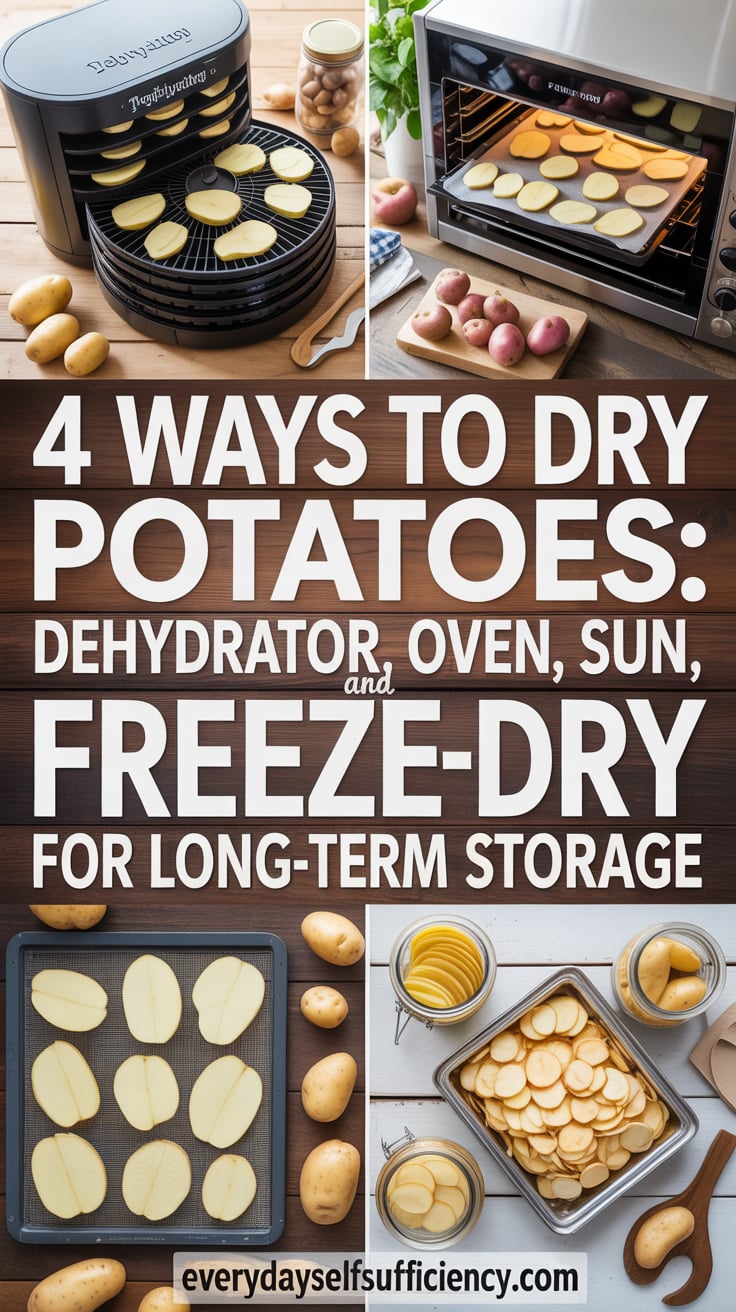
Dry, shelf-stable potatoes are the backbone of any resilient pantry and a powerful skill for off-grid living. In this guide, you’ll learn 4 ways to dry potatoes safely and efficiently—dehydrator, oven, sun/solar, and freeze-drying—along with pro tips on blanching, anti-browning pre-treatments, storage, and rehydration. Whether you want lightweight trail food, long-term storage, or emergency readiness, mastering 4 ways to dry potatoes gives you control over cost, quality, and nutrition.
The Lost SuperFoods is a great companion if you’re building a self-reliant pantry. It covers practical, historical preservation techniques that pair perfectly with these 4 ways to dry potatoes.
Before we dive into each method, here are the big ideas:
- Drying potatoes requires pre-treatment (blanching and anti-browning) to prevent oxidation, preserve color, and improve rehydration.
- The 4 ways to dry potatoes each have unique pros: dehydrator (most consistent), oven (accessible), sun/solar (off-grid), and freeze-dry (premium longevity).
- Correct storage—conditioning, oxygen absorbers, and light protection—makes the difference between 2 months and 25 years of shelf life.
- You can dry slices, shreds, cubes, and even make homemade potato flakes for instant mashed potatoes.
Pro tip: For more fundamentals, see this general tutorial on dehydrating basics: Dehydrating 101 for Home Food Preservation.
Table of Contents
Planning, Safety, and Prep Before You Try 4 Ways to Dry Potatoes
When you focus on 4 ways to dry potatoes, safety and prep are where you win. Potatoes oxidize (brown) quickly once cut. They also carry enzymes and starches that can slow drying and harden surfaces if you skip blanching. Pre-treatment solves both problems and leads to better flavor, texture, and color in storage.
Choose the right potatoes:
- Waxy (Yukon Gold, Red): best for slices and cubes that hold shape.
- Starchy (Russet): best for shreds and flakes (mashed potatoes), very light and fast to rehydrate.
- New potatoes: smaller size; great for cubes and “soup mix” jars.
Wash, peel, and uniformity:
- Scrub well to remove soil. Peel if you want bright color and smoother texture; leaving skins adds fiber and flavor.
- Slice 1/8–1/4 inch thick, shred on the large-holed side of a grater (or food processor), or cube 1/4–1/2 inch. Uniform pieces dry evenly.
Anti-browning pre-treatment:
- Citric acid bath: 1 tsp citric acid per quart of cold water. Soak cut potatoes 5–10 minutes as you work.
- Alternative: 1 Tbsp lemon juice per quart. Commercial sulfite dips work too but aren’t necessary for most home preservers.
Blanching is essential:
- Boiling water blanch: 3–5 minutes for slices and cubes (until just tender but not soft), 2–3 minutes for shreds. Drain immediately.
- Steam blanch: 5–7 minutes; gentle and reduces nutrient loss.
- Cold shock: After blanching, plunge into ice water to stop cooking.
- Pat dry: Reduce surface moisture for faster drying.
Why blanch? It stops enzymes, improves color, sets the structure of shreds, and prevents “case hardening” when trying these 4 ways to dry potatoes. Skipping blanching leads to leathery pieces that never rehydrate well.
Food safety and temperatures:
- Always dry between 125–145°F (52–63°C) for dehydrating/oven/sun methods to avoid cooking while still evaporating moisture efficiently.
- Never store until pieces are fully brittle (slices/cubes) or crisp (shreds/flakes) and pass the jar test (no fogging after 24 hours).
Water matters: Clean, safe water for blanching and soaking is vital. If you’re off-grid or preparing for disruptions, consider building redundancy now. Midway through your drying journey, a dependable countertop or under-sink system simplifies everything. The New Water Offer: SmartWaterBox is a practical way to ensure you always have clean water on hand for soaking, blanching, and cooking your dried potatoes.
Way #1 — Dehydrator Method (Most Consistent of the 4 Ways to Dry Potatoes)
Among the 4 ways to dry potatoes, a quality dehydrator delivers the most predictable results. It circulates warm air evenly and allows precise temperature control.
What you need:
- A dehydrator with adjustable thermostat (125–135°F is ideal)
- Mesh or solid liners for shreds and flakes
- Bowls for citric acid soak and ice bath
- Pot for blanching
- Clean towels
Step-by-step (slices, cubes, shreds):
- Prep and soak: Cut potatoes to uniform size, soak in citric acid solution 5–10 minutes.
- Blanch: 3–5 minutes for slices/cubes; 2–3 minutes for shreds. Shock in ice water.
- Drain and pat dry: Lay on towels to remove surface water.
- Load trays: Single layer, no overlapping. For shreds, use mesh liners.
- Dry at 125–135°F:
- Slices: 6–10 hours until brittle.
- Cubes: 8–12 hours until hard and dry through.
- Shreds: 4–8 hours until crisp and rattly.
- Condition: Fill jars 2/3 full, shake daily for a week. If condensation appears, return to dehydrator to finish.
- Store: Mylar + oxygen absorbers for long-term; jars or PET bottles for medium-term.
How to make potato flakes in a dehydrator:
- Cook peeled potatoes fully (boil or steam until soft).
- Mash without dairy or fat (use only water and salt).
- Spread thinly (1/8 inch) on lined dehydrator trays.
- Dry 135°F for 8–14 hours until completely dry and brittle.
- Crumble into flakes; condition and store.
- Rehydrate: 1 cup hot water + 1/2–2/3 cup flakes + salt to taste. Rest 3–5 minutes.
Avoid these mistakes when using 4 ways to dry potatoes:
- Overcrowding trays: Slows evaporation and traps moisture.
- Skipping blanch: Causes discoloration and poor rehydration.
- Too high heat: Leads to case hardening and bitter flavor notes.
Mid-content resource for pantry planners: If your goal with 4 ways to dry potatoes is a resilient, long-term food supply, diversify with staple recipes and preservation methods in The Lost SuperFoods. It pairs beautifully with dehydrator-based storage.
Way #2 — Oven Drying Method (No Dehydrator Required)
If you’re prioritizing accessibility in these 4 ways to dry potatoes, your home oven can do the job. It’s not as energy-efficient and can be slower, but it works if you manage airflow and low heat.
Setup:
- Use the oven’s lowest setting, ideally 170°F (or “Warm”). Prop the door 1–2 inches to vent steam.
- Place a fan nearby blowing across the opening for airflow if your oven doesn’t circulate well.
- Use wire racks over baking sheets to keep pieces elevated and allow heat to circulate beneath.
Steps:
- Prepare and blanch as in Part 1.
- Arrange in a single layer. For shreds, spread loosely; for slices, avoid overlap.
- Dry at the lowest setting with door propped open:
- Slices: 6–12 hours.
- Cubes: 8–14 hours.
- Shreds: 4–8 hours.
- Rotate trays every 60–90 minutes. Flip slices halfway through.
- Test for doneness: Slices/cubes should snap cleanly; shreds should feel dry and crisp.
- Condition and store as outlined earlier.
Troubleshooting oven drying among the 4 ways to dry potatoes:
- Pieces bend but don’t snap: They’re not done; give them another hour and test again.
- Uneven drying: Smaller pieces finish sooner; remove them early.
- Browning edges: Temperature too high; consider “preheating to warm” then turning the oven off and using residual heat in cycles, or use a heat diffuser.
Energy tips:
- Batch-process large amounts after dinner while the oven is still warm.
- Consider drying overnight with a small circulating fan for airflow.
Flavor enhancements:
- Dust with a touch of garlic powder or smoked paprika before drying (no oil). This makes snackable dried potatoes for trail mixes or soups. Avoid adding fats prior to drying—they reduce shelf life.
Affiliate note for off-grid kitchens: If you rely on oven or stovetop blanching, water management matters. The New Water Offer: SmartWaterBox helps ensure a durable supply of clean water for soaking, blanching, and rehydration—essential when you use these 4 ways to dry potatoes for long-term storage.
Way #3 — Sun and Solar Dehydrator Method (Off-Grid Favorite)
Of the 4 ways to dry potatoes, sun/solar drying is the most independent from grid power. It requires heat, low humidity, and airflow. In arid climates (RH below 30%), thin slices and shreds can dry beautifully. In humid areas, use a proper solar dehydrator with screened vents and dark absorber panels.
Core requirements:
- Air temperature above 85°F (29°C) with relative humidity below 30–40%.
- Full sun and dark surfaces to absorb heat.
- Insect protection: fine mesh screens or lidded racks.
- Good airflow: raised racks and cross-breezes.
Steps:
- Pre-treat and blanch as in Part 1. Blanching is non-negotiable for sun drying because it improves safety and speed.
- Spread in single layers on mesh racks. Place racks over dark surfaces to increase heat.
- Cover with mesh to keep insects off.
- Elevate racks to allow bottom airflow; bricks or inverted pots work well.
- Rotate racks to follow the sun; flip slices mid-day.
- Drying time varies: 1–3 days depending on weather and thickness. Bring trays indoors at night to avoid dew.
- Finish in a dehydrator or warm oven if humidity rises.
Prevent mold and case hardening:
- Keep pieces thin (1/8–1/4 inch).
- Never seal until fully dry.
- If weather changes, finish with a short dehydrator or oven session at 125–135°F.
DIY solar dehydrator:
- Build a wooden or metal frame with a clear top (old window), a black absorber base (painted metal), and screened vents at the bottom/front (intake) and top/back (exhaust).
- Interior racks allow stacked capacity.
- Target 120–140°F internal temps with consistent airflow.
Why sun-drying shines in these 4 ways to dry potatoes:
- No electricity needed.
- High volume potential with multi-rack setups.
- Pairs well with homestead workflows of blanching on propane or rocket stoves.
Food safety and timing:
- If potatoes aren’t dry by sunset, bring them inside. Moist food plus night humidity invites spoilage.
- Spot-check with a moisture meter if you have one, or use the snap test.
Off-grid cooking and drying complement each other. For stove alternatives to fuel your blanching work, see: Off-Grid Cooking Methods.
When you adopt all 4 ways to dry potatoes, sun/solar becomes your “zero-power” option. It’s slower than a dehydrator but perfect for large harvests and grid-down scenarios.
Way #4 — Freeze-Drying Method (Premium Shelf Life in the 4 Ways to Dry Potatoes)
Freeze-drying is the gold standard among the 4 ways to dry potatoes if budget allows. It’s a low-temperature vacuum process that removes almost all moisture while preserving shape, color, flavor, and nutrients. Properly packed, freeze-dried potatoes can last 20–25 years.
What you need:
- Home freeze dryer unit
- Vacuum pump and oil (or oil-free pump)
- Pre-freezer or chest freezer for staging
- Mylar bags, oxygen absorbers (300–500cc), and heat sealer
Steps:
- Prep and blanch: Yes, even with freeze-drying, blanching improves color and texture. For flakes, cook and mash without fats.
- Pre-freeze: Spread slices, cubes, or shreds in a single layer on trays. Freeze solid to speed sublimation.
- Load machine: Follow manufacturer settings for potatoes. Typical cycle: 24–40 hours depending on load.
- Check dryness: Break a thick cube—no cold spots or gumminess. If cool/damp in the center, run extra dry time.
- Package immediately: Warm food absorbs humidity fast. Fill Mylar, add O2 absorber, and seal.
- Store cool and dark.
Advantages compared to other 4 ways to dry potatoes:
- Fast rehydration with near-fresh texture.
- Best long-term flavor retention.
- Ideal for ready meals: freeze-dry pre-cooked potato dices, soups, or hash mixes.
Cost and throughput:
- Higher upfront cost, lower ongoing labor.
- Batch often to maximize machine efficiency.
- Share among family/homestead groups to amortize costs.
Making freeze-dried potato flakes:
- Cook, mash (no dairy), spread on parchment-lined trays, pre-freeze, and run a cycle. Break into flakes and package with O2 absorbers. Rehydrate with hot water + salt.
Safety tip:
- Avoid fats and dairy in foods intended for decades of storage. Add butter, milk, or cheese at cooking time, not before freeze-drying.
If comprehensive preparedness is your aim with these 4 ways to dry potatoes, add broader self-reliance training. The New Survival Offer: URBAN Survival Code complements pantry building with practical skills for city dwellers.
Pre-Treatments, Blanching, and Anti-Browning Essentials That Make 4 Ways to Dry Potatoes Work
Potatoes brown because of polyphenol oxidase. They also contain starches that, if not heat-treated, rehydrate poorly. This is where soaking and blanching transform all 4 ways to dry potatoes from “it works” to “it’s excellent.”
Soaking options:
- Citric acid: 1 tsp/quart cold water; 5–10 minutes. Reliable color retention.
- Lemon juice: 1 Tbsp/quart; slightly less consistent than citric acid but widely available.
- Sodium ascorbate/ascorbic acid dips: Excellent antioxidant protection, neutral flavor.
Blanching detail by cut:
- Slices (1/8–1/4 inch): 3–5 minutes. Test by bending a slice—it should flex but not crack.
- Cubes (1/4–1/2 inch): 4–5 minutes; ensure centers are heated.
- Shreds: 2–3 minutes; stir gently so they don’t clump.
- Flakes: Boil or steam until fully tender, then mash without fats.
Cold shock and drying:
- Transfer to an ice bath to stop cooking.
- Drain thoroughly and pat dry to save hours in the dehydrator or solar dryer.
Preventing case hardening in 4 ways to dry potatoes:
- Keep temps steady at 125–135°F for dehydrator/oven methods.
- Thin slices and consistent thickness.
- Use airflow: fans, propped oven door, or solar vents.
Seasoning and sodium:
- Salt in blanch water is optional; it can slightly improve taste but may reduce long-term texture if overused. Add flavor at cooking time instead.
Food chemistry and texture:
- Blanching gelatinizes surface starches so slices don’t fuse to trays.
- It locks in carotenoids in yellow-fleshed varieties, enhancing color after drying.
Water usage:
- Reuse blanch water for multiple batches, then cool and water non-edible plants to conserve.
- If water availability limits your workflow, plan smaller lots. For reliability in your 4 ways to dry potatoes routine, consider the New Water Offer: SmartWaterBox to secure clean processing and rehydration water year-round.
Storage, Conditioning, Shelf Life, and Food Safety for All 4 Ways to Dry Potatoes
How you store is as important as how you dry. After any of the 4 ways to dry potatoes, condition them first to equalize residual moisture and detect under-drying before it ruins an entire batch.
Conditioning:
- Pack loosely into glass jars 2/3 full.
- Shake daily for 7 days.
- Watch for fogging on glass or pieces sticking together—signs you must return them to heat to finish drying.
Packaging:
- Short term (under 1 year): Airtight jars with tight lids; add a small desiccant if humidity is high.
- Medium term (1–3 years): Vacuum-sealed jars or bags stored cool and dark.
- Long term (3–10+ years): Mylar bags + oxygen absorbers (300–500cc per gallon of space), heat-sealed. Keep in bins to prevent punctures.
Oxygen absorbers vs desiccants:
- O2 absorbers remove oxygen, deterring oxidation and pests—ideal for potato storage.
- Desiccants reduce humidity. Use sparingly and never with O2 absorbers in food-contact unless rated for combined use.
Shelf life expectations across the 4 ways to dry potatoes:
- Dehydrated slices/cubes/shreds: 2–10 years depending on packaging and temperature.
- Dehydrated flakes: 1–5 years; avoid added fats.
- Freeze-dried: Up to 25 years in Mylar with O2 absorbers.
- Sun-dried: Comparable to dehydrator if fully dried and packaged properly.
Storage environment:
- Target 50–70°F; every 10°F drop can nearly double shelf life.
- Avoid light exposure to protect vitamins and prevent off-flavors.
Pest prevention:
- Freeze finished dehydrated potatoes for 72 hours to kill potential insect eggs; then condition and store.
- Use bay leaves outside storage containers or store inside sealed bins.
Food safety:
- If you detect mold, off-odors, or soft spots in storage, discard the package.
- When in doubt, re-dry suspect jars at 125°F for 1–2 hours, re-condition, and re-seal.
Want a printable pantry plan that extends beyond the 4 ways to dry potatoes? The Lost SuperFoods provides durable, no-frills methods you can implement immediately.
Rehydration Ratios, Quick Meals, and Everyday Uses for Dried Potatoes
Drying isn’t the finish line—using your food is. These rehydration ratios turn each of the 4 ways to dry potatoes into fast meals, trail-ready fuel, and emergency staples.
Basic rehydration guidelines:
- Slices: 1 cup dried + 1.5–2 cups hot water; soak 20–30 minutes or simmer 10–15 minutes.
- Cubes: 1 cup dried + 2–2.5 cups hot water; simmer 15–20 minutes.
- Shreds: 1 cup dried + 1.25–1.5 cups hot water; soak 10–15 minutes, then drain.
- Flakes: 1 cup hot water + 1/2–2/3 cup flakes; adjust to desired consistency.
Recipe ideas:
- Scalloped potatoes: Layer rehydrated slices with a dry cream sauce mix; bake until bubbly.
- Hash browns: Rehydrate shreds, squeeze dry, season, and fry in a bit of oil until crisp.
- Potato soup base: Simmer cubes with dried onion, celery, and bouillon; finish with cream at the end.
- Shepherd’s pie: Use flakes for quick mashed topping over seasoned ground meat and vegetables.
- Breakfast scrambles: Add rehydrated shreds to eggs and sausage; great for camping.
Speed hacks:
- Pre-soak slices or cubes in a thermos with hot water while you set up camp or prep the rest of dinner.
- For freezer-ready meals, combine dehydrated potatoes with dry seasonings in jars or Mylar. Add water and simmer when needed.
Nutrition and salt:
- Dried potatoes are naturally low in fat. Add healthy fats at serving to boost calories for active days.
- Keep sodium flexible by storing seasonings separately. This extends the versatility of all 4 ways to dry potatoes.
Family-friendly:
- Potato flakes make the easiest weeknight side. Stir into soups to thicken without flour.
- Combine shreds with dried bell peppers and onions for instant skillet meals.
Meal planning tip:
- Store in meal-size containers (1–2 cups of dried potatoes) to reduce exposure of the larger stash.
- Label everything with cut type (slice/cube/shred/flake), date, and rehydration ratios.
If you’re equipping your household to rely more on pantry staples, add training that addresses urban disruption scenarios. The New Survival Offer: URBAN Survival Code pairs well with building recipes you can cook from water and dried goods alone.
Troubleshooting, Cost/Time Comparison, and Pro Workflow for 4 Ways to Dry Potatoes
Troubleshooting common issues:
- Pieces turn dark: Insufficient anti-browning soak or skipped blanch. Next time, use citric acid and follow blanch times.
- Chewy centers: Temperature too high or pieces too thick; reduce slice thickness and keep temps 125–135°F.
- Oily or rancid smell: Fats were added before drying. Keep oil out until cooking.
- Mold after storage: Under-dried or unconditioned. Return to heat, dry thoroughly, and re-condition.
Signs of doneness across the 4 ways to dry potatoes:
- Slices: Brittle snap, no bend.
- Cubes: Hard throughout; resist pressing.
- Shreds: Crisp, rattle in the jar.
- Flakes: Paper-thin, snap cleanly, no tackiness.
Cost/time comparison:
- Dehydrator: Moderate upfront cost; low energy. 6–12 hours typical. Consistent.
- Oven: No new equipment; higher energy; slower and needs attention.
- Sun/solar: Minimal cost; weather dependent; 1–3 days.
- Freeze-dry: High upfront; premium quality; 24–40 hours per cycle; best shelf life.
Batching strategies:
- Work in “stations”: wash/peel; slice; soak; blanch; ice bath; tray loading; drying; conditioning; packing.
- Keep blanch water hot and rotating; process multiple trays quickly.
- Mix cuts: run shreds (fast) on top trays and cubes (slow) below; pull finished trays early.
Yield estimates:
- 3–4 pounds fresh potatoes yield about 1 pound dehydrated slices or cubes.
- 1 pound dehydrated yields 7–9 cups rehydrated slices/cubes.
- For flakes, 1 pound flakes yields about 8–10 cups mashed when rehydrated.
Pro gear suggestions (non-electric and electric):
- Mandoline for even slices.
- Salad spinner to remove surface moisture fast.
- Mesh dehydrator liners for shreds and flakes.
- Mylar bags, O2 absorbers, jar sealer attachment.
Scaling for harvest season:
- Sun-dry by day; finish in dehydrator at night.
- Dedicate a weekend per cut type. One weekend for shreds (breakfasts), one for cubes (soups/stews), one for flakes (sides).
Risk management and resilience:
- Diversify storage: mix dehydrated, freeze-dried, and root-cellared potatoes to hedge against fuel and power changes.
- Build water redundancy for pre-treatments and rehydration. The New Water Offer: SmartWaterBox supports consistent results across all 4 ways to dry potatoes, especially in long outages.
Advanced preservation knowledge helps you combine methods smartly. Explore historical storage tactics in The Lost SuperFoods to round out your skills.
Conclusion: Master 4 Ways to Dry Potatoes and Build a More Resilient Kitchen
When you master 4 ways to dry potatoes—dehydrator, oven, sun/solar, and freeze-drying—you unlock low-cost, long-lasting nutrition that’s ready for everyday cooking and emergency use. The keys are simple: pre-treat to prevent browning, blanch to improve texture, dry gently with airflow, condition before storing, and package with oxygen protection. From hash browns to soup bases and instant mashed potatoes, dried potatoes are among the most versatile staples you can keep.
Your next steps:
- Pick one method to start—dehydrator or oven—and run a test batch of slices.
- Scale to shreds and cubes, then try flakes.
- Package correctly and build a working pantry of meals you actually cook.
Call to action for a resilient pantry:
- For step-by-step, time-tested pantry formulas, grab The Lost SuperFoods.
- For water reliability that keeps blanching and cooking on track, consider the New Water Offer: SmartWaterBox.
- For broader readiness skills to match your pantry upgrade, see the New Survival Offer: URBAN Survival Code.
FAQ
What is the best way to dry potatoes?
The best overall method among the 4 ways to dry potatoes is a dehydrator at 125–135°F with good airflow. It’s consistent, energy-efficient, and produces slices, cubes, and shreds that rehydrate well. Freeze-drying offers the longest shelf life and best texture but requires expensive equipment. Oven drying works if you manage low heat and airflow, while sun/solar is ideal off-grid in dry climates.
What’s the best way to dehydrate potatoes?
For dehydrating specifically, blanch pre-treated slices or shreds, then dry at 125–135°F until brittle (slices) or crisp (shreds). Condition in jars for 7 days and store in Mylar with oxygen absorbers for long-term stability.
What is the best method to preserve potatoes?
A layered approach works best: combine 4 ways to dry potatoes (dehydrator/sun/oven/freeze-dry) with cool storage (root cellar), plus canning for ready meals. For longest shelf life, freeze-drying in Mylar with oxygen absorbers leads, followed by dehydrated potatoes stored cool and dark.
How to dry potatoes without a dehydrator?
Use the oven’s lowest setting with the door propped open and a fan for airflow, or rely on sun/solar drying in arid weather. Always pre-treat to prevent browning and blanch to improve texture. Bring trays indoors at night if sun-drying to avoid dew
Product recommendations recap:
- Pantry skills and recipes that complement all 4 ways to dry potatoes: The Lost SuperFoods
- Water reliability for blanching and rehydration: New Water Offer: SmartWaterBox
- Urban-centric readiness skills to match your pantry: New Survival Offer: URBAN Survival Code
Remember, the more you practice these 4 ways to dry potatoes, the faster you’ll move from experimentation to a dependable, delicious food reserve.