
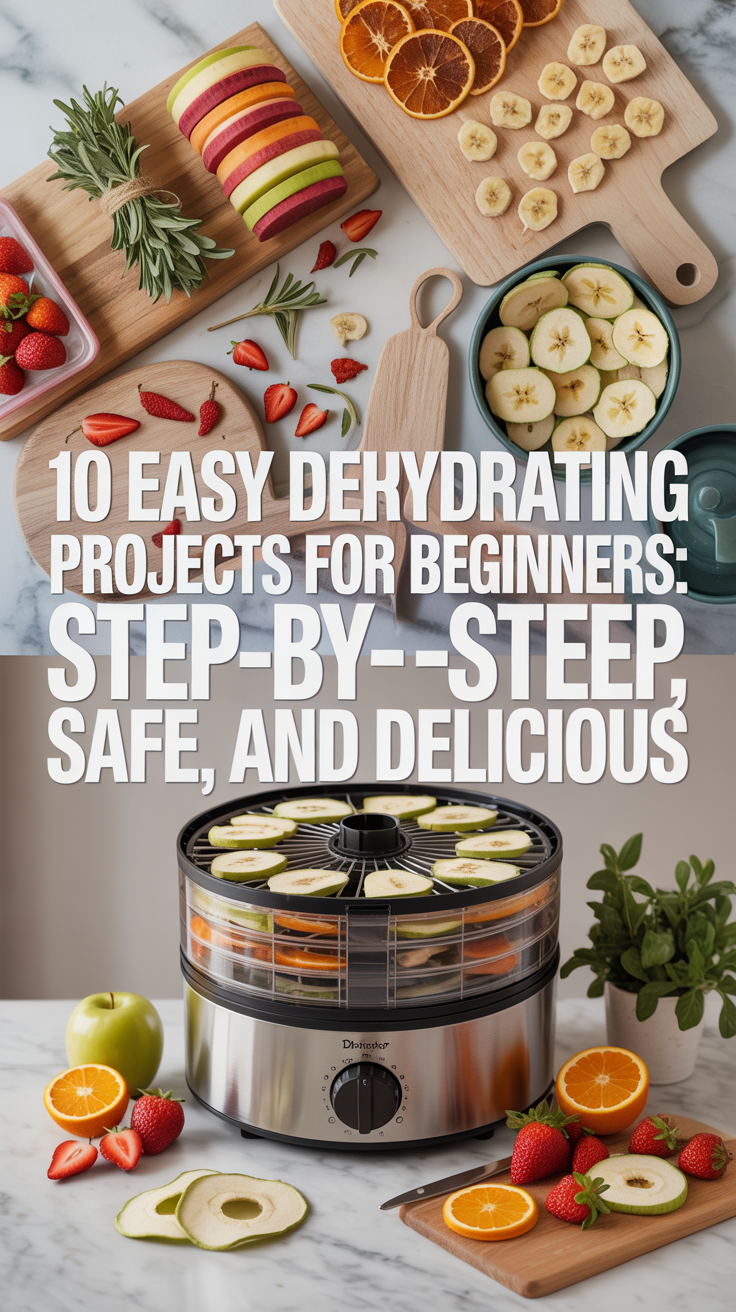
If you’re ready to stock your pantry, cut food waste, and build self-reliance, 10 Easy Dehydrating Projects for Beginners is the perfect place to start. This long-form guide shows you exactly how to dehydrate fruits, vegetables, and simple proteins safely, with clear temperatures, times, prep steps, and storage methods. By the end, you’ll have 10 Easy Dehydrating Projects for Beginners you can do in a weekend, plus pro tips to avoid common mistakes, pick the right dehydrator, and rehydrate meals that taste like they were just made.
Resource for building your self-reliant pantry: The Lost SuperFoods pairs perfectly with these 10 Easy Dehydrating Projects for Beginners, giving you proven recipes, portioning tips, and storage strategies for real-world emergencies. Check it out here: The Lost SuperFoods.
Before we dive in, bookmark your home base for self-reliance guides and food preservation tips: Everyday Self-Sufficiency. It’s a great internal resource to revisit as you scale beyond these 10 Easy Dehydrating Projects for Beginners.
Table of Contents
Why Dehydrate? The Benefits and Basics Behind 10 Easy Dehydrating Projects for Beginners
Dehydrating is one of the most forgiving, affordable, and beginner-friendly preservation methods. The heart of 10 Easy Dehydrating Projects for Beginners is learning to remove moisture to slow spoilage, shrink storage space, and lock in flavor. Properly dried foods are shelf-stable for months to years, weigh far less than canned or frozen goods, and can be rehydrated quickly into meals, snacks, and soups.
Core benefits that make 10 Easy Dehydrating Projects for Beginners so practical:
- Saves money: Capture produce in-season, in bulk, or from your garden. Seconds and “ugly” produce dehydrate beautifully.
- Reduces waste: Brown bananas become banana chips; oversized zucchini turns into soup-ready coins.
- Space-efficient storage: Dried apples that once filled a crisper drawer now fit in a single quart jar.
- Energy-light: A dehydrator uses far less power than a freezer over time, and dehydrated food won’t spoil during outages.
- Flavor and nutrition: Low-and-slow drying preserves taste; pretreating helps protect color and vitamins.
Essential equipment for 10 Easy Dehydrating Projects for Beginners:
- Dehydrator with temperature control (95–165°F). Temperature control matters for safety, especially for jerky.
- Sharp knife or mandoline for even slices.
- Parchment, mesh screens, and silicone mats for sticky fruit leathers.
- Airtight storage: mason jars, Mylar bags, food-safe buckets, oxygen absorbers, and/or vacuum sealer.
- Labels and a fine-tip marker: always note food, date, and batch.
Safety fundamentals that keep 10 Easy Dehydrating Projects for Beginners on track:
- Wash produce thoroughly. Trim bruises and spots.
- Slice uniformly so pieces dry at the same rate.
- Pretreat fruits prone to browning (apples, bananas, pears) with lemon water or ascorbic acid.
- Dry at the right temperature for each food; don’t rush with heat—case hardening (a dry exterior trapping moist interior) leads to spoilage.
- Always cool and “condition” dehydrated fruit for a week in a jar, shaking daily to distribute residual moisture and prevent mold.
- For meat jerky, preheat to 160°F (beef) or 165°F (poultry) before drying or briefly post-heat after drying per USDA guidance.
Storage that preserves your wins from 10 Easy Dehydrating Projects for Beginners:
- Fruit and veg: target brittle, leathery, or dry-crisp, then store in airtight containers with oxygen absorbers for long-term.
- Avoid humid environments or temperature swings—cool, dark, and dry is best.
- Check jars monthly for moisture or off-odors; re-dry if necessary.
This foundation ensures your 10 Easy Dehydrating Projects for Beginners are safe, tasty, and shelf-stable, giving you the confidence to try more advanced recipes later on.
Tools, Temperatures, and Setup: The On-Ramp for 10 Easy Dehydrating Projects for Beginners
Before you jump into 10 Easy Dehydrating Projects for Beginners, get your tools dialed:
- Dehydrator features that help beginners:
- Adjustable thermostat: 95°F for herbs, 125–135°F for fruits/veg, 145–165°F for jerky and fish.
- Horizontal airflow or a fan helps consistency.
- Solid tray liners and mesh screens expand your project range (from powders to fruit leathers).
- Timer or auto shutoff: helpful, not mandatory.
- Knife vs. mandoline: a mandoline gives even slices (1/8–1/4 inch) which dry uniformly.
- Pretreatments:
- Fruit browning prevention: 1 tbsp lemon juice or 1 tsp ascorbic acid per cup of water; dip slices 2–3 minutes.
- Blanching vegetables (e.g., carrots, green beans) 2–3 minutes can shorten drying time and improve rehydration.
- Seasoning: Keep salt light early on—flavors concentrate during drying.
Beginner workflow that speeds up 10 Easy Dehydrating Projects for Beginners:
- Wash, peel (as desired), and slice evenly.
- Pretreat if needed, drain well.
- Load trays in single layers without overlapping.
- Dry at the recommended temperature, rotating trays halfway if your dehydrator needs it.
- Test doneness: leathery (fruit leather), brittle (herbs), crisp or dry-bendy (chips). Break open a thick piece—no moisture beads.
- Cool 30–60 minutes before sealing to avoid condensation.
- Condition fruit: jar loosely for a week, shake daily; if condensation appears, re-dry.
Product recommendation section for 10 Easy Dehydrating Projects for Beginners:
- Dehydrator for beginners: Look for adjustable temps (95–165°F), at least 400–600W, 4–6 trays, and included mesh/solid liners. Popular beginner-friendly brands offer solid budget models—choose one with easy-to-clean trays and a clear door so you can watch progress.
- Resource pairing: Want shelf-stable recipes that complement your dehydrated pantry? The Lost SuperFoods is a useful companion to 10 Easy Dehydrating Projects for Beginners because it shows how to turn your dried ingredients into full meals with storability in mind.
Project 1 and 2 — Apple Chips and Banana Coins
Project 1: Apple Chips
- Why it’s great: Apples are affordable, forgiving, and perfect for your first of the 10 Easy Dehydrating Projects for Beginners.
- Prep:
- Wash; peel is optional.
- Core and slice 1/8–1/4 inch.
- Pretreat 2–3 minutes in lemon or ascorbic solution to prevent browning.
- Drying:
- 125–135°F for 6–10 hours, depending on slice thickness and humidity.
- Flip once midway if your dehydrator lacks airflow.
- Doneness: Dry-crisp or firmly leathery without tackiness. Break a chip; no moisture should bead.
- Flavor ideas: Cinnamon dusting, pumpkin spice, or a tiny pinch of sea salt.
- Storage: Cool fully, then move to airtight jars. For long-term, add oxygen absorbers and store in the dark. Condition if you kept them chewy.
- Uses: Snacks, crunchy salad topper, oatmeal mix-ins, apple-cinnamon tea.
Project 2: Banana Coins
- Why it’s great: Zero waste for spotted bananas; swaps for candy; a staple in 10 Easy Dehydrating Projects for Beginners.
- Prep:
- Peel; slice 1/4 inch.
- Dip in lemon water to slow browning.
- Drying:
- 125–135°F for 6–12 hours, depending on thickness.
- Doneness: Leathery to firm; no stickiness on the surface.
- Variations: Dust with cocoa powder, cinnamon, or crushed freeze-dried strawberries.
- Storage: Cool completely; store in jars. Condition for a week if you prefer them soft-chewy.
- Pro tip: Make a batch into powder in a spice grinder for instant banana flavor in smoothies and pancakes.
Quality checks that keep 10 Easy Dehydrating Projects for Beginners safe:
- Test multiple pieces; thick pieces often hide moisture.
- If pieces bend and “sweat,” they need more time.
- Keep notes on time, temp, and slice thickness so your second run is perfect.
Project 3 and 4 — Strawberry Slices and Pineapple Bites
Project 3: Strawberry Slices
- Prep:
- Rinse and hull.
- Slice 1/4 inch; larger berries may be halved.
- Optional: very light honey-water brush for a glossy finish.
- Drying:
- 125–135°F for 6–10 hours.
- Doneness: Leathery, tack-free.
- Storage: Cool; store airtight; condition for 5–7 days. Keep away from light to preserve color and vitamin C.
- Uses: Cereal toppers, trail mix, tea infusions, yogurt mix-ins.
- Tip for 10 Easy Dehydrating Projects for Beginners: Use mesh liners; strawberries can fuse to trays.
Project 4: Pineapple Bites
- Prep:
- Peel, core, and cube 1/2–3/4 inch.
- Pat dry to shorten drying time.
- Drying:
- 125–135°F for 8–16 hours, depending on cube size and juiciness.
- Doneness: Chewy-leathery; surface dry with deep sweetness.
- Variations: Dust lightly with ground ginger or chili-lime.
- Storage:
- Cool fully; store airtight with an oxygen absorber for long-term.
- Condition a week if the pieces are chewy.
- Safety note for 10 Easy Dehydrating Projects for Beginners: Sticky fruit is normal; avoid stacking pieces or they’ll trap moisture.
Smart scaling tip: When you batch these middle projects from 10 Easy Dehydrating Projects for Beginners, prep multiple fruits at once and rotate trays. Keep flavors compatible to avoid scent transfer—strawberry and pineapple are great together.
Mid-Content Hydration Strategy + Project 5 and 6 — Zucchini Coins and Bell Pepper Flakes
Mid-content survival tie-in for 10 Easy Dehydrating Projects for Beginners:
Dry food stores beautifully, but rehydration water matters. As you build out 10 Easy Dehydrating Projects for Beginners, consider securing clean water for cooking and rehydrating soups, stews, and oatmeals. A compact backup solution like SmartWaterBox integrates well with a dehydrated pantry, ensuring that when you need hot soup or jerky-and-rice, water isn’t the weak link.
Project 5: Zucchini Coins
- Prep:
- Slice 1/4 inch; skins on is fine.
- Optional salt sprinkle draws out moisture; pat dry before loading.
- Drying:
- 125–135°F for 6–10 hours.
- Doneness: Dry-bendy to crisp depending on thickness and end use.
- Uses:
- Soup and ramen add-ins (rehydrates fast).
- Crunchy chips with ranch seasoning.
- Powder into “zucchini powder” to thicken sauces or boost nutrients.
- Storage:
- Cool fully, store in jars with desiccant packs for crisp chips.
Project 6: Bell Pepper Flakes
- Prep:
- Seed and de-rib; dice small or slice thin for faster drying.
- Drying:
- 125–135°F for 6–10 hours; smaller cuts dry faster.
- Doneness: Brittle. Should shatter cleanly when crushed.
- Uses:
- Omelets, casseroles, chili, and fajitas.
- Grind to powder for a natural seasoning mix.
- Tip for 10 Easy Dehydrating Projects for Beginners: Keep colors separate for vivid jars, or mix rainbow batches for all-purpose flakes.
Project 7 and 8 — Kale Chips and Onion Flakes
Project 7: Kale Chips
- Prep:
- Wash and dry thoroughly; moisture is the enemy of crisp.
- Tear into palm-sized pieces; toss lightly with oil and salt or nutritional yeast.
- Drying:
- 115–125°F for 3–6 hours. Lower temps preserve nutrients but take longer.
- Doneness: Shatter-crisp with no soft spots.
- Storage:
- Cool completely; store with a desiccant for crispness.
- Flavor ideas:
- Garlic-parmesan, smoky paprika, lemon pepper, or chili-lime.
- Why this belongs in 10 Easy Dehydrating Projects for Beginners:
- Immediate gratification. Kale chips show you how texture changes with time and temperature, teaching you to read doneness by touch.
Project 8: Onion Flakes
- Prep:
- Peel and slice thin or dice.
- Drying:
- 125–135°F for 6–10 hours.
- Doneness: Brittle; dry enough to grind into onion powder.
- Odor control note for 10 Easy Dehydrating Projects for Beginners:
- Dry onions last in the garage or on a porch if possible; smell can linger.
- Clean trays and wipe dehydrator housing afterward.
- Uses:
- Soups, gravies, burger mixes, spice blends.
- Grind to onion powder. Add anti-caking with a grain of rice in the jar.
Storage safety across these 10 Easy Dehydrating Projects for Beginners:
- Oxygen absorbers preserve color and flavor in long-term jars and Mylar.
- Label every jar: food, date, batch, and any seasoning.
Project 9 and 10 — Beef Jerky and Fruit Leather
Project 9: Beef Jerky (Beginner-Safe Method)
- Safety first in 10 Easy Dehydrating Projects for Beginners:
- USDA recommends heating meat to 160°F (beef) or 165°F (poultry) before or after drying to kill pathogens.
- Prep:
- Choose lean beef (eye of round/top round). Trim all fat.
- Slice 1/4 inch across grain for chew, with grain for tender strips.
- Marinade (basic):
- 1/4 cup soy sauce, 1 tbsp Worcestershire, 1 tsp black pepper, 1 tsp onion powder, 1 tsp garlic powder, 1 tsp smoked paprika, 1–2 tsp brown sugar or honey. Optional 1/4 tsp curing salt for added safety/color.
- Heat step:
- Briefly preheat marinated strips in a 275°F oven until internal temp reaches 160°F (use a thermometer), then move to dehydrator.
- Drying:
- 145–160°F for 4–8 hours until dry, bendy, and non-greasy. Blot any surface oil.
- Storage:
- Short-term: jars or bags at room temp for a week or two.
- Longer-term: vacuum seal or refrigerate/freezer. Use oxygen absorbers if room-temp storing in Mylar.
- Why jerky belongs in 10 Easy Dehydrating Projects for Beginners:
- Teaches meat safety, temperature control, and texture cues you’ll use for fish and poultry later.
Project 10: Fruit Leather (Any Berry + Apple Base)
- Prep:
- Blend 2 cups berries with 1 cup applesauce. Sweeten lightly if needed; add lemon juice for brightness.
- Pour and dry:
- Spread 1/8–1/4 inch thick on lined trays (silicone sheets or parchment).
- 125–135°F for 6–10 hours.
- Doneness: No wet spots; peels cleanly; slightly tack-free.
- Storage:
- Cut strips and roll in parchment; store airtight.
- Variations tied to 10 Easy Dehydrating Projects for Beginners:
- Peach-mango-ginger, strawberry-banana, spiced pear.
- Kid-friendly tip:
- Use cookie cutters after drying for fun shapes.
Turning 10 Easy Dehydrating Projects for Beginners into Meals and Mixes
With 10 Easy Dehydrating Projects for Beginners under your belt, start building mix-and-eat systems:
- Oatmeal cups:
- Combine apple chips, strawberry bits, cinnamon, and powdered milk. Add hot water.
- Soup kits:
- Jar of bell pepper flakes, onion flakes, zucchini coins, tomato powder, rice, and bouillon. Add jerky bits if desired.
- Trail mix:
- Banana coins, pineapple bites, nuts, seeds, and dark chocolate disks.
- Smoothie bags:
- Strawberry slices, banana powder, and yogurt drops (dehydrate small dots of thick yogurt at 125°F until dry, then store airtight).
- Taco night:
- Onion flakes, pepper flakes, and tomato powder rehydrated with hot water; add to ground beef or beans.
- Rehydration basics:
- Fruits often rehydrate 1:1 to 1:2 with warm water in 10–20 minutes.
- Vegetables rehydrate 1:1 to 1:3 depending on cut size; simmer gently for soups and stews.
- Jerky is best eaten as-is; for stews, simmer 15–30 minutes until tender.
- Powder power:
- Grind dried ingredients to powders for instant sauces and flavor bombs: onion powder, bell pepper powder, tomato powder, zucchini powder, and banana powder. Powders are a secret accelerator in 10 Easy Dehydrating Projects for Beginners.
Organizing your pantry to showcase 10 Easy Dehydrating Projects for Beginners:
- Clear jars let you see inventory at a glance.
- Use tiered shelves and labels with dates and “use-by” guidelines.
- Keep a notebook or spreadsheet tracking batches, times, and outcomes. Patterns will improve your consistency.
If you want a structured approach to planning meals around stored foods, The Lost SuperFoods complements 10 Easy Dehydrating Projects for Beginners by giving you complete meal frameworks, not just individual ingredients.
Storage, Shelf Life, and Troubleshooting for 10 Easy Dehydrating Projects for Beginners
Storage best practices:
- Cool fully before sealing. Warm food creates condensation and mold risk.
- Short-term: mason jars with tight lids; check weekly during the first month.
- Long-term: Mylar with oxygen absorbers (300–500cc per quart) or vacuum-sealed jars. Store cool, dark, and dry.
- Add desiccant packs only for chip-like items you want to keep crisp (kale chips, apple chips). Avoid desiccants with foods intended to be leathery.
- Label every container with food, date, and batch number.
Shelf life guidelines for 10 Easy Dehydrating Projects for Beginners:
- Fruits: 6–12+ months in airtight containers; longer in Mylar with O2 absorbers.
- Vegetables: 6–18+ months depending on dryness and storage.
- Jerky: A few weeks at room temp; months refrigerated; longer frozen. Vacuum sealing extends life.
- Powders: 6–12 months; avoid humidity; include an anti-cake solution (e.g., small food-safe silica or a grain of rice in a shaker).
Troubleshooting the most common issues:
- Case hardening (outside dry, inside moist):
- Cause: temp too high. Solution: lower temp, slice thinner, and be patient.
- Tacky fruit after 12+ hours:
- Problem: high humidity or thick slices. Solution: extend time, reduce slice thickness, use mesh liners for airflow.
- Mold in the jar a week later:
- Cause: sealed warm or under-dried. Solution: discard moldy food; next time condition fruit in jars for a week, re-drying if condensation appears.
- Bland flavor:
- Cause: over-blanching or old produce. Solution: season lightly before drying; use peak-ripeness fruit.
- Strong odors (onions/garlic):
- Fix: dry in a ventilated area or outside; clean dehydrator afterwards to protect delicate flavors in the next batch.
Water and resilience note for 10 Easy Dehydrating Projects for Beginners:
Dehydrated food shines during outages and on the move—but only if you have water to rehydrate. Consider a compact, resilient backup like SmartWaterBox to ensure your chili, stews, and oatmeals are always on the menu. For a broader urban-resilience plan that matches a dehydrated pantry, URBAN Survival Code offers practical tactics you can implement quickly.
Conclusion: Put 10 Easy Dehydrating Projects for Beginners Into Action Today
You now have 10 Easy Dehydrating Projects for Beginners that turn everyday produce and simple proteins into shelf-stable meals, snacks, and ingredients: apple chips, banana coins, strawberry slices, pineapple bites, zucchini coins, bell pepper flakes, kale chips, onion flakes, beef jerky, and fruit leather. With safe temperatures, pretreating tips, storage methods, and rehydration ratios, your pantry can grow smarter each week.
Next steps that pair with 10 Easy Dehydrating Projects for Beginners:
- Build your water resilience for cooking, cleaning, and rehydrating: SmartWaterBox
- Expand your self-reliant meal playbook: The Lost SuperFoods
- Sharpen your urban readiness to match your pantry: URBAN Survival Code
- Keep a health-first mindset when building and using your pantry: Home Doctor
FAQ: 10 Easy Dehydrating Projects for Beginners
How to naturally dehydrate?
You can sun- or air-dry some foods in very dry, warm climates, but it’s weather-dependent and slower. For reliable, natural results, use a low-temperature dehydrator (95–135°F for produce) with steady airflow—this mimics traditional drying while preventing pests, dust, and humidity from ruining batches. For fruits prone to browning, dip slices in lemon water or an ascorbic acid solution first. In 10 Easy Dehydrating Projects for Beginners, sticking to a controlled dehydrator gives you the safest, most consistent outcome.
What are some common mistakes in dehydrating?
Slicing too thick, leading to case hardening or under-dried centers.
Drying too hot to “hurry” the process; this seals the outside and traps moisture.
Skipping pretreatments for apples, bananas, and pears (browning) or veggies that benefit from blanching (texture and rehydration).
Sealing foods while still warm, causing condensation and mold.
Not conditioning fruit in jars for a week to equalize residual moisture.
Poor storage: clear jars in sunlight or no oxygen absorbers for long-term storage.
For jerky, skipping the 160–165°F safety step. In 10 Easy Dehydrating Projects for Beginners, temperature control and patience are non-negotiable.
What is the healthiest food to dehydrate?
Whole fruits and non-starchy vegetables are excellent because they retain fiber and micronutrients while concentrating flavor. Apples, strawberries, kale, bell peppers, tomatoes, and onions are standouts in 10 Easy Dehydrating Projects for Beginners. Keep temperatures moderate (125–135°F), avoid heavy sugar coatings, and store in opaque containers to protect vitamins from light. Kale chips dried low and slow, apple chips without added sugar, and bell pepper flakes are nutrient-dense and versatile.
What is the best food dehydrator for beginners?
Look for:
Adjustable thermostat from 95°F to at least 160–165°F.
4–6 trays with expansion capability.
Horizontal airflow or a fan for even drying.
Included mesh and fruit leather liners.
Easy cleanup and a clear door.
Power between 400–600W is plenty for 10 Easy Dehydrating Projects for Beginners. Purchase from a reputable brand with replacement trays and accessories available. Pair that with a simple water-resilience plan like SmartWaterBox and a meal framework resource like The Lost SuperFoods to make your dehydrator part of a complete, self-reliant kitchen.