
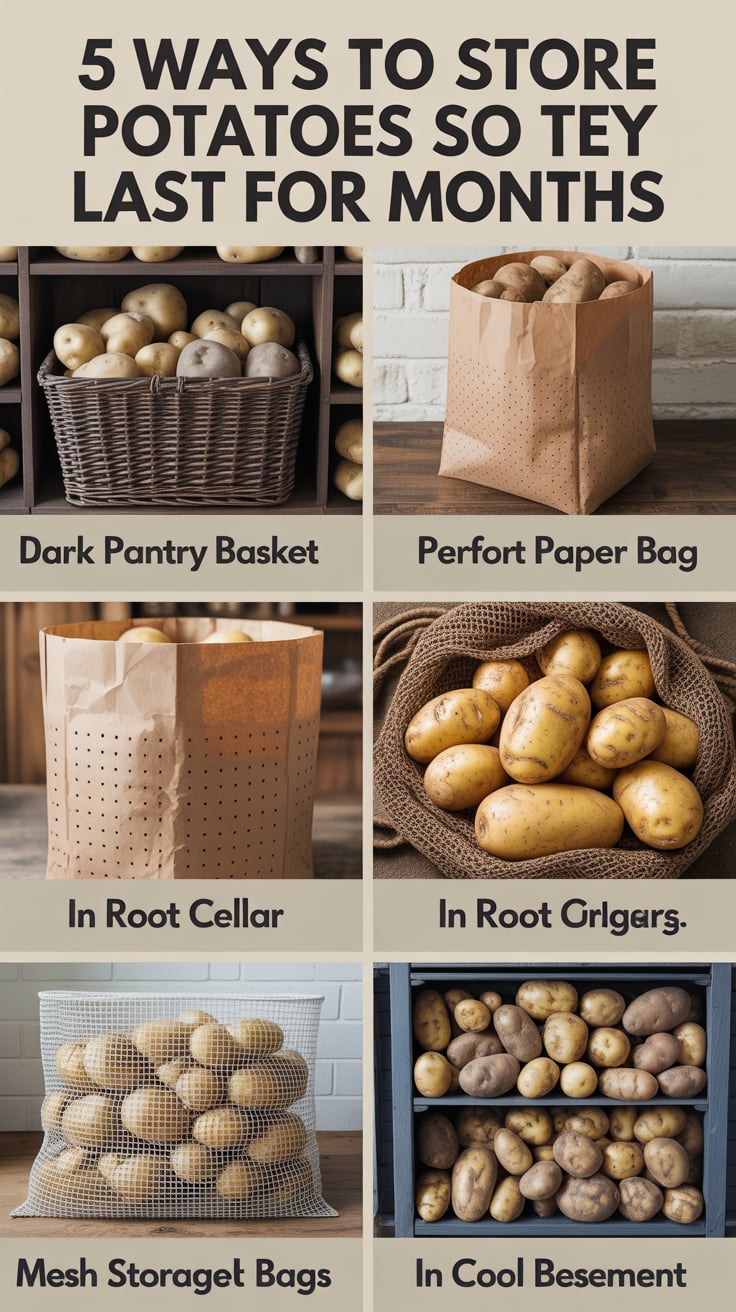
Potatoes are one of the most budget-friendly, versatile staples you can stock in your pantry—if you know how to keep them fresh. This guide walks you through 5 ways to store potatoes so they last for months, plus expert prep tips, troubleshooting, and the exact temperature and humidity targets that make the biggest difference. Whether you have a basement, a tiny apartment pantry, or just a freezer and an oven, you’ll find a method that fits your space, climate, and cooking style.
If you’re building a resilient pantry beyond potatoes, you may also like the long-term preservation ideas in The Lost SuperFoods.
The foundation: selection, curing, and prep that extend potato shelf life
Before you tuck a single potato into storage, the steps you take at harvest or purchase will determine how long they keep. Think of this as the “80/20” of potato longevity: get selection and prep right, and even average storage conditions can deliver great results.
- Choose storage-friendly varieties. Russets, Yukon Gold, Kennebec, Red Pontiac, and other thick-skinned, late-season potatoes generally store better than thin-skinned new potatoes. If you’re buying, look for mature potatoes with fully set skins.
- Inspect and sort. Separate out any with cuts, bruises, soft spots, or signs of disease. “One bad potato can spoil the bunch” is true—the ethylene and moisture from decaying tubers accelerate spoilage nearby.
- Don’t wash before storage. Moisture on the surface invites rot. Brush off loose soil with a dry cloth or soft brush. Wash only right before cooking.
- Cure freshly dug potatoes. If you grew your own, cure them to toughen skins and heal minor nicks. Spread tubers in a single layer in a dark, well-ventilated area at 45–60°F (7–16°C) and high humidity (85–95%) for 10–14 days. After curing, move them to long-term conditions.
- Target the sweet spot. For long-term storage, aim for 40–50°F (4–10°C) with 85–95% relative humidity, excellent ventilation, and complete darkness. Cooler can cause starch-to-sugar conversion (sweet taste and dark frying), and warmer can lead to sprouting and shriveling.
- Store by size. Small potatoes age faster than large ones. If space allows, keep larger tubers for long storage and plan to use smaller potatoes first.
- Layer and protect. Give each potato a little breathing room. Use slatted crates, ventilated bins, or baskets lined with newspaper or kraft paper to reduce bruising while allowing airflow.
Internal planning tip: Think through how you’ll check your stash weekly. Quick routines for inspection and rotation keep waste near zero. See also: [How to build a pantry rotation system](INTERNAL LINK PLACEHOLDER).
External reference for targets: University extensions consistently recommend cool, dark, humid conditions with good airflow for potato storage; for example, see guidance from Penn State Extension and other land-grant universities (Penn State Extension; North Dakota State University Extension).
Root cellar storage that mimics a cool, humid underground environment
If you have a basement, crawlspace, unheated garage, or climate-controlled shed, you can create “root cellar” conditions for whole potatoes without much expense. The root cellar method is the gold standard for months-long storage of unprocessed tubers because it maintains the temperature/humidity equilibrium potatoes evolved for underground.
- Temperature and humidity. Aim for 40–45°F (4–7°C) and 90% relative humidity, with good ventilation and darkness. A digital thermometer-hygrometer helps you monitor conditions.
- Airflow matters. Stagnant air breeds condensation and mold. Use slatted wooden crates, mesh baskets, or ventilated plastic bins. Elevate bins off the floor on pallets and keep a few inches between stacks and walls for circulation.
- Light control. Light causes greening (solanine) and bitter flavor. Keep storage areas dark; line bins with paper or burlap, and use opaque containers or blackout curtains as needed.
- Bedding options. Line the bottom of crates with newspaper or a thin layer of dry straw to cushion potatoes. Avoid plastic liners that trap moisture.
- Separation protocol. Keep onions and apples away. Onions can impart off-flavors; apples emit ethylene gas that hastens sprouting in potatoes.
- Condensation fixes. If the cellar is too damp, increase ventilation or add a small, oscillating fan on a timer. If too dry, place shallow trays of water near airflow or use damp sand bins (more on this in a later section).
- Pests and cleanliness. Sweep the area, store potatoes off the ground, and keep the space rodent-proof. Start each storage season with clean crates.
- Regular checks. Inspect weekly. Remove any soft, wrinkled, or moldy tubers immediately. Rotate bins so older potatoes are used first.
With consistent conditions, expect 3–6 months of storage for mature, thick-skinned varieties. If you’re curious about building or retrofitting a small root cellar space, see: [How to build a root cellar in a basement corner](INTERNAL LINK PLACEHOLDER).
Authoritative guidance on temperatures and handling: University of Maine Cooperative Extension and other extension services align on the ideal cool, dark, humid setup (University of Maine Cooperative Extension; Penn State Extension).
Paper bag and pantry method for apartments and small spaces
Not everyone has a basement or garage. If you live in a small space, you can still achieve 4–10 weeks of quality storage with a simple paper-bag or cardboard setup in the coolest cabinet or closet you have. This is the most “set-and-forget” approach for renters.
- Choose your spot wisely. Look for the coolest area in your living space: a low cabinet away from the oven and dishwasher, an interior closet floor, or a shaded pantry. Avoid the top of the fridge or any warm appliance-adjacent spot.
- Pack for breathability. Use kraft paper bags, breathable burlap sacks, or shallow cardboard boxes lined with newspaper. Avoid sealed plastic bags; they trap moisture and cause rot.
- Layer gently. Place potatoes in a single layer if possible, or no more than 2–3 layers separated by newspaper. The paper absorbs condensation and reduces bruising from pressure points.
- Darkness is critical. Paper and cardboard block light better than mesh bags. If your space has ambient light, add a cloth cover or keep them in a closed cabinet.
- Temperature tradeoffs. In apartments without cool spots, expect shorter storage periods. Use your stash steadily and shop more frequently if needed.
- Weekly routine. Check bags weekly, removing any shriveled or soft potatoes. Rotate the bag so the bottom layer gets used first.
- What not to do. Don’t store potatoes in the refrigerator unless you plan to cook them in ways that won’t be affected by sugar conversion (e.g., mashed or roasted). Cold storage below ~40°F (4°C) sweetens and darkens fried potatoes.
This method is ideal for 5–20 pound quantities you’ll work through in a few weeks. Pair it with the freezing or dehydrating methods below if you want months of shelf stability without a cellar. For organizing small-space pantries, see: [Pantry declutter and storage hacks](INTERNAL LINK PLACEHOLDER).
For food storage do’s and don’ts, the USDA FoodKeeper resource provides general timelines and handling advice (USDA FoodKeeper).
Sand or sawdust crates that regulate humidity naturally
If your space is a bit too dry, or you struggle with shriveling, a classic fix is to store potatoes in bins layered with slightly damp sand or clean, dry sawdust. This method buffers humidity, cushions the tubers, and reduces pressure points that lead to bruising.
- Choose a container. Use wooden boxes, plastic totes with drilled ventilation holes, or deep crates. Ensure drainage or breathable sides so moisture doesn’t pool.
- Prep the medium. Use clean, slightly damp sand (not wet) or clean, kiln-dried sawdust/shavings. If using sand, dampen it just enough that it clumps lightly in your hand, then breaks apart. Too much moisture invites rot.
- Layer properly. Add a 1–2 inch base layer of sand/sawdust, then a single layer of potatoes not touching, then cover with another layer of medium. Repeat until the container is nearly full, finishing with a cover layer.
- Keep it cool and dark. Place the bin in a 40–50°F (4–10°C) location, away from light and with some airflow. Check humidity with a hygrometer; aim for 85–95% inside the storage area.
- Spot checks. Every 2–3 weeks, gently dig in and spot-check a few potatoes. Replace any damp clumps of sand and remove any compromised tubers.
- Pros and tradeoffs. Expect longer life thanks to humidity control and reduced bruising; the tradeoff is a little extra space and weight. If you use sand, plan where you’ll sift and reuse it each season.
Gardeners sometimes “store in ground” by leaving potatoes in soil covered with a thick mulch and a water-resistant cover until deep winter, but this requires careful pest and moisture management and is climate-dependent. The sand/sawdust crate method gives similar benefits, with more control and less risk.
For science on humidity and sprout control, see extension literature on potato storage physiology (North Dakota State University Extension; University of Maine Cooperative Extension).
Freezer-ready potatoes: blanch, flash, and pack for months of convenience
Raw potatoes don’t freeze well—they turn mealy, watery, or discolored. But with a quick blanch and proper packing, you can freeze cut potatoes for 8–12 months of quick meals. This method is perfect if you find a bulk deal, or if pantry space is limited and you want minimal daily prep.
- Pick your cut and purpose.
- Home fries or roasted cubes: Peel if you like, cut into 1/2–1 inch cubes.
- French fries: Cut into batons.
- Hash browns: Parboil whole potatoes first, cool, then shred.
- Mashed potatoes: Cook fully, mash with a little fat, and portion for freezing.
- Blanch or par-cook.
- For cubes and fries: Blanch in boiling water 2–4 minutes, then plunge into ice water until fully cooled. Drain very well.
- For hash browns: Parboil whole potatoes 10–15 minutes depending on size, cool completely, shred, and squeeze out excess moisture.
- Pre-freeze to prevent clumping. Spread blanched potatoes in a single layer on a parchment-lined sheet and freeze until firm (1–2 hours).
- Pack and label. Transfer to freezer bags or containers. Press out excess air. Label with cut, date, and blanch time. For best results, use a vacuum sealer.
- Cooking from frozen. Toss frozen cubes with oil and roast at high heat (425°F/220°C). Fry frozen fries straight from the freezer. Cook hash browns in a hot, oiled skillet. Thaw mashed potatoes overnight and reheat gently with a splash of milk or broth.
- Quality tips. Avoid over-blanching, which can lead to mush. Add a dash of lemon juice or vitamin C solution in the blanch water to help with color retention if desired.
For tested freezing directions and safety, consult the National Center for Home Food Preservation for potatoes and other vegetables (National Center for Home Food Preservation).
Dehydrated potatoes and DIY potato flakes for light, shelf-stable storage
Dehydrating turns bulky, moisture-rich potatoes into lightweight, long-lasting staples that store for months to years when packed correctly. You can make slices, shreds, dices, or DIY potato flakes for instant mashed potatoes and soup thickening.
- Pre-cook and prep.
- For slices and dices: Parboil 5–10 minutes until just tender. Rinse briefly and pat dry.
- For shreds: Parboil whole potatoes, cool fully, then shred and squeeze out excess moisture.
- For potato flakes: Cook potatoes fully, mash plain (no dairy if you’ll store long-term), spread thinly on dehydrator trays lined with nonstick sheets.
- Dehydrate thoroughly.
- Slices/dices: 125–135°F (52–57°C) for 6–10 hours until dry and leathery, not tacky.
- Shreds/hash browns: Similar temps for 6–10 hours until crisp.
- Flakes: 125–135°F until fully dry and brittle; pulse in a blender to desired texture.
- Cool, condition, and pack. Let dried pieces cool, then “condition” by loosely storing in a jar for a week, shaking daily to check for moisture beads. If none appear, pack for long-term storage.
- Long-term packaging. For 12–24+ months, pack in airtight containers with minimal oxygen. Mylar bags with oxygen absorbers stored in a cool, dark place are ideal. Glass jars with absorbers also work.
- Rehydration ratios.
- Slices/dices: 1 cup dried to 1.5–2 cups hot water; simmer until tender.
- Shreds: Cover with hot water for 10–15 minutes; pan-fry.
- Flakes: Start with 1 part flakes to 2–2.5 parts hot water; adjust for texture.
- Flavor upgrades on demand. Add salt, butter, dairy, and seasonings when you cook—not before storage—to maximize shelf life.
If you’re building out a deeper pantry of nutrient-dense, shelf-stable foods and want creative recipes for using every part of a harvest, check out The Lost SuperFoods for preservation ideas that complement dehydrated staples.
For method validation and safety, the National Center for Home Food Preservation provides temperatures, dryness tests, and packaging guidance (National Center for Home Food Preservation).
Troubleshooting, food safety, and when to discard potatoes
Even the best storage plans encounter hiccups. Here’s how to spot problems early, fix what you can, and know when to toss a potato.
- Greening and bitterness. Exposure to light triggers chlorophyll and solanine formation, causing green patches and a bitter taste. Trim away small green areas generously; if the potato is extensively green or tastes bitter, discard it.
- Sprouting. Cool temperatures and darkness slow sprouting, but time wins eventually. Small, firm sprouts can be snapped off; if the potato remains firm, it’s still usable. If it’s heavily sprouted and wrinkled, compost it.
- Softness and smell. Soft, spongy texture, wetness, mold, or a sour/putrid smell mean internal breakdown—discard immediately to avoid contaminating neighbors.
- Black spots and bruises. Peel and cut away bruised areas; if discoloration penetrates deeply or is widespread, discard.
- Moisture problems. Condensation and high humidity without ventilation spur rot. Increase airflow, reduce humidity, and switch to sand/sawdust layering if shriveling is your main issue.
- Refrigerator effects. Chilling injury below ~40°F (4°C) increases sugar content. You can sometimes reverse sweetness by holding potatoes at 60–70°F (15–21°C) for a week, then cooking. For frying, sweetened potatoes brown too quickly.
- Botulism risk and safety note. Don’t store cooked potatoes in airtight conditions at room temperature; refrigerate promptly. When in doubt, throw it out.
If you want a practical, home-ready reference on recognizing and responding to household health issues, including foodborne illness basics, you may find Home Doctor useful as a general guide for families. It’s not a substitute for professional care, but having vetted information on hand is always smart.
For authoritative safety guidance, see the CDC and USDA resources on foodborne illness and safe handling (Centers for Disease Control and Prevention; USDA FoodKeeper).
Summary of the 5 best methods to store potatoes long-term, and when to use each
To help you match your space, climate, and meal plans, here’s how the five core methods stack up:
Root cellar storage (whole potatoes)
- Best for: Basements/garages with cool, humid conditions
- Shelf life: 3–6 months (sometimes longer) for mature, thick-skinned varieties
- Key controls: 40–45°F, 85–95% RH, darkness, airflow
Paper bag/pantry method
- Best for: Apartments, renters, small batches
- Shelf life: 4–10 weeks depending on temperature and variety
- Key controls: Coolest cabinet, paper/cardboard, weekly checks
Sand or sawdust crates
- Best for: Dry climates, shriveling issues, protecting tubers
- Shelf life: Comparable to root cellar with better humidity buffering
- Key controls: Slightly damp sand or clean sawdust between layers
Freezing after blanching
- Best for: Convenience cooking, bulk deals without cool storage space
- Shelf life: 8–12 months
- Key controls: Proper blanching, flash-freezing, airtight packing
Dehydrating and potato flakes
- Best for: Ultra-compact storage, backpacking, long shelf life
- Shelf life: 12–24+ months when packed in low-oxygen containers
- Key controls: Thorough drying, conditioning, Mylar + oxygen absorbers
As you design your setup, combine methods: keep whole potatoes in a cool, dark place and convert the rest to freezer, dehydrated, or flake form. This hedges against climate swings and gives you quick weeknight options. For more pantry resilience beyond tubers, consider preservation playbooks in The Lost SuperFoods.
Conclusion: build your perfect potato plan for the next season and beyond
If you follow these 5 ways to store potatoes so they last for months—root cellar, paper bag/pantry, sand or sawdust crates, blanch-and-freeze, and dehydrating—you’ll cover every living situation and season. Start with smart selection and curing, hit the temperature/humidity targets, and make weekly checkups a habit. Then convert any surplus into freezer packs or dehydrated staples so nothing goes to waste.
A resilient pantry is built one system at a time. This month, dial in your coolest dark spot and grab a hygrometer. Next month, batch-blanch and freeze two trays of potato cubes. The month after, make your first jar of homemade potato flakes. Small steps now mean hot, hearty meals later—without emergency runs to the store.
For deeper dives into preservation methods that pair well with potatoes, including historical and modern techniques, browse The Lost SuperFoods. And keep learning with evergreen fundamentals like [How to store onions without sprouting](INTERNAL LINK PLACEHOLDER) and [Beginner’s guide to dehydration at home](INTERNAL LINK PLACEHOLDER).
External sources cited:
- National Center for Home Food Preservation – scientifically tested guidelines for freezing and dehydrating vegetables
- Penn State Extension – storage temperature and humidity targets for potatoes
- University of Maine Cooperative Extension – handling, curing, and long-term storage recommendations
- USDA FoodKeeper – general storage timelines and safety basics
FAQ
What’s the ideal temperature and humidity to store potatoes for months?
Aim for 40–50°F (4–10°C) and 85–95% relative humidity in complete darkness with good airflow. This balance slows sprouting and shriveling while preventing rot.Can I store potatoes in the fridge?
Generally no for long-term storage. Refrigeration below ~40°F (4°C) causes starches to convert to sugars, which can darken frying and affect flavor. Use the fridge only if you’ll mash or roast, or if it’s a short-term stopgap.How do I keep potatoes from sprouting?
Use cool, dark storage, avoid storing with apples (ethylene gas promotes sprouting), and choose mature, thick-skinned varieties. Regularly remove small sprouts; discard heavily sprouted, wrinkled potatoes.Should I wash potatoes before storing them?
No. Moisture on the skin encourages rot. Gently brush off dirt and only wash right before cooking.What’s the best method if I live in a warm apartment?
The paper bag/pantry method combined with freezing or dehydrating works best. Keep a small, cool cabinet stash for 4–8 weeks and convert the rest to freezer packs or dehydrated slices and flakes for months-long stability.Are green potatoes safe to eat?
Green areas indicate solanine formation from light exposure. Trim away small green patches generously. If the potato is extensively green or tastes bitter, discard it.Can I freeze raw, uncooked potatoes without blanching?
It’s not recommended. Raw potatoes freeze poorly and get mealy or discolored. Blanching or par-cooking sets the texture and helps maintain color and flavor.What are the 5 ways to store potatoes so they last for months?
Root cellar storage, paper bag/pantry storage, sand or sawdust crates, blanch-and-freeze, and dehydrating into slices/shreds or potato flakes. Use one or a mix depending on your space and goals.Can I store potatoes next to onions?
It’s better to store them separately. Onions can impart off-flavors, and apples (not onions) emit ethylene that speeds sprouting in potatoes. Keep all produce with strong odors or ethylene output away from potatoes.How long will dehydrated potato flakes last?
If thoroughly dried and packed with oxygen absorbers in Mylar bags or airtight jars, flakes can last 12–24+ months in a cool, dark place. Check periodically for moisture or off smells before use.